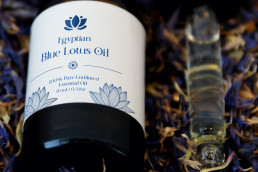
If you have ordered a bottle of blue lotus oil from abroad, or you are planning to, you have probably wondered whether it will actually reach your doorstep. The question is a fair one. Although Nymphaea caerulea is not an internationally scheduled substance, it sits in an awkward grey zone in a handful of countries, and customs officers are not always familiar with it. This article walks through what you need to know about blue lotus oil customs import matters: which countries restrict it, how to declare it properly, what documentation helps, and what realistically happens if a parcel is held at the border.
Table of Contents
- What "Customs and Import Rules" Actually Means for Blue Lotus Oil
- Countries Where Blue Lotus Is Restricted or Regulated
- Russia, Poland, and Latvia
- The United States: Louisiana
- Australia
- Other jurisdictions worth noting
- How to Declare Blue Lotus Oil Correctly
- The right way to describe it
- The wrong way to describe it
- Documentation That Helps
- Certificate of Analysis (COA)
- Safety Data Sheet (SDS)
- Commercial invoice
- What Happens If a Parcel Is Held
- Step one: the hold notice
- Step two: inspection
- Step three: release or seizure
- Travelling With Blue Lotus Oil
- Buying Domestically Versus Importing
- Realistic Expectations and Common Mistakes
- Frequently Asked Questions
- Where to Go From Here
- Order With Confidence
It is written and clinically reviewed by Antonio Breshears, ND, CCA, a Bastyr-trained naturopathic doctor and certified clinical aromatherapist. For broader background on the botanical, its chemistry, and its uses, readers are encouraged to consult the complete guide to blue lotus oil, which sits as the master reference for everything covered in this legal and travel series.
What “Customs and Import Rules” Actually Means for Blue Lotus Oil
Before getting into specifics, it helps to understand what customs is actually checking for. When a parcel crosses an international border, it passes through a customs authority whose job is to verify three things: that the item is legal to import into the destination country, that any duties or taxes owed have been paid, and that the goods match the declared description on the shipping label. For most botanical oils, this is a routine process. For blue lotus, it occasionally is not, and the reason is almost entirely about perception rather than chemistry.
Nymphaea caerulea is not listed under the 1961 Single Convention on Narcotic Drugs or the 1971 Convention on Psychotropic Substances. It is not a controlled substance under United States federal law, United Kingdom law, or the law of the overwhelming majority of countries. It is, in plain terms, a botanical flower with a long ethnobotanical history and a mild profile of plant alkaloids (chiefly aporphine and nuciferine) that fall well short of the threshold for drug control. In most of the world, importing it is no more regulated than importing rose absolute or jasmine oil.
There are, however, a small number of jurisdictions where it is either explicitly restricted, regulated as a novel food or therapeutic product, or where the authorities have historically treated it with suspicion. Those are the cases that require attention before you order.
Countries Where Blue Lotus Is Restricted or Regulated
The list of places with meaningful restrictions on blue lotus is shorter than online forums sometimes suggest, but it is real. Based on publicly available legal records and regulatory guidance, the following jurisdictions warrant particular caution.
Russia, Poland, and Latvia
Russia classifies Nymphaea caerulea as a controlled narcotic plant, and possession or import may carry criminal penalties. Poland has, since 2009, included blue lotus on its list of substances restricted under the Act on Counteracting Drug Addiction. Latvia has similar restrictions in place. In all three countries, ordering blue lotus oil internationally is a genuinely bad idea, and reputable vendors will not ship there.
The United States: Louisiana
Louisiana State Act 159 (enacted 2005) names Nymphaea caerulea among a list of plants whose possession is prohibited when intended for human consumption. The act carves out an exception for ornamental, landscaping, and decorative purposes. What this means in practice is that importing blue lotus oil into Louisiana is legally murky if the product is marketed for ingestion or psychoactive use, and on firmer ground if it is sold strictly as an aromatic or cosmetic oil. The rest of the United States has no equivalent restriction at the federal or state level.
Australia
Australia presents a regulatory complexity rather than an outright ban. The Therapeutic Goods Administration (TGA) regulates products making therapeutic claims, and the Food Standards Australia New Zealand (FSANZ) framework regulates anything marketed as food or ingestible. Blue lotus oil imported as a cosmetic, aromatic, or perfumery material is generally fine. Products marketed for ingestion, for “lucid dreaming”, or with explicit psychoactive claims face a much higher regulatory bar and are more likely to be held at the border. Australian customs is also known to scrutinise botanical imports more thoroughly than many other jurisdictions.
Other jurisdictions worth noting
A handful of Gulf states and parts of Southeast Asia apply broad prohibitions to plants with any psychoactive reputation, even where the specific plant is not named in legislation. Saudi Arabia and the United Arab Emirates fall into this category. If you are importing into a country with strict general drug laws, the absence of Nymphaea caerulea from a specific schedule does not guarantee safe passage; the safest course is to contact the local customs authority in writing before ordering.
How to Declare Blue Lotus Oil Correctly
For the vast majority of international orders, declaration is straightforward and the parcel passes through customs without incident. Getting the declaration right matters, however, because the two most common causes of seizure are not legal prohibition but rather mismatched paperwork and inflammatory product descriptions.
The right way to describe it
On the customs declaration form (CN22 or CN23 for postal shipments, commercial invoice for couriers), the product should be described as one of the following:
- “Botanical aromatic oil, Nymphaea caerulea” for shipments where the botanical name is useful
- “Essential oil, cosmetic use” for shipments where simpler language is preferred
- “Perfumery material, natural floral absolute” where the product is an absolute rather than a distilled oil
The HS (Harmonised System) tariff code for essential oils and absolutes is typically 3301.29 or 3301.30, depending on the exact nature of the extract. A reputable vendor will enter this code correctly on your behalf.
The wrong way to describe it
Avoid, at all costs, any description that uses the words “psychoactive”, “dream herb”, “sacred plant medicine”, “entheogen”, or “euphoric”. These phrases are guaranteed to draw scrutiny, and while they may not make the product illegal, they often result in the parcel being opened, delayed, or returned. A well-made blue lotus oil is a cosmetic and aromatic product, and the declaration should reflect that.
Documentation That Helps
For most consumer-sized orders (a bottle or two for personal use), no special documentation is required beyond the standard customs declaration. For larger orders, or shipments into jurisdictions with stricter import regimes, the following documents can smooth the process considerably.
Certificate of Analysis (COA)
A batch-specific COA from a third-party laboratory confirms the botanical identity of the oil and establishes that it does not contain any controlled or adulterated constituents. Any vendor worth buying from can supply this on request. For commercial imports it is often mandatory; for personal orders it is a useful thing to have on file in case a parcel is queried.
Safety Data Sheet (SDS)
An SDS is a standardised document describing the physical and chemical properties of a substance, along with handling and safety information. For essential oils and absolutes, an SDS identifies the oil as a cosmetic raw material and specifies its regulatory classification. Having an SDS available, even for personal imports, occasionally helps resolve customs queries.
Commercial invoice
For courier shipments (DHL, FedEx, UPS), a clear commercial invoice that matches the declared contents and value is essential. Under-declaring the value of an oil to save on import duty is a false economy; it flags the shipment for inspection and can result in penalties that far exceed the duty saved.
What Happens If a Parcel Is Held
Occasionally, a blue lotus oil shipment is held at customs for inspection. This is usually brief and administrative rather than legal. Here is what typically happens and what to do.
Step one: the hold notice
You or the sender will receive a notice stating that the parcel is being held pending inspection, and requesting additional documentation or clarification. This is routine and does not indicate that you or the vendor has done anything wrong. Respond promptly with whatever is requested, usually a COA, an invoice, and a plain-English description of the product and its intended use (cosmetic, aromatic, perfumery).
Step two: inspection
Customs may open the parcel and visually or chemically inspect the contents. For a properly labelled bottle of genuine Nymphaea caerulea oil, this confirms the declaration and the parcel is released. For products that have been mis-declared, adulterated, or that contain anything surprising, the outcome is less predictable.
Step three: release or seizure
In the great majority of cases where blue lotus is legal in the destination country, the parcel is released, sometimes with additional duty assessed. In jurisdictions where the plant is restricted, the parcel is seized and destroyed, and there may be a formal letter from the customs authority. Criminal consequences are very rare for personal-use quantities but are not impossible in the most restrictive jurisdictions (Russia, Poland, Latvia).
Travelling With Blue Lotus Oil
Carrying blue lotus oil across borders in your personal luggage is a separate question from ordering it by post, and the rules are generally simpler. Within the European Union, the United Kingdom, the United States (outside Louisiana), Canada, and most of Asia and Latin America, a small bottle of aromatic oil in checked or carry-on luggage is unremarkable. The usual liquid restrictions for carry-on apply: containers of 100 ml or less, in a clear resealable bag, for international air travel.
If you are travelling into one of the restricted jurisdictions listed earlier, do not bring blue lotus oil with you, regardless of how small the quantity. The legal exposure is not worth it.
Buying Domestically Versus Importing
For readers in countries where blue lotus is freely legal but not widely stocked, the question often becomes whether to import or to seek a domestic vendor. Importing from a reputable supplier in a producing country (Egypt, or a European house that specialises in Egyptian extracts) can offer better freshness, traceability, and price than a domestic reseller, but adds the variable of customs. Buying domestically removes the customs variable but adds a layer of markup and, sometimes, uncertainty about the supply chain.
For most personal buyers, a vendor that ships internationally from a jurisdiction with clear export practices, provides a COA on request, and declares the product correctly is the simpler path. Look for vendors who are transparent about their shipping lanes and who have a track record of deliveries into your country.
Realistic Expectations and Common Mistakes
Most international orders of blue lotus oil arrive without any issue at all. The horror stories circulated on forums are disproportionate to the actual incident rate, and they usually involve one of three mistakes: ordering into a genuinely restricted jurisdiction, declaring the product in inflammatory terms, or buying from a vendor who cannot supply proper documentation. Avoid those three errors and you have removed most of the risk.
The common mistakes worth flagging:
- Assuming that because a country is not on the restricted list, anything goes. Some countries have broad general drug laws that can capture unlisted plants.
- Letting the vendor describe the product on the customs form as “dream oil” or “psychoactive botanical”. This is almost guaranteed to cause problems.
- Under-declaring the value to save on import duty. This flags the shipment and can result in penalties.
- Ordering bulk quantities (hundreds of millilitres) for personal use. Large quantities attract commercial scrutiny even where small quantities do not.
- Not keeping the order confirmation, COA, and invoice on hand in case a query arises.
Frequently Asked Questions
Is blue lotus oil legal to import into the United Kingdom?
Yes. Nymphaea caerulea is not a controlled substance under the Misuse of Drugs Act 1971 or the Psychoactive Substances Act 2016 when sold as a cosmetic or aromatic oil. Standard customs declaration and, where applicable, import VAT apply.
Is it legal to import into the United States?
Yes, at the federal level, and in every state except Louisiana, where Act 159 applies. Most imports pass through US customs without issue when declared as a botanical essential oil or cosmetic raw material.
Will customs open my parcel?
Occasionally, but not usually. Random inspections and spot checks affect a small percentage of international parcels. A properly declared shipment is released quickly even if opened.
Do I need a prescription or permit?
No. Blue lotus oil is not a prescription substance in any major jurisdiction, and no import permit is required for cosmetic quantities in countries where it is legal.
What is the correct HS tariff code?
Essential oils and absolutes generally fall under HS code 3301.29 or 3301.30. Your vendor should apply the correct code. Misclassification is a common cause of customs queries.
Can I order blue lotus oil into Australia?
Yes, when it is sold as a cosmetic, aromatic, or perfumery material. Products marketed with therapeutic or ingestion claims are subject to TGA and FSANZ oversight and face a higher regulatory bar. Choose a vendor who declares the product correctly for the Australian market.
What happens if my parcel is seized?
In countries where blue lotus is legal, seizure is extremely rare and usually reversible once documentation is supplied. In restricted jurisdictions (Russia, Poland, Latvia), parcels are destroyed and the buyer may receive a formal notice. Criminal penalties for personal quantities are very rare but exist in principle in the most restrictive countries.
Can I travel with blue lotus oil in my luggage?
Yes, within the standard airline liquid rules (100 ml or less in carry-on, larger quantities in checked luggage) and into any country where the plant is not restricted. Do not carry it into Russia, Poland, Latvia, or the small number of Gulf states with broad botanical restrictions.
Does it matter whether the product is an absolute or an essential oil?
Not from a legal standpoint in most countries. Both are classified under the same general tariff heading for essential oils and extracts. The practical difference is in extraction method, shelf life, and scent profile rather than import status.
What should I do if customs requests additional information?
Respond promptly with the documentation you have: the order invoice, the Certificate of Analysis if available, and a clear description of the product as a cosmetic or aromatic oil. A brief, factual reply almost always resolves the query within a few days.
Where to Go From Here
If you have read this far, you already know more than most buyers about blue lotus oil customs import questions. The practical summary: for the overwhelming majority of international buyers, a properly declared bottle from a reputable vendor arrives without drama. For buyers in a small list of restricted jurisdictions, it does not, and attempting to import is not worth the risk. For everything in between, clear paperwork and a professional vendor are the two things that matter most.
To put the legal picture in the context of blue lotus as a whole, including its chemistry, uses, and history, the complete guide to blue lotus oil remains the definitive starting point. For questions about specific safety considerations once the oil is in your hands, the safety and application articles in this series are the logical next stop.

Antonio Breshears
Antonio Breshears is a renowned expert in holistic medicine and beauty, with over 25 years of research experience dedicated to uncovering the secrets of nature's most powerful remedies. Holding a degree in Naturopathic Medicine, Antonio's passion for healing and well-being has driven him to explore the intricate connections between mind, body, and spirit.
Over the years, Antonio has become a respected authority in the field, helping countless individuals discover the transformative power of plant-based therapies, including essential oils, herbs, and natural supplements. He has authored numerous articles and publications, sharing his wealth of knowledge with a global audience seeking to improve their overall health and well-being.
Antonio's expertise extends to the realm of beauty, where he has developed innovative, all-natural skincare solutions that harness the potency of botanical ingredients. His formulations embody his deep understanding of the healing properties found in nature, providing holistic alternatives for those seeking a more balanced approach to self-care.
With his extensive background and dedication to the field, Antonio Breshears is a trusted voice and guiding light in the world of holistic medicine and beauty. Through his work at Pure Blue Lotus Oil, Antonio continues to inspire and educate, empowering others to unlock the true potential of nature's gifts for a healthier, more radiant life.