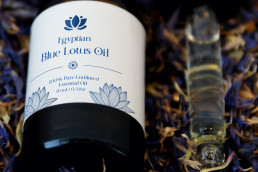
This recipe produces roughly 30 ml of a silky, lightweight eye cream built around pure blue lotus absolute, suitable for the delicate orbital skin where most conventional moisturisers feel too heavy. It is formulated at a 0.5 percent essential oil dilution, low enough for the thinnest skin on the face yet high enough for the aromatic constituents to earn their place. The finished cream should settle quickly, leave a soft floral signature around the temples, and work under or over a routine without pilling.
Table of Contents
- What You'll Need
- Equipment
- Ingredients (for 30 ml finished cream)
- Why This Formulation Works
- Step-by-Step Instructions
- How to Use Blue Lotus Eye Cream
- Storage and Shelf Life
- Variations
- Anhydrous eye balm (no preservative needed)
- Ultra-sensitive skin version
- Depuffing morning version
- Richer mature-skin version
- Common Mistakes to Avoid
- Frequently Asked Questions
- Where to Go From Here
- Begin With Genuine Blue Lotus
It is written and clinically reviewed by Antonio Breshears, ND, CCA, a Bastyr-trained naturopathic doctor and certified clinical aromatherapist. For the background science on dilution, carrier chemistry, and where blue lotus sits in a facial routine, the complete guide to blue lotus oil is the companion reference to this recipe.
What You’ll Need
The ingredient list is deliberately short. An eye cream lives or dies on the quality of its base, not the length of the formula. Good inputs produce a good product; adding more components to an eye cream rarely improves it and often raises the risk of irritation on an area that has almost no stratum corneum protection.
Equipment
- One 30 ml amber or cobalt glass jar with a wide mouth (airless pump jars are ideal if you have one)
- A small heatproof glass bowl or beaker
- A saucepan for a gentle water bath (bain-marie)
- A stainless steel or silicone mini whisk or a small electric milk frother
- A digital kitchen scale accurate to 0.1 gram
- A glass stirring rod or clean chopstick
- Disposable pipettes or a 1 ml glass dropper
- A clean spatula for decanting
- Isopropyl alcohol (70 percent or higher) and lint-free cloth for sanitising
Ingredients (for 30 ml finished cream)
- 10 g jojoba oil (Simmondsia chinensis)
- 4 g rosehip seed oil (Rosa canina), cold-pressed
- 3 g shea butter, refined or unrefined
- 1.5 g cetyl alcohol (plant-derived, to thicken without greasiness)
- 0.6 g emulsifying wax NF or Olivem 1000
- 9 g distilled water or hydrosol (rose, chamomile, or cornflower work beautifully)
- 0.5 g vegetable glycerine
- 0.3 g tocopherol (vitamin E, as antioxidant)
- 0.3 g broad-spectrum preservative such as Geogard ECT or Liquid Germall Plus
- 3 drops pure blue lotus absolute (this equals approximately 0.5 percent dilution)
If you prefer a simpler, preservative-free version that skips the water phase, a variation further down the page delivers a rich anhydrous balm for the same area.
Why This Formulation Works
Periorbital skin is roughly half the thickness of the rest of the face and contains very few sebaceous glands. It loses water rapidly, creases early, and reacts to almost any sensitiser more quickly than the cheek or forehead. That reality dictates the formulation choices here: a low 0.5 percent blue lotus dilution, a blend of linoleic- and oleic-rich oils to restore barrier lipids without occluding the area, and a small humectant load from glycerine to hold water in the outer layers.
Jojoba is technically a liquid wax ester, structurally close to human sebum, and behaves predictably on thin skin. Rosehip adds linoleic acid, carotenoids, and trans-retinoic acid precursors that support collagen turnover without the irritation profile of prescription retinoids. Shea butter contributes the cushioning, slightly occlusive feel that differentiates an eye cream from an eye serum. The emulsifier and cetyl alcohol together give the cream its clean pickup and non-greasy finish.
Blue lotus absolute sits in this base as an aromatic and phytochemical accent rather than as an active. Its flavonoids (apigenin, quercetin, kaempferol) have well-attested antioxidant behaviour in vitro, and the olfactory impression, a cool floral top softening into a honeyed, faintly balsamic heart, has a quietly parasympathetic effect that suits a nighttime eye routine. At 0.5 percent, you are well below the threshold of concern for most sensitive users while retaining a noticeable scent and antioxidant contribution.
Step-by-Step Instructions
- Sanitise everything. Wipe all equipment, the inside of the finished jar, and your work surface with 70 percent isopropyl alcohol and allow to air dry. Cosmetic contamination almost always traces back to skipped sanitation.
- Weigh the oil phase. Into one heatproof beaker, weigh the jojoba, rosehip, shea butter, cetyl alcohol, and emulsifying wax. Set this beaker into a water bath over low heat.
- Weigh the water phase. Into a second heatproof beaker, weigh the distilled water or hydrosol and the vegetable glycerine. Place this beaker alongside the first in the water bath.
- Heat both phases to 70 to 75 degrees Celsius. This is the window where emulsifying wax properly melts and disperses. Hold both phases there for around 20 minutes to heat-sanitise.
- Combine. Remove both from the heat. Pour the water phase slowly into the oil phase while whisking continuously with a mini electric frother. The mixture should turn opaque and creamy within 30 to 60 seconds.
- Cool and stir intermittently. Continue gentle stirring every few minutes as the cream cools. It will thicken noticeably below 40 degrees Celsius.
- Add the cool-down phase. Once the cream is at or below 40 degrees Celsius, add the tocopherol, preservative, and the 3 drops of blue lotus absolute. Stir thoroughly but gently for another minute to disperse.
- Decant. Transfer to the sanitised 30 ml jar using a clean spatula. Close immediately and label with the date of manufacture.
The finished cream should have a soft ivory colour, a faint floral-honeyed scent, and a texture that holds a peak briefly before relaxing back.
How to Use Blue Lotus Eye Cream
Apply in the evening, after cleansing and any watery serums, before any heavier facial oil or night cream. A grain-of-rice amount per eye is sufficient. Using your ring finger (the weakest of the four, which discourages dragging), dot the cream along the orbital bone, starting from the inner corner and working outward along the brow bone, then along the cheekbone under the eye. Tap gently until absorbed rather than rubbing. Avoid application directly onto the lash line or the inner rim of the eye.
Morning use is optional. Some users find the cream sits well under mineral sunscreen and concealer; others prefer a lighter eye gel during the day and reserve this richer formulation for night.
Storage and Shelf Life
Stored in a cool cupboard away from direct sunlight, a properly preserved eye cream in this format keeps well for 4 to 6 months. Airless pump packaging extends that slightly by preventing air and finger contact; a traditional jar is fine provided you use a small spatula rather than dipping fingers into the product. Refrigeration is not required but does no harm and can feel pleasant on tired eyes in summer.
Discard the cream immediately if you see any colour change, separation that does not re-emulsify with gentle stirring, or any change in scent from floral-honeyed to sour, cheesy, or sharply fatty. These are signs that the preservative has been overwhelmed.
Variations
Anhydrous eye balm (no preservative needed)
If you prefer to avoid a water phase entirely, combine 12 g jojoba, 6 g rosehip, 8 g shea butter, 3 g cetyl alcohol or beeswax pastilles, 0.3 g tocopherol, and 3 drops blue lotus absolute. Melt the solid ingredients gently, whisk, then pour into a 30 ml tin. Shelf life extends to 9 to 12 months. The trade-off is a heavier feel on the skin and slower absorption.
Ultra-sensitive skin version
Reduce blue lotus absolute to 2 drops (roughly 0.3 percent) and substitute chamomile hydrosol for the water phase. Skip the rosehip entirely and replace with an equal weight of squalane, which is one of the best-tolerated facial oils available. This variant suits skin that reacts to botanicals generally.
Depuffing morning version
Replace 2 g of the jojoba with 2 g of caffeine-infused jojoba (easily made by steeping ground coffee in jojoba for two weeks and straining). Add 1 drop of Roman chamomile alongside the blue lotus. The caffeine provides transient vasoconstriction for morning puffiness; the chamomile reinforces the calming olfactory profile.
Richer mature-skin version
Increase shea butter to 5 g and add 1 g of squalane to the oil phase. This produces a denser, more cushioning cream suited to very dry or visibly crepey periorbital skin. The blue lotus ratio stays at 0.5 percent.
Common Mistakes to Avoid
The most frequent failures in home eye-cream making are all preventable. The first is overheating the oil phase past 80 degrees Celsius, which degrades the emulsifier and produces a thin, unstable cream that will separate within days. The second is adding the blue lotus absolute during the heating stage; aromatic compounds are volatile and benefit from being reserved for the cool-down phase under 40 degrees Celsius.
A third mistake is skipping the preservative because the formula “feels clean”. Any product containing water, hydrosol, or botanical extract in meaningful proportion will grow microorganisms within a week or two without a broad-spectrum preservative, and the area around the eyes is the last place you want to introduce unchecked bacterial or fungal contamination. A fourth is using too high a blue lotus concentration; periorbital skin does not reward you for generosity with essential oils.
Finally, avoid applying the cream too close to the lash line. Essential oil migration into the tear film causes stinging, redness, and in rare cases transient blurring. Stay on the orbital bone.
Frequently Asked Questions
Can I use blue lotus absolute directly on the eye area without a base?
No. Neat application of any essential oil or absolute around the eyes is not appropriate. The skin is too thin, the tear film is too close, and the risk of sensitisation is too high. Always dilute into a suitable cream or oil base.
Is 0.5 percent blue lotus enough to do anything useful?
Yes, in this context. Eye-area formulations are deliberately restrained. At 0.5 percent you still receive the flavonoid antioxidant contribution and the olfactory calming effect, which is the main reason blue lotus belongs in a nighttime routine in the first place.
Can I substitute blue lotus oil from a different brand?
You can, but pay attention to whether the product is a true absolute, a dilution in jojoba, or a blend. A pre-diluted product would require significantly more drops to reach the same aromatic concentration. The recipe above assumes pure, undiluted blue lotus absolute.
Is this recipe safe during pregnancy?
Blue lotus oil is not recommended during pregnancy or breastfeeding. For expectant or nursing readers, omit the blue lotus entirely and either leave the base unscented or use a single drop of Roman chamomile, which has a better-established safety profile in pregnancy at low dilutions.
What if I do not have emulsifying wax?
You cannot reliably make a stable water-in-oil eye cream without an emulsifier. If you do not want to source one, use the anhydrous eye balm variation above, which bypasses the water phase entirely and does not require emulsification.
Why jojoba rather than a cheaper oil?
Jojoba’s wax-ester structure mimics human sebum more closely than any triglyceride oil. It does not oxidise at the rate of nut or seed oils, which matters for a product stored for months and used on delicate skin. Sweet almond or apricot kernel will work but shorten the usable shelf life.
Can I patch test this formulation?
Yes, and you should. Apply a small amount to the inside of the forearm or behind the ear for 24 hours before applying near the eye. Redness, itching, or swelling means the formulation is not for you, usually because of sensitivity to one of the botanical components rather than the blue lotus itself.
Will this cream remove makeup?
No. This is a leave-on treatment cream applied after cleansing. Trying to use it as a makeup remover wastes the product and introduces mascara and eyeliner residues that shorten its shelf life.
Can I use this cream in the morning under sunscreen?
Most users tolerate it well under mineral SPF. If you find it pills or feels too heavy in daytime, the depuffing morning variation is lighter and more suited to layering under sun protection and makeup.
Does blue lotus help dark circles?
Evidence for any topical botanical reversing true periorbital hyperpigmentation is modest at best. This cream supports the barrier and delivers antioxidants, which can improve the appearance of tired or dehydrated skin. Genuine pigmented circles usually have vascular or genetic origins that topical products address only at the margins.
Where to Go From Here
If this is your first home-made facial formulation, take your time with the sanitation and temperature steps; those two variables matter more than any ingredient choice. Once you have made the base version successfully, the variations give you a path to tailor the cream to your own skin and season. For the broader context of how blue lotus behaves across the face, the scalp, and the body, and for the chemistry underpinning the choices made here, the complete guide to blue lotus oil covers everything from extraction methods to safety in more depth than any single recipe can.

Antonio Breshears
Antonio Breshears is a renowned expert in holistic medicine and beauty, with over 25 years of research experience dedicated to uncovering the secrets of nature's most powerful remedies. Holding a degree in Naturopathic Medicine, Antonio's passion for healing and well-being has driven him to explore the intricate connections between mind, body, and spirit.
Over the years, Antonio has become a respected authority in the field, helping countless individuals discover the transformative power of plant-based therapies, including essential oils, herbs, and natural supplements. He has authored numerous articles and publications, sharing his wealth of knowledge with a global audience seeking to improve their overall health and well-being.
Antonio's expertise extends to the realm of beauty, where he has developed innovative, all-natural skincare solutions that harness the potency of botanical ingredients. His formulations embody his deep understanding of the healing properties found in nature, providing holistic alternatives for those seeking a more balanced approach to self-care.
With his extensive background and dedication to the field, Antonio Breshears is a trusted voice and guiding light in the world of holistic medicine and beauty. Through his work at Pure Blue Lotus Oil, Antonio continues to inspire and educate, empowering others to unlock the true potential of nature's gifts for a healthier, more radiant life.