Blue lotus oil has a smaller but still meaningful role in hair and scalp care than it does in skincare, because hair itself is not a living tissue and the absolute’s mechanisms of action are mostly scalp-focused rather than strand-focused. Done well, though, the oil supports scalp health, helps with stress-related hair dysfunction, and contributes to hair-ritual practices that sustain consistent care over time. This pillar covers the full territory: how blue lotus actually interacts with hair and scalp, which conditions it genuinely supports, how to match it to different hair types, what formulations work for which purposes, and what it cannot do.
Table of Contents
- How Blue Lotus Oil Works on Hair and Scalp
- Conditions Blue Lotus Oil Helps With
- Matching Blue Lotus Oil to Your Hair Type
- Fine or Straight Hair
- Thick or Coarse Hair
- Curly Hair
- Afro and Textured Hair
- Oily Hair and Scalp
- Dry Hair
- Application Methods
- Scalp Massage
- Pre-Wash Oiling
- Leave-In Treatment
- Hair Mask
- Dilution Guidance for Hair and Scalp
- Carrier Oil Selection for Hair
- Simple Starter Recipe
- Realistic Timeframes for Results
- What Blue Lotus Oil Does Not Do for Hair
- Safety for Hair and Scalp Use
- Frequently Asked Questions
- Where to Go From Here
- For Hair That Earns Its Ritual
It is written and clinically reviewed by Antonio Breshears, ND, CCA, a Bastyr-trained naturopathic doctor and certified clinical aromatherapist. For the underlying chemistry, our pillar on chemical composition and therapeutic properties is the technical reference; for the dilution mathematics, our carrier oil pairings pillar.
How Blue Lotus Oil Works on Hair and Scalp
Four mechanisms matter, and the distinction between hair and scalp is important because the oil primarily acts on the scalp (living tissue) rather than on the hair shaft itself (dead protein structure).
Scalp circulation and inflammation. The mild anti-inflammatory action of the flavonoid fraction (apigenin, quercetin, kaempferol) supports scalp health, particularly in stress-reactive scalp conditions and mild inflammatory dandruff. Improved scalp comfort creates better conditions for hair follicle function over time. This is the clearest mechanism for hair outcomes that actually depend on scalp biology.
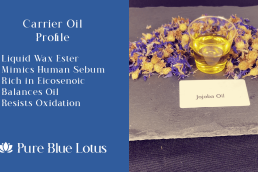
Sebum regulation. The absolute’s fatty-acid fraction, delivered through scalp massage, can help balance sebum production in users whose scalps run either too oily (stress-reactive excess sebum) or too dry (stripped scalp from frequent washing or harsh products). The effect is modest and depends on appropriate carrier selection; blue lotus in jojoba closely resembles the scalp’s own sebum chemistry.
Stress-component support for hair dysfunction. A substantial amount of hair trouble (telogen effluvium shedding, stress-aggravated alopecia patterns, anxiety-driven trichotillomania, stress-related dandruff) has a cortisol and sympathetic-arousal component. The calming aromatic dimension of blue lotus use supports this layer, with effects on hair that accumulate over weeks as the stress physiology settles. Easy to dismiss as indirect, but clinically real.
Ritual and compliance reinforcement. Hair care benefits more than almost any other personal care category from consistency. A pleasant, aromatically rich oil ritual is more likely to be sustained over months and years than an efficient but unpleasant one. The compliance effect of a scent users actually enjoy often produces better real-world outcomes than a technically superior product used inconsistently.
Conditions Blue Lotus Oil Helps With
The specific hair and scalp conditions where blue lotus has a meaningful supporting role.
Scalp health generally. The default starting point: a scalp massage oil with blue lotus supports overall scalp comfort, balance, and circulation. See blue lotus oil for scalp health.
Hair growth support. Not a hair-growth miracle ingredient; the evidence for any essential oil causing dramatic hair regrowth is thin at best, with minoxidil remaining the only well-established topical for androgenetic alopecia. Blue lotus supports the scalp conditions that hair growth depends on, and some users notice modest improvements in shedding and hair density over three to six months of consistent scalp massage practice. See blue lotus oil for hair growth.
Hair loss and shedding. A supportive role alongside clinical evaluation of the underlying cause. Stress-related telogen effluvium, the most common cause of generalised shedding, responds particularly well to the stress-component dimension of blue lotus practice. See blue lotus oil for hair loss.
Dandruff. Mild to moderate dandruff with stress or inflammatory components responds to the anti-inflammatory and calming aromatic dimensions. Not a replacement for medicated shampoos (ketoconazole, selenium sulphide, zinc pyrithione) in cases of moderate to severe seborrhoeic dermatitis, but a useful adjunct. See blue lotus oil for dandruff.
Grey hair and premature greying. Honest answer: blue lotus does not reverse greying. Greying is primarily genetic and stress-influenced, and no topical oil has been demonstrated to restore pigment to greying hair. The oil’s role here is comfort, ritual, and stress-regulation support, which may have marginal effects on stress-accelerated greying. See blue lotus oil for greying hair.
Damaged hair repair. The oil contributes to hair shaft conditioning through the fatty-acid fraction, smoothing cuticle surfaces and reducing frizz. Not a “repair” in the strict sense (damaged hair cannot be restored to undamaged state), but a meaningful contribution to appearance and manageability. See blue lotus oil for damaged hair.
Matching Blue Lotus Oil to Your Hair Type
Hair type (texture, porosity, density, curl pattern) determines both the dilution percentage and the right carrier and application approach.
Fine or Straight Hair
Fine hair is easily weighed down by oils, so lighter formulations and smaller application amounts work best. Use 1 to 2 percent blue lotus in a light carrier (jojoba, fractionated coconut, or squalane). Apply primarily to the scalp as a pre-wash massage (leave for 30 minutes, then wash out), rather than leaving on as a leave-in treatment.
Thick or Coarse Hair
Thick hair tolerates heavier formulations and leave-in applications. 2 to 3 percent blue lotus in a richer carrier (sweet almond, argan, or a blend). Scalp massage and ends treatment both work; the hair will absorb more oil before looking weighed down.
Curly Hair
Curly hair particularly benefits from oil treatments because the natural oils from the scalp travel down the strand less efficiently than in straight hair, leaving the ends drier and more prone to damage. A 2 to 3 percent blue lotus oil in argan or jojoba, applied as a leave-in to the mid-length and ends, supports curl definition and moisture retention. See blue lotus oil for curly hair.
Afro and Textured Hair
Afro and textured hair shares many of the moisture-challenges of curly hair but at greater intensity, and benefits from richer oil treatments applied more frequently. Pre-poo oiling (applying oil before washing to protect against the drying effect of shampoo), scalp massage, and leave-in conditioning all have a place. See blue lotus oil for Afro and textured hair.
Oily Hair and Scalp
Counter-intuitively, oily scalps often benefit from oil treatment because the excess sebum is frequently a response to over-stripping of the natural oils (often from frequent or harsh washing). A light blue lotus oil (1 percent in jojoba) applied to the scalp as a pre-wash treatment can help balance sebum production over weeks of practice. Start low and observe.
Dry Hair
Dry hair benefits from multiple touchpoints: scalp massage for sebum production, pre-wash oiling for protection, and leave-in ends treatment for manageability. A 2 to 3 percent blue lotus in a richer carrier blend (argan, sweet almond, and jojoba) covers all three uses.
Application Methods
Four main application approaches, each suiting different goals.
Scalp Massage
The primary therapeutic application. A few drops of blue lotus oil blend (2 percent dilution) are warmed between the palms and massaged into the scalp with fingertips for five to ten minutes, working in small circular motions across the whole scalp. This supports circulation, distributes the active fraction to the scalp tissue, and integrates the stress-regulation benefit of the massage itself with the aromatic and pharmacological benefits of the oil.
Can be done as a pre-wash ritual (twice weekly is a good rhythm) or as a leave-in practice for users with drier scalps. The former washes out the oil afterwards; the latter keeps it on overnight for greater effect.
Pre-Wash Oiling
Apply blue lotus oil blend to the hair (with more at the ends, less at the roots) 30 to 60 minutes before washing. The oil coats the hair shaft, reducing the drying effect of shampoo surfactants and providing a protective barrier during the wash. Particularly valuable for curly, textured, dry, and damaged hair.
Leave-In Treatment
A small amount of oil (one to two drops for fine hair, three to four for thick or textured hair) is rubbed between the palms and smoothed through damp hair after washing, focusing on the mid-lengths and ends. Avoids the roots (which would make fine hair look greasy). The oil stays on until the next wash.
Hair Mask
A more intensive, periodic treatment. A larger volume of blue lotus oil blend is applied generously throughout the hair, covered with a warm towel or shower cap, and left for 30 minutes to 2 hours before washing out. Used weekly or fortnightly for deep conditioning. See our blue lotus oil hair mask article for specific recipes.
Dilution Guidance for Hair and Scalp
Hair applications tolerate slightly higher dilutions than facial skincare because scalp skin is thicker than facial skin and the application is often rinsed out rather than left indefinitely.
- Scalp massage (leave-in or pre-wash): 2 to 3 percent blue lotus in carrier.
- Hair mask: 2 to 3 percent, applied generously and rinsed after.
- Leave-in ends treatment: 1 to 2 percent in a light carrier.
- Beard oil: 2 to 3 percent (the skin under a beard is facial skin, but the beard protects it somewhat). See blue lotus oil for beards.
For sensitive scalps or users new to aromatic scalp care, start at 1 percent and work up over two to three weeks. Any irritation, redness, or unusual itching means stop immediately and reassess.
Carrier Oil Selection for Hair
The carrier matters substantially for hair applications because it makes up the bulk of what actually coats the hair and scalp.
Jojoba is the most versatile choice, suiting all hair types because it closely resembles scalp sebum. Long shelf life, light enough for fine hair, substantial enough for textured hair at the right ratio.
Argan is particularly suited to dry, damaged, or coarse hair. Richer than jojoba, with its own established hair-care reputation.
Sweet almond is a classic scalp massage carrier, balancing weight and absorption well. Shorter shelf life than jojoba.
Coconut oil (unrefined, solid at room temperature) is exceptional for pre-wash oiling of curly and textured hair because it penetrates the hair shaft more effectively than most oils. Its use in leave-in applications is limited because it solidifies in cooler conditions.
Fractionated coconut oil remains liquid and is a lighter alternative for year-round use.
Castor oil is a traditional scalp-massage carrier with a reputation for supporting hair growth. Thick and heavy, best blended (20 to 30 percent castor in a lighter base) rather than used alone.
Our carrier oil pairings pillar has the full detail.
Simple Starter Recipe
For users who want a single formulation to try before exploring further.
Scalp and hair treatment oil (30 ml):
- 20 ml jojoba oil (main carrier)
- 8 ml argan oil (richness)
- 2 ml castor oil (scalp circulation)
- 18 drops blue lotus absolute (approximately 3 percent)
Combine in a dark glass bottle with a dropper, shake gently to mix. Apply five to ten drops to the scalp and massage for five minutes. Leave in for 30 minutes (or overnight for deeper treatment) before washing out. Shelf life: six to nine months.
This covers scalp massage, pre-wash oiling, and occasional hair mask use with a single bottle. Once comfortable with the basic practice, explore the condition-specific formulations in the cluster articles.
Realistic Timeframes for Results
Hair care operates on slower timescales than skincare because hair grows slowly and the underlying biology takes time to respond to interventions. Honest expectations.
- Immediate (first use): improved hair-feel, better manageability, the aromatic experience. No visible change to hair structure.
- Two to four weeks: improved scalp comfort, reduced itch or flaking if present, gentler hair-feel with repeated use.
- One to two months: more consistent scalp comfort, reduced stress-component shedding, accumulating effects of the hair ritual practice.
- Three to six months: more substantial effects on shedding patterns, possible modest improvement in hair density in users whose starting state had significant stress or scalp-inflammation components, more noticeable difference in hair appearance from sustained conditioning.
- Beyond six months: effects plateau; ongoing maintenance rather than continued improvement. Long-term use sustains the gains rather than producing new ones.
Users expecting hair regrowth on the scale that minoxidil produces, or visible thickness changes within weeks, will be disappointed. Users approaching blue lotus as scalp-comfort and ritual support, with modest hair benefits over time, get the value the oil actually delivers.
What Blue Lotus Oil Does Not Do for Hair
Honest about the limits.
- It does not regrow hair in androgenetic alopecia. Minoxidil, finasteride (for men), and spironolactone (for some women) are the evidence-based interventions for male and female pattern hair loss. Blue lotus may provide comfort and scalp-health support alongside these but does not substitute for them.
- It does not “repair” damaged hair structurally. Once the hair shaft is damaged (from heat, chemical processing, or mechanical stress), the damage is permanent until the affected hair grows out. The oil can improve the appearance and manageability of damaged hair, but does not rebuild the internal protein structure.
- It does not prevent or reverse greying. Greying is primarily genetic and not reversible with any current topical intervention.
- It does not substitute for medicated shampoo in significant dandruff. Moderate to severe seborrhoeic dermatitis responds to antifungal (ketoconazole) or antiseborrhoeic (selenium sulphide, zinc pyrithione) shampoos. Blue lotus is an adjunct, not a replacement.
- It does not treat autoimmune hair loss (alopecia areata). This condition requires clinical evaluation and, often, corticosteroid or other targeted treatment.
Safety for Hair and Scalp Use
- Patch test before first use on the inner forearm, even if you have used blue lotus on face skin without issue. Scalp skin can occasionally react differently.
- Avoid during pregnancy and breastfeeding.
- Not for children under five. Older children: use at reduced dilution (1 percent) and only for specific indications.
- Keep out of eyes. During scalp massage, the oil can migrate toward the hairline; rinse any contact with a carrier oil followed by water.
- Do not apply to broken scalp skin. Scalp abrasions, acne breakouts, or seborrhoeic flares with cracks are best left alone until the skin has settled.
- Storage. Hair oil blends last six to nine months; longer in jojoba-dominant carriers, shorter in sweet almond or rosehip.
Full safety detail is in our safety, side effects and precautions reference.
Frequently Asked Questions
Is blue lotus oil good for hair?
Yes, within a modest set of realistic expectations. It supports scalp health, provides stress-component support for stress-related hair dysfunction, contributes to hair-shaft conditioning, and functions as a pleasant ritual-supporting aromatic. It is not a miracle hair-growth ingredient.
Does blue lotus oil make hair grow?
Indirectly and modestly, by supporting scalp health and stress regulation. Not a strong hair-growth intervention; minoxidil remains the only well-established topical for androgenetic alopecia. Some users notice reduced shedding and modest density improvements over three to six months of consistent use.
How often should I use blue lotus oil on my hair?
Scalp massage once or twice weekly is a good rhythm for most users. Pre-wash oiling can be done every wash. Leave-in ends treatment can be applied daily in small amounts for curly, textured, or very dry hair. Consistency matters more than frequency.
Can I use blue lotus oil on dry hair or damp hair?
Both work, for different purposes. Dry hair: better absorption for leave-in treatments. Damp hair (post-wash): the oil seals in the water from the wash, supporting moisture retention. Damp-hair application is often preferred for curly and textured hair.
Does blue lotus oil cause greasy hair?
At appropriate dilution and application, no. The common cause of greasy hair after oil use is applying too much oil, applying it too close to the roots on fine hair, or not washing it out thoroughly when it is used as a pre-wash treatment. Start with smaller amounts and adjust.
Can I leave blue lotus oil in my hair overnight?
Yes, for a deeper treatment. Apply to the scalp and mid-lengths, protect the pillow with a towel or silk cap, and wash out in the morning. Particularly valuable weekly for dry or damaged hair.
What is the best carrier oil for blue lotus in hair?
Jojoba is the most versatile for all hair types. Argan for dry or damaged hair. Coconut oil (unrefined) for pre-wash oiling of curly and textured hair. Castor oil blended with a lighter base for scalp circulation support.
Can blue lotus oil help with dandruff?
Mild to moderate dandruff with stress or inflammatory components, yes, as an adjunct to regular scalp care. Not a replacement for medicated shampoos in significant seborrhoeic dermatitis. See our dandruff article.
Will blue lotus oil help with hair loss?
As a supporting adjunct, yes, particularly for stress-related shedding (telogen effluvium) and scalp-inflammation components of hair loss. Not a primary treatment for androgenetic alopecia, which warrants clinical interventions. See our hair loss article.
Is blue lotus oil safe to use on coloured or chemically treated hair?
Yes, with no expected interaction with dyes, relaxers, or perms. The oil conditions rather than strips, so it is compatible with chemically treated hair and can support the damage-management these treatments require.
Can men use blue lotus oil on beards?
Yes, and it is a genuinely useful beard oil ingredient. Dilution around 2 to 3 percent in jojoba or a jojoba-argan blend, applied to the beard and underlying skin daily or every other day. See our beards article.
Does blue lotus oil prevent grey hair?
No. Greying is primarily genetic and not prevented or reversed by any current topical intervention. The oil can support scalp health and stress regulation, which may marginally slow stress-accelerated greying, but the effect is small.
Where to Go From Here
For condition-specific protocols, use the cluster article links above. For the chemistry, our pillar on chemical composition and therapeutic properties. For the carrier and dilution framework, the carrier oil pairings pillar. For the hair mask recipe specifically, our hair mask article. For safety, the safety, side effects and precautions reference. For storage of your hair oil blends, storage and shelf life. For the broader introduction, the complete guide. Everything on this site is hosted at Pure Blue Lotus Oil.

Antonio Breshears
Antonio Breshears is a renowned expert in holistic medicine and beauty, with over 25 years of research experience dedicated to uncovering the secrets of nature's most powerful remedies. Holding a degree in Naturopathic Medicine, Antonio's passion for healing and well-being has driven him to explore the intricate connections between mind, body, and spirit.
Over the years, Antonio has become a respected authority in the field, helping countless individuals discover the transformative power of plant-based therapies, including essential oils, herbs, and natural supplements. He has authored numerous articles and publications, sharing his wealth of knowledge with a global audience seeking to improve their overall health and well-being.
Antonio's expertise extends to the realm of beauty, where he has developed innovative, all-natural skincare solutions that harness the potency of botanical ingredients. His formulations embody his deep understanding of the healing properties found in nature, providing holistic alternatives for those seeking a more balanced approach to self-care.
With his extensive background and dedication to the field, Antonio Breshears is a trusted voice and guiding light in the world of holistic medicine and beauty. Through his work at Pure Blue Lotus Oil, Antonio continues to inspire and educate, empowering others to unlock the true potential of nature's gifts for a healthier, more radiant life.