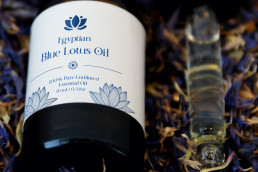
If you have found your way to this page, the question you are asking is probably a simple one: does blue lotus oil actually help with sleep, and if so, how should you use it? The short answer is yes, consistently and for most people, and the detail matters more than the reading list suggests. This article is the practical companion to our wider pillar on the subject, focused tightly on sleep support and nothing else.
Table of Contents
- Does Blue Lotus Oil Work for Sleep?
- Which Sleep Problems Respond Best
- How to Use Blue Lotus Oil for Sleep
- The Pre-Bed Diffusion
- The Temple Anointing
- The Pillow Spray
- The Evening Bath
- Finding Your Dose
- What to Expect in the First Three Weeks
- Troubleshooting
- Blends and Pairings
- Safety and Cautions
- Frequently Asked Questions
- Where to Go From Here
- Begin Your Evening Practice
It is written and clinically reviewed by Antonio Breshears, ND, CCA, a Bastyr-trained naturopathic doctor and certified clinical aromatherapist. For the fuller treatment of mechanisms, dream work, and cultural history, return to the pillar guide on blue lotus oil for sleep and dreams at any point.
Does Blue Lotus Oil Work for Sleep?
In most cases, yes. Blue lotus oil helps the majority of users fall asleep more easily, sleep more continuously, and wake more rested, provided it is used consistently and at a sensible dose. Three mechanisms converge to produce this effect.
The first is pharmacological. Blue lotus contains a pair of alkaloids, aporphine and nuciferine, that quiet the dopaminergic noise most of us carry into the evening. Alongside them sit flavonoids, particularly apigenin, which binds gently to the same central nervous system receptors that benzodiazepine medications target more aggressively. The effect is mild but real, and closer to a well-brewed chamomile than to a sedative.
The second is olfactory. Scent is the only sense that reaches the limbic brain without passing through the thalamus first, which means a consistent bedtime aroma becomes a conditioning cue for the parasympathetic state. After two to three weeks of nightly use, the scent alone begins to cue sleep physiology, much as a particular coffee aroma cues alertness in the morning.
The third is behavioural. The act of stopping, dispensing the oil, and breathing consciously at the same point each evening draws a line under the day. That small piece of ritual does more work than most people expect. For the molecular detail, our guide to blue lotus oil chemistry and therapeutic properties is the deeper read.
Which Sleep Problems Respond Best
Blue lotus is not a cure-all, and it is useful to be clear about where it works well and where it does not.
It responds strongly in the following patterns:
- Sleep onset difficulty, where the body is tired but the mind will not settle. This is its single most reliable indication. Our article on blue lotus oil for insomnia covers the clinical case in full.
- Anxiety-driven wakefulness, where sleep is disrupted by racing thoughts, tight breathing, or a wound-up nervous system. The alkaloid fraction’s gentle quieting is particularly well suited here.
- Light, broken sleep, where the issue is not falling asleep but staying asleep through the night. A low, sustained aromatic presence in the room is usually more effective than a larger single dose at bedtime.
- Circadian disruption from screens, where evening blue light has pushed the natural sleep window later. Blue lotus will not reset the clock on its own, but it supports the other practices (reduced evening screens, dim warm lighting) that do.
- Shift-work adjustment, where the sleep window falls at unusual hours. Used as an olfactory cue tied to the start of rest, rather than to a specific time of day, it can help the body recognise when to switch states.
It is less effective, or not effective, in these patterns:
- Sleep apnea and other obstructive sleep disorders. Blue lotus does not address airway dynamics. A proper clinical workup comes first.
- Severe, chronic clinical insomnia, where blue lotus should be seen as a supportive addition to a wider treatment plan, not a replacement for it.
- Alcohol-related sleep fragmentation. Alcohol causes a specific kind of late-night awakening that no aromatic will fix. The fix is the alcohol itself.
- Untreated thyroid, anaemia, or hormonal drivers, which mimic insomnia and respond only to their underlying cause.
How to Use Blue Lotus Oil for Sleep
There is no single correct method. Four approaches cover most use cases, and the best results usually come from combining two of them into a short, repeatable evening sequence.
The Pre-Bed Diffusion
Two to four drops in an ultrasonic diffuser, started thirty to forty minutes before you intend to sleep. By the time you lie down, the scent should be present in the room at a level you can notice without having to concentrate on it. Smaller bedrooms take two drops. Larger rooms take four. Ultrasonic diffusion is strongly preferable to heat-based diffusion, which damages the oil’s delicate top notes. More on this in our guide to blue lotus oil diffuser techniques.
The Temple Anointing
A single drop of blue lotus diluted into a pea-sized amount of jojoba, fractionated coconut, or cold-pressed apricot kernel oil. Applied to the temples and the pulse points at the wrists, immediately before lying down. This is the most direct method and suits sleep-onset difficulty particularly well. Our article on carrier oil pairings sets out the dilution maths in full.
The Pillow Spray
A small 30ml mist bottle containing distilled water, a teaspoon of witch hazel or a dash of vodka as an emulsifier, and two to three drops of blue lotus oil. Shaken well and misted once on the pillow ten minutes before sleep. This is the gentlest method and the one most often chosen by people who find the diffuser scent too prominent. The full formulation is in our pillow spray recipe.
The Evening Bath
Five to ten drops of blue lotus, dispersed first into a tablespoon of carrier oil or Polysorbate 20, then added to a full warm bath taken forty-five minutes before sleep. Never add essential oils neat to bathwater; they do not disperse, and they concentrate against the skin in unpredictable ways. This method pairs the aromatic effect with the well-documented sleep-inducing effect of the post-bath temperature drop.
Finding Your Dose
Most people get their best results at the low end of the range. Two drops in the diffuser, one drop temple-anointed, and a single pillow-spray mist is a complete evening practice for a great many users. Only move up if the lower dose has clearly done nothing for a week. Blue lotus is a deep oil, and more is rarely better.
A useful rule of thumb: if you can smell the oil without having to search for it, but do not find yourself focusing on it once you lie down, the dose is right. If the scent feels heavy or intrusive, reduce by a drop. If you cannot detect it at all, add a drop and move the diffuser closer.
What to Expect in the First Three Weeks
Blue lotus tends to work in a predictable arc.
In the first week, you are likely to notice the scent more than the effect. Sleep may feel slightly softer on the first or second night. Some users report unusually vivid dreams in this period; this is normal and typically settles. Do not assume it is not working because the effect is modest.
In the second week, the olfactory conditioning begins to register. You will notice the scent starting to cue a mild shift as soon as the diffuser comes on. Sleep onset typically eases noticeably by this point.
By the third week, the scent has become a full parasympathetic cue. This is the point at which users most commonly describe the oil as working properly. The practice, at this stage, becomes self-reinforcing: the scent triggers the physiology, and the physiology rewards the ritual.
Troubleshooting
If you are three weeks in and the oil seems to be doing nothing, check three things before concluding it is not for you.
- The oil itself. Most commercial “blue lotus oil” is fragrance oil with no real plant material in it at all. A genuine absolute carries an identifiable alkaloid and flavonoid profile on a GC-MS report, and a fragrance substitute carries none. Our guide to choosing high quality blue lotus oil walks through how to tell.
- The timing. Diffusion started at bedtime is too late. The oil’s effect depends on the scent being established in the room before you lie down.
- The underlying cause. If anxiety, alcohol, caffeine, or a hormonal driver is running the show, the oil will be working against it rather than with it. Addressing the underlying driver is the first move; the oil is an adjunct.
Conversely, if the oil is working too well, and you find yourself drowsy the following morning, reduce the dose by a drop and reassess. Morning drowsiness from blue lotus almost always indicates an oversized evening dose rather than an inherent problem with the oil.
Blends and Pairings
Blue lotus is a beautiful single-note oil but combines well with three other aromatics that are worth knowing.
- With lavender, in roughly equal parts, for gentle sleep onset. The brighter, more familiar sedation of lavender softens the heavier floral depth of the lotus.
- With frankincense, in a 2:1 ratio favouring the lotus, for meditative pre-sleep practice. Both oils have long histories in contemplative tradition, and the pairing is deeply calming.
- With vetiver, again 2:1 favouring the lotus, for restless or broken sleep. Vetiver’s earthy, grounding note anchors the night in a way blue lotus alone does not quite achieve.
Safety and Cautions
Blue lotus oil, used at appropriate dilutions, has a long record of safe traditional use. Three cautions are worth repeating here. It is avoided in pregnancy and breastfeeding as a matter of professional caution. It should be discussed with a prescriber before use by anyone on dopaminergic medications for Parkinson’s, schizophrenia, or related conditions. And it is not a food product; the essential oil and absolute are for aromatic and topical use only, never for ingestion. The full safety review lives in our dedicated article on blue lotus oil safety, side effects and precautions, and related use in broader stress and anxiety contexts is covered in the pillar on blue lotus oil health and wellness benefits.
Frequently Asked Questions
How quickly does blue lotus oil work for sleep?
The first-night effect is usually mild. Most users notice a meaningful improvement by the end of the first week, and the full conditioning effect settles in by the end of the third week of nightly use.
How many drops of blue lotus oil should I use for sleep?
Two to four drops in an ultrasonic diffuser is the starting range for a standard bedroom. One drop is sufficient for a temple anointing when diluted into a pea-sized amount of carrier oil. More is rarely better with this particular oil.
Can I use blue lotus oil with melatonin?
There is no known pharmacological conflict between blue lotus and melatonin. Many users combine the two successfully. As with any combination, start at the lower end of each dose to gauge the total effect before building up.
Will blue lotus oil make me too drowsy?
Rarely, and usually only at doses well above the recommended range. Morning drowsiness, if it occurs, almost always indicates an oversized evening dose. Reduce by a drop and reassess.
Is blue lotus oil addictive?
No. Blue lotus does not act on reward pathways in the way habit-forming substances do. It can become a valued part of an evening ritual, but that is a different matter from physical or psychological dependence.
Should I use blue lotus oil every night?
Yes. Consistent nightly use is the method that produces the best results, because it establishes the olfactory conditioning that makes the oil most effective. Taking breaks tends to slow the development of the conditioning response.
Can I combine blue lotus oil with a sleep blend I already use?
In most cases, yes, provided the existing blend is well balanced and does not already contain heavy sedating oils at high doses. If in doubt, introduce the blue lotus at a half-dose for the first week and observe how the combined effect sits.
Does blue lotus oil improve deep sleep or just sleep onset?
Both, though the effect on sleep onset is stronger and more consistent. Improvements in deep sleep continuity tend to appear after the first two weeks of regular use, as the olfactory conditioning strengthens.
What carrier oil is best for blue lotus at bedtime?
Jojoba is the practitioner’s default because it is stable, non-greasy, and well-tolerated by most skin. Fractionated coconut oil is a lighter alternative. Cold-pressed apricot kernel is an elegant choice for those who want the softest finish.
Can I take blue lotus oil internally for sleep?
No. Blue lotus essential oil and absolute are for aromatic and topical use only. Blue lotus preparations intended for internal use (teas, alcohol tinctures, infused wines) are different products and are not interchangeable with the oil.
Where to Go From Here
If your particular difficulty is clinical insomnia, continue with our article on blue lotus oil for insomnia. If dream work rather than sleep quality is what brought you to the plant, our companion articles on lucid dreaming and dream recall pick up that thread. For the wider picture on the oil, return to our complete guide to blue lotus oil, or visit the video library for short films on evening practice. Everything on this site is hosted at Pure Blue Lotus Oil.

Antonio Breshears
Antonio Breshears is a renowned expert in holistic medicine and beauty, with over 25 years of research experience dedicated to uncovering the secrets of nature's most powerful remedies. Holding a degree in Naturopathic Medicine, Antonio's passion for healing and well-being has driven him to explore the intricate connections between mind, body, and spirit.
Over the years, Antonio has become a respected authority in the field, helping countless individuals discover the transformative power of plant-based therapies, including essential oils, herbs, and natural supplements. He has authored numerous articles and publications, sharing his wealth of knowledge with a global audience seeking to improve their overall health and well-being.
Antonio's expertise extends to the realm of beauty, where he has developed innovative, all-natural skincare solutions that harness the potency of botanical ingredients. His formulations embody his deep understanding of the healing properties found in nature, providing holistic alternatives for those seeking a more balanced approach to self-care.
With his extensive background and dedication to the field, Antonio Breshears is a trusted voice and guiding light in the world of holistic medicine and beauty. Through his work at Pure Blue Lotus Oil, Antonio continues to inspire and educate, empowering others to unlock the true potential of nature's gifts for a healthier, more radiant life.