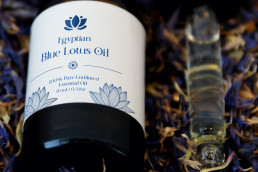
Sunburn is an inflammatory injury, not merely a cosmetic inconvenience, and the aftercare you choose in the first 72 hours shapes how your skin heals over the following weeks. This article examines whether blue lotus oil sunburn aftercare is a sensible choice, where it genuinely helps, and where it falls short of what a serious burn requires. It is written for readers who want a thoughtful, botanically literate answer rather than a marketing one.
Table of Contents
- What Sunburn Actually Is
- How Blue Lotus Oil Helps With Sunburn Aftercare
- Flavonoid-driven anti-inflammatory activity
- Supporting the barrier during re-epithelialisation
- Parasympathetic and olfactory comfort
- How to Use Blue Lotus Oil for Sunburn
- A gentle post-acute aftercare blend
- Aromatic support for rest
- What to Expect: Realistic Timeframes
- When Blue Lotus Oil Is NOT the Right Choice
- Complementary Approaches Worth Considering
- Frequently Asked Questions
- Where to Go From Here
- Soothe, Rest, Restore
It is written and clinically reviewed by Antonio Breshears, ND, CCA, a Bastyr-trained naturopathic doctor and certified clinical aromatherapist. For a broader foundation on the oil’s chemistry and applications, readers may wish to begin with The Complete Guide to Blue Lotus Oil, which covers the alkaloid and flavonoid profile referenced throughout this piece.
What Sunburn Actually Is
Before deciding whether any botanical oil is appropriate, it helps to understand what has happened to the skin. Sunburn is the visible aftermath of ultraviolet radiation, principally UVB, damaging the DNA within keratinocytes (the outermost skin cells). The body recognises this damage and responds with a cascade of inflammatory signalling, including prostaglandins, cytokines, and vasodilation, which produces the familiar redness, warmth, tenderness, and eventual peeling. In moderate to severe cases, blistering occurs when cellular damage extends deeper and the epidermis begins to separate from the dermis.
A first-degree sunburn affects only the outer layer of skin and resolves within roughly three to seven days. A second-degree sunburn, with blistering and sometimes swelling or fever, is a more serious injury and should be assessed medically, particularly if it covers a large surface area or occurs on the face. Any botanical aftercare, blue lotus included, is reasonable only for mild to moderate first-degree burns that do not involve open blistering.
How Blue Lotus Oil Helps With Sunburn Aftercare
Blue lotus oil is not a burn treatment in any clinical sense, and it would be dishonest to present it as one. What it offers, within realistic expectations, is a pleasant and chemically plausible adjunct during the recovery phase once the skin is no longer actively weeping, blistered, or acutely traumatised. Its contribution sits across three areas.
Flavonoid-driven anti-inflammatory activity
The absolute contains apigenin, quercetin, and kaempferol, flavonoids reasonably well-attested in the literature for modulating inflammatory pathways at the skin level. These compounds can moderate some of the cytokine and prostaglandin signalling that drives post-burn redness and tenderness. The effect is modest rather than dramatic, which is the honest framing, but it is plausible enough that blue lotus has a reasonable place in a gentle aftercare blend once the acute phase has passed.
Supporting the barrier during re-epithelialisation
Sunburn damages the skin barrier and accelerates transepidermal water loss, which is part of why sunburnt skin feels tight, dry, and later begins to flake. Blue lotus oil, diluted appropriately in a lipid-rich carrier such as jojoba or squalane, contributes to occlusion and emollience while the skin rebuilds its outermost layer. This is more about the carrier doing heavy lifting than the blue lotus itself, but the combination is genuinely useful during the peeling and reconstruction phase roughly days three through ten.
Parasympathetic and olfactory comfort
Sunburn is uncomfortable and often disturbs sleep, and discomfort itself delays healing by keeping the nervous system in a sympathetic state that does not favour tissue repair. Blue lotus oil’s cooling, honeyed-floral aroma, paired with its apigenin content (which interacts with central benzodiazepine receptors) and its gentle aporphine and nuciferine alkaloids, offers a parasympathetic cue that helps you rest. This indirect effect, helping sleep and reducing nervous-system agitation, is probably as valuable as any direct skin effect during recovery.
How to Use Blue Lotus Oil for Sunburn
The critical principle is timing. Blue lotus oil should not be applied to actively hot, weeping, or blistered skin. The first 24 to 48 hours after a burn belong to cold compresses, aloe vera gel (ideally fresh or unadulterated), adequate hydration, anti-inflammatory support such as oral ibuprofen if medically appropriate, and broad sun avoidance. Only once the skin has cooled, is no longer weeping, and the acute phase is settling should oil-based products be introduced, typically 48 to 72 hours after the burn.
A gentle post-acute aftercare blend
For a 30 ml bottle of aftercare oil suitable for use from roughly day three onward:
- 25 ml of squalane or cold-pressed jojoba oil as the primary carrier, both of which are light, non-comedogenic, and well-tolerated by inflamed skin
- 5 ml of fractionated coconut oil or rosehip seed oil for additional emollience and vitamin A support during re-epithelialisation
- 6 to 9 drops of pure blue lotus absolute (a 1 to 1.5 percent dilution, deliberately conservative for compromised skin)
- Optional: 3 drops of Roman chamomile or true lavender for additional anti-inflammatory and soothing action
Shake gently, warm a few drops between your palms, and press (do not rub) onto clean, cooled skin once or twice daily. Avoid application immediately before sun exposure, and do not use on broken skin, blisters, or areas that are still hot to the touch.
Aromatic support for rest
Separately from topical application, a diffuser with 2 to 4 drops of blue lotus oil in the evening can help settle the nervous system and encourage better sleep during the recovery phase. This is arguably the most reliable use of the oil during sunburn aftercare, because the sleep and stress pathway is where blue lotus performs most consistently.
What to Expect: Realistic Timeframes
A mild first-degree sunburn will resolve largely on its own within three to seven days, regardless of what you apply, provided you stop compounding the damage with further sun exposure. Blue lotus oil is not going to shorten that timeline in any measurable way, and anyone promising otherwise is overselling.
What the oil can realistically contribute is a more comfortable recovery: slightly less tightness and itching during the peeling phase, marginally less visible redness (particularly if paired with chamomile or lavender), and noticeably better sleep during the days when the burn is most disruptive. If you are using the aftercare blend twice daily from day three, you should expect the peeling phase to feel less aggravating and the skin to appear more settled by roughly day seven to ten.
For post-inflammatory hyperpigmentation, which can linger for weeks or months after a significant burn, blue lotus oil has a modest supporting role alongside more targeted agents such as niacinamide, vitamin C, and disciplined SPF use. Again, modest rather than dramatic is the honest framing.
When Blue Lotus Oil Is NOT the Right Choice
There are several situations where blue lotus oil is either unhelpful or genuinely inappropriate for a sunburn. Using it in the wrong context can delay healing or worsen irritation, so this section matters.
- Blistering or second-degree burns. Any burn with blisters, significant swelling, fever, chills, or a surface area larger than roughly the size of the patient’s palm should be assessed by a medical professional. Do not apply essential oils, absolutes, or any occlusive product to blistered skin.
- The first 24 to 48 hours. Oils of any kind can trap heat in acutely burnt skin. Cold compresses, aloe, and water-based gels are the appropriate first-line support.
- Broken, weeping, or infected skin. Any sign of infection, yellow discharge, spreading redness, worsening pain, red streaks, is a medical issue and needs clinical evaluation, not a botanical blend.
- Pregnancy and breastfeeding. Blue lotus oil is generally avoided during pregnancy and lactation, so a pregnant person with sunburn should choose a different aftercare strategy entirely.
- Children under 12. Blue lotus is not an appropriate aftercare oil for a child’s sunburn. Plain aloe and a paediatrician’s input are better.
- Known sensitivities. If you have not used blue lotus absolute before, sunburnt skin is not the moment to introduce it. Patch-test on unaffected skin first, ideally before the burn even occurs.
- Before further sun exposure. Any floral absolute on already-compromised skin combined with fresh UV exposure is a poor idea. Use in the evenings and cover the area if going outdoors the following day.
Complementary Approaches Worth Considering
Blue lotus oil works best as one element in a broader recovery strategy rather than a stand-alone remedy. The following supports are individually better-evidenced for sunburn and should sit alongside any botanical aftercare.
Hydration, internally. Sunburn draws fluid toward the skin surface and can mildly dehydrate you. Increased water intake during the first several days supports both skin recovery and general thermoregulation.
Aloe vera, ideally fresh. Unadulterated aloe gel (not a neon-green supermarket version full of preservatives and colouring) remains the most reliable botanical first-line for sunburn and is appropriate from the first hour onward. It pairs comfortably with a later introduction of a blue lotus blend.
Oral anti-inflammatory support. Short-term use of ibuprofen or another NSAID, where medically appropriate, reduces the inflammatory cascade that drives post-burn discomfort. Discuss with your prescriber if you have any reason to avoid NSAIDs.
Cooler oats or colloidal oatmeal baths. A tepid (not cold) bath with colloidal oatmeal eases itch and tightness during days two through five and is particularly helpful for larger-area burns on the back or shoulders.
Strict sun avoidance during recovery. The single most important thing you can do for a sunburn is stop adding to it. Cover the area, stay out of direct sun where possible, and use broad-spectrum SPF50 on any exposed skin for at least two weeks after the burn has resolved.
Antioxidant-rich diet. Vitamins C and E, polyphenols, and omega-3 fats all support skin repair from the inside. A few days of deliberately colourful meals is a small, worthwhile intervention.
Frequently Asked Questions
Can I apply blue lotus oil directly to sunburn?
No. Blue lotus oil should always be diluted in a carrier oil, typically at 1 to 1.5 percent for compromised skin, and should not be applied during the acute phase (the first 24 to 48 hours) when the skin is still hot, weeping, or actively inflamed. Wait until the burn has cooled and settled, then apply a properly diluted blend.
How soon after a sunburn can I start using blue lotus oil?
Roughly 48 to 72 hours after the burn, provided there is no blistering, no broken skin, and the area is no longer hot to the touch. During the first two days, stick with aloe vera, cold compresses, and hydration.
Will blue lotus oil prevent peeling?
No oil prevents peeling, because peeling is the body shedding damaged cells. What a good aftercare blend does is keep the underlying skin soft, comfortable, and well-supported during that shedding process, which can make the peeling phase feel less itchy and look less dramatic.
What is the best carrier oil for sunburnt skin?
Squalane and cold-pressed jojoba are both excellent first choices because they are light, non-comedogenic, and closely compatible with the skin’s own lipid profile. Rosehip seed oil is a useful addition for its vitamin A content, which supports re-epithelialisation.
Can I use blue lotus oil on a sunburnt face?
Yes, with the same cautions as elsewhere on the body and at the lower end of the dilution range (1 percent). Avoid the eye area. Apply in the evening so the oil is not on the skin during any subsequent sun exposure the following day.
Does blue lotus oil have any cooling effect?
Its aromatic profile reads as cool and aquatic at the top, which some people find subjectively cooling, but it does not contain cooling agents such as menthol. Genuine thermal cooling during acute sunburn is better achieved with cold compresses, not oils.
Can I combine blue lotus with aloe vera gel?
Yes, and this is a sensible combination. Apply aloe first to cooled skin, allow it to absorb, then follow with the blue lotus aftercare oil blend once the aloe has settled in. This layering is comfortable and complementary.
Is blue lotus oil phototoxic?
Blue lotus absolute is not generally considered phototoxic in the way that cold-pressed citrus oils are, but applying any floral absolute to compromised skin and then exposing it to fresh UV is poor practice regardless. Use in the evening and protect the area during subsequent daylight hours.
How long should I continue using the aftercare blend?
Typically for seven to fourteen days, or until the skin has fully re-epithelialised and returned to its normal texture and colour. If any post-inflammatory pigmentation lingers, you may continue the blend alongside more targeted brightening actives, though blue lotus is a supporting rather than leading agent for pigmentation.
Can children use blue lotus oil for sunburn?
Blue lotus oil is not the appropriate choice for paediatric sunburn. Plain aloe vera, cool baths, adequate hydration, and paediatric medical guidance are the right approach for children.
Where to Go From Here
Blue lotus oil is a thoughtful, modestly useful adjunct in the recovery phase of a mild sunburn, particularly valued for the comfort it offers during sleep and the gentle support it provides while the skin rebuilds. It is not a rescue remedy, and it is not a substitute for the basics: sun avoidance, hydration, aloe, and medical assessment where the burn warrants it. Used with appropriate timing and dilution, it earns a quiet place in an intelligent aftercare routine.
Readers who want a fuller picture of the oil’s chemistry, safety profile, and wider applications will find the relevant material in The Complete Guide to Blue Lotus Oil. For the skincare-minded, the broader category pillar on complexion and topical use expands on the dilution principles referenced here.

Antonio Breshears
Antonio Breshears is a renowned expert in holistic medicine and beauty, with over 25 years of research experience dedicated to uncovering the secrets of nature's most powerful remedies. Holding a degree in Naturopathic Medicine, Antonio's passion for healing and well-being has driven him to explore the intricate connections between mind, body, and spirit.
Over the years, Antonio has become a respected authority in the field, helping countless individuals discover the transformative power of plant-based therapies, including essential oils, herbs, and natural supplements. He has authored numerous articles and publications, sharing his wealth of knowledge with a global audience seeking to improve their overall health and well-being.
Antonio's expertise extends to the realm of beauty, where he has developed innovative, all-natural skincare solutions that harness the potency of botanical ingredients. His formulations embody his deep understanding of the healing properties found in nature, providing holistic alternatives for those seeking a more balanced approach to self-care.
With his extensive background and dedication to the field, Antonio Breshears is a trusted voice and guiding light in the world of holistic medicine and beauty. Through his work at Pure Blue Lotus Oil, Antonio continues to inspire and educate, empowering others to unlock the true potential of nature's gifts for a healthier, more radiant life.