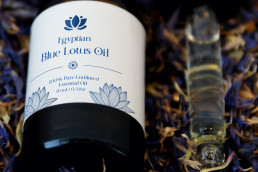
If you have spent any time shopping for blue lotus oil, you have probably noticed something odd: the same product, or something claiming to be the same product, ranges from about five pounds for a ten millilitre bottle on a marketplace listing to well over two hundred pounds for a fraction of that volume from a specialist apothecary. That is not a small spread. This guide explains what drives the genuine blue lotus oil price, what a fair premium looks like, and how to read a listing so you understand whether you are paying for real Nymphaea caerulea absolute or a fragranced carrier with a pretty label.
Table of Contents
- Why Blue Lotus Oil Is So Expensive in the First Place
- What Drives the Blue Lotus Oil Price: The Four Main Factors
- 1. Extraction Method
- 2. Dilution and Presentation
- 3. Origin and Sourcing
- 4. Third-Party Testing and Documentation
- Typical Blue Lotus Oil Price Ranges in 2025
- How to Read a Listing: A Practical Checklist
- Common Pricing Traps to Avoid
- The "Essential Oil" Label on a Cheap Bottle
- The "Pure" Claim Without Context
- The Bulk Discount That Is Too Generous
- The Unlabelled Origin
- What a Fair Price Actually Buys You
- When Cheap Blue Lotus Oil Might Still Be Fine
- When Blue Lotus Oil Is Not Worth Buying at Any Price
- Frequently Asked Questions
- Where to Go From Here
- Buy Blue Lotus Oil With Confidence
It is written and clinically reviewed by Antonio Breshears, ND, CCA, a Bastyr-trained naturopathic doctor and certified clinical aromatherapist. For broader context on the material itself, its chemistry, uses, and sourcing, pair this article with The Complete Guide to Blue Lotus Oil, which covers the botany and traditional use in more depth.
Why Blue Lotus Oil Is So Expensive in the First Place
The short answer is that the raw material is scarce and the extraction yield is low. Nymphaea caerulea is a water lily, not a field crop. The flowers open in the morning and close within hours, must be hand-picked at the right window, and the usable aromatic compounds sit in a delicate floral tissue rather than in seeds, wood, or peel. It takes roughly 3,000 to 5,000 hand-harvested flowers to produce one gram of blue lotus absolute. For context, that is broadly comparable to jasmine absolute or tuberose, and those materials sit at similar price points in the perfumery trade.
Add to that the fact that most authentic production happens in Egypt, with a small cottage industry of growers and extractors who handle relatively modest batches. There is no industrial-scale supply chain for real blue lotus. Wholesale prices at the producer level already reflect this, and by the time the absolute has been quality-checked, bottled, diluted (where appropriate), shipped, and sold at retail, the finished product simply cannot be cheap if it is genuine.
So when you see a listing for “pure blue lotus essential oil, 30ml, £8.99, free shipping” your first reaction should be a quiet sigh. The maths does not work. Whatever is in that bottle, it is not thirty millilitres of pure absolute.
What Drives the Blue Lotus Oil Price: The Four Main Factors
1. Extraction Method
There are three main methods used to extract aromatic compounds from blue lotus flowers, and each produces a material with a different character and cost.
Solvent extraction (absolute) is the most common method for blue lotus and yields what is technically called an absolute rather than an essential oil. It captures the fullest spectrum of the flower’s aromatic and bioactive compounds, including the alkaloids (aporphine, nuciferine) and flavonoids (apigenin, quercetin, kaempferol) that give blue lotus its therapeutic character. A good-quality blue lotus absolute, undiluted, typically trades wholesale at figures that translate into retail prices of roughly £30 to £70 per millilitre.
Steam distillation (true essential oil) is rare for blue lotus because the yield is so low that most producers consider it uneconomic. True blue lotus essential oil, when it exists, is usually the most expensive form of all, often exceeding £80 per millilitre at retail, and tends to have a lighter, greener aromatic profile than the absolute.
Supercritical CO2 extraction produces a material somewhere between the two, with a clean solvent-free profile and good retention of the heat-sensitive compounds. It is a premium method, and the finished product typically sits at the upper end of the price band.
2. Dilution and Presentation
This is where most of the confusion in the market comes from, and it is not always dishonest. A genuine 5 percent blue lotus absolute blended into organic jojoba, sold at roughly £40 for a 10ml bottle, is a perfectly reasonable and useful product. It is ready to apply to the skin, it is honest about what it is, and the price is proportionate to the quantity of absolute it actually contains.
The problem arises when a product is sold as “pure blue lotus oil” at that same price point and the reality is that it is a 2 percent dilution, or a synthetic fragrance in fractionated coconut oil, or (in the worst cases) a drop of blue lotus tincture coloured with food dye. The price itself is not the fraud; the label is.
A useful mental benchmark: if a bottle is sold as genuinely pure, undiluted absolute, expect to pay somewhere in the region of £30 to £70 per millilitre. If a bottle is sold as a pre-diluted ready-to-use oil, look for the dilution percentage on the label, and work out roughly how much actual absolute it contains. A 5ml bottle at 5 percent dilution contains 0.25ml of absolute. At a wholesale absolute cost of, say, £25 per millilitre, the raw material alone in that bottle is about £6.25, which starts to make the finished retail price of £30 to £50 look reasonable rather than extortionate.
3. Origin and Sourcing
Authentic Nymphaea caerulea is Egyptian. There are blue-coloured water lilies grown elsewhere, and there are other species sold under the name “blue lotus” (most notoriously Nymphaea nouchali var. caerulea from Sri Lanka and Thailand, and various hybrid ornamentals), but the plant with the documented pharmacology and the historical aromatic profile is the Egyptian species. Oils sourced from verified Egyptian growers carry a price premium that reflects both the authenticity and the generally smaller batch sizes.
Oils sourced from Thailand or India are not automatically inferior, but they are often a different species with a different alkaloid profile, and they should be priced accordingly. If a listing is vague about origin, or uses phrases like “sourced from the finest global suppliers” without specifying a country, treat that as a yellow flag.
4. Third-Party Testing and Documentation
The difference between a £15 bottle and an £80 bottle of the same nominal product is often the paperwork behind it. Genuine premium producers will provide, or offer on request, a gas chromatography-mass spectrometry (GC-MS) report identifying the constituent compounds, a certificate of analysis, and clear batch traceability back to the harvest. This costs money to produce, and that cost is reflected in the retail price. It is also the single best protection you have against buying a synthetic or adulterated product.
Typical Blue Lotus Oil Price Ranges in 2025
Here is a rough guide to what you should expect to pay for different forms and qualities of blue lotus oil at retail. Prices are approximate and will shift, but the proportions between categories are stable.
- Pure blue lotus absolute, undiluted, Egyptian origin, GC-MS verified: approximately £30 to £70 per 1ml, or £150 to £350 for 5ml.
- Premium pre-diluted blue lotus oil (5 to 10 percent in organic carrier): approximately £40 to £90 for 5 to 10ml.
- Mid-tier pre-diluted blends (2 to 5 percent, reputable brand, origin stated): approximately £20 to £50 for 10ml.
- Budget-tier “blue lotus oil” (often 1 percent or less, or fragrance oil, uncertain origin): £5 to £15 for 10 to 30ml. Treat these as cosmetic fragrance products, not therapeutic materials.
- True steam-distilled blue lotus essential oil (rare): £80 to £150+ per 1ml when available at all.
Notice how wide those bands are. That reflects genuine variation in the market, not pricing chaos. A well-made 5 percent dilution at £60 for 10ml is not a worse product than an undiluted absolute at £300 for 5ml; they are different products for different uses, at appropriately different price points.
How to Read a Listing: A Practical Checklist
Before you click “buy” on any blue lotus oil listing, run through the following checklist. If the product cannot answer most of these questions clearly, the price, whatever it is, is probably not worth paying.
- What is the botanical name? It should say Nymphaea caerulea explicitly. “Blue lotus” alone is not enough.
- What is the country of origin? Egypt for the authentic aromatic species. Other origins may still be useful products, but should be priced and described honestly.
- What is the extraction method? Absolute (solvent), CO2, or steam-distilled. Each has a typical price band.
- Is it diluted, and if so, to what percentage, in what carrier? A reputable seller will state this on the label, not hide it.
- Is GC-MS testing available? Not every small producer publishes this, but premium sellers should at least offer it on request.
- Does the price roughly match the maths? Work out how much absolute is actually in the bottle, and ask yourself whether the finished price is plausible at wholesale costs of £20 to £40 per millilitre of absolute.
- Is the packaging appropriate? Dark amber or cobalt glass, properly sealed, ideally in an outer box. Blue lotus absolute is light-sensitive and oxidises in clear glass.
Common Pricing Traps to Avoid
The “Essential Oil” Label on a Cheap Bottle
Genuine blue lotus essential oil, steam-distilled, is extremely rare and extremely expensive. If a 10ml bottle labelled “Blue Lotus Essential Oil” costs under £20, it is almost certainly either a synthetic fragrance oil, a fragranced carrier with no therapeutic value, or a heavily diluted tincture. The word “essential oil” on a budget listing is one of the clearest red flags in this category.
The “Pure” Claim Without Context
“100 percent pure” is a marketing phrase, not a technical one. A bottle can be 100 percent pure jojoba oil with a drop of blue lotus in it and technically not lie. Look for the specific dilution percentage of the blue lotus absolute itself, not vague purity claims about the bottle as a whole.
The Bulk Discount That Is Too Generous
Real blue lotus absolute has a wholesale floor price. If someone is offering 100ml for £50, that is roughly 50p per millilitre, which is below the wholesale cost of the raw material for any genuine product. The discount is not a deal; it is a signal that the contents are not what the label says.
The Unlabelled Origin
Legitimate suppliers are proud of their sourcing and say so. Listings that describe the oil only in poetic terms (“ancient Egyptian secret”, “sacred flower of the Nile”) without any specific grower, region, or extraction detail are usually relying on the romance of the plant to distract from the absence of concrete sourcing information.
What a Fair Price Actually Buys You
When you pay a fair premium for blue lotus oil, here is what you are actually getting, and it is worth understanding this so the price feels less like a luxury tax and more like what it is, which is a reflection of what real material costs to produce.
You are paying for thousands of hand-picked flowers per gram of absolute. You are paying for careful extraction that preserves the alkaloid and flavonoid profile rather than driving it off with too much heat or too much solvent residue. You are paying for laboratory verification that the constituent compounds match what authentic Nymphaea caerulea should contain. You are paying for packaging that protects the oil from light and oxidation. And you are paying for a seller who takes responsibility for the chain of custody from the flower to the bottle.
For reference, at a typical 2 percent dilution in a 10ml rollerball, a 5ml bottle of undiluted absolute will make you around 25 rollerballs. That is roughly £12 to £14 of absolute per finished rollerball, at the premium end of the market. A year of regular use from a single 5ml bottle is not an extravagant outcome for what is, clinically and aromatically, one of the more unusual materials in the apothecary.
When Cheap Blue Lotus Oil Might Still Be Fine
To be fair, not every low-priced blue lotus product is a scam. There is a legitimate category of “cosmetic fragrance” blue lotus oils: heavily diluted, honestly labelled, intended for pleasant scenting of bathwater or a room diffuser, and sold at prices that reflect their low concentration. If what you want is a floral note in a bath oil and you have no therapeutic expectation, a £10 bottle of 1 percent blue lotus in jojoba is a perfectly sensible purchase.
The problem is only when a low-priced product is sold with high-priced claims, or when a buyer expects the therapeutic effects of a 5 to 10 percent absolute from a 1 percent fragrance blend. Match your expectations to your price point honestly and most of the market confusion resolves itself.
When Blue Lotus Oil Is Not Worth Buying at Any Price
There are situations where no price makes the oil a good purchase. These include pregnancy and breastfeeding, where blue lotus is traditionally avoided; concurrent use of strong dopaminergic medications, MAOIs, or heavy sedatives, where the oil’s alkaloids may interact unpredictably; and certain jurisdictions where the material is restricted by law (Russia, Poland, Latvia, the US state of Louisiana, with regulatory complexity in Australia). No amount of good sourcing changes those limits, and a responsible seller will note them on the site rather than hide them in fine print.
Frequently Asked Questions
What is a fair price for 5ml of pure blue lotus oil?
For genuine, undiluted Egyptian Nymphaea caerulea absolute with GC-MS verification, expect to pay roughly £150 to £350 for 5ml at retail. For a high-quality pre-diluted blend at 5 to 10 percent, roughly £40 to £90 for 5 to 10ml is appropriate.
Why do some blue lotus oils cost £10 and others £200?
The cheaper products are almost always either synthetic fragrance oils, extremely heavy dilutions (1 percent or less), or a different species sold under the same common name. The more expensive products are undiluted or lightly diluted genuine absolute, usually Egyptian and laboratory-tested. The price difference reflects the actual quantity of real blue lotus absolute in the bottle.
Is pre-diluted blue lotus oil a worse deal than undiluted?
Not necessarily. Pre-diluted oil is ready to apply, safer for people who are not used to handling undiluted absolutes, and often better value per millilitre of finished product. Undiluted absolute is more flexible (you can dilute it yourself at any percentage for any use) but requires more care. Choose based on how you plan to use it, not on a general preference for one over the other.
Can I trust blue lotus oil sold on large marketplace platforms?
With caution. Marketplaces have a wide range of sellers, and the same listing page can rotate between genuine and counterfeit stock. If you buy via a marketplace, stick to sellers who publish clear sourcing, GC-MS data, and specific dilution percentages, and who operate their own brand site alongside the marketplace presence.
Does organic certification justify a higher blue lotus oil price?
It can, modestly. Organic certification for wild-harvested or small-producer Egyptian flowers is expensive to obtain, so certified organic blue lotus oil typically costs around 15 to 30 percent more than uncertified equivalents. Whether that premium is worth it depends on how strict your sourcing preferences are.
How long does a bottle of blue lotus oil last?
Stored properly in dark glass, away from heat and light, a good-quality absolute will hold its character for roughly 3 to 4 years. A pre-diluted oil in a carrier such as jojoba will keep for around 18 to 24 months before the carrier starts to affect the scent. Factor shelf life into your cost-per-use calculations; a £200 bottle that lasts three years of regular use is cheaper per application than a £20 bottle that expires in six months.
Why is CO2-extracted blue lotus oil more expensive?
Supercritical CO2 extraction uses specialist equipment, produces no solvent residue, and typically yields a cleaner aromatic profile with better retention of heat-sensitive compounds. It is a premium process and the finished product reflects that in price. Whether you need CO2-extracted specifically, rather than a good solvent-extracted absolute, is a matter of preference for most users.
Is there any way to test blue lotus oil at home?
Not reliably. You can check the basics, colour (genuine absolute is a dark amber to brownish-orange, not bright blue), scent complexity (a real absolute has cooler floral-aquatic top notes, a deep honeyed-floral heart, and a balsamic-smoky base, not a single flat floral note), and viscosity (thicker than water, slower to spread on skin). But these are rough cues, not proof. Real verification requires GC-MS analysis, which is why it matters that the seller provides it.
Does the blue lotus oil price include any legal or import cost?
In most Western markets, standard VAT and shipping apply. In the restricted jurisdictions mentioned earlier (Russia, Poland, Latvia, Louisiana in the US, Australia), the product may be unavailable, subject to special declarations, or outright prohibited. Reputable sellers will refuse to ship to restricted jurisdictions rather than add hidden surcharges to navigate them.
Are “bulk” or “wholesale” blue lotus oil listings genuine?
Sometimes, but most small buyers should be cautious. Real wholesale blue lotus absolute is traded in small quantities (typically 100g to 1kg) at prices that still work out to tens of pounds per millilitre. If a “wholesale” listing offers significantly lower prices than that, it is almost certainly a synthetic or diluted product rebadged as bulk stock.
Where to Go From Here
Pricing is only one part of the buying decision. The other parts are what the oil is meant to do for you, how you plan to apply it, and whether the particular product you are considering matches your use case. For the broader context, including chemistry, traditional use, and practical applications, The Complete Guide to Blue Lotus Oil is the right starting point. Once you have matched the right form (absolute versus pre-diluted blend) to your intended use, the price bands in this guide will tell you what fair looks like, and which listings are worth a second look.

Antonio Breshears
Antonio Breshears is a renowned expert in holistic medicine and beauty, with over 25 years of research experience dedicated to uncovering the secrets of nature's most powerful remedies. Holding a degree in Naturopathic Medicine, Antonio's passion for healing and well-being has driven him to explore the intricate connections between mind, body, and spirit.
Over the years, Antonio has become a respected authority in the field, helping countless individuals discover the transformative power of plant-based therapies, including essential oils, herbs, and natural supplements. He has authored numerous articles and publications, sharing his wealth of knowledge with a global audience seeking to improve their overall health and well-being.
Antonio's expertise extends to the realm of beauty, where he has developed innovative, all-natural skincare solutions that harness the potency of botanical ingredients. His formulations embody his deep understanding of the healing properties found in nature, providing holistic alternatives for those seeking a more balanced approach to self-care.
With his extensive background and dedication to the field, Antonio Breshears is a trusted voice and guiding light in the world of holistic medicine and beauty. Through his work at Pure Blue Lotus Oil, Antonio continues to inspire and educate, empowering others to unlock the true potential of nature's gifts for a healthier, more radiant life.