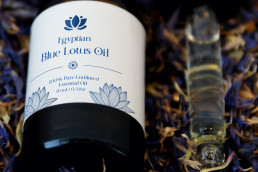
If you have been shopping for blue lotus oil and found yourself second-guessing whether it is actually legal to buy, own, or use in the United States, you are not alone. The short answer is yes: blue lotus oil is legal in the US at the federal level and in forty-nine of the fifty states. The longer answer, which is worth reading if you live in or travel to Louisiana, involves one state law, one specific piece of regulatory language, and a handful of practical considerations. This article lays out the blue lotus oil legal US landscape as it currently stands, with the nuance the topic deserves.
Table of Contents
- What Blue Lotus Oil Actually Is (For Legal Purposes)
- Federal Legal Status in the United States
- The Louisiana Exception
- How Louisiana's Law Applies to Blue Lotus Oil
- What About Other States?
- Is Blue Lotus Oil Legal to Mail or Ship Within the US?
- Flying Within the US With Blue Lotus Oil
- Using Blue Lotus Oil Legally: What "Legal" Actually Permits
- Aromatic and Topical Use
- Internal Use
- Marketing and Resale
- When to Be Cautious, Even Where It Is Legal
- How to Buy Blue Lotus Oil Legally and Safely
- Frequently Asked Questions
- Where to Go From Here
- Legal, Pure, and Ready to Ship
It is written and clinically reviewed by Antonio Breshears, ND, CCA, a Bastyr-trained naturopathic doctor and certified clinical aromatherapist. For broader context on the plant, its chemistry, and its traditional uses, see the complete guide to blue lotus oil, which serves as the reference hub for this and related articles in the safety and travel category.
What Blue Lotus Oil Actually Is (For Legal Purposes)
Before addressing legality, it helps to be precise about what we are discussing. Blue lotus oil refers to aromatic extracts of Nymphaea caerulea, the Egyptian blue water lily. Depending on the producer, the product may be a solvent-extracted absolute, a true steam-distilled essential oil, or a supercritical CO2 extract. All three are aromatic plant extracts intended for topical, olfactory, or cosmetic use.
The flower contains several naturally occurring compounds, including the alkaloids aporphine and nuciferine, along with flavonoids such as apigenin, quercetin, and kaempferol. None of these compounds are listed as controlled substances under the US Controlled Substances Act. Nymphaea caerulea itself is not a scheduled plant under federal law, which is the foundational reason the oil is legal to buy, sell, ship, and possess across almost the entire country.
This is a meaningfully different situation from, for example, kratom or certain tryptamine-containing plants, which have either federal scrutiny or a patchwork of state bans. Blue lotus occupies a much quieter legal space, and for most Americans the question of legality simply does not arise.
Federal Legal Status in the United States
At the federal level, blue lotus (Nymphaea caerulea) is uncontrolled. It is not listed on any of the five schedules under the Controlled Substances Act. The Drug Enforcement Administration does not regulate the plant, its extracts, or products derived from it. The US Food and Drug Administration has not banned the ingredient, though, and this is important, the FDA has also not approved blue lotus as a food additive, a dietary supplement ingredient with a specific claim, or a drug.
What this means in practical terms:
- You can legally buy blue lotus oil online or in person in forty-nine US states.
- You can legally possess it, gift it, and use it for aromatherapy or cosmetic purposes.
- Reputable sellers market it as an aromatherapy product or cosmetic ingredient, not as a drug or supplement that treats specific conditions.
- You should not see claims on a legitimate product label that it cures, treats, or prevents any disease. Such claims would invite FDA scrutiny, not because of the plant itself, but because of the unapproved drug claim attached to it.
The legal status is therefore best understood as “uncontrolled and unregulated for aromatic use”, which is the same bucket that most essential oils sit in.
The Louisiana Exception
There is exactly one state where the situation is different, and it is Louisiana. In 2005, the Louisiana State Legislature passed Act 159, often referred to as the “hallucinogenic plants” law. This statute, now codified at Louisiana Revised Statutes 40:989.1, restricts the cultivation, manufacture, distribution, and possession of roughly forty named plants, including Nymphaea caerulea, when they are intended for human consumption.
The key phrase is “intended for human consumption”. The law does not ban the plant outright. It specifically targets cultivation, processing, sale, or possession of the listed plants “for the purpose of human consumption”. Aesthetic, ornamental, landscaping, educational, and decorative uses are explicitly exempted. In other words, you can grow a blue water lily in your pond in Baton Rouge without violating the law; you cannot sell it, or extracts of it, framed as something to be ingested or inhaled for psychoactive effect.
How Louisiana’s Law Applies to Blue Lotus Oil
This is where interpretation matters. The Louisiana statute was written with ingestion, smoking, and psychoactive consumption in mind. Aromatic use of an essential oil sits in a grey area that the statute does not directly address. Some sellers decline to ship to Louisiana addresses as a cautious compliance measure, particularly if their marketing emphasises relaxation or mood effects. Others ship without issue, treating the oil as an aromatic product akin to any other essential oil.
If you live in Louisiana and want to use blue lotus oil:
- Check the seller’s shipping policy before ordering; some restrict Louisiana deliveries.
- Understand that possession for ornamental, aromatic, or cosmetic purposes sits outside the law’s “human consumption” framing, but the grey zone is real.
- Avoid any product that is marketed for ingestion, tea preparation, or smoking, since those uses fall squarely within what the statute prohibits.
- If in doubt, consult a Louisiana-licensed attorney rather than relying on an aromatherapy article.
This article does not constitute legal advice, and the boundaries of Act 159 as applied to topical and aromatic use have not, to my knowledge, been extensively litigated. The sensible approach is caution, transparency with suppliers, and recognition that the law exists regardless of how loosely it has been enforced.
What About Other States?
Outside of Louisiana, no US state has passed a law specifically controlling Nymphaea caerulea or its extracts. You can legally buy blue lotus oil in California, Texas, New York, Florida, and every state in between. Occasionally, a shopper will ask about states with strict cannabis or kratom laws, on the assumption that blue lotus might be caught up in the same legislative spirit. It is not. Those laws are species-specific or compound-specific and do not sweep blue lotus into their scope.
State cosmetic and labelling rules still apply, so a retailer selling blue lotus oil in California, for instance, must comply with California’s Proposition 65 labelling conventions for cosmetic ingredients where relevant. But this is a seller-compliance issue, not a consumer-legality issue. As a consumer, you are not at risk of legal consequence for buying, owning, or using blue lotus oil in any of the forty-nine unrestricted states.
Is Blue Lotus Oil Legal to Mail or Ship Within the US?
Yes. Blue lotus oil can be shipped through USPS, UPS, FedEx, and other carriers within the United States without restriction, with the usual caveats about hazardous materials declarations for liquids shipped by air. Since essential oils and absolutes are sometimes classified as flammable for air transport (depending on flashpoint), reputable sellers handle the hazmat paperwork on their end. From a buyer’s perspective, the parcel arrives like any other.
International inbound shipments, say, from an Egyptian producer to a US customer, clear US Customs and Border Protection without issue in the overwhelming majority of cases. Customs may occasionally inspect botanical extracts, but Nymphaea caerulea is not on any prohibited or controlled import list, and personal-quantity shipments of aromatherapy products are routine.
Flying Within the US With Blue Lotus Oil
For domestic US air travel, blue lotus oil is treated the same as any other essential oil or liquid cosmetic. The TSA’s 3-1-1 rule applies: containers of 100 ml or less, placed together in a single quart-sized clear bag, for carry-on. Checked baggage allows larger volumes. There is no legal restriction on carrying blue lotus oil through a US airport.
One practical note: if your bottle is labelled clearly as an aromatherapy product or essential oil, TSA screening tends to be entirely uneventful. An unmarked amber dropper bottle can occasionally invite a question, so keep the original label intact if you can.
Using Blue Lotus Oil Legally: What “Legal” Actually Permits
Legality and wisdom are not identical. The fact that blue lotus oil is legal to possess does not mean every possible use is appropriate. A few distinctions worth drawing:
Aromatic and Topical Use
Diffusing blue lotus oil in your home, adding a drop or two to a carrier oil for a massage blend, incorporating it into a face serum at a 1 to 2 percent dilution, or dabbing a diluted blend on your pulse points: all of this is legal and is the intended use of the product.
Internal Use
Ingesting essential oils is a practice that most certified aromatherapists, myself included, do not recommend without specific clinical oversight. Regardless of legality, blue lotus absolute is not a food product, and many absolutes contain trace residual solvents from extraction that are acceptable for aromatic use but not for consumption. Legal does not mean edible.
Marketing and Resale
If you are a small formulator considering making products with blue lotus oil for sale, the federal legality of the ingredient is only half the story. Cosmetic labelling must comply with the FDA’s cosmetic regulations, drug claims are prohibited, and state-level cosmetic registrations may apply. If you are selling into Louisiana, take specific legal advice.
When to Be Cautious, Even Where It Is Legal
Legal status aside, there are situations in which blue lotus oil is not the right choice for the individual user. These are not legal issues; they are clinical ones:
- Pregnancy and breastfeeding. Blue lotus is traditionally avoided during pregnancy and lactation due to insufficient safety data.
- Dopaminergic medications, MAOIs, and strong sedatives. The alkaloids in blue lotus have modest dopaminergic and serotonergic activity, and while the aromatic dose is very low, interactions are theoretically possible.
- Children under six. As with most essential oils, use caution or avoid in very young children.
- Broken skin or known floral allergies. Patch test before wider use.
These are standard aromatherapy precautions rather than legal restrictions, but they are worth naming alongside the legal picture so that the overall decision is a well-informed one.
How to Buy Blue Lotus Oil Legally and Safely
Because the oil is legal in almost every US jurisdiction, buying it is straightforward. The more important question is how to buy a product that is what it claims to be. A legal product is not automatically a pure product. When evaluating a seller, look for:
- Clear botanical name on the label (Nymphaea caerulea), country of origin, and extraction method.
- Realistic pricing. A true absolute requires thousands of flowers per gram and is not a cheap ingredient. A 10 ml bottle sold for a few dollars is almost certainly diluted or synthetic.
- Transparent batch information or certificates of analysis on request.
- Honest marketing that does not promise drug-like effects or cures.
- Dark glass packaging and sensible storage guidance.
The legality of the product is the easy part. The quality of the product is where most buying mistakes are made.
Frequently Asked Questions
Is blue lotus oil legal in all 50 states?
It is legal in 49 states. Louisiana has a specific statute, Act 159 of 2005, that restricts Nymphaea caerulea and several other plants when possessed or sold for human consumption. Aromatic and ornamental use sits in a grey area, and some sellers decline to ship to Louisiana addresses for that reason.
Is blue lotus a controlled substance at the federal level?
No. Nymphaea caerulea is not listed on any schedule of the US Controlled Substances Act, and the DEA does not regulate it. The alkaloids it contains, including aporphine and nuciferine, are also not federally scheduled.
Can I fly with blue lotus oil in the US?
Yes. Standard TSA liquid rules apply: 100 ml or less per container in carry-on, within a single quart-sized clear bag, or larger volumes in checked luggage. Keep the original label intact for easy identification at screening.
Can I order blue lotus oil online and have it shipped to my home?
Yes, in 49 states. Reputable US and international sellers ship blue lotus oil through standard carriers. If you live in Louisiana, check the seller’s shipping policy first.
Why is blue lotus restricted in Louisiana but nowhere else?
Louisiana passed a broad “hallucinogenic plants” statute in 2005 that named roughly forty plants, including blue lotus, and restricted them when intended for human consumption. No other US state has followed suit. The law is unusual in its scope and reflects the particular legislative concerns of that session rather than any nationwide trend.
Can I grow blue lotus plants in the US?
Yes, in 49 states, and even in Louisiana for ornamental or aesthetic purposes under the statute’s exemption. Blue lotus is grown as a water garden plant in many US climates, particularly in warmer southern and western states.
Is blue lotus oil legal for cosmetic or skincare use?
Yes. It can be formulated into cosmetics, serums, and personal care products in compliance with the FDA’s cosmetic regulations. Products must not make drug claims such as treating a specific disease or condition.
Does the FDA approve blue lotus oil?
The FDA neither approves nor prohibits blue lotus oil. It is not a drug and is not marketed as one. It is treated as an aromatic or cosmetic ingredient, similar to most essential oils, which the FDA does not pre-approve.
Is blue lotus oil the same as blue lotus tea or smoking blend legally?
The plant is the same, but the legal posture differs. Teas and smoking blends are clearly intended for human consumption, which is precisely the framing that Louisiana’s Act 159 targets. An aromatic oil for diffusion or topical use sits in a different use category, even though the underlying botanical is identical.
Could blue lotus ever become federally controlled in the future?
It is not currently under any active regulatory review to my knowledge, and there has been no federal legislative movement in that direction. Regulatory landscapes can change, but blue lotus has a long history of quiet legality in the US, and there is no current pressure to alter that.
Where to Go From Here
The legal picture for blue lotus oil in the US is, in most respects, reassuringly simple: buy, own, and use it in 49 states without concern. Louisiana is the one meaningful exception, and even there the restriction is narrower than a headline reading might suggest. For a broader understanding of the plant, its chemistry, and how to use it thoughtfully, the complete guide to blue lotus oil is the natural next stop. If you are planning international travel with the oil, or sending it as a gift abroad, the travel and shipping articles in this category address those specifics.
None of the above is legal advice. Laws change, interpretations shift, and individual circumstances vary. If you are in Louisiana, involved in commercial sale or manufacture, or travelling internationally with blue lotus products, a qualified attorney is a better source of guidance than any aromatherapy article. For the ordinary personal user in the other 49 states, the situation is as straightforward as it sounds: a legal, aromatic ingredient with a long tradition and a quiet regulatory presence.

Antonio Breshears
Antonio Breshears is a renowned expert in holistic medicine and beauty, with over 25 years of research experience dedicated to uncovering the secrets of nature's most powerful remedies. Holding a degree in Naturopathic Medicine, Antonio's passion for healing and well-being has driven him to explore the intricate connections between mind, body, and spirit.
Over the years, Antonio has become a respected authority in the field, helping countless individuals discover the transformative power of plant-based therapies, including essential oils, herbs, and natural supplements. He has authored numerous articles and publications, sharing his wealth of knowledge with a global audience seeking to improve their overall health and well-being.
Antonio's expertise extends to the realm of beauty, where he has developed innovative, all-natural skincare solutions that harness the potency of botanical ingredients. His formulations embody his deep understanding of the healing properties found in nature, providing holistic alternatives for those seeking a more balanced approach to self-care.
With his extensive background and dedication to the field, Antonio Breshears is a trusted voice and guiding light in the world of holistic medicine and beauty. Through his work at Pure Blue Lotus Oil, Antonio continues to inspire and educate, empowering others to unlock the true potential of nature's gifts for a healthier, more radiant life.