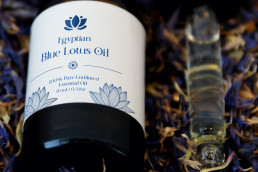
If you have read anything serious about the phytochemistry of Nymphaea caerulea, you will have seen quercetin mentioned alongside apigenin and kaempferol as one of the flavonoids carrying much of the plant’s biological weight. This article looks specifically at quercetin blue lotus chemistry: what quercetin is, what it actually does as an antioxidant, how it behaves when delivered through an aromatic oil rather than a capsule, and what you can reasonably expect from it. It is written for readers who want the science honestly rendered, without the supplement-industry theatrics that tend to cling to anything with “antioxidant” in the headline.
Table of Contents
- What Quercetin Actually Is
- The Antioxidant Mechanism, Plainly Stated
- Quercetin in Blue Lotus Oil Specifically
- Why the Extraction Choice Matters for Antioxidant Content
- What Quercetin Does When You Use the Oil
- Topical Application
- Olfactory and Respiratory Exposure
- Realistic Expectations for the Antioxidant Effect
- How to Use Blue Lotus Oil for Its Antioxidant Benefit
- When Blue Lotus Oil Is Not the Right Antioxidant Choice
- Complementary Approaches to Antioxidant Skin Care
- Frequently Asked Questions
- Where to Go From Here
- Experience the Full Flavonoid Profile
It is written and clinically reviewed by Antonio Breshears, ND, CCA, a Bastyr-trained naturopathic doctor and certified clinical aromatherapist. For the wider picture of the plant’s chemistry and therapeutic context, see The Complete Guide to Blue Lotus Oil, which situates quercetin alongside the aporphine alkaloids and other flavonoids that define the oil’s character.
What Quercetin Actually Is
Quercetin is a flavonol, a subclass of flavonoids, and one of the most widely studied plant polyphenols in all of nutritional science. It appears across the plant kingdom: in onions, apples, capers, tea, berries, and a long list of medicinal botanicals. It is the molecule responsible for much of the colour you see in yellow-tinged flower pigments and the astringent bite you taste in red onion skins. Structurally, it is a compact polyphenolic scaffold with multiple hydroxyl groups arranged in a way that makes it unusually good at donating electrons to unstable free radicals, which is the essential party trick of any antioxidant molecule.
In blue lotus, quercetin is present both as the free aglycone and as glycosides (quercetin attached to sugar molecules, chiefly rutin and isoquercitrin). The glycosylated forms tend to predominate in the living flower; extraction method and subsequent handling then determine how much free quercetin versus glycoside ends up in the finished oil or absolute. This distinction matters, because the two forms have different solubility, different skin penetration profiles, and different bioavailability if ever consumed.
The Antioxidant Mechanism, Plainly Stated
When biologists say “antioxidant”, they mean a molecule that neutralises reactive oxygen species (ROS), the unstable, electron-hungry compounds that your cells produce as metabolic by-products and that environmental stressors (UV, pollution, inflammation, psychological stress) produce in excess. Left unchecked, these reactive species damage cell membranes, oxidise lipids, cross-link proteins, and degrade DNA. Over time and at scale, that damage is what ageing tissue looks like at a molecular level.
Quercetin addresses this in three reasonably well-attested ways. First, it directly scavenges free radicals by donating hydrogen atoms from its hydroxyl groups, quenching the radical and leaving behind a relatively stable quercetin-derived radical that does not propagate damage. Second, it chelates transition metal ions, particularly iron and copper, that catalyse some of the most damaging oxidation reactions in tissue. Third, it modulates the enzymes responsible for both generating and clearing oxidative stress, upregulating endogenous antioxidants like glutathione and downregulating inflammatory mediators such as certain cytokines and prostaglandins.
That third mechanism is the one that matters most for real-world skin and systemic effects. Direct radical scavenging is useful but relatively short-lived; enzymatic modulation shifts the underlying oxidative tone of tissue over days and weeks.
Quercetin in Blue Lotus Oil Specifically
Quercetin is not the headline molecule of blue lotus. That distinction belongs to the aporphine alkaloids (aporphine itself and nuciferine), which drive the oil’s psychoactive and mood-modulating character, and to apigenin, which binds central benzodiazepine receptors and contributes to the calming effect. Quercetin sits in a supporting role, but supporting does not mean trivial.
In an Egyptian blue lotus absolute or essential oil, quercetin and its glycosides contribute to several functional qualities. They stabilise the oil against oxidative degradation, which is part of why a well-extracted blue lotus absolute keeps its integrity for three to four years in dark glass. They add an astringent, slightly dry quality to the base of the scent that balances the honeyed floral heart. And when the oil is applied to skin or inhaled in sufficient proximity, they contribute an anti-inflammatory tone to the skin tissue and respiratory epithelium they contact.
The exact quercetin concentration varies by extraction method and by the batch of flowers. Solvent extraction into an absolute captures the broadest flavonoid profile, including quercetin glycosides, because the ethanol-based wash dissolves both polar and semi-polar compounds. Steam distillation, which produces a true essential oil, captures far less quercetin, because flavonoids are largely non-volatile. Supercritical CO2 extraction sits between the two, with tuneable parameters that can be pushed toward higher flavonoid yield.
Why the Extraction Choice Matters for Antioxidant Content
If you are buying blue lotus oil specifically with quercetin and the broader antioxidant profile in mind, the absolute is the form to look for. A pure steam-distilled essential oil, while aromatically beautiful and chemically “cleaner” by some definitions, will carry only trace amounts of flavonoids. Many of the antioxidant claims floating around for blue lotus are implicitly claims about the absolute, not about the distilled fraction.
What Quercetin Does When You Use the Oil
There are two realistic routes by which quercetin in a topical or aromatic blue lotus product reaches your tissues: transdermal absorption through the skin, and incidental respiratory absorption through inhalation. Oral intake is not a relevant route for an oil intended for topical and aromatic use, and I am not going to discuss it here.
Topical Application
When you apply a properly diluted blue lotus absolute to skin, quercetin and its glycosides are deposited into the upper layers of the epidermis along with the oil’s other constituents. Flavonoid penetration through intact skin is modest but meaningful; the molecules are small enough and lipophilic enough (particularly the aglycone form) to diffuse into the stratum corneum and, to a lesser extent, the viable epidermis. What they do there is local: they quench oxidative stress in keratinocytes, modulate inflammatory signalling in inflamed or sun-exposed tissue, and contribute to the slow, cumulative “skin looks calmer” effect that experienced users of blue lotus absolute report after a few weeks of consistent use.
This is not the same as a clinical-grade quercetin serum at high concentration. It is a gentler, more diffuse contribution, layered into an oil whose primary therapeutic identity is emotional and olfactory rather than dermatological. Treat the antioxidant benefit as a welcome adjunct rather than the main reason you are using the oil.
Olfactory and Respiratory Exposure
When you inhale blue lotus oil from a diffuser or a personal inhaler, the heavier, non-volatile compounds including most quercetin remain largely in the reservoir; what reaches your nose and upper airways is dominated by the volatile aromatic molecules. There is some aerosolised transfer of heavier constituents, particularly with ultrasonic or nebulising diffusers, but the quercetin contribution through inhalation is minor compared to topical use. The olfactory effects of blue lotus are driven by different chemistry.
Realistic Expectations for the Antioxidant Effect
This is where I want to be careful, because “antioxidant” is a word that has been stretched, in consumer marketing, into near-meaninglessness. Here is what is fair to say about quercetin in blue lotus oil, within realistic limits.
First, consistent topical use of a quality blue lotus absolute, diluted appropriately into a carrier and applied daily or near-daily, contributes to a measurable shift in skin oxidative tone over weeks. You will not see dramatic changes in a single application. You may notice, over a month or two, that reactive skin feels less reactive, that fine irritation settles more readily, and that skin tolerates environmental stress (sun, wind, pollution) with less visible inflammation. Part of this is quercetin; part of it is the broader flavonoid and alkaloid mix.
Second, the antioxidant action of blue lotus is not going to replace a dedicated topical antioxidant regimen if that is what your skin needs. If you have significant sun damage, persistent hyperpigmentation, or established photoageing, a clinical-grade vitamin C serum and a daily mineral sunscreen will do more, more reliably, than any botanical oil. Blue lotus complements such a regimen; it does not substitute for it.
Third, the systemic antioxidant effect from aromatic use is essentially negligible. If you are looking to raise your body-wide antioxidant status, dietary quercetin from food, or a supplement taken under professional guidance, is the appropriate tool. A diffuser is not.
How to Use Blue Lotus Oil for Its Antioxidant Benefit
If the quercetin and flavonoid content is part of what drew you to blue lotus, here is a straightforward way to work the oil into a skin routine that actually leverages its antioxidant profile.
For facial application, dilute the absolute to around 1 to 2 percent in a well-chosen carrier. Jojoba is my default for balanced skin; squalane works beautifully for drier or more mature skin; rosehip adds its own vitamin and carotenoid content if you want stacked antioxidant action. At 2 percent, that is roughly 12 drops of blue lotus absolute per 30 millilitres of carrier. Apply a few drops to clean, slightly damp skin in the evening, after any water-based serums and before any heavier occlusive step. Evening application suits the oil’s settling, parasympathetic character better than morning use, though morning use is entirely fine if you prefer.
For body use, dilute to 2 to 3 percent and treat it as a slow, considered evening ritual on areas that get environmental exposure: décolletage, forearms, the backs of the hands. Consistency matters more than volume; a small amount nightly outperforms an occasional lavish application.
Give the protocol four to six weeks before judging the effect. Antioxidant shifts in skin are slow by nature, because the tissue you are treating today was partly built weeks ago; you are influencing what the next generation of keratinocytes looks like as they move up through the epidermis.
When Blue Lotus Oil Is Not the Right Antioxidant Choice
If you are pregnant or breastfeeding, do not use blue lotus oil. The aporphine alkaloid content is the reason, not the quercetin, but the oil as a whole is one to avoid in these contexts. Choose a different antioxidant approach, ideally dietary or clinically formulated for pregnancy-safe topical use.
If you are taking dopaminergic medications, MAOIs, or heavy sedatives, discuss any aromatic use with your prescriber before beginning. Again, the concern is the alkaloid profile rather than the flavonoids, but you cannot use the oil piecewise.
If your primary skin concern is established photoageing, melasma, or significant post-inflammatory hyperpigmentation, blue lotus is a supporting actor rather than a lead. A dermatologist-guided regimen involving retinoids, tyrosinase inhibitors, and rigorous sun protection will produce results that no botanical oil can match. Blue lotus layered into that regimen contributes a calming, antioxidant top note; it does not stand in for active ingredients with well-established clinical evidence.
If you are looking for a targeted topical quercetin delivery, a formulated quercetin serum at a meaningful concentration, in a vehicle designed for penetration, will deliver more quercetin to skin than a blue lotus absolute will. Blue lotus gives you quercetin in a broader botanical context, which is valuable for its own reasons, but it is not a quercetin-maximising product.
Complementary Approaches to Antioxidant Skin Care
Quercetin rarely works alone in nature, and it rarely should in a skincare approach either. If you want to build a coherent antioxidant strategy around blue lotus, think in layers.
Dietary quercetin remains the most reliable route for systemic effect. Red and yellow onions, capers, apples (eaten with skin), buckwheat, green tea, and a range of berries supply quercetin in forms the body metabolises well. A diet built on these foods, alongside the usual suspects of deeply coloured vegetables, outperforms any topical approach for whole-body oxidative balance.
Topical vitamin C (L-ascorbic acid or a well-formulated derivative) pairs particularly well with a blue lotus evening ritual. Use the vitamin C in the morning, under sunscreen, for daytime oxidative protection; use blue lotus in the evening for its combined calming and antioxidant tone. The two do not compete.
For olfactory and emotional benefit, which is where blue lotus genuinely excels, the antioxidant profile becomes a quiet bonus rather than the organising principle. Treat the oil for what it is: a beautifully complex aromatic with a calming, parasympathetic character, whose flavonoid content adds a quiet antioxidant dividend to topical use.
Frequently Asked Questions
How much quercetin is actually in blue lotus oil?
Exact concentrations vary by extraction method and batch, and most producers do not publish detailed flavonoid assays. Quercetin is a minor but meaningful constituent, present chiefly as glycosides in the absolute and in much smaller quantities in steam-distilled oil. Do not expect serum-level doses; expect a botanically embedded contribution.
Does quercetin in blue lotus oil work through the skin?
Modestly, yes. Flavonoids penetrate the stratum corneum to a limited degree and exert local antioxidant and anti-inflammatory effects in the upper epidermis. The effect is cumulative over weeks rather than immediate.
Can I use blue lotus oil instead of a quercetin supplement?
No. If you want meaningful systemic quercetin exposure, diet or a guided oral supplement is the appropriate route. The oil is not a substitute.
Is the antioxidant benefit stronger in the absolute or the essential oil?
Stronger in the absolute. Solvent extraction captures a broader flavonoid profile, including quercetin glycosides, than steam distillation does. Supercritical CO2 extraction sits between the two.
Does quercetin contribute to the scent of blue lotus oil?
Indirectly. Quercetin itself is not a significant aromatic molecule, but it contributes to the slightly astringent, dry quality at the base of the oil and helps stabilise the more volatile aromatics against oxidation over time.
How long does quercetin remain stable in a bottle of blue lotus absolute?
Well stored, in dark glass, cool and away from light, three to four years is a realistic window for the oil as a whole. Quercetin is among the more stable constituents, being itself an antioxidant. Oxidised or old oil will show changes in scent and colour before the flavonoid degradation becomes significant.
Can I combine blue lotus oil with a vitamin C serum?
Yes, and it is a sensible pairing. Use vitamin C in the morning under sunscreen; use diluted blue lotus in the evening. They complement each other rather than compete.
Does heating or diffusing the oil destroy the quercetin?
Most quercetin stays in the diffuser reservoir rather than aerosolising, because it is non-volatile. Standard ultrasonic diffuser temperatures will not meaningfully degrade what remains. For antioxidant benefit to skin, topical application is the route that matters.
Is quercetin in blue lotus oil safe for sensitive skin?
At appropriate dilution (1 to 2 percent on the face), it is well tolerated by most skin types and often reduces reactivity over time. As with any new oil, patch test on the inner forearm for 24 to 48 hours before facial use.
Does blue lotus oil have more antioxidants than other floral oils?
It has a distinctive flavonoid profile, particularly with its quercetin, apigenin, and kaempferol combination, which is not mirrored by most common floral oils. Whether that makes it “more” antioxidant depends on how you measure; what is fair to say is that its antioxidant contribution sits within a broader and more interesting therapeutic chemistry than most florals offer.
Where to Go From Here
Quercetin is one line in a much larger chemical signature, and understanding it in isolation is only useful if you then place it back into the context of the whole oil. For the fuller picture of how blue lotus chemistry works as an integrated whole, including the aporphine alkaloids, apigenin, kaempferol, and the volatile aromatic constituents, read The Complete Guide to Blue Lotus Oil. If you are specifically evaluating a product and want to understand what your chosen extraction method delivers, the sections of that guide on absolute, steam-distilled, and CO2-extracted forms will clarify what you can reasonably expect in the bottle.

Antonio Breshears
Antonio Breshears is a renowned expert in holistic medicine and beauty, with over 25 years of research experience dedicated to uncovering the secrets of nature's most powerful remedies. Holding a degree in Naturopathic Medicine, Antonio's passion for healing and well-being has driven him to explore the intricate connections between mind, body, and spirit.
Over the years, Antonio has become a respected authority in the field, helping countless individuals discover the transformative power of plant-based therapies, including essential oils, herbs, and natural supplements. He has authored numerous articles and publications, sharing his wealth of knowledge with a global audience seeking to improve their overall health and well-being.
Antonio's expertise extends to the realm of beauty, where he has developed innovative, all-natural skincare solutions that harness the potency of botanical ingredients. His formulations embody his deep understanding of the healing properties found in nature, providing holistic alternatives for those seeking a more balanced approach to self-care.
With his extensive background and dedication to the field, Antonio Breshears is a trusted voice and guiding light in the world of holistic medicine and beauty. Through his work at Pure Blue Lotus Oil, Antonio continues to inspire and educate, empowering others to unlock the true potential of nature's gifts for a healthier, more radiant life.