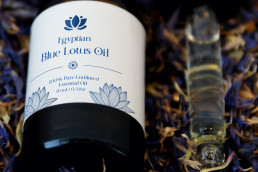
Users searching specifically for “blue lotus absolute smell” usually have a different intent from those searching for blue lotus oil generally. They want to understand what distinguishes the absolute from the essential oil, whether the absolute smells different enough to justify its higher price, and which form suits a particular application. This article answers those questions directly. The short version: the absolute and the essential oil have noticeably different scent profiles, with the absolute being richer, deeper, and longer-lasting; both are genuine blue lotus products, but they serve different purposes and the difference is worth understanding before buying.
Table of Contents
- What "Absolute" Means in Perfumery Terms
- The Absolute's Scent Profile in Detail
- A Fuller, Heavier Opening
- The Honeyed Heart Is Pronounced
- A Long, Warm Base
- Side-by-Side: Absolute vs Essential Oil
- Which Form Suits Which Application
- Where the Absolute Is the Right Choice
- Where the Essential Oil Can Be the Right Choice
- CO2 Extract: The Third Option
- How to Tell Which Form You Have Bought
- Frequently Asked Questions
- Where to Go From Here
- Genuine Egyptian Absolute
It is written and clinically reviewed by Antonio Breshears, ND, CCA, a Bastyr-trained naturopathic doctor and certified clinical aromatherapist. For the general scent profile shared by both forms, our anchor page on what blue lotus oil smells like is the broader reference; this article focuses specifically on the absolute and how it compares to the steam-distilled essential oil.
What “Absolute” Means in Perfumery Terms
An absolute is a highly concentrated aromatic extract produced by solvent extraction. The process uses a food-grade solvent (typically hexane, sometimes ethanol) to draw both the volatile aromatic compounds and the non-volatile fractions (flavonoids, some alkaloids, resinous materials, fatty acids, and waxes) out of the plant material. The solvent is then carefully removed under reduced pressure and low heat, leaving a thick, richly coloured product that captures a fuller chemical profile of the flower than distillation can.
Steam-distilled essential oils, by contrast, only capture the volatile fraction: the compounds that vaporise at the boiling point of water and condense out with the steam. This is a narrower chemical window, and it produces a lighter, simpler product with a thinner scent profile.
For blue lotus specifically, the difference is substantial because much of what makes the oil characteristic sits in the non-volatile fraction. The deep honeyed heart, the sustained balsamic-smoky base, and the long persistence on skin or fabric are all largely absent from a true steam-distilled blue lotus essential oil. The absolute preserves them; the essential oil does not.
The Absolute’s Scent Profile in Detail
The absolute is what most users are encountering when they buy “blue lotus oil”, even when the label says “essential oil”. The scent profile is the three-phase composition described in detail on our primary smell page: a cooler floral-aquatic top, a deep honeyed-floral heart, and a balsamic-smoky base. Worth re-stating here in the context of what makes the absolute specifically what it is.
A Fuller, Heavier Opening
Compared to the essential oil, the absolute’s top notes are still cooler and lighter than the heart, but they arrive carrying more weight. The aquatic-green quality is present, as is the faint powdery character, but there is already a suggestion of the heart underneath. On first sniff, the absolute reads as a complete aromatic composition with multiple layers simultaneously detectable; the essential oil reads as something thinner and more one-dimensional.
The Honeyed Heart Is Pronounced
The deep honeyed-floral heart is where the absolute most clearly distinguishes itself. This is the flavonoid and resinous-fraction contribution that solvent extraction captures and steam distillation does not. Users who recognise “blue lotus” as a specific scent are mostly recognising this heart; it is the defining character of the genuine absolute.
In a steam-distilled essential oil, the heart phase is either absent or substantially reduced, leaving a gap between the top and whatever base notes the volatile fraction can provide. The scent moves too quickly from opening to dry-down without the honeyed middle that gives the absolute its depth.
A Long, Warm Base
The absolute’s balsamic-smoky base, sustained for hours and sometimes a full day, is the feature that makes it work as a ritual or pillow-spray aromatic. This base is carried by the fatty, waxy, and resinous components of the absolute: the heavier molecules that extend release of the volatile compounds over time. A steam-distilled essential oil has essentially none of these carriers, and its base notes fade within an hour or two.
The practical implication is direct. If you want an oil that holds a scent on fabric overnight, or that leaves a perceptible aromatic signature on skin for hours after application, you need an absolute. The essential oil cannot do this, not because it is poor quality but because its chemistry does not include the necessary components.
Side-by-Side: Absolute vs Essential Oil
A direct comparison across the main dimensions that matter for use.
Colour: the absolute is dark amber to honey-brown, sometimes nearly black in concentrated form. The essential oil is pale yellow to light amber, considerably lighter.
Viscosity: the absolute is thick and slow-pouring at room temperature, sometimes semi-solid in cool conditions. The essential oil is thin and free-flowing, similar to most steam-distilled florals.
Top notes: the absolute’s top is cooler and fuller, already suggesting the underlying heart. The essential oil’s top is lighter and airier, with less depth beneath.
Heart notes: the absolute has the pronounced honeyed-floral heart that defines the oil’s character. The essential oil has a thinner, more purely floral heart without the honeyed quality.
Base notes: the absolute has a long, warm, balsamic-smoky base lasting hours. The essential oil has a short, relatively thin base that fades quickly.
Persistence on skin: the absolute lasts two to four hours in full development with base notes continuing beyond. The essential oil typically fades within 30 to 60 minutes.
Chemistry: the absolute contains alkaloids (aporphine, nuciferine), flavonoids (apigenin, quercetin, kaempferol), volatile aromatic compounds, and fatty acids and waxes. The essential oil contains primarily the volatile aromatic fraction only.
Price: the absolute is substantially more expensive per millilitre, reflecting its higher concentration and more demanding production. The essential oil is typically priced at a fraction of a comparable absolute.
Availability: the absolute is widely available (this is what most “blue lotus oil” on the market actually is). True steam-distilled blue lotus essential oil is much rarer.
Which Form Suits Which Application
The practical question for most users.
Where the Absolute Is the Right Choice
- Pillow sprays and overnight aromatic use. The absolute’s long base notes sustain on fabric through the night. An essential oil in the same formulation would fade before the user fell asleep.
- Ritual anointing and contemplative practice. The three-phase development and the persistent base support the ritual timeframe, during which the user wants the aromatic to accompany the entire session rather than fade in the first few minutes.
- Topical applications requiring sustained presence. Pulse-point rollerballs, meditation-anchoring dabs on the wrist, intimate-ritual applications: all benefit from the absolute’s persistence.
- Skincare formulations. The fatty-acid fraction of the absolute contributes to skin-feel and carrier properties, which the essential oil lacks.
- Therapeutic work relying on the flavonoid fraction. Apigenin’s mild GABAergic effect, the alkaloid dopaminergic modulation, and the broader pharmacological profile of the full-spectrum absolute all sit outside the essential oil’s chemical range.
Where the Essential Oil Can Be the Right Choice
- Users specifically avoiding solvent residues. A small minority of users prefer steam-distilled or CO2-extracted product for reasons of solvent sensitivity or philosophical preference. True blue lotus essential oil (or a CO2 extract) is the appropriate choice for this group.
- Very light aromatic use. Users who want the briefest, lightest floral presence without any lingering base notes might prefer the essential oil’s faster fade. This is uncommon but legitimate.
- Blending where the absolute would dominate. In specific perfumery blends where the absolute’s depth and persistence would overwhelm other components, the essential oil provides a lighter floral-aquatic note that can sit more quietly in the blend. Specialist perfumery use.
For the overwhelming majority of therapeutic, aromatic, and practice-oriented applications, the absolute is the correct choice. The essential oil has a niche but is not the default.
CO2 Extract: The Third Option
A supercritical CO2 extract of blue lotus sits between the absolute and the essential oil on most dimensions. Its scent profile preserves most of the absolute’s heart and base notes, with the top notes often closer to the living flower than either of the other two methods produces. The absence of solvent residues is attractive to users who want the fuller profile of the absolute without the hexane-extraction step.
CO2 extracts are premium-priced and relatively hard to find at scale. When available from a reputable producer, they are arguably the highest-quality form of blue lotus oil on the market, though the practical difference from a good absolute is subtle. For users who can find and afford it, worth trying. For most users, a good solvent-extracted absolute delivers essentially the same experience at a more accessible price.
How to Tell Which Form You Have Bought
The label is not always reliable, and several practical tests can clarify what is in the bottle.
- Colour and viscosity. Thick, dark, slow-pouring oil is an absolute. Thin, pale, free-flowing oil is more likely an essential oil (or a diluted product).
- Three-phase development. If the scent develops through the top-heart-base phases over several minutes on skin, it is an absolute. If it stays largely unchanged from first sniff to fade, it is more likely an essential oil or a diluted product.
- Persistence. A drop on the back of the wrist still faintly detectable at two hours is an absolute. Complete fade within an hour is more consistent with an essential oil.
- Price. Genuine absolute commands a premium. A product sold at an essential-oil price point, claiming to be an absolute, is likely diluted or mislabelled. A product sold at absolute prices, claiming to be essential oil, might be a CO2 extract or a mislabel.
- Supplier transparency. Reputable suppliers will specify the extraction method clearly on the bottle and on their documentation. Vague labelling (“blue lotus oil” with no further specification) should prompt a direct question to the supplier.
Our guide to choosing high-quality blue lotus oil covers the broader authenticity question.
Frequently Asked Questions
What does blue lotus absolute smell like?
A three-phase scent: a cooler floral-aquatic top, a deep honeyed-floral heart, and a sustained balsamic-smoky base. The heart and base are richer and more persistent than the steam-distilled essential oil’s profile. This is the scent most users recognise as “blue lotus”.
Is blue lotus absolute different from blue lotus essential oil?
Yes, noticeably. The absolute is a solvent-extracted product containing the full chemical profile of the flower, including the flavonoids, alkaloids, and fatty acids that give the oil its characteristic depth. The essential oil is steam-distilled and contains only the volatile aromatic fraction, producing a lighter, thinner scent that fades more quickly.
Which is better, blue lotus absolute or essential oil?
Depends on the application. For most therapeutic, aromatic, and ritual uses, the absolute is the correct choice because of its fuller chemical profile and sustained scent. The essential oil has a legitimate niche for users avoiding solvent residues or specifically wanting a lighter, shorter-lasting aromatic presence.
Why is blue lotus absolute more expensive?
Production is more demanding (solvent extraction requires specialised equipment and careful processing), and the product captures a fuller chemical profile than distillation can. The yield per kilogram of flower material is also similar or lower, so the botanical input cost is comparable while the processing cost is higher.
Does blue lotus absolute contain solvent residues?
Trace residues of the extraction solvent (usually hexane) remain in food-grade quantities in reputable product. These are not a practical concern for most users at normal aromatic and topical doses. Users who specifically want to avoid solvent residues can choose steam-distilled essential oil or CO2-extracted product instead.
Is blue lotus absolute safe for skin?
Yes, at appropriate dilution (1 to 2 percent in a facial-grade carrier, 2 to 3 percent in a body carrier). The solvent residues are within safe limits and the absolute has a good skin-compatibility record. Full safety detail is in our safety reference.
Can I use blue lotus absolute in a diffuser?
Yes, though with a lighter hand than a thinner essential oil would require. The absolute’s viscosity means the drops are slightly larger, and its base notes can persist in the diffuser reservoir and the room itself. Two drops of absolute is roughly equivalent to three or four drops of a lighter essential oil.
Why does my “blue lotus essential oil” smell more like an absolute?
Because it almost certainly is an absolute mislabelled as essential oil. This is common in the market; most products sold as “blue lotus essential oil” are technically absolutes. For most practical purposes this does not matter, but users who specifically want one form or the other should verify with the supplier.
Does blue lotus absolute smell stronger than the essential oil?
Stronger in the sense of richer, deeper, and longer-lasting, yes. Not necessarily stronger at first sniff; the essential oil can actually present as brighter in its top notes. The absolute’s “strength” is in its fullness and persistence, not its initial intensity.
Can I blend blue lotus absolute with other essential oils?
Yes, and it blends particularly well as a base-note anchor for lighter florals (rose, jasmine, ylang ylang), resins (frankincense, myrrh), and woods (sandalwood, cedarwood). Its depth gives it a useful role in complex blends. Keep blends simple (two or three oils) for diffuser work; more complexity can be appropriate for perfumery and skincare formulations.
Where to Go From Here
For the general scent profile shared by both forms, see our primary smell page. For the broader sensory, chemical, and physical characteristics, our properties of blue lotus essential oil reference. For the extraction technology detail, extraction and production. For authenticity and buying, choosing high-quality blue lotus oil. For the broader introduction to the oil, the complete guide. Everything on this site is hosted at Pure Blue Lotus Oil.

Antonio Breshears
Antonio Breshears is a renowned expert in holistic medicine and beauty, with over 25 years of research experience dedicated to uncovering the secrets of nature's most powerful remedies. Holding a degree in Naturopathic Medicine, Antonio's passion for healing and well-being has driven him to explore the intricate connections between mind, body, and spirit.
Over the years, Antonio has become a respected authority in the field, helping countless individuals discover the transformative power of plant-based therapies, including essential oils, herbs, and natural supplements. He has authored numerous articles and publications, sharing his wealth of knowledge with a global audience seeking to improve their overall health and well-being.
Antonio's expertise extends to the realm of beauty, where he has developed innovative, all-natural skincare solutions that harness the potency of botanical ingredients. His formulations embody his deep understanding of the healing properties found in nature, providing holistic alternatives for those seeking a more balanced approach to self-care.
With his extensive background and dedication to the field, Antonio Breshears is a trusted voice and guiding light in the world of holistic medicine and beauty. Through his work at Pure Blue Lotus Oil, Antonio continues to inspire and educate, empowering others to unlock the true potential of nature's gifts for a healthier, more radiant life.
Related Guides
COA Required for Cosmetic Batch Record Blue Lotus Oil: 2026
COA Required for Cosmetic Batch Record Blue Lotus Oil—what to verify: identity,…

Essential Oil Blends 2026: Blue Lotus Recipes & Ratios
Master essential oil blends with Blue Lotus recipes, safe dilution ratios, and…