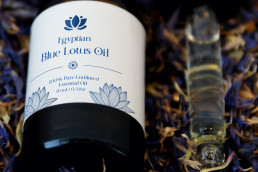
A well-made blue lotus candle is one of the quieter pleasures of home aromatherapy: a soft honeyed-floral throw that warms a room without overwhelming it, and a slow-burning object that rewards the patience of the maker. This recipe produces two 8 ounce soy candles scented at 8 percent fragrance load, using a blend of blue lotus absolute and complementary essential oils that carry well through a hot wax melt. It is written for the home maker who wants to produce something genuinely fine, not a novelty, and who is willing to take the small extra steps that separate a candle you light once from one you return to.
Table of Contents
- What You Will Need
- Equipment
- Ingredients (makes two 8 ounce candles)
- Why This Formulation Works
- Step-by-Step Instructions
- How to Use Your Blue Lotus Candle
- Storage and Shelf Life
- Variations
- Sensitive Nose Variation
- Deeper Base Variation
- Beeswax and Coconut Blend
- Massage Candle Variation
- Common Mistakes to Avoid
- Frequently Asked Questions
- Where to Go From Here
- Source the Absolute First
It is written and clinically reviewed by Antonio Breshears, ND, CCA, a Bastyr-trained naturopathic doctor and certified clinical aromatherapist. For the broader context on blue lotus absolute, its chemistry, and how it behaves in different applications, see the complete guide to blue lotus oil, which sits alongside this recipe as a reference for dilution, safety, and formulation reasoning.
What You Will Need
Equipment
- A pouring pitcher or double boiler (stainless steel, with a spout)
- A digital thermometer (candy or infrared, reading up to 100 degrees Celsius)
- A digital kitchen scale accurate to 1 gram
- A smaller scale accurate to 0.1 gram for weighing the oils
- Two 8 ounce candle vessels (heat-safe glass or tin, roughly 240 ml each)
- Two pre-waxed, pre-tabbed wicks sized for a 70 to 80 mm diameter vessel (CD-12 or ECO-12 for soy are reliable starting points)
- Wick stickers or hot glue to secure the wick tabs
- Wick centering bars or two chopsticks taped together
- A glass stirring rod or stainless whisk
- A clean pipette for dosing the blue lotus absolute
Ingredients (makes two 8 ounce candles)
- 454 grams (1 pound) of soy wax, a container blend such as Golden Brands 464 or NatureWax C-3
- 36 grams of combined scent load (8 percent of the wax weight), comprising:
- 14 grams blue lotus absolute (diluted in carrier, see note below)
- 10 grams sandalwood essential oil or Australian sandalwood
- 8 grams sweet orange or bergamot essential oil
- 4 grams vanilla CO2 extract or benzoin resinoid
A note on the blue lotus absolute: because absolute is expensive and viscous, most makers pre-dilute it 1:1 in fractionated coconut oil or jojoba before adding it to wax. If you are using a pre-diluted 50 percent absolute, use 14 grams of that dilution; if you are using neat, undiluted absolute, use 7 grams neat and make up the balance with an additional 7 grams of sandalwood or a soft musk accord. The effective absolute content in the finished candle should sit around 1.5 percent of total wax weight, which is where its scent signature becomes perceptible without wasting material to wax absorption.
Why This Formulation Works
Blue lotus absolute is a poor solo performer in candles. Its scent profile is delicate, layered, and weighted toward heart and base notes that do not project well on their own through a soy wax matrix. Soy absorbs fragrance unevenly, and delicate florals can mute into near-silence if they are not supported by sturdier, higher-projecting partners. The sandalwood in this blend provides a warm woody base that carries the lotus outward; the citrus lifts the top and opens the nose to the floral heart; the vanilla or benzoin anchors the base and adds the honeyed sweetness that flatters lotus particularly well. The result is a candle where the lotus is clearly present but supported, rather than one where it disappears into the wax.
The 8 percent total scent load is at the upper end of what soy 464 can reliably hold without weeping or frosting excessively. If you are new to candle making, 6 percent is safer and still produces a detectable throw; drop the blue lotus to 10 grams and reduce the other oils proportionally. The 1.5 percent effective lotus content matches what an aromatherapist would use for a concentrated inhalation blend, and it respects the fact that absolute is both precious and potent.
Step-by-Step Instructions
- Prepare the vessels. Clean the glass jars with warm soapy water, dry thoroughly, and warm them gently in an oven at 60 degrees Celsius for ten minutes. Warm vessels reduce the risk of wet spots where the wax pulls away from cold glass as it sets.
- Secure the wicks. Stick the pre-tabbed wick to the centre of the jar base using a wick sticker or a small dot of hot glue. Thread the wick through the centering bar so it sits vertical and centred.
- Weigh the wax. Measure 454 grams of soy flakes into the pouring pitcher.
- Melt slowly. Place the pitcher in a double boiler over medium heat, or on a low induction setting. Stir occasionally. Bring the wax to 80 to 85 degrees Celsius, which fully melts soy 464 without degrading it.
- Remove from heat and cool. Take the pitcher off the heat and allow the wax to cool to 60 to 65 degrees Celsius. Adding fragrance to wax that is too hot flashes off the top notes and weakens the throw; adding it to wax that is too cold causes poor bonding and weeping.
- Weigh the scent blend. While the wax cools, weigh each oil into a small glass beaker using the 0.1 gram scale. Add the blue lotus absolute last so it is not sitting exposed to air longer than necessary. Gently swirl the beaker to combine.
- Incorporate the scent. When the wax reaches 60 to 65 degrees Celsius, pour the combined oils into the pitcher and stir steadily with a glass rod for a full two minutes. Do not skimp on this step; inadequate stirring is the most common cause of weak or patchy scent throw.
- Pour. Pour slowly into the prepared jars, stopping about 5 mm below the lip. Pouring too fast introduces air bubbles; pouring too slowly allows the wax to start setting in the pitcher.
- Settle. Leave the candles undisturbed on a level surface at room temperature (ideally 20 to 22 degrees Celsius) for 24 hours. Do not move them during the first six hours, when the wax is setting through its memory phase.
- Trim the wicks. Once fully set, trim the wicks to 6 mm above the wax surface using scissors or a wick trimmer.
- Cure. This is the step most makers skip and later regret. Leave the candles sealed or covered in a cool dark place for 10 to 14 days before the first burn. Soy wax needs this curing period for the fragrance molecules to bind fully to the wax matrix. Candles burned early often smell weak, even when correctly formulated.
How to Use Your Blue Lotus Candle
For the first burn, allow the wax to melt fully to the edges of the jar before extinguishing. This typically takes two to three hours in an 8 ounce vessel and prevents tunnelling, which is the single biggest cause of candles burning poorly for the rest of their life. After the first burn, one to two hour sessions are ideal. Trim the wick to 6 mm each time before lighting.
A well-formulated blue lotus candle is best in smaller rooms, a bedroom, a reading corner, a bathroom during a long evening bath, where the scent can build gently rather than fight against open-plan air currents. It pairs naturally with unhurried evening rituals and is less suited to kitchen or entryway use, where its softness is easily overwhelmed.
Storage and Shelf Life
Finished soy candles keep well for 12 to 18 months when stored with a lid in a cool dark place. The blue lotus component is the most fragile element; exposure to direct sunlight will dull the top of the scent noticeably within a few weeks. Keep the lid on between burns, or cover with a cloche, and avoid storing candles on a sunny windowsill. If a candle has been sitting unused for more than six months, the first burn may smell slightly flatter than subsequent ones as the surface layer refreshes.
Variations
Sensitive Nose Variation
If the standard formula feels too rich, reduce the total scent load to 6 percent (27 grams total). Use 10 grams blue lotus absolute dilution, 8 grams sandalwood, 6 grams bergamot, and 3 grams vanilla. The throw is quieter but cleaner.
Deeper Base Variation
For a more grounded, incense-adjacent profile, replace the citrus entirely with 4 grams frankincense and 4 grams pink pepper. Keep the lotus, sandalwood, and vanilla as specified. This version suits winter use and meditation settings.
Beeswax and Coconut Blend
For a slower, hotter-burning candle with a creamier aesthetic, use 320 grams soy wax, 80 grams coconut wax, and 54 grams white beeswax pastilles. Melt together to 80 degrees Celsius and proceed as above. Beeswax holds fragrance differently; expect a slightly softer throw but a more luxurious burn.
Massage Candle Variation
Replace the soy with a blend of 340 grams refined shea butter, 90 grams coconut oil, and 24 grams beeswax. Reduce the scent load to 3 percent (14 grams total, keeping the proportions). The melted wax pools at skin-safe temperature and can be poured onto the body as a warm massage oil. Use a low melt-point wick (LX-10 or similar).
Common Mistakes to Avoid
Adding fragrance at too high a temperature. Soy wax that is still above 70 degrees Celsius when you add scent will burn off the lighter notes and leave you with a base-heavy, muddy profile. Use the thermometer; do not eyeball it.
Under-stirring after scent addition. A full two minutes of steady stirring is the minimum. Patchy throw almost always traces back to this step.
Skipping the cure. A candle burned three days after pouring will smell roughly half as strong as the same candle burned after two weeks. If you test-burn early and feel disappointed, wait.
Wick sizing errors. A wick that is too small tunnels; one that is too large produces sooting and a large flame. If your first burn does not reach the edges in three hours, size up; if it produces black smoke or a mushrooming wick, size down.
Using the wrong blue lotus material. A cheap, adulterated absolute will produce a candle that smells vaguely sweet but lacks the characteristic cool-floral signature. Source matters more here than in almost any other application, because the wax does not forgive poor starting material.
Frequently Asked Questions
Can I use blue lotus essential oil instead of absolute?
True steam-distilled blue lotus essential oil is extremely rare and prohibitively expensive. Nearly all blue lotus aromatic material sold commercially is solvent-extracted absolute. Absolute works well in candles; if you genuinely have essential oil, it also works, but the quantity required to be perceptible may be impractical.
Will the candle have psychoactive effects when burned?
No. The alkaloids responsible for blue lotus’s mild mood effects are not volatile at candle combustion temperatures in any meaningful quantity, and they are not efficiently absorbed through inhaled smoke. A blue lotus candle is an aromatic and atmospheric experience, not a psychoactive one.
Is soy wax really the best choice?
For blue lotus specifically, soy is a reasonable compromise between fragrance retention, burn quality, and accessibility. Coconut-soy blends hold fragrance slightly better. Paraffin throws more loudly but dulls the delicacy of lotus. Beeswax on its own absorbs too little fragrance for this application.
Why does my candle smell strong cold but weak when burning?
This is a classic hot throw versus cold throw problem. It usually means the wick is undersized, the cure was too short, or the fragrance was added at too high a temperature. Work through those three variables in that order.
Can I colour the candle?
Yes, but use candle-grade dye chips or liquid dye, not food colouring or crayons. A soft dusty blue or warm ivory suits the scent; avoid neon tones, which look jarring against the lotus character. Add dye at the same temperature as fragrance.
How long does one candle last?
An 8 ounce soy candle burned in two-hour sessions with a properly sized wick will typically give 40 to 50 hours of burn time. Shorter sessions extend total life slightly at the cost of throw consistency.
Is this candle safe during pregnancy?
Blue lotus is avoided topically and orally during pregnancy. Ambient diffusion at candle concentrations in a ventilated room is a much lower exposure, but if you are pregnant or breastfeeding and prefer caution, choose a different aromatic for that period.
Can I sell candles made with this recipe?
Home-scale sale is possible in most jurisdictions, but you will need to label ingredients accurately, follow local candle safety regulations, and in some regions conduct burn testing for CPSC-equivalent compliance. Blue lotus is legally restricted in a small number of jurisdictions, which may affect where you can ship.
What if my wax has wet spots on the side of the jar?
Wet spots are a cosmetic adhesion issue caused by wax cooling unevenly against the glass. They do not affect performance. Warming the jars before pouring and allowing the candle to set in a draft-free room at steady room temperature minimises them.
Can I add dried flowers or botanicals to the top?
Dried botanicals placed on or in the wax are a fire hazard and should be avoided in candles intended for actual burning. If you want the decorative effect, use them only on the cold surface of a display candle that will not be lit, or embed them around the outside of the glass.
Where to Go From Here
A candle is one way to use blue lotus absolute in the home, but it is not the most efficient one. If you are primarily interested in the scent as a mood or sleep support, a simple diffuser blend or a pulse-point rollerball delivers more of the material’s character with far less of it used. If you are interested in the craft of candle making itself, the same base formula, with the blue lotus replaced or supplemented, will carry you through dozens of variations. For the chemistry background on why blue lotus behaves as it does in different formats, the complete guide to blue lotus oil is the sensible next read. Everything in this recipe rests on the quality of the starting material; a well-sourced absolute is the single largest variable in whether the finished candle feels ordinary or genuinely beautiful.

Antonio Breshears
Antonio Breshears is a renowned expert in holistic medicine and beauty, with over 25 years of research experience dedicated to uncovering the secrets of nature's most powerful remedies. Holding a degree in Naturopathic Medicine, Antonio's passion for healing and well-being has driven him to explore the intricate connections between mind, body, and spirit.
Over the years, Antonio has become a respected authority in the field, helping countless individuals discover the transformative power of plant-based therapies, including essential oils, herbs, and natural supplements. He has authored numerous articles and publications, sharing his wealth of knowledge with a global audience seeking to improve their overall health and well-being.
Antonio's expertise extends to the realm of beauty, where he has developed innovative, all-natural skincare solutions that harness the potency of botanical ingredients. His formulations embody his deep understanding of the healing properties found in nature, providing holistic alternatives for those seeking a more balanced approach to self-care.
With his extensive background and dedication to the field, Antonio Breshears is a trusted voice and guiding light in the world of holistic medicine and beauty. Through his work at Pure Blue Lotus Oil, Antonio continues to inspire and educate, empowering others to unlock the true potential of nature's gifts for a healthier, more radiant life.