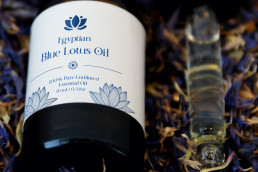
If you have arrived here wondering whether blue lotus oil is appropriate for a child, you are asking the right question before you diffuse or apply anything. The short, honest answer regarding blue lotus oil children safety is that it is not a paediatric essential oil in any conventional sense, and most clinical aromatherapists, myself included, do not recommend it for infants, toddlers, or young children. This article explains why, what the age considerations actually look like, what safer alternatives exist for the concerns parents are usually trying to address (sleep, anxiety, tantrums, restlessness), and when, if ever, a blue lotus preparation might be considered for an older adolescent under careful supervision.
Table of Contents
- Understanding Why Children Are Not Small Adults
- Why Blue Lotus Oil Is Not Recommended for Young Children
- Centrally Active Alkaloids
- Sedative and Dreamy Qualities That Can Disorient Children
- Unknown Interactions With Paediatric Medications
- Extraction Solvent Residues
- Age Considerations: What the Guidance Actually Looks Like
- Infants Under Two Years
- Children Two to Six Years
- Children Seven to Twelve Years
- Adolescents Thirteen to Seventeen Years
- What Parents Are Usually Actually Trying to Solve
- Sleep Difficulties
- Anxiety and Emotional Regulation
- Tantrums and Dysregulation
- Attention and Sensory Difficulties
- If Blue Lotus Is Being Used in the Home for Adult Purposes
- When to Seek Professional Help Instead
- Safer Aromatherapy Alternatives for Children
- Frequently Asked Questions
- Where to Go From Here
- Blue Lotus, For Adult Use
It is written and clinically reviewed by Antonio Breshears, ND, CCA, a Bastyr-trained naturopathic doctor and certified clinical aromatherapist. For broader context on the oil itself, its chemistry, and its legitimate adult uses, see The Complete Guide to Blue Lotus Oil; this article is specifically about paediatric considerations and should be read alongside any general safety information you consult.
Understanding Why Children Are Not Small Adults
Before we talk about blue lotus specifically, it helps to understand the framework clinical aromatherapists use when assessing any essential oil for paediatric use. Children are not simply scaled-down adults. Their skin is thinner and more permeable, so transdermal absorption is higher per unit body weight. Their liver enzyme systems, particularly the cytochrome P450 pathways that metabolise many aromatic compounds, do not mature fully until adolescence. Their respiratory tracts are narrower and more reactive, meaning that inhaled compounds that an adult finds pleasantly relaxing can trigger bronchospasm or mucous membrane irritation in a young child. And, critically, their developing nervous systems are far more sensitive to centrally acting compounds.
This is why the paediatric aromatherapy literature, including the work of Robert Tisserand and Rodney Young, takes a consistently conservative stance: fewer oils, lower dilutions, shorter exposures, and a strong preference for well-studied, gentle constituents. Blue lotus, while genuinely lovely for adult use, does not fit the profile of a well-studied paediatric oil. It has never been systematically tested in children, its alkaloid content acts centrally on dopaminergic and serotonergic pathways, and its traditional use contexts were overwhelmingly adult and ceremonial.
Why Blue Lotus Oil Is Not Recommended for Young Children
There are four specific concerns that make blue lotus a poor choice for infants and young children, and it is worth spelling them out rather than hiding behind a generic “consult your doctor” warning.
Centrally Active Alkaloids
Blue lotus contains aporphine (a weak dopamine agonist) and nuciferine (a weak dopamine antagonist with serotonin 5-HT2A and 2C activity). In adults at sensible dilutions, these produce the gentle, slightly dreamy, parasympathetic shift that the oil is prized for. In a developing nervous system, the effects of even small amounts of these compounds are unknown and, frankly, under-studied. Neurodevelopmental research is generally cautious about introducing weak psychoactive compounds to children without a clear clinical reason and a robust safety dataset. Blue lotus has neither.
Sedative and Dreamy Qualities That Can Disorient Children
Adults often describe the experience of blue lotus as mildly euphoric, softening, and dream-enhancing. Those same qualities can be confusing, disorienting, or frightening for a young child who does not yet have the cognitive framework to interpret altered perception. What feels pleasantly introspective to a thirty-year-old can feel strange and unsettling to a six-year-old. This is not a hypothetical risk; it is a routine caution among clinical aromatherapists working with children and any psychoactive botanical.
Unknown Interactions With Paediatric Medications
Children on ADHD medications, SSRIs, antiepileptics, or antihistamines are increasingly common. Blue lotus has plausible interactions with dopaminergic and serotonergic drugs, and the paediatric interaction profile is entirely uncharted. Introducing a centrally active botanical to a child on any prescription psychiatric or neurological medication is not a reasonable aromatherapy decision; it is a clinical decision that belongs in a prescriber’s office.
Extraction Solvent Residues
Most blue lotus on the market is a solvent-extracted absolute rather than a steam-distilled essential oil. Even high-quality absolutes retain trace residues of extraction solvents (typically hexane, sometimes ethanol). Regulatory thresholds for these residues are set for adult cosmetic use, not for children. For paediatric applications, steam-distilled oils are preferred precisely because they eliminate this variable, and even then only a short list of oils is considered child-appropriate.
Age Considerations: What the Guidance Actually Looks Like
Rather than give a single blanket rule, it is more useful to think in age bands, because a newborn and a fifteen-year-old are dealing with completely different physiologies.
Infants Under Two Years
No blue lotus. No diffusion in the room, no topical application, no inclusion in any bath or balm. At this age the range of essential oils considered safe is very narrow (typically limited to carefully diluted lavender, gentle chamomile hydrosols, and a handful of others in the hands of a trained practitioner), and blue lotus is nowhere on that list. If your infant is struggling with sleep or fussiness, the answers lie in routine, environment, feeding, and paediatric assessment, not aromatherapy.
Children Two to Six Years
Still no blue lotus. This is the age band where parents often start to explore aromatherapy for sleep support or calming, and there are genuinely useful options (Roman chamomile, lavender, mandarin) at very low dilutions. Blue lotus does not belong in this toolkit because the central activity profile is too uncertain for an age group whose brains are still rapidly developing and whose self-reporting of subjective effects is unreliable.
Children Seven to Twelve Years
Blue lotus is still not a default recommendation in this age band. Some clinical aromatherapists will, under specific circumstances and parental consent, use small amounts of gentle adult-oriented oils at significantly reduced dilutions for older children in this range. I would still place blue lotus in a more cautious category, reserved for specific situations and not for general calming or sleep support. There are far better-studied, better-tolerated options for a nine-year-old who cannot wind down at bedtime.
Adolescents Thirteen to Seventeen Years
This is where the picture becomes more nuanced. An older adolescent with a mature enough metabolic profile, parental consent, no relevant medications, and a specific use case (say, occasional pre-exam anxiety or difficulty settling at night) might reasonably experiment with very low-dilution blue lotus under supervision. Even here, I would suggest starting with diffusion rather than topical use, keeping sessions short, and treating it as an occasional tool rather than a daily practice. And I would still default to better-studied oils first.
What Parents Are Usually Actually Trying to Solve
When parents ask me about blue lotus for a child, the underlying concern is almost always one of four things: the child will not sleep, the child is anxious, the child is having tantrums or emotional dysregulation, or the child has some sensory or attention difficulty. Blue lotus is not the right answer for any of these in a young child, but the concern is real and worth addressing properly.
Sleep Difficulties
For a child who struggles with sleep, the primary investigation should be routine, screen exposure, dinner timing, room environment, and any underlying medical issues (sleep apnoea, restless legs, reflux). Once those are addressed, the aromatherapy options that have the best paediatric track record are lavender (Roman or true lavender at a 0.5 percent dilution in a carrier, or two drops in a bedroom diffuser) and Roman chamomile. These are gentle, well-studied, and have a long safety history in children. Blue lotus adds nothing that lavender does not already do better and more safely.
Anxiety and Emotional Regulation
For anxious children, the evidence base for aromatherapy alone is modest, and most of the benefit comes from ritual, attention, and the calming interaction with the parent rather than the specific chemistry of the oil. Simple, child-appropriate oils like mandarin, sweet orange, or Roman chamomile, used at very low dilution in a bedtime massage or simple diffusion, are a reasonable adjunct to the actual work of anxiety in children, which is behavioural, relational, and sometimes clinical.
Tantrums and Dysregulation
Aromatherapy is not a behavioural intervention and will not solve tantrums. What a calm scent can do is help set up an environment that supports regulation, and this is better served by a familiar, gentle, safe oil than by something with centrally active alkaloids.
Attention and Sensory Difficulties
Children with diagnosed ADHD or sensory processing differences often have complex sensitivities, and aromatherapy decisions for these children really do belong with a paediatric-trained practitioner who knows the child. Blue lotus would not be my starting point, and I would want a full picture before suggesting anything centrally active.
If Blue Lotus Is Being Used in the Home for Adult Purposes
A common and legitimate scenario is a parent who uses blue lotus for their own sleep, meditation, or perfumery and wants to know whether it is safe to do so with children in the house. The short answer is that passive exposure through occasional adult diffusion in a separate room is generally not a concern for older children, but there are still sensible precautions.
Do not diffuse in a child’s bedroom or in a shared sleeping space. Do not diffuse continuously in a closed, poorly ventilated room where a child spends hours. Store the bottle out of reach; this is true of every essential oil, and blue lotus is no exception. If a child accidentally ingests essential oil, treat it as you would any accidental ingestion, rinse the mouth, do not induce vomiting, and contact poison control or your paediatrician. Topical spills should be washed off with a plain carrier oil followed by soap and water, since essential oils are oil-soluble and water alone does not remove them effectively.
If you wear blue lotus as a personal fragrance, a small amount on your own skin will not meaningfully dose a child who hugs you, but it is sensible to avoid applying it to the chest or wrists immediately before extended skin-to-skin contact with an infant.
When to Seek Professional Help Instead
There are situations where aromatherapy of any kind, blue lotus included, is not the right layer of intervention and a paediatric professional should be involved. These include persistent insomnia lasting more than a few weeks, anxiety that interferes with school or friendships, any concern about mood or suicidal thinking in an older child or teen, dysregulation that seems out of proportion to developmental expectations, and any situation involving psychiatric medication. Please do not use an unvalidated aromatic on a child as a substitute for a proper clinical assessment. The honest limit of aromatherapy, and of this article, is that it is an adjunct, not a treatment for paediatric mental health concerns.
Safer Aromatherapy Alternatives for Children
If your goal is a gentle, safe aromatic practice to support a child’s sleep or general mood, here are the options I routinely recommend ahead of blue lotus for anyone under adolescence.
- Lavender (Lavandula angustifolia) at 0.25 to 0.5 percent dilution in a carrier for bedtime massage, or two drops in a bedroom diffuser run for twenty to thirty minutes before sleep. Well-studied in paediatric contexts and reliably gentle.
- Roman chamomile at similar dilutions. Calming, familiar, and with a long safety record.
- Mandarin or sweet orange for daytime mood and general brightness; children tend to like the scent and these oils are very well tolerated.
- Hydrosols (rose, chamomile, lavender) as a gentler alternative for very young children, used as a pillow mist or a light skin spritz.
These are the tools to reach for first. Blue lotus is a specialist adult oil, and that is the frame to keep it in.
Frequently Asked Questions
Can I diffuse blue lotus oil with children in the house?
Occasional, short diffusion in a separate room away from where children sleep or spend extended time is generally fine for adult use. Avoid continuous diffusion in shared spaces, and never diffuse it in a child’s bedroom.
What age is blue lotus oil safe for?
There is no established safe paediatric age. I would not use it for any child under thirteen, and even in adolescence I would treat it as a specialist occasional oil rather than a regular part of a child’s routine.
Is blue lotus oil safe for babies?
No. Blue lotus is not appropriate for infants under any circumstances, whether diffused, applied topically, or added to bath water.
My toddler grabbed my blue lotus bottle; what should I do?
If the bottle is sealed and intact, simply move it out of reach. If there has been a spill on the skin, wash the area with a plain carrier oil (olive or almond oil) and then soap and water. If you suspect ingestion, contact poison control or your paediatrician immediately and do not induce vomiting.
Can teenagers use blue lotus oil for sleep or exam stress?
An older adolescent who is otherwise healthy, not on centrally acting medication, and has parental consent can reasonably experiment with low-dilution diffusion or a very dilute roll-on blend. I would still start with better-studied options like lavender and only consider blue lotus if the teenager is curious about it specifically.
Is blue lotus tea safe for children?
The tea is a separate question from the oil, but the same cautions about centrally active alkaloids apply. I do not recommend blue lotus tea for children, and the legitimate traditional use cases were adult.
Will passive exposure to blue lotus harm my child?
Passive exposure at the levels produced by occasional adult use, a diffuser in another room, or perfume on a parent’s skin, is not expected to cause harm in an otherwise healthy child. The concerns are with direct application or concentrated inhalation.
Can I use blue lotus oil for my child’s anxiety if nothing else has worked?
Please do not make this decision without a clinical conversation. Persistent anxiety in a child that has not responded to other support should be assessed by a paediatric clinician. Blue lotus is not a validated anxiety treatment for any age, and particularly not for children.
What essential oils are actually recommended for children?
Lavender, Roman chamomile, mandarin, sweet orange, and gentle hydrosols are the workhorses of paediatric aromatherapy. These are well-studied, gentle, and appropriate at low dilutions for various age bands.
Does blue lotus oil interact with children’s medications?
The interaction profile in children is entirely uncharted. Given its activity on dopaminergic and serotonergic pathways, I would treat it as potentially interacting with ADHD stimulants, SSRIs, antiepileptics, and sedating antihistamines, and avoid it in any child on these medications.
Where to Go From Here
If you arrived here considering blue lotus for a child, I hope this has given you a clear answer (it is an adult oil, and there are better paediatric options) along with a framework for thinking about aromatic safety in children more broadly. If you use blue lotus yourself and wanted to understand the household considerations, you now have a sensible set of precautions to follow. For a fuller picture of the oil itself, its chemistry, adult use cases, and general safety profile, The Complete Guide to Blue Lotus Oil is the natural next read.
Aromatherapy decisions for children should always be made with the child’s specific situation, medications, and developmental stage in mind, and for anything beyond general relaxation, a consultation with a paediatric-trained practitioner or your child’s clinician is the right next step.

Antonio Breshears
Antonio Breshears is a renowned expert in holistic medicine and beauty, with over 25 years of research experience dedicated to uncovering the secrets of nature's most powerful remedies. Holding a degree in Naturopathic Medicine, Antonio's passion for healing and well-being has driven him to explore the intricate connections between mind, body, and spirit.
Over the years, Antonio has become a respected authority in the field, helping countless individuals discover the transformative power of plant-based therapies, including essential oils, herbs, and natural supplements. He has authored numerous articles and publications, sharing his wealth of knowledge with a global audience seeking to improve their overall health and well-being.
Antonio's expertise extends to the realm of beauty, where he has developed innovative, all-natural skincare solutions that harness the potency of botanical ingredients. His formulations embody his deep understanding of the healing properties found in nature, providing holistic alternatives for those seeking a more balanced approach to self-care.
With his extensive background and dedication to the field, Antonio Breshears is a trusted voice and guiding light in the world of holistic medicine and beauty. Through his work at Pure Blue Lotus Oil, Antonio continues to inspire and educate, empowering others to unlock the true potential of nature's gifts for a healthier, more radiant life.