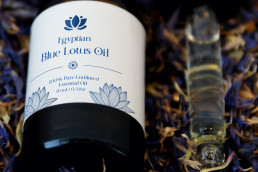
If you are searching for blue lotus oil in the Netherlands, the practical questions are straightforward: is it legal, where can you actually buy a genuine bottle, what should you pay, and how do you avoid the disappointingly common fragrance oils sold under the same name. This guide addresses each of those points plainly, with specific attention to the Dutch regulatory landscape, reputable sourcing options, and the quality markers that separate a real Nymphaea caerulea absolute from a scented impostor.
Table of Contents
- Is Blue Lotus Oil Legal in the Netherlands?
- What You Are Actually Buying: Absolute, Essential Oil, or Fragrance?
- Solvent-extracted absolute
- Steam-distilled essential oil
- Supercritical CO2 extract
- Fragrance oil (avoid)
- Where to Buy Blue Lotus Oil in the Netherlands
- Smartshops
- Dutch online herbal and aromatherapy retailers
- International suppliers shipping to the Netherlands
- Direct-from-producer artisan brands
- What You Should Expect to Pay
- How to Verify Authenticity Before You Buy
- Shipping, Customs, and Delivery in the Netherlands
- How to Use Blue Lotus Oil Once You Have It
- When Blue Lotus Oil Is Not the Right Choice
- Complementary Approaches and Pairings
- Frequently Asked Questions
- Where to Go From Here
- Authentic Blue Lotus, Shipped to the Netherlands
It is written and clinically reviewed by Antonio Breshears, ND, CCA, a Bastyr-trained naturopathic doctor and certified clinical aromatherapist. For broader context on chemistry, applications, and safety, readers may also want to consult The Complete Guide to Blue Lotus Oil, which sits as the master reference behind this geographic buying guide.
Is Blue Lotus Oil Legal in the Netherlands?
Yes. Blue lotus (Nymphaea caerulea) is legal to buy, possess, and use in the Netherlands. It is not listed under the Dutch Opium Act (Opiumwet), nor does it appear on any of the scheduled psychoactive substance lists maintained by the Dutch Ministry of Health. The plant, its dried flowers, extracts, tinctures, and essential or absolute oils are sold openly in smartshops, herbal suppliers, and online retailers throughout the country.
This contrasts with a handful of other jurisdictions, notably Russia, Poland, Latvia, and the US state of Louisiana, where blue lotus is either restricted or outright prohibited. The Netherlands, with its comparatively liberal stance on botanicals and traditional plant medicines, is one of the easier European countries in which to source the oil legitimately. Importing from reputable international suppliers is also uncomplicated, provided the product is labelled correctly as a cosmetic or aromatic ingredient rather than a food or medicine.
That said, legal availability is not the same as quality availability. The Dutch market, like many others, contains a broad spectrum of products ranging from genuine solvent-extracted absolute to heavily diluted or entirely synthetic fragrance blends. The rest of this guide is dedicated to helping you find the former and avoid the latter.
What You Are Actually Buying: Absolute, Essential Oil, or Fragrance?
This is the single most important distinction when shopping for blue lotus oil anywhere, including the Netherlands. The term “blue lotus oil” is used loosely in retail, and the same label can refer to three very different products.
Solvent-extracted absolute
This is the most common authentic form. Fresh or dried blue lotus flowers are extracted using a food-grade solvent (typically hexane or ethanol), which is then removed, leaving behind a thick, deeply aromatic absolute. Roughly 3,000 to 5,000 flowers yield a single gram of absolute, which is why genuine product is expensive. Expect a dark amber to greenish-brown colour, a honeyed-floral heart with balsamic-smoky depth, and a consistency that thickens in cool weather.
Steam-distilled essential oil
True steam-distilled blue lotus essential oil exists but is genuinely rare. The flowers are delicate and yield very little oil by distillation, so the finished product is both scarce and costly. If you see an inexpensive “essential oil” labelled blue lotus, it is almost certainly not what it claims to be.
Supercritical CO2 extract
CO2 extraction uses pressurised carbon dioxide as a solvent, producing an extract that sits somewhere between an absolute and an essential oil in character. It is the cleanest method from a residue perspective but is the least common commercially. Premium suppliers occasionally offer it.
Fragrance oil (avoid)
A “blue lotus fragrance oil” or “blue lotus perfume oil” sold for a few euros is almost invariably a synthetic composition in a carrier oil. It will smell floral and pleasant, but it contains no Nymphaea caerulea plant material and offers none of the aromatic or traditional use benefits the real oil is known for. These products are not inherently harmful, but they should not be confused with the botanical extract.
Where to Buy Blue Lotus Oil in the Netherlands
Dutch buyers have several routes. Each has trade-offs in price, selection, and reliability.
Smartshops
The Netherlands is home to a well-established network of smartshops, which have long sold traditional and ethnobotanical products. Larger chains and independent shops in Amsterdam, Rotterdam, Utrecht, The Hague, and Maastricht often stock blue lotus in various forms, including flowers, tinctures, and occasionally oil. The advantage is that you can see and smell the product before buying. The disadvantage is that staff expertise on aromatherapy-grade oil specifically (as opposed to dried flower material for tea or smoking blends) varies considerably. Ask for the botanical name, extraction method, and country of origin. If the shop cannot answer those three questions, look elsewhere.
Dutch online herbal and aromatherapy retailers
A number of Netherlands-based online retailers specialise in essential oils, absolutes, and carrier oils. These tend to offer better documentation than smartshops: GC-MS reports, batch numbers, and origin statements. Shipping within the Netherlands is typically overnight, and VAT is included in the listed price. Look for retailers that clearly identify their blue lotus product as an absolute (not a fragrance oil), state the solvent used, and disclose the country of origin (Egypt is the traditional and most trusted source).
International suppliers shipping to the Netherlands
For specialist or premium-grade oil, many Dutch buyers order from established international suppliers. Egypt, India, and select EU and US-based aromatherapy houses ship to the Netherlands without difficulty. Customs will typically process the parcel quickly, and small personal-use quantities of cosmetic-labelled oil pass through without issue. Be aware that import VAT (21 percent) and possibly a small handling fee apply to shipments from outside the EU above the low-value threshold.
Direct-from-producer artisan brands
A smaller but growing segment is the direct-to-consumer artisan brand, which sources raw material from Egyptian growers and bottles in small batches. These tend to offer the best combination of authenticity, transparency, and price for what you receive, though the per-bottle cost is still meaningful. This is the category in which Pure Blue Lotus Oil operates, shipping to the Netherlands alongside the rest of the EU.
What You Should Expect to Pay
Pricing for genuine blue lotus oil in the Netherlands sits within a recognisable range. A small bottle (5 ml) of authentic absolute typically costs between 45 and 120 euros, depending on purity, extraction method, and brand positioning. A 10 ml bottle ranges from roughly 85 to 220 euros. CO2 extracts sit at the upper end. Anything dramatically below these ranges, for example a 10 ml “essential oil” for 15 euros, is not a genuine extract and should be treated as a fragrance product.
Dilutions (blue lotus absolute pre-mixed in jojoba or similar carrier at 5 to 10 percent) are perfectly legitimate and cost considerably less. They can be a sensible entry point if you are new to the oil and want to use it on skin without doing your own dilution work. Just be certain the label states the concentration clearly.
How to Verify Authenticity Before You Buy
A few straightforward checks will filter out most fakes and low-grade products.
Botanical name on the label. The product should explicitly state Nymphaea caerulea. If it says only “blue lotus” or “lotus flower” with no Latin binomial, treat it with suspicion. Some vendors confuse blue lotus with sacred lotus (Nelumbo nucifera), which is a different plant entirely.
Extraction method disclosed. A reputable supplier will state whether the product is an absolute, steam-distilled essential oil, or CO2 extract. Vague terms like “pure blue lotus oil” without clarification are a yellow flag.
Country of origin. Egypt is the traditional and most respected source, though blue lotus is also cultivated in Thailand, India, and parts of Africa. The label should say where the raw material comes from.
GC-MS report available. Gas chromatography-mass spectrometry testing identifies the chemical profile of the oil and can detect adulteration. Premium suppliers provide these reports on request or publish them on product pages. The presence of nuciferine and aporphine alkaloids, along with flavonoids such as apigenin and quercetin, is consistent with genuine Nymphaea caerulea.
Packaging. Genuine absolute is sold in dark glass (amber or cobalt), never clear glass and never plastic. The oil is sensitive to light and oxidation, and a supplier who packages it in clear plastic does not understand or respect the material.
Sensory check on arrival. Real blue lotus absolute has a distinctive scent: a cooler floral-aquatic top note, a rich honeyed-floral heart, and a balsamic, slightly smoky base that lingers. It is not a simple “pretty floral” smell. If your bottle smells like generic perfume, it is fragrance oil.
Shipping, Customs, and Delivery in the Netherlands
Domestic Dutch shipping of blue lotus oil is uncomplicated. PostNL and DHL handle most retail deliveries, typically within one to two working days. No special permits, declarations, or age restrictions apply to the oil at a consumer level.
Intra-EU shipping is equally simple. Orders from Germany, France, Belgium, or other EU member states arrive without customs intervention, and VAT is handled by the seller under standard EU e-commerce rules.
For shipments from outside the EU (the UK post-Brexit, the US, Egypt, and so on), Dutch customs will assess import VAT at 21 percent on orders above the low-value threshold. A small handling fee from the courier is also common. Parcels labelled clearly as cosmetic or aromatic ingredients with a declared value and HS code typically clear within one to three working days. Refusing to declare or mislabelling as a gift to avoid VAT is both against the rules and a reliable way to have your parcel held.
The oil itself is not a controlled substance and does not require any import permit for personal quantities.
How to Use Blue Lotus Oil Once You Have It
Assuming you have purchased a genuine absolute, the standard applications are aromatic, topical (diluted), and in ritual or meditation contexts.
Diffusion. Two to four drops in an ultrasonic diffuser, run for 20 to 40 minutes. This is the most economical way to experience the scent and its parasympathetic, calming effect on the nervous system.
Topical on skin. Dilute to 1 to 2 percent in a carrier oil (jojoba, sweet almond, argan) for facial use, 2 to 3 percent for body application, and up to 3 percent for targeted use on pulse points. One percent equates to roughly one drop of absolute per 5 ml of carrier. Do not apply undiluted.
Bath. Three to five drops dispersed in a tablespoon of carrier oil, then added to warm (not hot) bathwater. Never add neat oil to a bath; it will float on the surface and concentrate on skin.
Meditation and ritual. A single drop on the wrists or applied to a cotton strip near the breath is sufficient for contemplative use. The scent is effective at low concentrations.
When Blue Lotus Oil Is Not the Right Choice
A few situations warrant caution or avoidance entirely.
Pregnancy and breastfeeding. The alkaloid profile of blue lotus has not been adequately studied in pregnancy, and the traditional understanding urges avoidance. Do not use during these periods.
Dopaminergic and serotonergic medications. Because aporphine has weak dopamine-agonist activity and nuciferine has 5-HT2A/2C activity, caution is appropriate if you are taking Parkinson’s medications, MAOIs, or strong serotonergic antidepressants. This is a precaution rather than a documented interaction, but it is a reasonable one. Speak with your prescriber.
Heavy sedatives. Combining blue lotus with benzodiazepines, opioids, or strong sleep medications is not advisable. The oil is a mild relaxant rather than a strong sedative, but additive effects are plausible.
Children under 12. Aromatic diffusion in a shared space is generally fine at low concentrations, but topical application on young children should be avoided without professional guidance.
Sensitive skin. Always patch test before broader topical use. A small percentage of people react to the absolute even at standard dilutions.
Complementary Approaches and Pairings
Blue lotus oil works well alongside a handful of other botanicals and lifestyle practices.
For sleep support, it pairs naturally with lavender (Lavandula angustifolia) and Roman chamomile, both of which are widely available in the Netherlands. For meditative and ritual use, frankincense (Boswellia carterii or sacra) and sandalwood complement its base notes. For skincare and ageing-skin formulations, it blends gracefully with rose absolute and neroli.
From a lifestyle standpoint, the oil is most effective when used as part of a broader calming practice rather than as a standalone intervention. Breathwork, evening screen-time limits, and consistent sleep hygiene amplify whatever aromatic effect the oil provides. Blue lotus is modestly effective rather than dramatic; it rewards integration into a practice more than occasional heroic dosing.
Frequently Asked Questions
Is blue lotus oil legal in the Netherlands?
Yes. Blue lotus (Nymphaea caerulea) is not listed under the Dutch Opium Act and is legal to buy, possess, and use in the Netherlands. Importing from abroad for personal use is also permitted, subject to standard VAT rules.
Where is the best place to buy blue lotus oil in Amsterdam?
Amsterdam has several smartshops that stock blue lotus in various forms, as well as specialist aromatherapy retailers. For authentic absolute specifically, online ordering from a dedicated supplier with published GC-MS reports and clear extraction-method labelling is usually more reliable than walking into a generic shop.
How much should I pay for genuine blue lotus oil?
Expect 45 to 120 euros for 5 ml of authentic absolute and 85 to 220 euros for 10 ml, depending on brand and extraction method. Prices dramatically below these ranges indicate a fragrance oil rather than a real extract.
Can I import blue lotus oil from Egypt or the US to the Netherlands?
Yes. The oil is not a controlled substance and does not require an import permit for personal use quantities. Import VAT at 21 percent and a small handling fee usually apply to shipments from outside the EU above the low-value threshold.
What is the difference between blue lotus absolute and blue lotus essential oil?
Absolute is solvent-extracted, producing a concentrated, deeply aromatic product. True steam-distilled essential oil is very rare because the flowers yield little oil by distillation. Most authentic “blue lotus oil” on the market is actually absolute, regardless of how it is labelled.
How can I tell if my blue lotus oil is real?
Check the label for the botanical name Nymphaea caerulea, disclosed extraction method, country of origin, and dark glass packaging. Request a GC-MS report if in doubt. The scent should be complex: a cool floral-aquatic top, a honeyed-floral heart, and a balsamic, slightly smoky base.
Does blue lotus oil have psychoactive effects?
The alkaloids aporphine and nuciferine have mild neurological activity, and the oil is traditionally used for its calming, mood-settling qualities. However, topical or aromatic use produces subtle effects rather than pronounced psychoactive experiences. It is best understood as a gentle parasympathetic aid rather than a recreational substance.
Can I use blue lotus oil on my face?
Yes, diluted to 1 to 2 percent in a carrier such as jojoba or argan oil. Patch test first. The absolute contains flavonoids with antioxidant activity that pair well with facial skincare formulations, though it should not replace a sunscreen or a clinically evaluated skincare regimen.
How long does blue lotus oil last once opened?
Stored properly in dark glass, away from heat and light, a good absolute remains usable for 3 to 4 years. Oxidation gradually changes the scent profile but rarely renders the oil unsafe. Keep the bottle tightly capped and cool.
Can I use blue lotus oil during pregnancy?
No. Avoid use in pregnancy and while breastfeeding. The alkaloid profile has not been adequately studied in these contexts, and the traditional guidance is unambiguous.
Where to Go From Here
If you are new to the oil and want to understand the chemistry, extraction methods, and full range of applications before committing to a bottle, start with The Complete Guide to Blue Lotus Oil. It covers the material in considerably more depth and sits as the reference behind every geographic guide on this site, including this one. From there, you can make an informed decision about which format and which supplier matches your needs, whether you are buying locally in the Netherlands or ordering from an artisan producer internationally.

Antonio Breshears
Antonio Breshears is a renowned expert in holistic medicine and beauty, with over 25 years of research experience dedicated to uncovering the secrets of nature's most powerful remedies. Holding a degree in Naturopathic Medicine, Antonio's passion for healing and well-being has driven him to explore the intricate connections between mind, body, and spirit.
Over the years, Antonio has become a respected authority in the field, helping countless individuals discover the transformative power of plant-based therapies, including essential oils, herbs, and natural supplements. He has authored numerous articles and publications, sharing his wealth of knowledge with a global audience seeking to improve their overall health and well-being.
Antonio's expertise extends to the realm of beauty, where he has developed innovative, all-natural skincare solutions that harness the potency of botanical ingredients. His formulations embody his deep understanding of the healing properties found in nature, providing holistic alternatives for those seeking a more balanced approach to self-care.
With his extensive background and dedication to the field, Antonio Breshears is a trusted voice and guiding light in the world of holistic medicine and beauty. Through his work at Pure Blue Lotus Oil, Antonio continues to inspire and educate, empowering others to unlock the true potential of nature's gifts for a healthier, more radiant life.