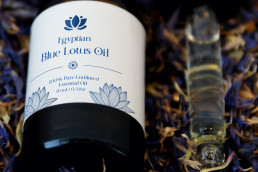
If you are looking for blue lotus oil in Singapore, you have probably noticed the market is fragmented: a handful of aromatherapy boutiques stock it occasionally, some wellness spas use it behind the counter without selling retail, and most serious buyers end up importing. This guide walks you through the realistic options, the legal picture, what to look for on a label, and how to tell a genuine Nymphaea caerulea absolute from the diluted perfume compounds that circulate at tourist prices.
Table of Contents
- Is Blue Lotus Oil Legal in Singapore?
- What the Singapore Market Actually Looks Like
- The Three Retail Channels
- What to Look For on the Label
- Importing Blue Lotus Oil into Singapore
- How to Verify Quality After You Buy
- Storing Blue Lotus Oil in Singapore's Climate
- When Blue Lotus Oil Is NOT the Right Choice
- Complementary Approaches
- Frequently Asked Questions
- Where to Go From Here
- Sourced Carefully, Shipped Worldwide
It is written and clinically reviewed by Antonio Breshears, ND, CCA, a Bastyr-trained naturopathic doctor and certified clinical aromatherapist. For a broader grounding in chemistry, safety, and use, readers may want to start with the complete guide to blue lotus oil, which this article assumes as background context.
Is Blue Lotus Oil Legal in Singapore?
Short answer: yes, with caveats. Nymphaea caerulea is not listed as a controlled substance under Singapore’s Misuse of Drugs Act, and the flower itself is not a scheduled psychoactive under the Poisons Act. The essential oil and absolute are therefore importable and sellable as cosmetic or aromatherapy products under normal Health Sciences Authority (HSA) cosmetic notification rules, provided no therapeutic claims are made on the label.
Where buyers run into trouble is when a product is marketed with health claims (treatment of insomnia, anxiety, depression, and so on). Making such claims shifts the product from cosmetic to therapeutic, which then requires HSA registration that small importers almost never hold. Reputable sellers therefore describe blue lotus oil for what it legally is in Singapore: a botanical aromatic used in perfumery, ritual, and aromatherapy, without disease-treatment claims.
A second caveat concerns ingestible forms. Blue lotus teas and edible preparations sit in a greyer zone under Singapore Food Agency (SFA) rules, and some sellers quietly import without novel food approval. The absolute and essential oil, on the other hand, are almost always sold strictly for external use, which keeps them on firmer legal ground. If a seller in Singapore tells you their blue lotus oil is safe to ingest, treat that as a warning sign rather than a feature.
What the Singapore Market Actually Looks Like
Unlike Thailand or Egypt, Singapore does not have a domestic blue lotus supply chain. Every bottle you buy here was imported, either directly from Egyptian or Indian suppliers, or repackaged through a European or Australian aromatherapy wholesaler. This has two practical implications for the buyer.
First, prices are meaningfully higher than at source. A genuine 5ml of Egyptian blue lotus absolute that costs roughly USD 80 to 120 wholesale will retail in Singapore between SGD 180 and SGD 350 once import duty, GST, retailer margin, and the small-batch nature of the market are factored in. Anything priced dramatically below this range is almost certainly diluted, synthetic, or mislabelled.
Second, genuine stock is thin. Most Singapore aromatherapy retailers do not carry blue lotus as a staple line because turnover is slow and the absolute does not age gracefully once opened in a warm climate. You will often find it listed online but backordered, or available only in pre-diluted blends (typically 5 to 10 percent in jojoba) rather than as a neat absolute.
The Three Retail Channels
In practice, Singapore buyers have three realistic routes. Boutique aromatherapy shops in areas such as Tiong Bahru, Bukit Timah, and along the Orchard stretch occasionally carry small stock. Wellness and day-spa chains sometimes sell the oils they use in treatments through their own retail counter, and a few have decent supplier relationships. Finally, direct import from a reputable overseas specialist, declared properly through Singapore Customs, is how most experienced buyers eventually source their oil once they know what they want.
What to Look For on the Label
Regardless of where you buy, the label tells you most of what you need to know. A genuine product will clearly state the botanical name Nymphaea caerulea, not simply “blue lotus” or worse, “lotus flower essence”. It will distinguish between absolute, essential oil, and CO2 extract, since these are three different products with different chemistry and different prices. It will state country of origin (Egypt is the gold standard for caerulea; India produces the related but chemically distinct Nelumbo nucifera, which is often sold under the same common name). And it will give a batch number and either an expiry or best-before date.
Be particularly cautious of products labelled simply “lotus oil” or “blue lotus essential oil” at prices under SGD 50 for 10ml. True Nymphaea caerulea absolute requires between three and five thousand flowers per gram of finished oil, which sets a hard floor on what it can cost. If the maths does not work, the product is not what it claims to be.
Also look for disclosure of carrier. Many Singapore retailers sell blue lotus “oil” that is in fact a pre-diluted blend in jojoba, fractionated coconut, or sweet almond. This is not dishonest if clearly stated, and for many users a 10 percent dilution in jojoba is genuinely more convenient than neat absolute. But the label must say so, and the price should reflect the dilution ratio.
Importing Blue Lotus Oil into Singapore
If you decide to import directly, the process is relatively straightforward for personal quantities. Essential oils and absolutes ship as regulated flammable liquids under IATA rules, so they move by standard international courier with the appropriate dangerous-goods paperwork handled by the shipper. On the Singapore side, personal-use quantities of cosmetic aromatic oils do not require HSA pre-approval, and GST is payable on the declared value above the current de minimis threshold.
Two practical points. Declare the shipment accurately as aromatic oil or cosmetic ingredient, not as perfume or medicine, since mislabelling creates customs delays that can leave heat-sensitive oil sitting in a warm warehouse for days. And choose a seller who ships in dark amber or cobalt glass with tight cap seals; the humidity and heat of Singapore’s climate are unkind to absolutes stored in anything less robust.
Commercial importers who plan to resell will need to complete HSA cosmetic product notification, which is an online filing rather than a full registration, but still involves ingredient disclosure and a responsible-person declaration. Most small boutiques use a local aromatherapy wholesaler to handle this step rather than filing directly.
How to Verify Quality After You Buy
Once the bottle is in your hand, a few simple checks separate genuine blue lotus absolute from the common adulterants. The colour should be a deep amber to brownish-gold, sometimes with a faintly greenish cast; it is never a clear pale yellow and never bright blue (despite what marketing images suggest, the oil itself is not blue). The texture at room temperature in Singapore will be fluid but slightly viscous; if it flows like water, it has almost certainly been cut with a thin carrier.
The scent is the strongest tell. Genuine Nymphaea caerulea opens with a cool, slightly aquatic floral note, moves through a deep honeyed-floral heart, and settles into a balsamic, faintly smoky base over twenty to thirty minutes on a scent strip. A synthetic or heavily adulterated product will smell immediately sweet and one-dimensional, like a floral shower gel, and the scent will not evolve over time. This single test, laid alongside a known-good reference, rules out the majority of poor stock.
A gas chromatography / mass spectrometry (GC/MS) report is the laboratory-grade answer to the same question. Reputable specialist suppliers will provide one on request, listing the key constituents and flagging any dilution. In Singapore, asking a retailer for the GC/MS of a specific batch is a reasonable request, and a willingness to provide it is a strong indicator of a serious supplier.
Storing Blue Lotus Oil in Singapore’s Climate
Tropical humidity and ambient temperatures between 28 and 33 degrees accelerate oxidation in any essential oil or absolute, and blue lotus is more sensitive than most. A few sensible habits extend its usable life considerably.
Keep the bottle in dark glass, tightly capped, in the coolest and darkest cupboard in your home. Avoid storing in bathrooms (humidity swings) or near windows (UV exposure). Refrigeration is genuinely helpful for an opened bottle of absolute in this climate; a dedicated small skincare fridge at around 15 degrees works well, though a normal fridge is fine. Let the oil come to room temperature before opening each time, to avoid condensation inside the bottle.
Properly stored, a sealed bottle of quality blue lotus absolute holds its character for three to four years. Opened and used regularly in Singapore conditions without refrigeration, expect roughly eighteen months to two years before the top notes begin to flatten.
When Blue Lotus Oil Is NOT the Right Choice
Even the best-sourced bottle is not appropriate for everyone. Blue lotus oil is avoided during pregnancy and breastfeeding; the alkaloid fraction (aporphine, nuciferine) has not been characterised for safety in these populations, and the precautionary position is unambiguous. It is also cautioned alongside dopaminergic medications, MAOIs, and strong central nervous system depressants, given the alkaloid activity at dopamine and serotonin receptors.
For anyone under active psychiatric care in Singapore, particularly on SSRIs, antipsychotics, or Parkinson’s medication, a conversation with the prescribing specialist before introducing blue lotus aromatically is the sensible course. The interactions are not dramatic in the way that, say, St. John’s Wort interactions can be, but they are not zero either.
Finally, blue lotus oil is not a substitute for clinical care. If you are buying it hoping to resolve serious insomnia, clinical depression, or chronic anxiety on your own, the realistic position is that it may contribute modestly to a broader approach but will not carry the weight alone. Singapore has well-developed mental health services and integrative practitioners; the oil works best as part of a plan, not as the plan.
Complementary Approaches
Within its realistic scope, blue lotus pairs well with a small number of practices and products commonly available in Singapore. For evening wind-down, a low-dose diffuser blend (two to three drops of blue lotus with one drop of sandalwood or lavender in a water diffuser) tends to produce a more complete parasympathetic shift than blue lotus alone. For skincare in the humid climate, a 1 to 2 percent dilution in jojoba used as a pre-cleanse or night facial oil sits well on most skin types without occluding.
Pairing aromatic use with consistent sleep hygiene, reduced evening screen exposure, and, for those so inclined, a short breath practice before bed, substantially improves the subjective effect of the oil. This is not because the oil is weak; it is because the olfactory-limbic pathway it works through responds to context and repetition, and isolated use in an otherwise stimulated nervous system produces a smaller shift than integrated use within a calmer routine.
Frequently Asked Questions
Is blue lotus oil legal to buy and use in Singapore?
Yes. Nymphaea caerulea is not a controlled substance under Singapore law, and the oil is legally sold and used as a cosmetic or aromatherapy product. The key regulatory line is that sellers must not make therapeutic disease-treatment claims without HSA registration.
How much should I expect to pay for genuine blue lotus oil in Singapore?
For a 5ml bottle of genuine Egyptian Nymphaea caerulea absolute, expect roughly SGD 180 to SGD 350 depending on grade and retailer. Pre-diluted blends in jojoba are cheaper proportionally. Prices dramatically below this range almost always indicate dilution, synthetic reconstruction, or mislabelling.
Can I bring blue lotus oil into Singapore from overseas?
Yes, for personal use. Declare it accurately as aromatic oil or cosmetic ingredient. Commercial quantities for resale require HSA cosmetic product notification, which is straightforward but must be completed before sale.
What is the difference between blue lotus absolute and blue lotus essential oil?
Absolute is solvent-extracted, richer in the heavier aromatic compounds, and is by far the more common product. True steam-distilled essential oil of blue lotus is rare and expensive, with a lighter, more volatile profile. Supercritical CO2 extracts sit between the two and are considered premium. Most Singapore retail stock is absolute.
Is there a difference between Egyptian and Indian blue lotus oil?
Yes, and it matters. Egyptian blue lotus is Nymphaea caerulea, the species with the traditional alkaloid profile. Indian “blue lotus” is often Nelumbo nucifera, a botanically distinct plant with a different chemistry. Both are beautiful oils; they are not interchangeable, and the label should tell you which one you are buying.
Can I use blue lotus oil on my face in Singapore’s climate?
Yes, at 1 to 2 percent dilution in a light carrier such as jojoba. In humid climates, favour lighter carriers over heavier ones and apply at night rather than under daytime sunscreen. Patch test first if you are prone to reactive skin.
How do I know if the oil I bought is genuine?
Three quick checks: the colour should be deep amber to brownish-gold (never clear or bright blue); the scent should evolve over twenty to thirty minutes from cool floral through honeyed heart to balsamic base; and the seller should be able to provide a GC/MS report for the batch on request.
Can I ingest blue lotus oil?
No. The oil is for external and aromatic use only. Ingestion sits in a regulatory grey zone under SFA rules and is not a safe or clinically supported use of the product. Sellers who suggest otherwise should be approached with caution.
How should I store blue lotus oil in Singapore?
Dark glass, tightly capped, in the coolest and darkest cupboard available, ideally refrigerated once opened. Avoid bathrooms and sunny windowsills. Properly stored, an opened bottle holds its character for roughly eighteen months to two years in this climate.
Is blue lotus oil safe during pregnancy?
No. Blue lotus oil is avoided during pregnancy and breastfeeding on precautionary grounds. The alkaloid fraction has not been characterised for safety in these populations, and the sensible position is to wait.
Where to Go From Here
If you are newer to the oil and still deciding whether it fits your routine, read through the complete guide to blue lotus oil before committing to a bottle; it covers chemistry, safety, and realistic expectations in more depth than any retailer will. If you have already bought and want to make the most of what you have in Singapore’s climate, focus on storage discipline and a small set of well-tested dilutions rather than chasing variety. The oil rewards consistent use far more than it rewards experimentation.
For Singapore buyers specifically, the pragmatic summary is this: genuine blue lotus oil is available here, but the market is thin and adulteration is common at the cheaper end. Pay what the maths says the real product costs, ask for the GC/MS, store it properly, and use it within its realistic scope. Done that way, it is a genuinely useful addition to an evening routine or a skincare practice, and the small extra effort of sourcing carefully pays back every time you open the bottle.

Antonio Breshears
Antonio Breshears is a renowned expert in holistic medicine and beauty, with over 25 years of research experience dedicated to uncovering the secrets of nature's most powerful remedies. Holding a degree in Naturopathic Medicine, Antonio's passion for healing and well-being has driven him to explore the intricate connections between mind, body, and spirit.
Over the years, Antonio has become a respected authority in the field, helping countless individuals discover the transformative power of plant-based therapies, including essential oils, herbs, and natural supplements. He has authored numerous articles and publications, sharing his wealth of knowledge with a global audience seeking to improve their overall health and well-being.
Antonio's expertise extends to the realm of beauty, where he has developed innovative, all-natural skincare solutions that harness the potency of botanical ingredients. His formulations embody his deep understanding of the healing properties found in nature, providing holistic alternatives for those seeking a more balanced approach to self-care.
With his extensive background and dedication to the field, Antonio Breshears is a trusted voice and guiding light in the world of holistic medicine and beauty. Through his work at Pure Blue Lotus Oil, Antonio continues to inspire and educate, empowering others to unlock the true potential of nature's gifts for a healthier, more radiant life.