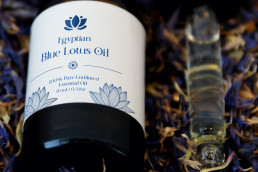
This is a melt-and-pour soap recipe that produces a gentle, mildly aromatic bar of blue lotus soap, suitable for face and body, with a soft honeyed-floral scent and a clean rinse. It is designed for the home maker who wants a finished bar in under an hour, without the complexity (or lye-handling) of cold-process soapmaking. The recipe yields four to six bars depending on mould size, and the formulation respects the cost of blue lotus absolute by placing it where its scent and skin-conditioning value actually carry through into the finished product.
Table of Contents
- What You'll Need
- Equipment
- Ingredients (yields approximately 500 g of finished soap, four to six bars)
- Why This Formulation Works
- Step-by-Step Instructions
- How to Use Blue Lotus Soap
- Storage and Shelf Life
- Variations
- Sensitive skin variant
- Richer, more emollient variant
- Clarity and visual variant
- Spa-style exfoliating variant
- Common Mistakes to Avoid
- Frequently Asked Questions
- Where to Go From Here
- Source the Absolute This Recipe Deserves
It is written and clinically reviewed by Antonio Breshears, ND, CCA, a Bastyr-trained naturopathic doctor and certified clinical aromatherapist. For background on blue lotus chemistry, sourcing and dilution principles that inform this formulation, see The Complete Guide to Blue Lotus Oil, which serves as the parent reference for every recipe in this category.
What You’ll Need
The recipe uses a melt-and-pour soap base because it is the most reliable route for working with a precious aromatic like blue lotus absolute. Cold-process soapmaking subjects fragrance materials to a lengthy alkaline saponification reaction that can damage delicate floral notes; melt-and-pour bypasses this entirely and lets the scent profile come through largely intact.
Equipment
- Heat-safe glass measuring jug (500 ml minimum)
- Sharp knife and cutting board for the soap base
- Digital kitchen scale (1 gram resolution)
- Silicone soap mould, four to six cavity loaf or individual bar moulds
- Stainless steel or silicone stirring spoon
- Pipette or glass dropper for the absolute
- Spray bottle of isopropyl alcohol (90 percent or higher) to release surface bubbles
- Microwave or double boiler for melting
Ingredients (yields approximately 500 g of finished soap, four to six bars)
- 450 g shea butter and goat milk melt-and-pour soap base, or a clear glycerin base if you prefer translucency
- 10 ml sweet almond oil (additional skin conditioning)
- 5 ml jojoba oil (carries fragrance and stabilises the absolute)
- 30 to 40 drops blue lotus absolute (approximately 1.5 to 2 ml)
- Optional: 10 drops lavender essential oil to round out the heart notes
- Optional: 5 drops vetiver or sandalwood essential oil to anchor the base
- Optional: 1/4 teaspoon dried blue lotus petals or cornflower for visual interest
- Optional: a few drops of natural blue mica colourant for soft tinting
Why This Formulation Works
The choice of a shea-and-goat-milk base rather than a plain glycerin base matters here. Blue lotus absolute is a thick, resinous material with a honeyed-floral character that benefits from a creamy, slightly opaque carrier; the goat milk softens the bar’s lather and the shea butter contributes the kind of after-feel that flatters the absolute’s deeper notes. A clear glycerin base will work, and it lets you show off embedded petals beautifully, but it can produce a slightly squeakier rinse that competes with the soft, balsamic finish you are trying to preserve.
The pre-blending step (dissolving the absolute into jojoba and sweet almond before adding it to the melted base) is the technical key to the recipe. Blue lotus absolute is viscous at room temperature and can clump or streak if dropped directly into hot soap. Diluting it first into a small volume of liquid carrier oil ensures even dispersion and protects the more volatile floral top notes from flash-evaporation when they meet the warm base. The jojoba is doing real work here: it is chemically a liquid wax, very stable, and it acts as a fixative that holds the scent in the bar for longer than almond oil alone would.
The fragrance load works out to roughly 0.4 to 0.5 percent of the total batch weight, which is modest by commercial standards but appropriate for an absolute of this cost and intensity. Blue lotus carries; you do not need to push it.
Step-by-Step Instructions
- Cube the soap base. Cut the 450 g of melt-and-pour base into roughly 2 cm cubes. Smaller cubes melt more evenly and reduce the risk of overheating any single section.
- Melt gently. Place the cubes in a heat-safe glass jug. Microwave in 30-second bursts at medium power, stirring between each, until fully liquid. Alternatively, set the jug into a saucepan of barely simmering water and melt over low heat. Target temperature is 55 to 60 degrees Celsius. Hotter than 65 degrees damages the soap structure and burns off your fragrance.
- Pre-blend the aromatic phase. In a small separate dish, combine the 10 ml sweet almond oil, 5 ml jojoba oil, and 30 to 40 drops of blue lotus absolute. Stir with a clean spoon until the absolute is fully dispersed and the mixture is uniform. Add the optional lavender and vetiver or sandalwood drops at this stage.
- Cool the base briefly. Let the melted soap rest for two to three minutes until it reaches approximately 50 to 55 degrees Celsius. A skin should not yet be forming on the surface, but the jug should feel warm rather than hot to the touch.
- Combine. Pour the aromatic phase into the melted base and stir slowly for 30 to 45 seconds in one direction. Slow stirring prevents excessive aeration. If using mica colourant, pre-disperse a small pinch into a teaspoon of additional jojoba and stir it in now.
- Pour into moulds. Pour steadily and evenly into your prepared silicone moulds. If using dried petals, sprinkle them onto the surface within the first 30 seconds, before a skin forms.
- Spritz the surface. Mist the top of each bar lightly with isopropyl alcohol. This breaks any surface bubbles and gives a smooth, professional finish.
- Cure and unmould. Leave the bars undisturbed at room temperature for four to six hours, or refrigerate for one to two hours, until fully set. Pop them out of the silicone moulds and trim any uneven edges with a clean knife.
- Wrap or store. Wrap each bar individually in cling film or wax paper to prevent the glycerin in the base from attracting moisture from the air (a common cause of “sweating” or surface beading on melt-and-pour bars).
How to Use Blue Lotus Soap
This is a daily-use bar, gentle enough for face and body. Wet the bar, work a light lather between the hands, and apply to damp skin. The scent reveals itself most clearly during the rinse and in the warm steam of a shower; this is when the floral-aquatic top notes lift and the honeyed heart settles onto the skin.
For the face, use sparingly and rinse with cool water; the soap is mild, but any true soap (rather than a synthetic syndet) will shift skin pH slightly upward, so following with a hydrating toner or facial oil makes sense if your skin runs dry. For the body, the bar is well suited to evening showers where the calming scent profile contributes to a wind-down ritual. Stored on a draining dish between uses, a single bar lasts most users two to three weeks of daily showers.
Storage and Shelf Life
Wrapped bars stored in a cool, dark cupboard hold their scent and skin feel for nine to twelve months. Unwrapped bars exposed to air will keep their cleansing function indefinitely but will gradually lose fragrance intensity over six to eight weeks as the volatile aromatic components evaporate. Avoid bathroom storage of unused stock; the humidity accelerates glycerin sweating and dulls the scent.
If you live in a particularly humid climate, vacuum-sealing the wrapped bars or storing them in an airtight tin with a small silica desiccant packet extends shelf life and keeps the surface crisp.
Variations
Sensitive skin variant
Reduce the blue lotus absolute to 20 drops and omit the lavender and vetiver entirely. Substitute the goat milk base for an oat milk or unscented hypoallergenic melt-and-pour base. The result is a quieter bar with a soft floral whisper rather than a defined scent profile, suitable for reactive skin or for users new to aromatic soaps.
Richer, more emollient variant
Increase the shea content by adding 15 g of cosmetic-grade shea butter to the melted base, stirring until fully incorporated before adding the aromatic phase. This produces a creamier, more conditioning bar that is excellent for winter use or for genuinely dry skin. Lather will be slightly reduced; this is normal.
Clarity and visual variant
Use a clear glycerin base instead of the shea-and-goat-milk base, and embed dried blue lotus petals and cornflower petals throughout the pour rather than only on the surface. Add a single drop of blue mica for a faint tint. The finished bar is visually striking and makes an attractive gift, though the scent reads slightly drier on this base.
Spa-style exfoliating variant
Stir in one tablespoon of finely ground oats and one teaspoon of poppy seeds during step five, just before pouring. This produces a textured bar suitable for body use (not face), with light mechanical exfoliation that pairs well with the calming scent for an evening bath ritual.
Common Mistakes to Avoid
Overheating the base. Microwaving in long bursts on high power scorches the soap and produces a yellowed, sticky bar with diminished fragrance. Use medium power and short bursts.
Adding the absolute to a base that is too hot. Pouring blue lotus absolute into soap above 65 degrees Celsius flashes off the most delicate top notes; you lose the cooler floral-aquatic opening that makes the scent recognisable.
Skipping the pre-blend step. Dropping the absolute directly into hot soap produces visible streaks, uneven scent distribution, and tiny dark specks in the finished bar.
Forgetting to wrap the bars. Glycerin is hygroscopic; unwrapped melt-and-pour soap develops surface beads of moisture within 24 to 48 hours in most home environments. Wrap as soon as the bars are unmoulded.
Overloading with fragrance. More absolute does not mean more scent. Beyond about 0.6 percent fragrance load, melt-and-pour bases struggle to bind the oil; you end up with seepage at the bar surface and a greasy feel.
Frequently Asked Questions
Can I use blue lotus essential oil instead of absolute in this recipe?
Yes, though true steam-distilled blue lotus essential oil is rare and considerably more expensive. If you have it, use the same drop count; the scent profile will be slightly cleaner and less honeyed but recognisably blue lotus. CO2 extracts work equally well.
Is this safe to use on the face?
For most users, yes. The fragrance load is modest and the base is mild. As with any new product, do a small patch test on the inner forearm 24 hours before first facial use, and avoid the immediate eye area. If your skin is reactive, use the sensitive skin variant above.
Can I make this with cold-process soap instead?
You can, but it is not recommended for blue lotus. Cold-process saponification exposes the absolute to lye and several weeks of curing during which most of the delicate floral character is lost. If you are committed to cold-process, add the absolute at trace, increase the dosage by 50 percent to compensate for losses, and accept that the scent will be subtler.
Why does my finished bar have white streaks?
Streaks usually indicate that the soap base began to set before the aromatic phase was fully incorporated. Next batch, work slightly faster after pouring in the aromatic phase, and ensure your base is at 50 to 55 degrees rather than cooler.
Is this safe during pregnancy?
Blue lotus is generally avoided during pregnancy and breastfeeding due to its alkaloid content (aporphine and nuciferine), even at low topical exposure. While the dose absorbed from soap rinsed off the skin is minimal, the conservative position is to skip blue lotus formulations during these periods.
Can I sell soap made from this recipe?
If you intend to sell, you will need to comply with cosmetic labelling regulations in your jurisdiction (in the UK, this includes a Cosmetic Product Safety Report and notification to the SCPN). Home use is unrestricted; commercial sale is a separate question.
How do I know if my blue lotus absolute is genuine?
Genuine blue lotus absolute is thick, resinous, dark amber to brown, and expensive (reflecting the 3,000 to 5,000 flowers required per gram). It has a complex scent that opens cool and floral, settles into honeyed warmth, and finishes with a slightly smoky-balsamic base. Pale yellow, watery, or cheaply priced products are usually fragrance oil blends.
Can I substitute coconut oil for the sweet almond?
Fractionated coconut oil works as a substitute and has a longer shelf life than sweet almond. Avoid solid coconut oil, which would re-solidify in the bar and create texture inconsistencies.
Why does my soap smell weaker after a few weeks?
This is normal evaporation of volatile aromatic compounds. Wrapping the bars individually slows it considerably. The scent never disappears entirely; the heart and base notes are more stable than the top notes and persist for many months.
Can children use this soap?
The formulation is mild enough for children over the age of two for occasional use, though daily use of any aromatic soap on young children is unnecessary. Avoid for infants. As always, patch test first.
Where to Go From Here
Soap is one of the gentler ways to incorporate blue lotus into a daily routine; the contact time is short, the dose is low, and the scent experience is concentrated into the warm minutes of a shower. If you enjoyed this recipe and want to explore other formulation routes, the parent reference at The Complete Guide to Blue Lotus Oil covers the chemistry, sourcing standards, and dilution frameworks that underpin every recipe in this category, including bath salts, facial oils, pulse-point rollers, and diffuser blends. Reading it alongside this recipe gives you the conceptual scaffolding to adapt the formulation confidently to your own preferences and skin type.

Antonio Breshears
Antonio Breshears is a renowned expert in holistic medicine and beauty, with over 25 years of research experience dedicated to uncovering the secrets of nature's most powerful remedies. Holding a degree in Naturopathic Medicine, Antonio's passion for healing and well-being has driven him to explore the intricate connections between mind, body, and spirit.
Over the years, Antonio has become a respected authority in the field, helping countless individuals discover the transformative power of plant-based therapies, including essential oils, herbs, and natural supplements. He has authored numerous articles and publications, sharing his wealth of knowledge with a global audience seeking to improve their overall health and well-being.
Antonio's expertise extends to the realm of beauty, where he has developed innovative, all-natural skincare solutions that harness the potency of botanical ingredients. His formulations embody his deep understanding of the healing properties found in nature, providing holistic alternatives for those seeking a more balanced approach to self-care.
With his extensive background and dedication to the field, Antonio Breshears is a trusted voice and guiding light in the world of holistic medicine and beauty. Through his work at Pure Blue Lotus Oil, Antonio continues to inspire and educate, empowering others to unlock the true potential of nature's gifts for a healthier, more radiant life.