Selecting the finest Blue Lotus Oil (Nymphaea caerulea) ensures you experience its full spectrum of aromatic, therapeutic, and sensory benefits. Given its rarity and price point, the market can be rife with diluted, adulterated, or synthetic products. This guide provides an in‑depth roadmap, covering sourcing, extraction methods, chemical analyses, visual and olfactory cues, certification standards, and purchasing best practices, to help you confidently identify genuine, potent, and ethically produced Blue Lotus Oil.
Table of Contents
- Understand Botanical and Geographic Origins
- Check Extraction Method Details
- Review Certificate of Analysis (CoA) & GC‑MS Reports
- Assess Organoleptic Characteristics
- Verify Certification and Ethical Standards
- Beware of Common Adulteration Strategies
- Examine Packaging and Storage Practices
- Read Customer Reviews and Third‑Party Evaluations
- Test a Sample Before Committing
- Establish a Relationship with Trusted Suppliers
- Price vs. Value Considerations
Understand Botanical and Geographic Origins
The natural environment profoundly influences an essential oil’s chemical fingerprint. Blue Lotus thrives in freshwater wetlands across Egypt’s Nile Delta, Madagascar’s river lagoons, and parts of East Africa. Look for reputable brands that specify:
- Botanical Name: Nymphaea caerulea (avoid generic labels like “Egyptian lotus” without Latin binomial).
- Geographic Source: Exact region or farm cooperative, e.g., “Organic Nile Delta plantations, Egypt.”
- Harvest Date: Freshness matters: harvest within the past 12–18 months maintains optimum potency.
Provenance transparency signals quality stewardship and allows you to verify climate, soil, and cultivar factors that yield characteristic alkaloid and terpene profiles.
Check Extraction Method Details
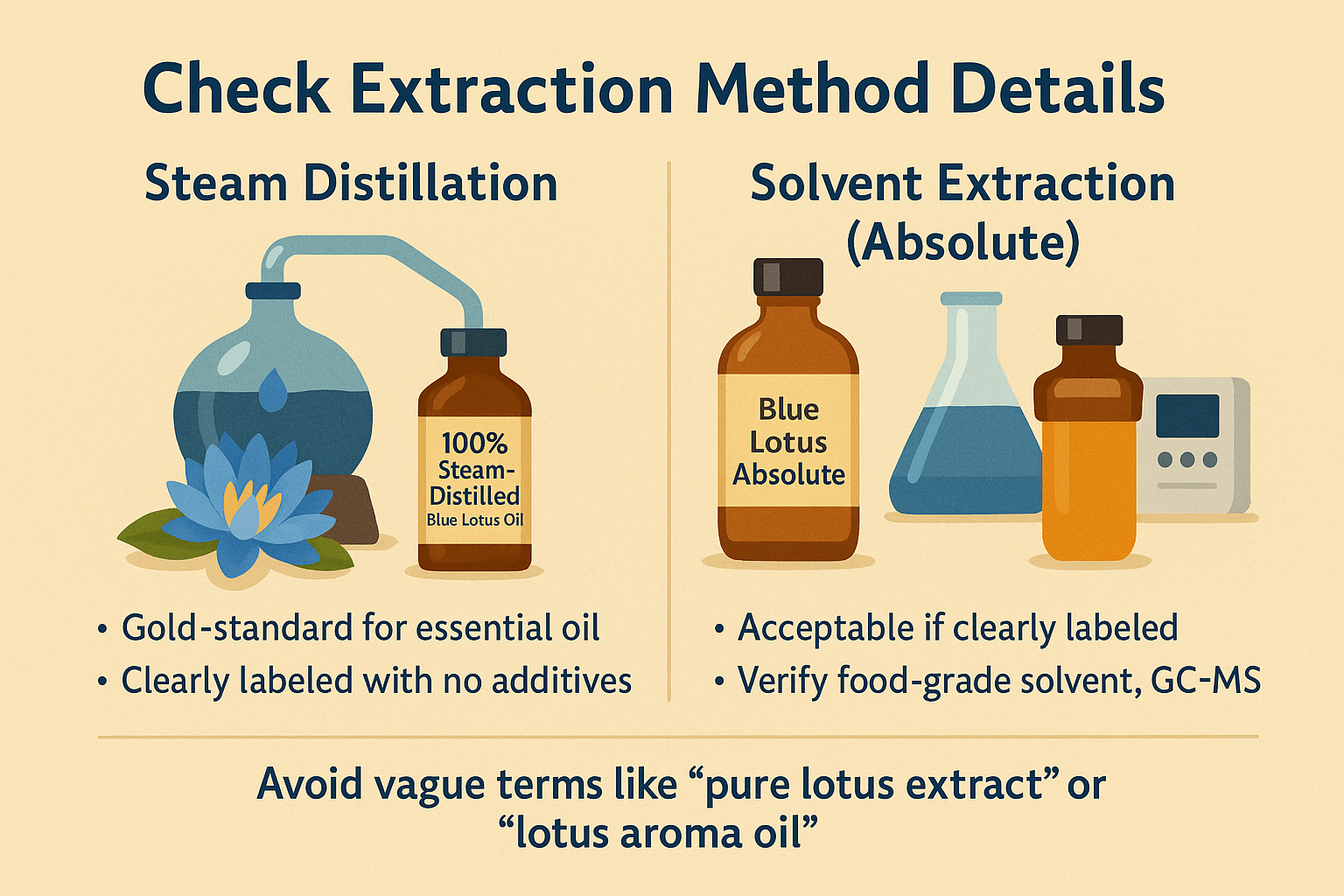
Extraction technique determines which compounds are present and preserves delicate aromatics. The two primary methods are:
- Steam Distillation: Gold‑standard for true essential oil. Live steam gently draws off volatile constituents. High‑quality oils will list “100% steam‑distilled Blue Lotus Oil” with no mention of additives.
- Solvent Extraction (Absolute): Yields a richer, heavier absolute containing waxes and non‑volatiles. Acceptable if clearly labeled as “Blue Lotus Absolute.” Verify that food‑grade solvents were used and fully evaporated (confirm via GC‑MS report for solvent residues).
Avoid vague descriptors like “pure lotus extract” or “lotus aroma oil” that could indicate synthetic fragrance blends.
Review Certificate of Analysis (CoA) & GC‑MS Reports
A reputable supplier provides batch‑specific analytical data:
- GC‑MS Chromatogram: Identifies and quantifies key marker compounds, nuciferine, aporphine alkaloids, linalool, geraniol. Look for a detailed chromatogram with retention times and peak areas.
- Pesticide & Heavy Metal Screening: Confirms the absence of agricultural chemicals or toxic elements. Check limits align with ISO 22000 or equivalent food‑grade standards.
- Solvent Residue Analysis: For absolutes, ensure residual hexane or ethanol levels are below detectable limits (typically <10 ppm).
CoAs should be current (within six months of purchase) and readily accessible on the vendor’s website or upon request.
Assess Organoleptic Characteristics
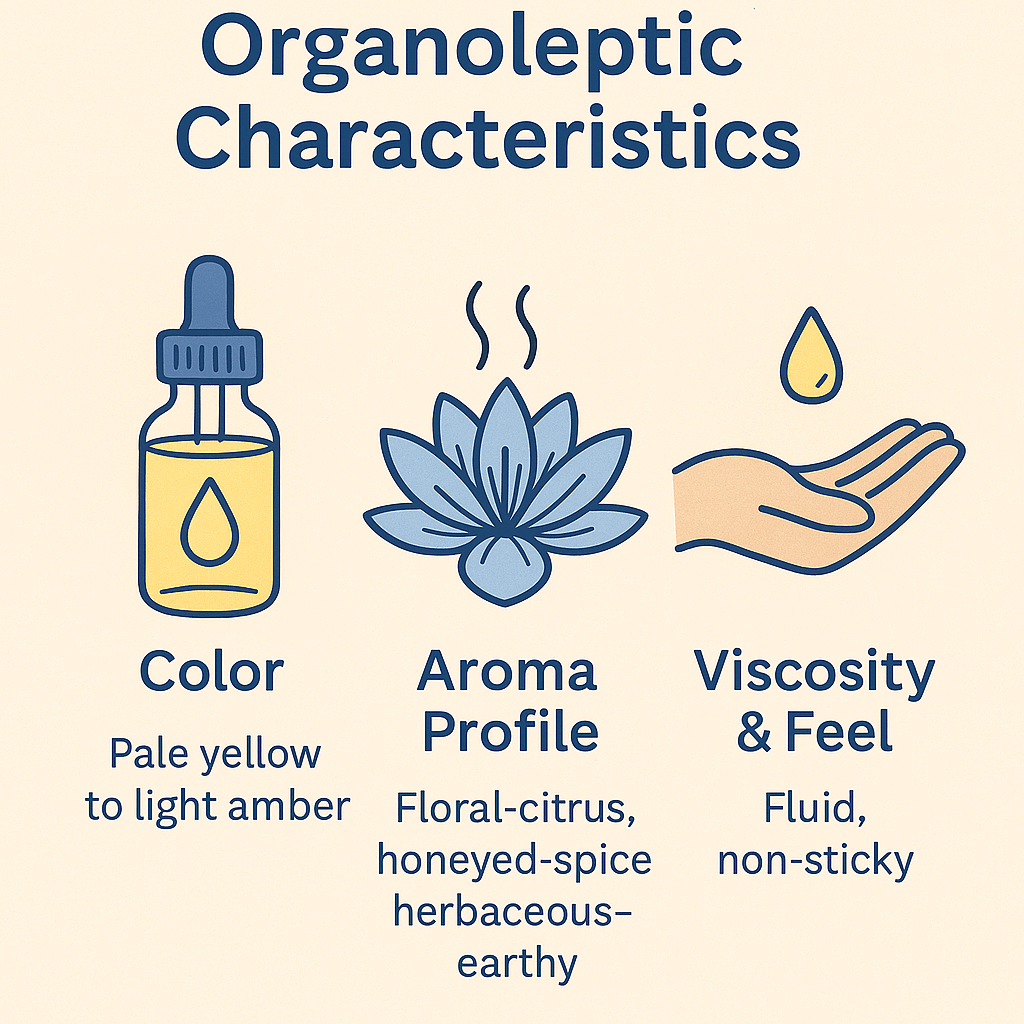
Sensory evaluation, appearance, aroma, viscosity, offers immediate clues to authenticity:
- Color: True steam‑distilled Blue Lotus Oil ranges from pale yellow to light amber. Absolutes appear darker, amber to brown, and more viscous. Avoid unnaturally clear or colorless products.
- Aroma Profile: A complex bouquet: bright floral‑citrus top notes (linalool, limonene), a warm honeyed‑spice heart (geraniol, aporphine alkaloids), and a subtle herbaceous‑earthy base. Synthetic reproductions often smell one‑dimensional or overly sweet.
- Viscosity & Feel: Steam oils are fluid and non‑sticky; absolutes are thicker, almost buttery. Pure oils shouldn’t feel slimy or leave a heavy film on the skin.
Verify Certification and Ethical Standards
Certifications signal rigorous oversight and social responsibility:
- Organic Certification: USDA Organic, EU Organic, or equivalent ensures no synthetic pesticides or fertilizers were used.
- Good Manufacturing Practices (GMP): ISO 9001 or pharmaceutical‑grade GMP indicates strict hygiene, traceability, and batch control.
- Fair‑Trade & Ethical Sourcing: Labels like Fair for Life, Rainforest Alliance, or partnerships with recognized grower cooperatives ensure equitable labor practices and community reinvestment.
- Sustainability Credentials: Wild‑harvested claims should be paired with conservation commitments to protect natural populations.
Beware of Common Adulteration Strategies
Adulteration risks include dilution with carrier oils, blending with cheaper absolutes, or adding synthetic aroma chemicals. Stay vigilant by:
- Comparing Price Points: Blue Lotus Oil commands premium pricing due to low yield (0.01–0.03%). If a product is significantly cheaper, red flags should go up.
- Asking for DNA Barcoding: Advanced suppliers may use micro‑authentication to verify plant species in residual sediments.
- Looking for Isotopic Fingerprinting: Some producers embed stable‑isotope markers to detect dilution or geographic origin fraud.
Examine Packaging and Storage Practices
Essential oils are light‑ and oxygen‑sensitive. Proper packaging safeguards quality:
- Dark Glass Bottles: Amber or cobalt‑blue glass with airtight caps and dropper inserts minimizes UV and oxygen exposure.
- Minimal Airspace: Bottles filled to the neck limit headspace oxidation.
- Climate‑Controlled Shipping & Storage: Suppliers should indicate that oils are stored and transported at cool, consistent temperatures (15–25 °C).
- Batch Coding & Expiry Dates: Clear labels with lot numbers and “Use By” dates (typically 2–3 years for steam oils, 5 years for absolutes) demonstrate quality management.
Read Customer Reviews and Third‑Party Evaluations
Independent feedback provides practical insights:
- Professional Aromatherapist Endorsements: Trainers, educators, and certified practitioners often share detailed usage notes.
- Customer Testimonials: Look for descriptions of therapeutic effects, aroma accuracy, and package integrity.
- Lab Testing Reports by Third Parties: Some users commission independent labs to verify GC‑MS data and share results publicly.
Test a Sample Before Committing
If possible, order a small sample vial to evaluate quality firsthand. Conduct a mini organoleptic assessment, color, scent complexity, viscosity, and perform a simple dilution skin patch test:
- Mix 1 drop Blue Lotus Oil with 1 teaspoon of carrier oil.
- Apply to the inner forearm and cover with a bandage.
- Check after 24 hours for any irritation or allergic reaction.
Positive results give you confidence in both purity and personal compatibility.
Establish a Relationship with Trusted Suppliers
Long‑term partnerships with reliable vendors yield consistent quality and access to new product lines. Look for suppliers who provide:
- Educational Resources: In‐depth blogs, webinars, and technical data on Blue Lotus phytochemistry and applications.
- Responsive Customer Service: Willingness to answer detailed questions about sourcing, testing, and handling.
- Regular Product Updates: New harvests, improved testing protocols, and sustainable farming initiatives.
Price vs. Value Considerations
High‑quality Blue Lotus Oil reflects its labor‑intensive cultivation and low yield. Rather than focus solely on the lowest price, consider total value:
- Purity & Potency: Verified by CoA, GC‑MS, and sensory profile.
- Ethical & Sustainable Impact: Certifications and fair‑trade practices.
- User Experience: Aroma authenticity, therapeutic effectiveness, and packaging integrity.
Investing in a premium oil often translates to better results, greater satisfaction, and fewer health risks.
Choosing high‑quality Blue Lotus Oil requires a combination of scientific scrutiny, sensory evaluation, and ethical discernment. By verifying botanical and geographic origin, scrutinizing extraction methods, reviewing analytical reports, assessing organoleptic cues, confirming certifications, and building trusted supplier relationships, you can navigate the market with confidence. The result is a genuine, potent Blue Lotus Oil that delivers its ancient wisdom and modern wellness benefits, every drop honoring the legacy of the Sacred Blue Lily.