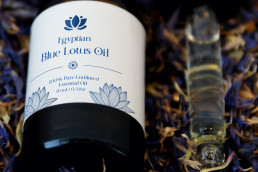
If your skin feels tight after washing, flakes at the cheekbones by mid-afternoon, or looks dull no matter how many serums you layer, you are probably dealing with some combination of impaired barrier function and dehydration. This article looks at whether blue lotus oil dry skin protocols are worth your time, what the oil realistically does for parched, reactive complexions, and how to use it without making things worse. The short answer: blue lotus absolute is a genuinely useful addition to a dry-skin routine, but only when you treat it as an occlusive-adjacent floral accent rather than a standalone moisturiser.
Table of Contents
- Understanding Dry Skin (It Is Not Always What You Think)
- Signs You Are Dealing With Dry Skin Specifically
- How Blue Lotus Oil Helps With Dry Skin
- Flavonoid-Driven Calming of Reactive, Inflamed Skin
- Occlusive Support When Blended Into an Emollient Base
- Olfactory-Limbic Effect on Skin-Related Stress
- Aporphine and Nuciferine Alkaloids at the Skin Level
- How to Use Blue Lotus Oil for Dry Skin
- The Baseline Facial Oil Protocol
- Application Method
- Layering With Hydrating Products
- A Simple Winter Rescue Blend
- What to Expect: Realistic Timeframes
- When Blue Lotus Oil Is NOT the Right Choice
- Complementary Approaches for Dry Skin
- Cleansing Choices That Respect the Barrier
- Humidity and Environment
- Internal Hydration and Fats
- Other Oils and Materials Worth Considering
- Professional Help
- Frequently Asked Questions
- Where to Go From Here
- Nourishment for Dry, Thirsty Skin
It is written and clinically reviewed by Antonio Breshears, ND, CCA, a Bastyr-trained naturopathic doctor and certified clinical aromatherapist. For broader context on the botany, chemistry, and uses of this material, readers may want to start with The Complete Guide to Blue Lotus Oil, which covers the foundations this article builds on.
Understanding Dry Skin (It Is Not Always What You Think)
The first thing to sort out is whether your skin is actually dry or simply dehydrated, because the answer changes what you should do. Dry skin is a lipid problem: the sebaceous glands produce less oil than the skin needs, the lipid matrix between corneocytes is patchy, and transepidermal water loss runs higher than it should. This is often constitutional, worse in winter, and tends to affect the whole face evenly.
Dehydrated skin is a water problem. The lipid barrier may be reasonably intact, but water is escaping faster than it is being replenished, usually because of over-cleansing, retinoids, acids, hot showers, central heating, or airline travel. Dehydrated skin can happen to anyone, including people with oily skin.
A great many people who call themselves “dry” are actually dehydrated, and a smaller number are both. This matters because dehydrated skin responds well to humectants (hyaluronic acid, glycerin, panthenol), while genuinely dry skin needs occlusives and emollients. Blue lotus oil sits in the emollient-plus-aromatic category and works best when layered into a routine that already addresses the water side of the equation.
Signs You Are Dealing With Dry Skin Specifically
Persistent tightness throughout the day, visible flaking at the sides of the nose or along the brows, a dull or papery appearance, fine lines that look more pronounced in certain lights, and a tendency to sting when any product with even mild actives touches the skin. If this matches your experience, an occlusive-emollient approach with aromatic support is reasonable, and blue lotus oil fits here.
How Blue Lotus Oil Helps With Dry Skin
Blue lotus absolute is not a moisturiser in the conventional sense. It does not flood the skin with water, and it is not particularly rich in the fatty acids that rebuild the lipid barrier the way rosehip or evening primrose do. What it does offer is a more specific set of benefits that matter more than they look on paper.
Flavonoid-Driven Calming of Reactive, Inflamed Skin
Dry skin is almost always mildly inflamed skin. When the barrier thins, environmental irritants penetrate more easily, and the immune cells in the dermis respond with low-grade, chronic inflammation that you experience as redness, sensitivity, and stinging. The flavonoid fraction in blue lotus absolute, principally apigenin, quercetin, and kaempferol, has modestly anti-inflammatory activity when applied topically in a suitable carrier. This does not make it a treatment for eczema or rosacea, but it does take some of the edge off the reactive quality that dry skin tends to develop.
Occlusive Support When Blended Into an Emollient Base
When you dilute blue lotus absolute into a fatty carrier such as jojoba, squalane, or a blend with shea, the finished product sits on the skin surface and slows transepidermal water loss. This is a property of the carrier more than the absolute itself, but blue lotus integrates well into these carriers and contributes its aromatic and flavonoid payload without disrupting the occlusive film.
Olfactory-Limbic Effect on Skin-Related Stress
This one is underappreciated. Chronic stress raises cortisol, and cortisol is quietly terrible for skin barrier function. It slows the repair of the lipid matrix, impairs wound healing, and pushes the skin into a more inflammatory state. The scent of blue lotus, inhaled during a facial ritual, shifts parasympathetic tone modestly, and this may contribute to better barrier recovery over weeks rather than minutes. It is not a dramatic effect, but it is real, and it is one of the reasons aromatherapeutic skincare tends to outperform its ingredient list on paper.
Aporphine and Nuciferine Alkaloids at the Skin Level
The alkaloid content of blue lotus absolute is relatively low, and most of what it does systemically happens through inhalation rather than dermal absorption. At skin level, the alkaloids contribute a mildly warming, slightly circulation-stimulating quality, which some dry-skin users appreciate in winter when everything feels blanched and sluggish. Do not overstate this; it is a gentle effect, not a dramatic one.
How to Use Blue Lotus Oil for Dry Skin
The single most important principle is that blue lotus absolute is never applied neat to the face. It is an expensive aromatic material, not a moisturiser, and it is used at low dilution in a well-chosen carrier. Done correctly, a small bottle lasts months.
The Baseline Facial Oil Protocol
For daily use on genuinely dry skin, blend at 1 to 2 percent dilution, which works out to roughly 6 to 12 drops of blue lotus absolute per 30 ml of carrier oil. Start at the lower end and only go higher if your skin tolerates it comfortably over two weeks.
Suitable carriers for dry skin specifically:
- Jojoba oil: technically a liquid wax, closely mimics human sebum, non-comedogenic, long shelf life, excellent baseline.
- Squalane: lightweight, highly stable, very well tolerated by reactive skin, pairs cleanly with the floral profile.
- Rosehip seed oil: higher in essential fatty acids, good for mature dry skin, shorter shelf life, better blended 50:50 with jojoba.
- Sweet almond oil: classic, affordable, good emollient, mild scent that blends well with the blue lotus aroma.
Application Method
Apply to damp skin, not dry skin. After cleansing, leave the face slightly moist or mist it with a simple hydrosol. Warm three to five drops of the blended oil between your palms, press into the face rather than rubbing, and allow thirty seconds of quiet inhalation of the scent that rises from your hands. This is not theatre; the olfactory exposure is part of the effect. Follow with your usual night cream or a plain occlusive balm if your skin is very dry. In the morning, a lighter application works beneath a moisturiser and sunscreen.
Layering With Hydrating Products
If your dry skin also has a dehydration component, apply a hyaluronic acid or glycerin-based hydrating serum first, then layer the blue lotus oil blend on top. The oil helps seal the water into the skin rather than allowing it to evaporate. Applying oil to bone-dry skin without any water underneath is a common mistake that leaves the complexion feeling coated but not actually nourished.
A Simple Winter Rescue Blend
For the cold months, when central heating and wind combine to strip the face:
- 25 ml jojoba oil
- 5 ml rosehip seed oil
- 8 drops blue lotus absolute
- 4 drops Roman chamomile essential oil (for additional calming)
Combined in a 30 ml dark glass dropper bottle, shaken gently, and used nightly. This lasts six to eight weeks for most people and is worth making fresh each season rather than in larger batches.
What to Expect: Realistic Timeframes
Skincare, even good skincare, is slower than people hope. Here is what honest progress looks like when you introduce a blue lotus oil blend into a dry-skin routine.
Week 1: The skin feels softer after application, and the immediate tightness that follows cleansing improves. Scent experience is pleasant and calming. No visible change yet.
Weeks 2 to 3: Flaking reduces if you are consistent. The papery, dull quality starts to soften. Sensitivity to other products (toners, active serums) may decrease slightly as the barrier stabilises.
Weeks 4 to 6: The skin looks more supple in photographs. Fine lines linked to dehydration appear less pronounced. If you were using the blend nightly, you will notice that mornings feel different: less tightness, less dullness.
Beyond 6 weeks: The improvements stabilise. Blue lotus oil is not going to keep delivering dramatic new gains after the first couple of months; it is maintenance-grade, not transformative. This is honest: it is a useful addition, not a miracle.
If you see no improvement whatsoever after four weeks of consistent use in an appropriate carrier, the blend is probably not your limiting factor. Look at cleansing (are you over-stripping the skin?), showering temperature, indoor humidity, essential fatty acid intake, and thyroid or hormonal factors that can drive constitutional dryness.
When Blue Lotus Oil Is NOT the Right Choice
Being straight about this matters. Blue lotus oil is not suitable or not useful in several specific situations.
Active eczema or severely compromised barrier. If your skin has open, weeping, or cracked areas, this is not the time for an aromatic absolute. You need a dermatologist-grade ceramide balm and possibly a short course of topical anti-inflammatory medication. Aromatics, even gentle ones, can sting and worsen already irritated skin.
Pregnancy and breastfeeding. Blue lotus essential oil and absolute are avoided during pregnancy and breastfeeding. Swap for plain jojoba with a small amount of rose hydrosol or stick with dermatologist-approved fragrance-free formulations.
Known sensitivity to florals. Some people react to jasmine, neroli, and blue lotus similarly. If you have reacted to other floral absolutes, patch test on the inner forearm for three days before applying to the face.
Fragrance-reactive rosacea. A subset of rosacea patients flare in response to any fragrant material on the face. If this is you, blue lotus is not the right fit, regardless of its flavonoid content.
Expectation that it will replace a moisturiser. It will not. Blue lotus oil at the correct dilution is an adjunct, not a primary moisturiser. Couples beautifully with a good cream; does not substitute for one.
Complementary Approaches for Dry Skin
The most useful thing blue lotus oil can do is fit into a sensible, boring, effective routine. Here is what that routine looks like.
Cleansing Choices That Respect the Barrier
Swap foaming cleansers for cream or oil-based cleansers. Use lukewarm water rather than hot. Cleanse once in the evening thoroughly, and in the morning consider rinsing only with water or a mild micellar product. This single change often improves dry skin more than any serum.
Humidity and Environment
Indoor humidity below 40 percent will strip even well-cared-for skin. A small humidifier in the bedroom, run overnight in winter, makes a measurable difference. Sleeping with a silk pillowcase reduces friction and mechanical irritation.
Internal Hydration and Fats
Dry skin responds to dietary fats: oily fish, walnuts, flaxseed, olive oil. A deficiency in omega-3 fatty acids shows up in the skin before it shows up anywhere else. Water intake matters, but not as much as people think; the skin is not a sponge, and drinking extra litres does not linearly improve hydration after baseline needs are met.
Other Oils and Materials Worth Considering
Roman chamomile and German chamomile pair well with blue lotus for reactive skin. Helichrysum italicum is useful for mature, thinning skin. Frankincense (Boswellia carterii or sacra) is a classic for dry, dull complexions and blends well with blue lotus in a carrier. Rose absolute or rose otto is exquisite with blue lotus but expensive; half-and-half is a reasonable compromise. The master reference in The Complete Guide to Blue Lotus Oil covers broader blending principles.
Professional Help
If dryness is severe, persistent, or accompanied by redness, scaling, or itching that disrupts sleep or daily life, see a dermatologist. Conditions such as atopic dermatitis, ichthyosis, and hypothyroid-driven skin change need clinical management, and aromatic skincare is adjunctive at best.
Frequently Asked Questions
Can I apply blue lotus oil directly to my dry skin?
No. Blue lotus absolute should always be diluted into a carrier oil at 1 to 2 percent for facial use. Applied neat, it is both wasteful of an expensive material and potentially irritating, particularly on already compromised dry skin.
How long before I see results on dry skin?
Most people notice improved softness within the first week and reduced flaking by weeks two to three. More visible changes in suppleness and tone appear around weeks four to six. If nothing has changed by four weeks of consistent use, the blend is probably not the limiting factor.
Is blue lotus oil better for dry skin than rosehip or argan?
It is not a direct substitute. Rosehip and argan are carrier oils rich in essential fatty acids that genuinely rebuild the lipid barrier. Blue lotus absolute is an aromatic added to those carriers. The best approach is to combine them: rosehip or jojoba as the base, blue lotus absolute at low dilution as the aromatic and flavonoid-bearing accent.
Can I use blue lotus oil around the eyes?
Cautiously, and only at the lower end of the dilution range (1 percent or below). The skin there is thinner and more reactive. Patch test for several days on the upper cheek before applying close to the orbit.
Will blue lotus oil clog my pores?
At proper dilution in non-comedogenic carriers like jojoba or squalane, it is not associated with comedogenic effect. If you are acne-prone as well as dry, stick with squalane as the carrier and keep dilution at 1 percent.
Can I add blue lotus oil to my existing moisturiser?
You can, but the distribution will be uneven and the alcohols and emulsifiers in commercial creams can alter how the absolute behaves. A cleaner approach is to apply your moisturiser first and the blue lotus blend on top, or to find a plain, simple moisturiser base to add it to deliberately.
Is it safe to use blue lotus oil on the body as well as the face?
Yes. For body use on dry patches (shins, elbows, décolletage), dilute at 2 to 3 percent in a richer carrier such as shea-infused jojoba or a body oil blend. This is also economical because the face gets most of the benefit from less product.
Does blue lotus oil help with winter skin specifically?
Yes, in the sense that the combination of a good occlusive carrier plus the calming flavonoid content suits the reactive, blanched quality that cold-weather skin develops. The winter rescue blend above is specifically formulated for this.
Can I use blue lotus oil with retinoids?
Yes, and it can be genuinely useful for buffering retinoid-induced dryness. Apply the retinoid as directed, wait fifteen to twenty minutes, then apply the blue lotus oil blend on top. Do not mix them directly in the palm; layer them.
How should I store my blue lotus oil blend?
In dark glass, away from heat and sunlight. A bathroom cabinet is fine if the shower does not steam the bottle directly; a bedroom drawer is better. Blends made with fresh carrier oils are best used within three to six months for optimal results, although the absolute itself is stable for three to four years.
Where to Go From Here
If you are adding blue lotus oil to a dry-skin routine, the practical first step is to blend a small bottle at 1 percent in jojoba, use it nightly for four weeks, and judge the effect honestly against where your skin started. For context on the broader chemistry, sourcing, and use of this material across other applications, The Complete Guide to Blue Lotus Oil is the reference to bookmark. If dryness is severe, persistent, or accompanied by symptoms that disrupt daily life, see a dermatologist; aromatic skincare is a thoughtful adjunct, not a substitute for clinical care.

Antonio Breshears
Antonio Breshears is a renowned expert in holistic medicine and beauty, with over 25 years of research experience dedicated to uncovering the secrets of nature's most powerful remedies. Holding a degree in Naturopathic Medicine, Antonio's passion for healing and well-being has driven him to explore the intricate connections between mind, body, and spirit.
Over the years, Antonio has become a respected authority in the field, helping countless individuals discover the transformative power of plant-based therapies, including essential oils, herbs, and natural supplements. He has authored numerous articles and publications, sharing his wealth of knowledge with a global audience seeking to improve their overall health and well-being.
Antonio's expertise extends to the realm of beauty, where he has developed innovative, all-natural skincare solutions that harness the potency of botanical ingredients. His formulations embody his deep understanding of the healing properties found in nature, providing holistic alternatives for those seeking a more balanced approach to self-care.
With his extensive background and dedication to the field, Antonio Breshears is a trusted voice and guiding light in the world of holistic medicine and beauty. Through his work at Pure Blue Lotus Oil, Antonio continues to inspire and educate, empowering others to unlock the true potential of nature's gifts for a healthier, more radiant life.