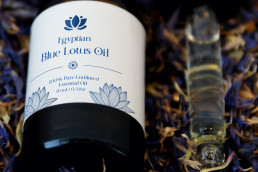
If you are searching for blue lotus oil in the UK, you are in one of the friendlier regulatory jurisdictions for this particular botanical. Unlike parts of Eastern Europe or the US state of Louisiana, the United Kingdom places no specific ban on Nymphaea caerulea, which means British buyers can legally purchase, own, and use the oil for aromatherapy and perfumery. The real question is not whether you are allowed to buy it, but where to buy it well, because the market is uneven and the price of getting it wrong is a diluted, solvent-heavy, or frankly counterfeit product.
Table of Contents
- The Legal Position in the United Kingdom
- Why the UK Market Is Particularly Uneven
- What Good Blue Lotus Oil Looks Like
- The Three Extraction Methods
- Scent and Colour Markers
- Where to Buy Blue Lotus Oil in the UK
- Specialist Aromatherapy Suppliers
- Dedicated Blue Lotus Apothecaries
- Independent Perfumers and Apothecaries
- What to Be Cautious About
- Pricing Benchmarks for the UK Market
- Delivery, Customs, and Post-Brexit Considerations
- How to Verify What You Have Received
- Practical Use Once You Have a Genuine Bottle
- When Blue Lotus Oil Is Not the Right Choice
- Frequently Asked Questions
- Where to Go From Here
- Genuine Blue Lotus, Shipped from the UK
It is written and clinically reviewed by Antonio Breshears, ND, CCA, a Bastyr-trained naturopathic doctor and certified clinical aromatherapist. For the broader chemistry, history, and safety context that underpins everything discussed here, the sensible starting point is The Complete Guide to Blue Lotus Oil, which acts as the master reference for this geographic buying guide.
The Legal Position in the United Kingdom
Blue lotus (Nymphaea caerulea) is not a controlled substance under the Misuse of Drugs Act 1971, nor is it scheduled under the Psychoactive Substances Act 2016 in a way that restricts aromatherapy-grade oils. The flower and its derivatives, including absolute, essential oil, and CO2 extract, can be sold openly in the UK as cosmetic, perfumery, or aromatherapy ingredients. You will find it on the shelves of independent aromatherapy shops, perfumery suppliers, and reputable online apothecaries.
What does exist in the UK is a cosmetics regulatory framework (the UK Cosmetics Regulation, the post-Brexit successor to EC 1223/2009) which requires products sold for topical use on the body to carry a Cosmetic Product Safety Report, a responsible person address within the UK, and appropriate labelling including INCI nomenclature and allergen declarations. Any reputable UK seller of blue lotus oil intended for skin application should be operating within this framework. If a seller cannot point to a UK responsible person and a notified product, they are either selling purely for perfumery or diffusion (which has a lighter regulatory footprint) or they are not compliant. Either way, it tells you something about the operation.
A small caveat: the UK does not permit ingestion of most essential oils and absolutes outside specific culinary or pharmaceutical contexts, and blue lotus oil is no exception. Reputable sellers do not market it as an internal remedy, and neither does this guide.
Why the UK Market Is Particularly Uneven
Blue lotus oil is expensive to produce. Three to five thousand flowers are needed to yield a single gram of absolute, and the flowers must be freshly harvested in Egypt (or occasionally Sri Lanka and Thailand, though Egyptian is the traditional benchmark). This means the real cost to the seller, before any margin, is significant. A 5 ml bottle of genuine blue lotus absolute, properly sourced, typically costs the retailer somewhere between £40 and £120 depending on extraction method and supplier relationship.
When you see a 10 ml bottle of “blue lotus oil” on a UK marketplace listed at £8 or £15, you are almost certainly looking at one of the following: a heavy dilution of absolute in jojoba or fractionated coconut oil (sometimes as low as 1 to 3 percent actual absolute, sold without disclosure), a synthetic fragrance compound designed to mimic the scent, or an oil from an entirely different plant (often a cheap water lily or a fragrance accord) sold under the blue lotus name. None of these are fraudulent in an absolute legal sense if the labelling is careful, but they will not deliver the olfactory depth or the aromatherapeutic profile that the genuine article provides.
The UK is particularly vulnerable to this because a significant proportion of the market sits on generalist online platforms, where sellers rotate, labels are vague, and independent verification is difficult. The specialist aromatherapy sector, by contrast, tends to behave well, because its customers know the difference.
What Good Blue Lotus Oil Looks Like
The Three Extraction Methods
Before you decide where to buy, it helps to know what you are buying. Genuine blue lotus oil on the UK market exists in three forms. Solvent-extracted absolute is by far the most common. It is produced by macerating the flowers in a non-polar solvent (typically hexane), removing the solvent, and washing the resulting concrete with ethanol. The final absolute is a thick, deeply coloured liquid with a honeyed, slightly smoky floral scent. Residual solvent levels in a well-produced absolute are measured in parts per million and are considered safe for topical and diffusion use.
Steam-distilled true essential oil is rare and expensive. The yield is very low because blue lotus is a delicate aquatic flower, and steam distillation damages some of the more volatile aromatic compounds. When you do find it, it tends to be lighter in colour and fresher in scent than the absolute, but considerably more costly per millilitre.
Supercritical CO2 extract is the premium option. It uses pressurised carbon dioxide as a solvent, which leaves no residue and captures a fuller spectrum of the flower’s aromatic and alkaloid profile. CO2 extracts tend to be the most expensive and the most complete in terms of the active constituents (aporphine, nuciferine, apigenin, quercetin, kaempferol). If a UK seller offers a CO2 extract at a reasonable price and with proper documentation, it is usually worth the premium.
Scent and Colour Markers
Genuine blue lotus absolute is a dark amber to brown liquid, viscous at room temperature, and the scent opens cooler and slightly aquatic before moving into a deep, honeyed floral heart and settling into a balsamic, faintly smoky base. If you apply a single drop to a smelling strip and it presents as a one-note sweet perfume that fades within an hour, you are probably looking at a synthetic. Real blue lotus has sillage and persistence; the base notes are still there six hours later.
A reputable UK seller should be able to provide, on request, a Gas Chromatography-Mass Spectrometry (GC-MS) report for the batch, a Safety Data Sheet, and the country of origin. If none of these are available, treat that as a meaningful signal.
Where to Buy Blue Lotus Oil in the UK
Specialist Aromatherapy Suppliers
The UK has a mature specialist aromatherapy industry, built around a small number of established suppliers who have been sourcing and distributing essential oils and absolutes for decades. These companies typically deal directly with Egyptian producers or well-known European intermediaries, maintain cold storage, batch-test their oils, and price honestly. A bottle of genuine blue lotus absolute from one of these suppliers will typically cost £45 to £95 for 5 ml, depending on extraction method and dilution.
The advantage of buying from a specialist is transparency. You can usually read the GC-MS report, see the batch number, understand whether the oil is neat or pre-diluted, and ask technical questions of a knowledgeable team. The disadvantage is that their product ranges are sometimes unglamorous, and their websites rarely win design awards.
Dedicated Blue Lotus Apothecaries
A smaller category of UK and UK-serving retailers specialises specifically in blue lotus products. These operations tend to source carefully, often directly from Egyptian farms or co-operatives, and they understand the botanical deeply enough to offer the oil alongside complementary preparations (tinctures, dried flowers, teas). Because blue lotus is their core product rather than one of hundreds, they tend to invest more in quality control and customer education. Pricing is broadly similar to specialist aromatherapy suppliers, sometimes slightly higher because of the narrower focus.
Independent Perfumers and Apothecaries
A growing number of independent UK perfumers and natural apothecaries stock small quantities of blue lotus absolute, often as part of a natural perfumery palette. These are usually reliable sources, because the perfumer’s own reputation depends on the quality of their raw materials. The downsides are limited stock, irregular availability, and sometimes premium pricing.
What to Be Cautious About
General online marketplaces (Amazon UK, eBay, Etsy) contain a mix of reputable specialists and low-quality sellers. Some genuine suppliers use these platforms as secondary sales channels, but they are swamped by cheap imitations, private labels of unknown origin, and products labelled as “blue lotus oil” that contain little or no actual blue lotus. If you must buy through a marketplace, look for sellers who also maintain their own professional website, who publish batch documentation, and who price within the realistic range (£40 and up for a 5 ml bottle of absolute).
High street health food shops and supermarket chains do not typically stock genuine blue lotus oil, and anything labelled as such in those settings is worth careful scrutiny.
Pricing Benchmarks for the UK Market
To give you a practical frame of reference, here are the rough price bands you should expect on the UK market in 2024 and 2025 for genuine material:
- 5 ml of blue lotus absolute (neat): £45 to £95
- 10 ml of blue lotus absolute (neat): £80 to £160
- 10 ml of blue lotus absolute pre-diluted in jojoba at 10 to 20 percent: £25 to £55
- 5 ml of supercritical CO2 extract: £70 to £140
- 1 ml sample bottles (from specialist suppliers): £12 to £22
If a product sits significantly below these bands, something is wrong: either the dilution is much higher than stated, the source is questionable, or the contents are not what the label claims. Pricing above these bands is not automatically a mark of quality, but it is more consistent with a real product than aggressive undercutting.
Delivery, Customs, and Post-Brexit Considerations
For UK customers, buying from UK-based suppliers is straightforward and avoids the customs complications that can arise post-Brexit. Oils shipped from EU suppliers now incur VAT at the point of import (unless the seller is registered for UK VAT under the low-value threshold rules) and sometimes a handling fee from the courier. For a 5 ml bottle, this typically adds £10 to £20 to the total cost, which often eliminates any apparent saving from buying across the Channel.
Shipping from outside Europe (Egypt, the US, India) is more complex still. Customs declarations must be correct, the oil must be labelled as a cosmetic or perfumery ingredient (not a medicinal product), and delays of several weeks are common. Buying from a UK-based seller who has already handled the import is almost always the better route for British customers.
How to Verify What You Have Received
Once your bottle arrives, there are a few practical checks worth doing. Open the bottle and place a single drop on a blotter strip or a clean piece of card. Leave it for ten minutes, then smell it. Genuine blue lotus absolute opens with a cool, slightly aquatic floral note, develops into a warm honeyed heart, and leaves a lingering balsamic base. A synthetic or heavily diluted product will either smell flat (one dimensional and sweet) or will dissipate quickly.
Next, check the viscosity. Real absolute is thick, almost syrupy at room temperature, and will sometimes need warming between the hands before it flows easily from a dropper. A thin, free-flowing liquid suggests either heavy dilution in a carrier or a synthetic base.
Finally, look at the colour. Genuine absolute is dark, ranging from deep amber to a rich brown. A pale yellow or clear oil labelled as blue lotus absolute is almost certainly not what it claims to be, although pre-diluted versions will naturally be lighter in proportion to their carrier.
Practical Use Once You Have a Genuine Bottle
Assuming you have sourced a good quality blue lotus oil in the UK, the standard aromatherapy protocols apply. For diffusion, two to four drops in a water-based ultrasonic diffuser will scent a medium-sized room for an hour or two. For topical use, dilute to 1 to 2 percent in a skin-friendly carrier (jojoba, sweet almond, or a high-quality fractionated coconut oil) for facial applications, 2 to 3 percent for body use, and up to 3 percent for targeted application on pulse points. For perfumery, blue lotus blends particularly well with sandalwood, frankincense, rose, neroli, and vetiver.
Stored properly in dark glass, away from heat and light, a good blue lotus absolute will retain its character for three to four years. Refrigeration is not necessary but will extend the shelf life slightly, particularly in warmer months.
When Blue Lotus Oil Is Not the Right Choice
Blue lotus oil is not appropriate during pregnancy or breastfeeding, and it is sensible to avoid it if you are taking dopaminergic medications (including some Parkinson’s treatments), MAO inhibitors, or substantial doses of sedative medication. The alkaloid profile, while modest, is not trivially inert, and interactions are plausible even if formal research is limited.
It is also not a clinical treatment. It can meaningfully support relaxation, sleep onset, and a sense of parasympathetic calm when used regularly, but it is not a substitute for proper medical care for anxiety, depression, insomnia, or any other diagnosed condition. If your reason for seeking it out is significant distress or persistent sleep disturbance, please see a GP or appropriate specialist alongside any aromatherapy use.
Frequently Asked Questions
Is blue lotus oil legal to buy in the UK?
Yes. Blue lotus (Nymphaea caerulea) is not a controlled substance in the UK, and the oil can be bought and sold openly for aromatherapy, perfumery, and topical cosmetic use. Ingestion is not recommended and is not within the standard regulatory framework for essential oils.
What is a fair price for blue lotus oil in the UK?
A 5 ml bottle of genuine blue lotus absolute typically sits between £45 and £95, depending on extraction method and supplier. CO2 extracts cost more, and pre-diluted versions cost less. Anything dramatically below these prices warrants careful scrutiny.
Can I buy blue lotus oil on Amazon UK or eBay?
Technically yes, and some reputable suppliers do use these platforms, but the marketplaces are also populated by low-quality imitations and synthetic fragrances sold under the blue lotus name. If you buy this way, check whether the seller maintains their own professional website and whether they can provide GC-MS documentation.
Do I need a special licence to sell blue lotus oil in the UK?
No specific licence is required for the oil itself, but sellers who market the product for topical cosmetic use must comply with UK Cosmetics Regulation, including a Cosmetic Product Safety Report and a UK-based responsible person. Perfumery and diffusion-only products have a lighter regulatory footprint.
Will I get stopped at customs if I import blue lotus oil from abroad?
It is very rare. Blue lotus oil is not a controlled substance, so customs interest is almost always limited to VAT and import duty rather than the legality of the contents. Delays can occur, particularly for shipments from outside Europe, and labelling should describe the product as a cosmetic or perfumery ingredient.
Can I use blue lotus oil on my skin directly?
It should always be diluted in a suitable carrier oil before topical use. Dilutions of 1 to 2 percent are appropriate for the face, 2 to 3 percent for the body. Neat application can cause skin sensitisation and is unnecessary for aromatherapeutic effect.
How do I know if my blue lotus oil is real?
Real blue lotus absolute is dark amber to brown, viscous at room temperature, and has a complex scent that evolves from cool floral top notes through a honeyed heart to a balsamic base. A clear, thin, one-dimensional oil that fades within an hour is almost certainly not genuine or is heavily diluted. Request GC-MS documentation from the seller if in doubt.
Is Egyptian blue lotus oil better than blue lotus from other countries?
Egyptian Nymphaea caerulea is the traditional source and has the longest-established aromatic profile. Oils from Sri Lanka and Thailand exist and can be of good quality, but they often differ subtly in scent and alkaloid profile. For classical aromatherapy and perfumery use, Egyptian origin is generally preferred.
How long does blue lotus oil last once opened?
Properly stored in dark glass, kept cool and out of direct light, a good blue lotus absolute retains its character for three to four years. The scent profile will gradually soften and deepen over time rather than degrading sharply, though very old oils can oxidise at the top notes.
Can I buy blue lotus oil on the high street in the UK?
Generally no. Mainstream high street retailers (including most health food chains and supermarkets) do not stock genuine blue lotus oil. It is found in specialist aromatherapy suppliers, independent apothecaries, natural perfumeries, and dedicated online retailers.
Where to Go From Here
If this is your first encounter with blue lotus, the most useful next step is to read The Complete Guide to Blue Lotus Oil, which covers the chemistry, history, safety, and applications in detail. Once you have read that, you will be well-placed to judge what you are being sold and by whom. For British buyers specifically, the practical summary is this: buy from a specialist who can show you documentation, expect to pay somewhere between £45 and £95 for a 5 ml bottle of genuine absolute, and treat any offer far below that range with scepticism. The UK is a good place to buy blue lotus oil; it is simply a matter of buying carefully.

Antonio Breshears
Antonio Breshears is a renowned expert in holistic medicine and beauty, with over 25 years of research experience dedicated to uncovering the secrets of nature's most powerful remedies. Holding a degree in Naturopathic Medicine, Antonio's passion for healing and well-being has driven him to explore the intricate connections between mind, body, and spirit.
Over the years, Antonio has become a respected authority in the field, helping countless individuals discover the transformative power of plant-based therapies, including essential oils, herbs, and natural supplements. He has authored numerous articles and publications, sharing his wealth of knowledge with a global audience seeking to improve their overall health and well-being.
Antonio's expertise extends to the realm of beauty, where he has developed innovative, all-natural skincare solutions that harness the potency of botanical ingredients. His formulations embody his deep understanding of the healing properties found in nature, providing holistic alternatives for those seeking a more balanced approach to self-care.
With his extensive background and dedication to the field, Antonio Breshears is a trusted voice and guiding light in the world of holistic medicine and beauty. Through his work at Pure Blue Lotus Oil, Antonio continues to inspire and educate, empowering others to unlock the true potential of nature's gifts for a healthier, more radiant life.