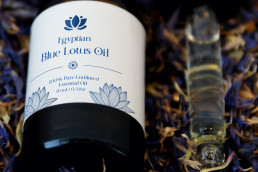
This article is the practical formulation reference for making blue lotus skincare at home, with ten tested recipes covering facial oils, balms, rollerballs, and water-based formulations. Each recipe specifies the dilution percentage, carrier choice, equipment needed, and realistic shelf life, and each sits within the broader framework set out in our skincare pillar. DIY skincare is rewarding when approached properly and frustrating when shortcuts compromise the formulation, so a few paragraphs of groundwork first, then the recipes.
Table of Contents
- Groundwork: Equipment, Ingredients, and Hygiene
- Equipment
- Ingredients
- Hygiene
- Understanding the Dilution Maths
- Recipe 1: Basic Nightly Facial Oil
- Recipe 2: Rich Facial Oil for Dry or Mature Skin
- Recipe 3: Light Facial Oil for Oily or Acne-Prone Skin
- Recipe 4: Under-Eye Oil
- Recipe 5: Pulse-Point Rollerball (Face-Grade)
- Recipe 6: Body Massage Oil
- Recipe 7: Blue Lotus Lip Balm
- Recipe 8: Cuticle and Nail Oil
- Recipe 9: Foot and Heel Balm
- Recipe 10: Facial Toning Mist (Water-Based, With Preservation Note)
- Complementary Oils That Work Well With Blue Lotus
- Common Mistakes in DIY Skincare
- Scaling the Recipes
- Frequently Asked Questions
- Where to Go From Here
- Formulate With the Finest
It is written and clinically reviewed by Antonio Breshears, ND, CCA, a Bastyr-trained naturopathic doctor and certified clinical aromatherapist. For the dilution mathematics and carrier selection logic behind these recipes, see our carrier oil pairings pillar; for condition-specific applications of the finished products, the skincare cluster articles linked throughout.
Groundwork: Equipment, Ingredients, and Hygiene
A few things to have in place before making any of these recipes.
Equipment
A small digital kitchen scale (0.1 gram resolution) is substantially better than measuring by volume for skincare work; the dilution percentages matter and small bottles do not tolerate sloppy measurement. A set of glass dropper bottles (5 ml and 10 ml), rollerball bottles (10 ml), and salve jars (15 to 30 ml) covers most of the formats below. Sterilise the bottles with boiling water and dry thoroughly before filling. A small glass beaker or a shot glass for mixing, and a glass stirring rod or a bamboo skewer, keeps the formulation free of contamination from plastic.
Ingredients
Beyond blue lotus absolute itself, the main ingredients are:
- Jojoba oil (cold-pressed, preferably organic) is the most versatile carrier, tolerated by all skin types.
- Argan oil (cold-pressed) for richer formulations suited to dry and mature skin.
- Rosehip seed oil for anti-ageing and pigmentation-focused formulations.
- Squalane (olive or sugarcane-derived) for very light, fast-absorbing formulations.
- Fractionated coconut oil for rollerballs and body formulations where long shelf life matters.
- Sweet almond oil for gentle body formulations (shorter shelf life).
- Beeswax (pellets or pastilles, cosmetic grade) for balms and salves.
- Shea butter (unrefined, cosmetic grade) for rich balms and body butters.
- Witch hazel (alcohol-free preferred for sensitive skin; alcohol-based for better solubilising) for water-based sprays.
- Complementary essential oils (lavender, frankincense, Roman chamomile, rose) as optional additions.
Hygiene
Clean hands and clean surfaces throughout. Skincare without preservatives relies on low water activity (anhydrous formulations) or tight handling to avoid contamination. Anhydrous (oil-only) formulations are relatively forgiving; anything containing water requires more care, and for most users the water-based recipes below are marginal DIY territory compared with buying a properly preserved commercial product.
Understanding the Dilution Maths
All the recipes below express blue lotus as a percentage of the total formulation by volume. The quick conversion: one percent in a 10 ml bottle is approximately two drops of essential oil; two percent is approximately four drops; three percent is approximately six drops. This assumes a standard 20-drops-per-ml conversion, though viscous oils like blue lotus absolute produce slightly larger drops, so in practice three drops of blue lotus will roughly equal two percent of a 10 ml rollerball. If precision matters (sensitive skin, specific therapeutic applications), use the scale and calculate by weight.
Our carrier oil pairings pillar covers the full dilution mathematics and the typical percentages for different applications.
Recipe 1: Basic Nightly Facial Oil
The reliable default facial oil. Suits normal, slightly dry, or combination skin. Two percent dilution of blue lotus in a facial-grade carrier blend.
Ingredients (for a 10 ml bottle): 9.8 ml jojoba oil (or a 50/50 blend of jojoba and argan), approximately four drops blue lotus absolute.
Method: Add the carrier oil to the bottle using a clean pipette. Add blue lotus drops. Cap and invert gently several times to mix; do not shake vigorously (this introduces air). Label with date and contents.
Use: Three to four drops in clean palms, pressed gently into the face and neck as the final step of an evening routine, after any water-based treatments.
Shelf life: Six to twelve months in a dark glass dropper bottle, stored in a cool drawer.
Recipe 2: Rich Facial Oil for Dry or Mature Skin
A richer formulation for users whose skin needs more substantial emollient support. Combines three carrier oils with blue lotus at two percent.
Ingredients (for a 15 ml bottle): 7 ml argan oil, 4 ml jojoba oil, 4 ml rosehip seed oil, approximately six drops blue lotus absolute.
Method: Combine the three carriers first in a small beaker, stir gently with a glass rod, then transfer to the dropper bottle. Add blue lotus and invert to mix.
Use: Four to six drops in clean palms, pressed into damp skin (slightly moist after cleansing) to lock in hydration. Evening use preferred; the scent can be intense for morning.
Shelf life: Six to eight months. Rosehip oil has a shorter shelf life than the others and sets the limit.
See our dry skin article and mature skin article for specific application guidance.
Recipe 3: Light Facial Oil for Oily or Acne-Prone Skin
A lighter formulation that will not reinforce oiliness or contribute to pore-clogging. One percent dilution of blue lotus in jojoba, with optional tea tree for additional antibacterial action.
Ingredients (for a 10 ml bottle): 9.9 ml jojoba oil, two drops blue lotus absolute, optional two drops tea tree essential oil.
Method: Standard combination as above.
Use: Two to three drops in clean palms, applied sparingly to affected areas or the whole face. Evening application. Use alongside, not instead of, any dermatologist-recommended treatments.
Shelf life: Nine to twelve months in jojoba (jojoba is technically a liquid wax and exceptionally stable).
See our oily skin article and acne article for fuller protocol detail.
Recipe 4: Under-Eye Oil
A targeted formulation for the delicate periocular area, with particularly gentle dilution and the lightest-texture carrier.
Ingredients (for a 5 ml rollerball): 4.9 ml of a 50/50 blend of jojoba and squalane, one drop blue lotus absolute (this gives a 0.5 percent dilution, appropriate for the thin skin under the eye).
Method: Combine the carriers, add blue lotus, cap with the rollerball fitment.
Use: Roll a small amount onto the skin around the eye socket (orbital bone), then gently pat in with a ring finger. Avoid getting oil into the eye itself. Evening use.
Shelf life: Six to eight months in the rollerball.
See our under-eye article and dark circles article for detail on how and when this works.
Recipe 5: Pulse-Point Rollerball (Face-Grade)
A multi-purpose rollerball for aromatic and light-topical use: pulse points, temples during stress or headache, gentle application to areas of tension. Two percent dilution in jojoba.
Ingredients (for a 10 ml rollerball): 9.8 ml jojoba oil, four drops blue lotus absolute.
Method: Standard combination. This rollerball is designed to be stronger than an under-eye rollerball but lighter than a body rollerball, so it suits a wide range of applications.
Use: Roll onto pulse points (wrists, behind ears, nape of neck) for aromatic presence, onto temples during tension or headache, or onto specific small areas as a targeted skincare treatment.
Shelf life: Nine to twelve months.
Recipe 6: Body Massage Oil
A lighter body formulation for general massage use, with a slightly higher blue lotus percentage than facial formulations and a light body-grade carrier.
Ingredients (for a 30 ml bottle): 29 ml of a 50/50 blend of sweet almond oil and fractionated coconut oil, approximately eighteen drops blue lotus absolute (3 percent dilution).
Method: Combine carriers in the bottle, add blue lotus, cap and invert gently.
Use: Generous application for general massage or body ritual. The scent is rich and the aromatic presence will fill the room during and after application.
Shelf life: Four to six months. Sweet almond oil oxidises faster than jojoba, setting the limit.
Recipe 7: Blue Lotus Lip Balm
A rich anhydrous balm that combines the aromatic character of blue lotus with the barrier-protection of beeswax and shea butter. Perfect for overnight lip treatment or daytime protection in dry conditions.
Ingredients (for a 15 ml tin or tube): 7 grams beeswax pellets, 4 grams shea butter, 3 grams jojoba oil, approximately eight drops blue lotus absolute (3 percent of final weight).
Method: Melt the beeswax and shea butter in a double boiler (or a glass bowl over a pan of simmering water) until fully liquid. Remove from heat and let cool to approximately 50 degrees Celsius (warm but not hot to the touch). Add the jojoba oil and blue lotus, stir well, and pour into the tin or tube. Allow to set at room temperature for two to three hours before capping.
Use: Apply sparingly to lips as needed, particularly before bed and in dry weather.
Shelf life: Eight to twelve months, sometimes longer. The beeswax and shea butter are both very stable, and the absence of water means no preservation issues.
See our lips article for application context.
Recipe 8: Cuticle and Nail Oil
A small-volume, targeted formulation for nail care. Slightly higher dilution (3 percent) because the application is small and the skin is thicker.
Ingredients (for a 5 ml rollerball or dropper bottle): 4.9 ml jojoba oil, three drops blue lotus absolute, optional one drop lavender essential oil.
Method: Standard combination. A rollerball works well for application to individual nails; a dropper bottle with a small glass rod applicator is an alternative.
Use: Apply to cuticles and nails nightly after hand washing, massaging gently into the nail bed and surrounding skin.
Shelf life: Nine to twelve months.
See our cuticles and nails article for more detail.
Recipe 9: Foot and Heel Balm
A richer version of the lip balm, formulated for the thicker skin of the feet and dry heels. Higher blue lotus percentage (5 percent) and more occlusive carriers.
Ingredients (for a 30 ml tin): 10 grams shea butter, 6 grams beeswax pellets, 12 grams fractionated coconut oil, approximately thirty drops blue lotus absolute (5 percent of final weight).
Method: Melt shea butter and beeswax in a double boiler until liquid. Remove from heat, cool to approximately 50 degrees Celsius, add the fractionated coconut oil and blue lotus, stir, and pour into the tin. Allow to set.
Use: Apply generously to feet and heels at bedtime, cover with cotton socks overnight for maximum effect.
Shelf life: Eight to twelve months.
See our feet and dry heels article for application guidance.
Recipe 10: Facial Toning Mist (Water-Based, With Preservation Note)
The one water-based recipe included here, with caveats. Water-based formulations can harbour bacteria and mould, and proper preservation is non-trivial. The recipe below uses alcohol-based witch hazel as a partial preservative and deliberately small batch size to minimise the risk.
Ingredients (for a 60 ml spray bottle): 45 ml rose hydrosol or orange blossom water, 12 ml alcohol-based witch hazel, 3 ml glycerine, approximately fifteen drops blue lotus absolute (plus a solubiliser – 1 ml of polysorbate 20 if you have it, otherwise accept that the blue lotus will partly separate and shake well before each use).
Method: Combine witch hazel, glycerine, and blue lotus (and polysorbate if using) in a small beaker, mix well. Add the hydrosol and transfer to the spray bottle.
Use: Mist lightly over the face after cleansing and before serums or oils. Avoid getting into the eyes.
Shelf life: Four to six weeks maximum, even with the witch hazel’s alcohol content. Any cloudiness, odour change, or film on the surface means discard immediately. For a longer-lasting and more reliable result, a commercial toner with proper preservation is a better choice than a DIY version.
Complementary Oils That Work Well With Blue Lotus
For users who want to build on the basic formulations, a few essential oils that pair particularly well with blue lotus in facial skincare.
- Lavender: adds an additional calming dimension; works at 0.5 to 1 percent alongside blue lotus.
- Frankincense: reinforces the contemplative aromatic character and adds mild astringent action; 0.5 to 1 percent.
- Roman chamomile: boosts the anti-inflammatory effect through its own apigenin content; 0.5 percent.
- Rose: adds floral depth and its own skin-compatible character; 0.25 to 0.5 percent (more is overwhelming).
- Helichrysum: specifically for scar and healing support; 0.5 percent, in targeted rather than all-over formulations.
- Carrot seed oil: pairs well with blue lotus for mature skin applications; 0.5 percent.
When combining essential oils, keep the total essential oil load within the safe range for the application area (2 percent total for facial, 3 percent total for body). Blue lotus at 2 percent plus lavender at 0.5 percent puts you at 2.5 percent total, which is marginal for facial use; reduce the blue lotus to 1.5 percent in that case.
Common Mistakes in DIY Skincare
Worth naming, because these are the failure modes that turn a promising recipe into a disappointment.
- Over-dilution. More blue lotus is not better. Formulations at 5 or 6 percent on the face can irritate even tolerant skin, and the therapeutic benefit does not scale linearly with concentration.
- Cheap or rancid carrier oil. A good blue lotus absolute in a rancid sweet almond oil is worse than a generic skincare product; the carrier matters. Buy cold-pressed, organic where feasible, and store the carriers properly before use.
- Contamination during making. Unsterilised bottles, dirty hands, touching the dropper tip to the bottle opening: all introduce microbes that accelerate degradation and can occasionally cause skin reactions.
- Water-based formulations without preservation. A DIY toner without proper preservation is a vehicle for bacterial growth. Accept that some formulations are better bought pre-preserved than made at home.
- Skipping the patch test. A new formulation, even from a tested recipe, can occasionally cause an unexpected reaction in a specific user. Three days of patch testing on the inner forearm is a small investment compared with potentially irritating the whole face.
- Ignoring shelf life. A formulation left on the shelf for eighteen months has degraded, even if it still looks and smells roughly the same. Use within the stated shelf life and discard when that passes.
Scaling the Recipes
The recipes above can be scaled up or down by proportion. For larger batches (a 30 ml bottle from a 10 ml recipe, or similar), multiply all ingredients by the scale factor, keeping the percentages identical. For smaller batches (a 5 ml trial bottle from a 10 ml recipe), halve everything.
Do not scale up beyond what you will use within the shelf life. A 60 ml facial oil is more oil than most users will get through before it ages; multiple smaller batches are better than one large one.
Frequently Asked Questions
What is the best DIY use for blue lotus oil?
A simple facial oil at two percent dilution in jojoba (Recipe 1 above) is the best starting point for most users. It suits most skin types, has a long shelf life, is easy to make, and delivers the full value of the oil.
How much blue lotus oil do I need for a 10 ml facial oil?
For a 2 percent dilution, approximately four drops in 9.8 ml of carrier oil. For 1 percent, two drops. Viscous oils like blue lotus absolute have slightly larger drops than lighter essential oils, so three drops of blue lotus in 10 ml is roughly 2 percent in practice.
Can I make a DIY blue lotus serum?
An anhydrous (oil-only) serum, yes; the facial oil recipes above are essentially oil-based serums. A water-based serum with hyaluronic acid or niacinamide is substantially more demanding to formulate, requires proper preservation, and is usually better bought pre-formulated than made at home.
What is the shelf life of DIY blue lotus skincare?
Anhydrous (oil-only) formulations: six to twelve months typically, longer for very stable carriers like jojoba. Balms with beeswax: eight to twelve months. Water-based formulations: one to six weeks, even with some preservation.
Can I use blue lotus oil with other essential oils in DIY skincare?
Yes. Lavender, frankincense, Roman chamomile, rose, and helichrysum all pair well. Keep the total essential oil load within the safe range for the application area (2 percent total facial, 3 percent total body).
Do I need a scale for making DIY skincare?
For professional-quality consistency, yes; small variations in dilution matter for facial formulations particularly. For casual use, drop-counting can work if you are consistent, but a digital kitchen scale with 0.1 gram resolution costs little and improves every formulation.
Is DIY blue lotus skincare better than commercial products?
Not necessarily. DIY has control-over-ingredients and cost-per-application advantages; commercial products have proper preservation, consistent formulation, and regulatory safety testing advantages. For simple anhydrous formulations (facial oils, balms), DIY is genuinely competitive. For complex formulations (serums, emulsions, preserved water-based products), commercial is usually better.
What equipment do I need to start DIY skincare?
A digital kitchen scale, a set of glass dropper and rollerball bottles, a small glass beaker or mixing cup, a glass stirring rod, and sterilising equipment (boiling water or alcohol). Nothing expensive; the total investment is under fifty pounds for a solid starter kit.
Can I store DIY blue lotus skincare in the refrigerator?
Oil-based formulations will thicken in the fridge and need to warm before use; refrigeration extends shelf life but is not usually worth the inconvenience. Water-based formulations benefit more from refrigeration, which slows microbial growth and extends their marginal shelf life.
Is it safe to make DIY skincare at home?
Yes, for the oil-based formulations in this article, provided you follow basic hygiene and respect the shelf lives. Water-based formulations are riskier because of microbial contamination, and for those, commercial preserved products are often safer.
Where to Go From Here
For the broader skincare framework these recipes fit into, see our skincare pillar. For the dilution mathematics and carrier selection, our carrier oil pairings pillar. For condition-specific protocols, the cluster articles linked throughout: dry skin, mature skin, acne, eczema, under eyes, lips, cuticles and nails, and feet and dry heels. For storage, our storage and shelf life article. For the broader introduction, the complete guide. Everything on this site is hosted at Pure Blue Lotus Oil.

Antonio Breshears
Antonio Breshears is a renowned expert in holistic medicine and beauty, with over 25 years of research experience dedicated to uncovering the secrets of nature's most powerful remedies. Holding a degree in Naturopathic Medicine, Antonio's passion for healing and well-being has driven him to explore the intricate connections between mind, body, and spirit.
Over the years, Antonio has become a respected authority in the field, helping countless individuals discover the transformative power of plant-based therapies, including essential oils, herbs, and natural supplements. He has authored numerous articles and publications, sharing his wealth of knowledge with a global audience seeking to improve their overall health and well-being.
Antonio's expertise extends to the realm of beauty, where he has developed innovative, all-natural skincare solutions that harness the potency of botanical ingredients. His formulations embody his deep understanding of the healing properties found in nature, providing holistic alternatives for those seeking a more balanced approach to self-care.
With his extensive background and dedication to the field, Antonio Breshears is a trusted voice and guiding light in the world of holistic medicine and beauty. Through his work at Pure Blue Lotus Oil, Antonio continues to inspire and educate, empowering others to unlock the true potential of nature's gifts for a healthier, more radiant life.
Related Guides
COA Required for Cosmetic Batch Record Blue Lotus Oil: 2026
COA Required for Cosmetic Batch Record Blue Lotus Oil—what to verify: identity,…

Essential Oil Blends 2026: Blue Lotus Recipes & Ratios
Master essential oil blends with Blue Lotus recipes, safe dilution ratios, and…