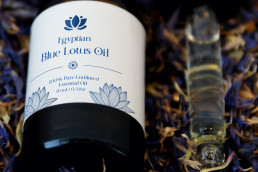
The skin beneath your eyes is the thinnest on your face, roughly half the thickness of the skin on your cheeks, which is why it shows fatigue, dehydration, and age before anywhere else. If you have arrived here wondering whether blue lotus oil under eyes is a sensible addition to your skincare routine, the short answer is yes, with important caveats about dilution, technique, and realistic expectations. This article walks through what the oil actually does for this delicate zone, how to apply it without irritating it, and where its limits genuinely lie.
Table of Contents
- What Makes the Under-Eye Area Different
- How Blue Lotus Oil Helps the Under-Eye Area
- Flavonoid Support for Capillary Integrity
- Anti-Inflammatory and Calming Action
- Hydration Support Through a Lipid Carrier
- A Parasympathetic Nudge at Bedtime
- How to Use Blue Lotus Oil Under the Eyes Safely
- Never Apply Undiluted
- The Dilution Range for Under-Eye Use
- Choosing the Right Carrier
- A Simple Under-Eye Formulation
- Application Technique
- Frequency
- What to Expect: Realistic Timeframes
- When Blue Lotus Oil Is Not the Right Choice
- Complementary Approaches Worth Considering
- Frequently Asked Questions
- Where to Go From Here
- Begin Your Under-Eye Ritual
It is written and clinically reviewed by Antonio Breshears, ND, CCA, a Bastyr-trained naturopathic doctor and certified clinical aromatherapist. For a broader grounding in the botanical, its chemistry, and its wider applications, you may also want to read The Complete Guide to Blue Lotus Oil, which provides context for the skincare uses discussed here.
What Makes the Under-Eye Area Different
Before discussing any oil, it helps to understand what you are actually treating. The periorbital skin (the area around the eye) sits on top of a network of fine capillaries, has minimal subcutaneous fat, and contains very few sebaceous glands. That last point matters: because it produces little of its own oil, it tends toward dryness, and because it is so thin, whatever lies beneath it shows through. Dark circles are often not pigment at all but the blue-violet tint of blood vessels visible through translucent skin. Puffiness is usually fluid retention or mild lymphatic congestion. Fine lines appear early because this skin flexes thousands of times a day with every blink and expression.
This context shapes what any topical product can realistically do. A well-formulated eye treatment can hydrate, support the microcirculation, calm inflammation, and improve the appearance of skin texture. It cannot remove pigment that is genetic, drain structural fat pads, or reverse bone remodelling that creates the hollow tear trough. Going in with clear expectations makes the results more satisfying.
How Blue Lotus Oil Helps the Under-Eye Area
Blue lotus absolute contains a set of compounds that are genuinely useful for delicate skin, though the effects are cumulative and modest rather than dramatic. Understanding the mechanisms helps you know what to look for.
Flavonoid Support for Capillary Integrity
Blue lotus is rich in flavonoids, notably quercetin, kaempferol, and apigenin. These molecules are reasonably well-attested in the literature for supporting capillary wall strength and reducing low-grade inflammatory signalling in skin. For the under-eye area, where fragile capillaries contribute to the bluish cast of dark circles, this kind of subtle vascular support is arguably the most relevant action the oil offers. You are not bleaching pigment; you are nudging the microcirculation toward better tone over weeks of consistent use.
Anti-Inflammatory and Calming Action
Apigenin in particular has been studied for its anti-inflammatory effects on skin, and the broader flavonoid and alkaloid profile of blue lotus appears to calm reactive skin without provoking the irritation that many active ingredients cause. If your under-eye puffiness has an inflammatory component (late nights, salty food, a touch of allergic response), a properly diluted blue lotus preparation can help settle the tissue rather than aggravate it.
Hydration Support Through a Lipid Carrier
Much of what blue lotus delivers to the under-eye area depends on what you dilute it into. The oil itself is highly concentrated aromatic material, so its direct role is calming and supportive; the occlusive and emollient benefit comes from the carrier. When blended into a well-chosen facial oil such as jojoba or squalane, the combined preparation locks in moisture against that parchment-thin skin and reduces the transepidermal water loss that makes fine lines look more pronounced.
A Parasympathetic Nudge at Bedtime
This point is often overlooked. Blue lotus is mildly relaxing when inhaled, and a significant contributor to chronic under-eye shadowing is poor sleep. Applying an aromatic eye preparation at night does double duty: it delivers the flavonoids to the skin and it delivers the scent to your nervous system in a way that supports falling asleep more easily. If you sleep better, the area under your eyes looks better. It is not magic; it is just compounding benefit.
How to Use Blue Lotus Oil Under the Eyes Safely
This is the section that matters most, because the wrong approach here causes irritation and sends people away convinced the oil does not work. It works; it just needs to be applied with the respect this skin deserves.
Never Apply Undiluted
Blue lotus absolute is far too concentrated to go directly onto periorbital skin. Straight application is not only ineffective, it risks sensitisation, stinging, and contact irritation. Anyone telling you otherwise is not thinking clearly about dilution principles. The absolute must always be blended into a carrier.
The Dilution Range for Under-Eye Use
For this area specifically, stay at the lower end of facial dilution: 0.5 to 1 per cent. That works out to roughly 1 to 2 drops of blue lotus absolute per 10 millilitres (two teaspoons) of carrier oil. A full facial percentage of 1 to 2 per cent is acceptable for cheeks and forehead, but the under-eye warrants extra caution.
Choosing the Right Carrier
For the under-eye, the carrier choice is arguably more important than for anywhere else on the face. Suitable options include:
- Squalane: lightweight, non-comedogenic, mimics skin’s natural lipids, absorbs without a greasy residue. My first choice for most people.
- Jojoba oil: technically a liquid wax that closely resembles human sebum, stable against oxidation, and well tolerated.
- Rosehip seed oil: rich in retinoic acid precursors and useful for fine lines, though it oxidises faster and needs refrigeration.
- A fragrance-free eye cream base: if you prefer a cream texture, you can add blue lotus to an unscented eye cream at the same low percentage.
Avoid coconut oil (too heavy and comedogenic for this area), avoid anything with added essential oils that you have not accounted for in your dilution calculation, and avoid mineral-oil-based products if you want the active compounds to penetrate.
A Simple Under-Eye Formulation
Here is the formulation I recommend to clients who want a starting point:
- 10 ml squalane (a small glass dropper bottle holds this well)
- 1 to 2 drops blue lotus absolute
- Optional: 1 drop of a genuinely gentle complementary oil such as Roman chamomile or helichrysum (both considered safe for facial use at low dilution)
Shake gently, label with date of preparation, and store in a cool, dark place. Use within six months.
Application Technique
Apply in the evening on clean skin. Place a single drop of the prepared blend on the tip of your ring finger (the ring finger applies the least pressure naturally), dab it into three or four points along the orbital bone from the inner to the outer corner, and press it in gently with small tapping motions. Do not drag, do not rub, and do not apply so close to the lash line that the product migrates into the eye overnight. Keep application on the bone itself and slightly outward, not directly under the lashes.
Frequency
Once daily at night is sufficient. A twice-daily routine (morning and night) is acceptable if your skin tolerates it well, though the morning dose is harder to pair with SPF and makeup, so most people settle on evening use.
What to Expect: Realistic Timeframes
This is where honesty matters most. Skincare timelines are slow, and the under-eye area is the slowest-responding zone of all because the cells here turn over at roughly the same rate as elsewhere but show improvements last due to their starting thinness.
Week one to two: You may notice the skin feels more comfortable, better hydrated, and slightly less papery when you smile. Any acute puffiness from a poor night’s sleep may recover faster than usual. Do not expect visible change in dark circles yet.
Week three to six: The texture begins to refine. If your fine lines are dehydration lines (the kind that look worse when you are tired), they often soften appreciably in this window. The tone of the area may start to look slightly more even as the microcirculation improves.
Month two to three: This is when the cumulative flavonoid effect on the capillaries starts to register visually, assuming consistent nightly use. Dark circles of vascular origin look somewhat lighter. Dark circles of pigmentary or structural origin will not change, and no topical will change them.
Beyond three months: Maintenance. The benefit is real but modest, and it requires ongoing use. Stop applying and the skin drifts back toward its baseline over weeks.
If you are expecting a filler-level transformation, you will be disappointed. If you are expecting a gently brighter, better-hydrated, less tired-looking periorbital area over a couple of months, you will probably be pleased.
When Blue Lotus Oil Is Not the Right Choice
There are several situations where I would steer someone away from this particular ingredient for under-eye use.
Pregnancy and breastfeeding: Blue lotus contains active alkaloids (aporphine and nuciferine) that have not been studied in pregnancy. Avoid topical and inhalational use during this period.
Known sensitivity to the oil: A patch test on the inner forearm for 48 hours is always wise before introducing anything new to the eye area. If you react there, you will certainly react under the eye.
Active dermatitis, eczema, or compromised barrier: If the skin around your eyes is already inflamed, cracked, or weeping, any concentrated botanical is more likely to sting than soothe. Heal the barrier first with a simple fragrance-free emollient, then reintroduce actives once the skin is quiet.
Structural or pigmentary dark circles: If your dark circles are caused by a deep tear trough, genetic pigment, or post-inflammatory hyperpigmentation from eczema or rubbing, a topical botanical will not shift them meaningfully. Dermatological assessment and, if appropriate, hyaluronic filler or targeted brightening treatments will serve you better.
Recent ophthalmic surgery or procedures: Wait until your ophthalmologist clears you for general skincare in the area.
Contact lens wearers: Apply well away from the lash line and wait a good thirty minutes before inserting lenses. Aromatic migration into the eye is uncomfortable and can interact with lens material.
Complementary Approaches Worth Considering
Topical blue lotus works best as one element in a broader strategy. The under-eye area responds to whole-person inputs as much as to any product.
Sleep. This is non-negotiable. Seven to nine hours of reasonably consistent sleep does more for under-eye appearance than any cream. If you are sleep-deprived, addressing that single variable will outperform any topical.
Hydration and salt balance. Chronic mild dehydration makes fine lines look deeper; excessive sodium intake causes periorbital puffiness, especially on waking. Moderating both helps.
Sun protection. A mineral SPF applied to the under-eye area every morning is the single most effective anti-ageing intervention you can make. UV accelerates collagen loss in already-thin skin.
Cold therapy. For acute puffiness, a cool (not frozen) eye mask or chilled gua sha tool in the morning genuinely helps move lymphatic fluid. This is complementary to, not a replacement for, your evening oil routine.
Gentle lymphatic massage. A minute of careful tapping and sweeping strokes from the inner corner outward, along the orbital bone, supports drainage. Use your prepared blue lotus blend as your slip medium for this and you are multitasking nicely.
Nutritional considerations. Iron deficiency is a surprisingly common hidden cause of persistent dark circles; if yours have a distinct purple cast and have been there for years, a basic blood panel is worth requesting.
Frequently Asked Questions
Can I put blue lotus oil directly on the skin under my eyes?
No. Blue lotus absolute must always be diluted into a carrier oil at 0.5 to 1 per cent for under-eye use. Undiluted application risks irritation and sensitisation on this very thin skin.
Will blue lotus oil get rid of my dark circles?
It can help lighten dark circles that are vascular in origin (the bluish tone from fragile capillaries showing through thin skin), gradually, over two to three months of consistent use. It will not affect dark circles caused by genetic pigmentation, structural hollowing, or post-inflammatory marks.
How long does it take to see results under the eyes?
Mild improvements in hydration and texture appear within two weeks. Visible improvements in tone and fine lines typically take six to twelve weeks of nightly use. The improvement is cumulative and modest, not dramatic.
What is the best carrier oil to mix with blue lotus for the under-eye area?
Squalane is my first recommendation because it is lightweight, non-comedogenic, and closely resembles skin’s natural lipids. Jojoba is an excellent second choice. Rosehip seed oil works well if you want additional antioxidant support, though it needs cool storage.
Can I use blue lotus oil if I have sensitive skin?
Often yes, at the very lowest end of the dilution range (0.5 per cent, which is 1 drop per 10 ml of carrier). Patch test on the inner forearm for 48 hours first. If you have active eczema or dermatitis around the eyes, wait until the barrier has healed before introducing it.
Can I apply it in the morning under makeup?
Yes, though most people find evening use more practical. If using in the morning, let the blend absorb for five to ten minutes before applying mineral SPF and concealer. A very light hand with the quantity is essential under makeup.
Is it safe to use near the eyelashes?
Apply on the orbital bone and slightly below, not directly at the lash line. Aromatic migration into the eye itself will sting and is worth avoiding. Keep a small buffer of a few millimetres.
Can I use blue lotus oil while pregnant or breastfeeding?
No. Blue lotus contains active alkaloids that have not been studied for safety in pregnancy or lactation. Avoid topical and inhalational use during these periods.
Will it help with crow’s feet and fine lines?
It helps most with dehydration lines, the fine creases that look worse when you are tired, by improving hydration and supporting skin texture. Deeper, etched lines and expression lines are primarily a matter of collagen loss and muscle movement, and no topical botanical will remove them.
How should I store my prepared under-eye blend?
In a small amber or cobalt glass dropper bottle, in a cool, dark cupboard away from heat and sunlight. Use within six months of preparation. If the oil begins to smell rancid or different from when you mixed it, discard and make a fresh batch.
Where to Go From Here
Using blue lotus oil under the eyes is one of the gentler and more considered applications in skincare; the chemistry of the oil suits the delicacy of the tissue, provided you dilute properly and apply with patience. Think of it as a long, slow treatment rather than a quick fix, and pair it with the lifestyle inputs that under-eye skin depends on most: sleep, sun protection, and hydration. For the broader picture of how this botanical fits into skincare, wellness, and ritual more widely, the complete guide to blue lotus oil is the natural next step, and it will place the under-eye application within its fuller context.

Antonio Breshears
Antonio Breshears is a renowned expert in holistic medicine and beauty, with over 25 years of research experience dedicated to uncovering the secrets of nature's most powerful remedies. Holding a degree in Naturopathic Medicine, Antonio's passion for healing and well-being has driven him to explore the intricate connections between mind, body, and spirit.
Over the years, Antonio has become a respected authority in the field, helping countless individuals discover the transformative power of plant-based therapies, including essential oils, herbs, and natural supplements. He has authored numerous articles and publications, sharing his wealth of knowledge with a global audience seeking to improve their overall health and well-being.
Antonio's expertise extends to the realm of beauty, where he has developed innovative, all-natural skincare solutions that harness the potency of botanical ingredients. His formulations embody his deep understanding of the healing properties found in nature, providing holistic alternatives for those seeking a more balanced approach to self-care.
With his extensive background and dedication to the field, Antonio Breshears is a trusted voice and guiding light in the world of holistic medicine and beauty. Through his work at Pure Blue Lotus Oil, Antonio continues to inspire and educate, empowering others to unlock the true potential of nature's gifts for a healthier, more radiant life.