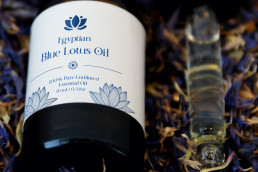
If you have arrived here looking for the best blue lotus oil for lucid dreaming, you almost certainly already know the broad strokes: Nymphaea caerulea has a long association with sleep, vivid dreams and altered states of consciousness reaching back to dynastic Egypt. The harder question, and the one this article actually answers, is which oils on the market are likely to produce the kind of soft, image-rich dream activity that lucid dreamers are looking for, and which are essentially decorative. Authenticity, extraction method and alkaloid concentration all matter here, and not equally.
Table of Contents
- What Lucid Dreamers Are Actually Looking For in an Oil
- Why Authenticity Matters More Here Than Almost Anywhere Else
- What real blue lotus smells like
- Which Extraction Method Is Best for Dream Work
- How to Use Blue Lotus Oil for Lucid Dreaming
- The pre-sleep ritual
- The wake-back-to-bed window
- Dilution and frequency
- What to Expect: Realistic Timeframes
- When Blue Lotus Oil Is Not the Right Choice
- Complementary Approaches Worth Combining
- How to Identify the Best Blue Lotus Oil for Lucid Dreaming When Buying
- Storage and Shelf Life
- Frequently Asked Questions
- Where to Go From Here
- Begin Your Dream Practice Tonight
It is written and clinically reviewed by Antonio Breshears, ND, CCA, a Bastyr-trained naturopathic doctor and certified clinical aromatherapist. For broader context on the plant, its chemistry and its uses, readers may want to start with The Complete Guide to Blue Lotus Oil, which sits as the parent reference for everything covered here.
What Lucid Dreamers Are Actually Looking For in an Oil
Before discussing which oil is best, it helps to be clear about what blue lotus can and cannot do for a dream practice. Lucid dreaming is not pharmacological in the way that, say, sedation is. It depends on a layered set of conditions: enough REM sleep, enough dream recall, enough cognitive priming during the day to recognise dream signs at night, and an autonomic state that is calm but not heavily sedated. Blue lotus oil, when it works for dreamers, works on the last two of those conditions. It nudges the nervous system toward parasympathetic dominance and seems, in many users, to enrich the sensory texture of dreams. It does not implant lucidity. It does not replace MILD, WBTB, reality checks or any of the cognitive practices that actually generate awareness within a dream.
What people describe most often after using a genuinely good blue lotus oil before bed is heightened dream recall, longer dream sequences, more colour and more emotional warmth in the imagery, and a kind of soft mental quietness that makes it easier to drift back into REM after a brief waking. Those four effects, modest as each one is on its own, are exactly the substrate a lucid dreaming practice needs.
Why Authenticity Matters More Here Than Almost Anywhere Else
Most aromatherapy applications are forgiving of mediocre oil. A poorly extracted lavender will still smell pleasant in a diffuser. A diluted frankincense will still feel reasonable on the skin. Blue lotus for dream work is not forgiving, because the effect depends on actual alkaloid and flavonoid content reaching the olfactory system. The bioactive constituents of Nymphaea caerulea include the aporphine alkaloids (a weak dopaminergic), nuciferine (with serotonergic activity at 5-HT2A and 5-HT2C receptors), and flavonoids such as apigenin, quercetin and kaempferol. Apigenin in particular interacts with the central benzodiazepine binding site and is part of why authentic blue lotus has any calming character at all.
If a product has been adulterated with synthetic floral fragrance, cut with cheaper absolutes, or labelled as blue lotus when it is actually a fragrance oil with a few drops of the real thing, none of that chemistry is meaningfully present. You will get a pleasant smell and no dream effect. This is the most common failure mode among first-time buyers who report disappointment with blue lotus for sleep or dreaming. They did not buy a weak oil; they bought a fragrance.
What real blue lotus smells like
Authentic Nymphaea caerulea absolute has a complex three-stage scent. The top is cooler and slightly aquatic, with a green-floral lift. The heart is deep, honeyed and richly floral, sometimes described as warm honey over wet petals. The base is balsamic, faintly smoky, and lingers on skin or paper for hours. If your bottle smells uniformly sweet and floral with no movement and no base, treat that as a warning sign.
Which Extraction Method Is Best for Dream Work
Three extraction methods are commonly used to produce blue lotus oil, and they are not equivalent for this particular use case.
Solvent-extracted absolute. This is the most common form on the market and, for dream work, generally the most appropriate. Solvent extraction (typically with food-grade hexane, fully removed before bottling) preserves the heavier, less volatile aromatic molecules that carry the deep honeyed character of the flower, and it captures a fuller spectrum of the alkaloid and flavonoid content than steam alone. A genuine absolute, made from a high ratio of flowers (typically 3,000 to 5,000 blooms per gram), is what most experienced users find effective for evening rituals.
Steam-distilled essential oil. True steam-distilled blue lotus is rare and expensive because the flower yields very little volatile oil. The aroma is brighter and cleaner than the absolute, but the heavier alkaloid fraction is largely left behind. For pure aromatherapy this is beautiful; for dream work it is generally less effective than a good absolute.
Supercritical CO2 extract. The premium category. CO2 extraction uses pressurised carbon dioxide rather than chemical solvents and produces an extract that is closer in profile to the living flower than either of the other methods. Where available, a CO2 extract is arguably the most complete representation of blue lotus chemistry. It is also the most expensive.
For most readers, a properly produced absolute represents the best value and the most reliable dream-work performance. CO2 is excellent if you can find and afford it. Steam-distilled essential oil is lovely as a perfume note but underpowered for what you actually want here.
How to Use Blue Lotus Oil for Lucid Dreaming
The protocol matters. Even an excellent oil used carelessly will give modest results, and a carefully used oil will outperform a more potent one applied without thought. The reason is olfactory: the limbic effect of any aromatic compound depends on consistent, low-level exposure during the windows of the night when REM is most active.
The pre-sleep ritual
Begin roughly thirty to forty-five minutes before you intend to sleep, not at the moment you turn the lights off. Diffuse two to four drops of blue lotus absolute in a cool-mist diffuser placed within two to three metres of the bed. The point is ambient saturation, not concentration; you want the scent to become a background condition rather than a foreground event. Run the diffuser for the thirty minutes before sleep and let it switch off naturally.
If you prefer skin application, dilute two drops of blue lotus absolute in five to seven millilitres of jojoba or fractionated coconut oil and apply lightly to the inner wrists, the back of the neck and the centre of the chest. A small amount on the temples is also traditional, though use restraint there because the warmth of the skin will amplify the scent considerably.
The wake-back-to-bed window
Lucid dreamers familiar with WBTB (wake-back-to-bed) will recognise the value of brief waking around four to five hours into the sleep period, which corresponds with the longer REM phases of the second half of the night. A small reapplication at this point, one drop on the wrist or a brief inhalation directly from the bottle held twenty centimetres from the nose, can prime the next REM cycle without disrupting return to sleep. This is, in my clinical experience with patients exploring dream work, the single most effective adjustment most people can make.
Dilution and frequency
For evening skin use, stay at one to two percent dilution. Higher concentrations do not produce stronger dream effects and can become heady or cloying in the bedroom. Use the protocol nightly for at least two weeks before judging effectiveness. Olfactory associations strengthen with repetition, and part of what makes blue lotus useful for dream work is the conditioned-response component, the brain learning that this scent signals a particular kind of sleep.
What to Expect: Realistic Timeframes
Within the first three to five nights of consistent use, most people notice improved dream recall on waking. Dreams tend to feel longer, more visually saturated and easier to remember in narrative sequence rather than as fragments. This alone is valuable for a lucid dreaming practice because recall is the foundation on which awareness is built.
Within the second and third week, with the oil paired alongside an intentional dream-journalling practice and basic reality checks during the day, many users report the first appearances of pre-lucid dreams (dreams in which they begin to question the reality of the experience) and occasional brief lucid episodes. The oil is not generating these directly; it is supporting the conditions under which the cognitive practice can take hold.
What you should not expect is a reliable, on-demand lucid experience purely from the oil. Anyone marketing blue lotus that way is overpromising. The realistic frame is this: blue lotus oil is one of the more genuinely useful botanical adjuncts for a serious dream practice, but it works as a support, not a switch.
When Blue Lotus Oil Is Not the Right Choice
There are situations where I would steer a patient away from this approach, regardless of how much they want to explore lucid dreaming.
Pregnancy and breastfeeding. Blue lotus is avoided in both, full stop. The alkaloid profile has not been adequately studied in these populations and the precautionary line is firm.
Use of dopaminergic medications, MAOIs or significant sedatives. The aporphine and nuciferine activity in blue lotus, while modest, has theoretical interactions with these medication classes. Speak to your prescriber before introducing it.
A history of dissociative experiences, severe nightmares or trauma-related sleep disturbance. Vivid, image-rich dreaming is not always pleasant. For people whose dream content is already distressing, intensifying it is the wrong direction. Trauma-aware therapy and stable sleep should come first.
Children. Not appropriate for paediatric use.
Significant respiratory sensitivity. Diffused essential oils can aggravate asthma in some individuals. Use a steam-free method and ventilate well, or skip the diffuser entirely in favour of a single application to a tissue placed on the bedside table.
Complementary Approaches Worth Combining
Blue lotus oil performs best when it is one element of a structured practice rather than a standalone intervention. The cognitive techniques (MILD, SSILD, WBTB and reality testing) remain the engine of any lucid dreaming practice; the oil supports the autonomic and sensory conditions in which they work.
A consistent dream journal kept on the bedside table, written in for two or three minutes immediately on waking, reliably improves recall within a week regardless of any other intervention. Reduced screen exposure for an hour before sleep, especially the elimination of bright blue-spectrum light, supports natural melatonin onset and the depth of early-night sleep on which REM rebound depends. Magnesium glycinate in the evening, where appropriate and not contraindicated, is a reasonable nutritional support for sleep architecture.
Among other oils, mugwort (Artemisia vulgaris) is traditionally associated with dream work but is significantly more activating and can produce uncomfortably intense or unpleasant dreams in sensitive individuals; treat it with respect rather than enthusiasm. Sandalwood pairs beautifully with blue lotus in a diffuser blend and adds grounding to the lighter floral character. Lavender, while not specifically a dream herb, supports sleep onset and can be useful for those who struggle to fall asleep before any dreaming can occur.
How to Identify the Best Blue Lotus Oil for Lucid Dreaming When Buying
A short, practical checklist for evaluating a product before purchase:
- The botanical name Nymphaea caerulea appears explicitly on the label, not just “blue lotus” or “lotus blossom”.
- The extraction method is named (absolute, CO2 or steam-distilled), not vague language like “infused” or “fragrance oil”.
- The country of origin is stated, with Egyptian-grown material being the historical reference standard.
- The bottle is dark glass (amber or violet), not clear, and ideally small (5 to 15 ml) given the price point.
- The price reflects the production cost. A genuine absolute requires thousands of flowers per gram; pricing significantly below the market range almost always indicates dilution or substitution.
- The colour of the absolute is a deep amber-brown, not pale yellow or water-clear.
- The scent shows movement over time on a paper test strip: top, heart and base notes resolving over hours rather than fading uniformly within minutes.
An oil that meets all of these criteria is overwhelmingly likely to perform as expected for dream work, regardless of brand. An oil that fails several of them will not, regardless of marketing.
Storage and Shelf Life
A genuine blue lotus absolute, stored properly, retains its character and activity for three to four years. Properly means dark glass, kept in a cool dark cupboard rather than on a bathroom shelf, with the cap fully closed between uses. Heat and light are the enemies of all aromatic oils, and blue lotus is no exception. A bottle that has been left in sunlight or near a heat source for months will smell flatter and produce noticeably less effect.
Frequently Asked Questions
Does blue lotus oil really induce lucid dreams?
Not directly. It supports dream recall, sensory richness in dreams and the parasympathetic state in which REM sleep is most stable. Lucidity itself is generated by cognitive practice; the oil is a useful adjunct rather than an inducer.
How many drops of blue lotus oil should I use before bed?
Two to four drops in a cool-mist diffuser placed two to three metres from the bed, run for thirty minutes before sleep. For skin application, two drops diluted in five to seven millilitres of carrier oil applied to wrists, neck and chest.
How long does it take to see results from blue lotus for dreams?
Improved dream recall is usually noticeable within three to five nights of consistent use. Pre-lucid and occasional lucid experiences, when they occur, typically emerge in the second or third week and depend heavily on parallel cognitive practice.
Is the absolute or the essential oil better for lucid dreaming?
The absolute is generally more effective because it captures more of the heavier alkaloid and flavonoid content of the flower. True steam-distilled essential oil is rarer, brighter in scent, but underpowered for dream work. CO2 extracts are excellent where available.
Can I apply blue lotus oil neat to my skin?
No. Always dilute in a carrier oil at one to two percent for evening skin use. Neat application is wasteful, can irritate sensitive skin and offers no additional dream benefit.
Will blue lotus oil cause nightmares?
For most users, no. It tends to produce warm, image-rich, emotionally positive dreams. People with existing nightmare patterns or trauma-related sleep disturbance should approach it cautiously, since intensifying dream content is not always desirable in those contexts.
Can I combine blue lotus with melatonin or other sleep supplements?
In most cases yes, though check with your prescriber if you take prescription sleep medication, antidepressants or dopaminergic drugs. Blue lotus is mild, but interactions are theoretically possible at the receptor level.
Is it safe to use blue lotus oil every night?
For healthy adults outside the contraindicated groups, nightly use over weeks and months is generally well tolerated. Periodic breaks of a few days every month or so are sensible practice and may help maintain sensitivity to the scent.
What does authentic blue lotus oil smell like?
A cooler, slightly aquatic floral top note; a deep, honeyed, warmly floral heart; and a balsamic, faintly smoky base that lingers for hours. Uniformly sweet, perfume-like or flat scent profiles indicate adulteration or fragrance substitution.
Why is good blue lotus oil expensive?
It takes thousands of flowers to produce a single gram of absolute, and the harvest, extraction and bottling process is labour-intensive. Genuinely low prices almost always mean the product is diluted, synthetic or mislabelled.
Where to Go From Here
If you are new to blue lotus and want a fuller picture of its chemistry, traditional uses and broader applications before committing to a dream-work protocol, The Complete Guide to Blue Lotus Oil is the right next read. From there, the practical question becomes one of sourcing: an authentic absolute, properly produced and properly stored, will outperform any number of cheaper alternatives, and for a practice as subtle as lucid dreaming the difference is not academic.

Antonio Breshears
Antonio Breshears is a renowned expert in holistic medicine and beauty, with over 25 years of research experience dedicated to uncovering the secrets of nature's most powerful remedies. Holding a degree in Naturopathic Medicine, Antonio's passion for healing and well-being has driven him to explore the intricate connections between mind, body, and spirit.
Over the years, Antonio has become a respected authority in the field, helping countless individuals discover the transformative power of plant-based therapies, including essential oils, herbs, and natural supplements. He has authored numerous articles and publications, sharing his wealth of knowledge with a global audience seeking to improve their overall health and well-being.
Antonio's expertise extends to the realm of beauty, where he has developed innovative, all-natural skincare solutions that harness the potency of botanical ingredients. His formulations embody his deep understanding of the healing properties found in nature, providing holistic alternatives for those seeking a more balanced approach to self-care.
With his extensive background and dedication to the field, Antonio Breshears is a trusted voice and guiding light in the world of holistic medicine and beauty. Through his work at Pure Blue Lotus Oil, Antonio continues to inspire and educate, empowering others to unlock the true potential of nature's gifts for a healthier, more radiant life.