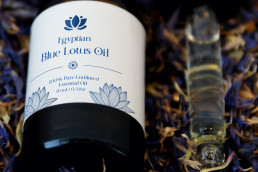
Of all the uses blue lotus has acquired across its long life as a sacred flower, none is older, and none is more thoroughly documented, than its place in the quiet hours. The Egyptians steeped it into wine to end their evenings gently. They painted it into tomb scenes of sleep and rebirth. They anointed the foreheads of those seeking rest and revelation alike. Three millennia later, the oil is still doing much the same work, and modern sleep science is only now catching up to what the old practitioners seem to have known by instinct.
Table of Contents
- The Short Answer
- The Science of Blue Lotus for Sleep
- The Ritual Dimension
- For Sleep Onset and Insomnia
- For Dream Work, Dream Recall, and Lucid Dreaming
- For Nightmares and Restless Sleep
- How to Use Blue Lotus Oil for Sleep
- Blends That Support Sleep
- Safety and When Not to Use It
- Frequently Asked Questions
- Where to Go From Here
- Ready to Begin Your Practice?
This guide is the anchor of our wider library on blue lotus oil for sleep and dreams. It is written and clinically reviewed by Antonio Breshears, ND, CCA, a Bastyr-trained naturopathic doctor and certified clinical aromatherapist. Where therapeutic claims are made, they are grounded in either peer-reviewed research, documented traditional use, or explicitly labelled practitioner experience.
The Short Answer
Blue lotus oil supports sleep and dream work in three distinct ways, each backed by a different kind of evidence. Pharmacologically, it contains alkaloids and flavonoids that interact with the dopaminergic, serotonergic, and GABAergic systems involved in the sleep-wake cycle. Olfactorily, its complex floral-honey aromatic profile signals the parasympathetic nervous system through the olfactory-limbic pathway, encouraging the physiological shift from active day into restful night. Ritually, its use as a sleep aid draws on an unbroken lineage of ceremonial practice older than almost any bedtime tradition we still have. This guide walks through each in turn, and then moves on to practical application.
The Science of Blue Lotus for Sleep
The chemistry behind the sleep effect is partially understood and actively being researched. Several compound families are doing the visible work.
The alkaloids first. Two in particular, aporphine and nuciferine, act on the dopaminergic system in a way that produces the characteristic blue lotus experience: a softening of mental noise, a gentle sensory opening, and an easier slip from wakefulness toward sleep. Aporphine is a weak dopamine receptor agonist. Nuciferine, counterintuitively, acts as a weak dopamine antagonist at certain receptor subtypes. Present together in small quantities in the flower, they produce a net effect that is neither stimulant nor sedative in the pharmaceutical sense, but something older and more interesting: a quieting.
The flavonoids second. Apigenin, quercetin, and kaempferol are all present in well-produced blue lotus absolute. Apigenin in particular is of active interest to sleep researchers because it binds to benzodiazepine receptors in the central nervous system with modest affinity, producing a mild anxiolytic and sedative effect. This is the same flavonoid that accounts for much of chamomile’s reputation as a bedtime herb, and it is present in meaningful concentration in real blue lotus material.
Beyond the molecules there is a simpler mechanism, the one we notice first and understand last. The olfactory system is the only sensory channel that connects directly to the limbic brain without first passing through the thalamus. Scent bypasses the reasoning centres entirely. A complex, familiar aromatic signal, used consistently at a particular time of day, becomes a powerful conditioning cue for the parasympathetic state. This is not wishful thinking; it is the same mechanism by which a particular coffee smell triggers alertness even before you have tasted the drink. Used deliberately at bedtime for two or three weeks, blue lotus oil trains the nervous system to expect, and to produce, sleep on cue. For the full molecular picture, see our guide to blue lotus oil chemistry and therapeutic properties.
The Ritual Dimension
There is another side to the sleep effect that resists the laboratory, and is no less real for that. Sleep, in almost every pre-modern culture, was a ceremonial passage rather than a pharmaceutical event. You did not simply close your eyes and switch off. You dimmed the lamps, spoke the correct prayer, crossed a recognised threshold. The body understood what was happening because the body was being told, in a language older than thought.
Modern life has stripped most of that grammar away. Our evenings end when the laptop closes, and the signal to the nervous system is essentially: continue, just more quietly. The return of ritual, even in a very small form, is one of the most powerful tools available to anyone who struggles with the shift into sleep. A single drop of oil anointed to the temples, a slow breath, and the simple acknowledgement that the day is finished, does more to restore the old grammar than any pill can. This is a theme we explore further in our library on blue lotus oil in meditation and yoga practice.
For Sleep Onset and Insomnia
Difficulty falling asleep is the single most common complaint blue lotus is reached for, and the one where it is most reliably helpful.
The characteristic pattern of modern sleep-onset insomnia is a body that is tired, a mind that will not settle, and a nervous system caught between parasympathetic signals from the dark room and sympathetic signals from the day’s unresolved list. Blue lotus works on both sides of this tension. The alkaloid fraction quiets the cognitive loop. The olfactory cue nudges the body toward parasympathetic dominance. The apigenin content contributes a low-level sedation comparable to a dose of well-brewed chamomile.
The most effective use for sleep onset is not a large dose but a timed one. Start the diffuser thirty to forty minutes before you intend to sleep. The oil’s scent should be present in the room, at a level you can notice but do not have to concentrate on, by the time you lie down. Two to four drops in an ultrasonic diffuser is the starting point for a standard bedroom. If insomnia is particularly stubborn, a simple temple anointing with a single drop diluted into a pea-sized amount of jojoba, applied immediately before sleep, adds a direct dermal component to the aromatic one.
For a fuller treatment of this specific use case, including protocols, dosages, and nightly routines, our detailed guide on blue lotus oil for insomnia is the next step. The related article on blue lotus oil for sleep covers general sleep quality support beyond clinical insomnia.
For Dream Work, Dream Recall, and Lucid Dreaming
The second major domain in which blue lotus has an unusually well-documented reputation is dream work. Practitioners and long-term users report, with notable consistency, that the oil increases the vividness, the emotional texture, and the narrative coherence of dreams, and in some cases facilitates lucid dreaming, in which the dreamer becomes aware of dreaming and is able to influence the dream consciously.
The Egyptian record is explicit on this point. The flower was associated with Nefertem, god of both perfume and dream, and blue lotus was used as an aid to prophetic sleep in temple contexts. Greek and later Mediterranean references associate lotus consumption with altered, dreamlike states, although the botanical identity of the specific plant in texts like Homer’s Odyssey remains contested among classicists. What is not contested is the long cultural memory of blue lotus as a dream-associated plant.
Neurologically, the effect is not yet fully mapped. The alkaloid fraction is a strong candidate, acting on dopaminergic systems involved in REM sleep and dream formation. Expectation, framed by a meaningful aromatic cue, is a second plausible mechanism, given the consistent evidence that the brain organises dream content partly in response to pre-sleep state and intention. In practice, the difference between the two explanations matters less than the reliability of the effect.
For practical application, the protocol differs slightly from the sleep-onset protocol. Dream work responds better to a lighter, sustained aromatic presence than to a dose clustered at bedtime. A small pillow spray, two to three drops of blue lotus dispersed in witch hazel and distilled water, misted once on the pillow ten minutes before sleep, is a simple and well-tolerated approach. Our pillow spray recipe gives the full formulation.
For those specifically interested in directed practice, our guide to blue lotus oil for lucid dreaming walks through pre-sleep intention setting, the combination with other known oneirogenic practices, and the interaction with reality-check discipline. The companion article on blue lotus oil for dream recall addresses the simpler, more foundational skill of remembering dreams at all.
For Nightmares and Restless Sleep
A smaller but notable use case is the management of recurrent nightmares and broken sleep. Because blue lotus has a mild ability to buffer the sympathetic activation that tends to underlie distressing dream content, it is sometimes preferred in the aromatic support of anxiety-driven dreams, over more conventional calming oils such as lavender.
The mechanism is not sedation so much as reframing. The same quieting effect that helps a racing mind relax at sleep onset seems to carry into dream content, reducing the emotional intensity of frightening or intrusive imagery. Anecdotal reports in practitioner communities are consistent on this point, although formal clinical data are scarce. Where nightmares form part of a wider post-traumatic picture, aromatic practice should be treated as a support, not a substitute for working with a trained clinician. More on related uses can be found in our pillar on blue lotus oil health and wellness benefits.
How to Use Blue Lotus Oil for Sleep
Four methods cover most practical use. Each is compatible with the others, and many people combine two or three into a single evening practice.
- Diffusion. Two to four drops in an ultrasonic diffuser, started thirty to forty minutes before sleep. Ultrasonic is preferable to heat-based diffusion because it preserves the oil’s delicate top notes. Run the diffuser for the period before bed; it is usually not necessary to keep it running all night. Our diffuser techniques guide covers equipment selection and room sizing.
- Pillow spray. Two to three drops of blue lotus dispersed in a base of distilled water and a small amount of witch hazel or vodka, in a 30ml mist bottle. One spray on the pillow ten minutes before sleep. This is the gentlest of the four methods and the one most often recommended for dream work.
- Temple or pulse-point anointing. A single drop of blue lotus diluted into a pea-sized amount of a suitable carrier such as jojoba, fractionated coconut, or cold-pressed apricot kernel oil. Applied to the temples, the wrists, or the collarbone just before lying down. This is the most direct method and is particularly suited to sleep-onset insomnia. A reference on dilution appears in our guide to carrier oil pairings.
- Evening bath. Five to ten drops of blue lotus dispersed first in a tablespoon of carrier oil or an emulsifier such as Polysorbate 20, then added to a full bath. Never add essential oils neat to bathwater; they do not disperse, and they concentrate unpredictably against the skin. An evening bath forty-five minutes before sleep combines the aromatic effect with the well-documented sleep-promoting effect of the post-bath body-temperature drop.
Blends That Support Sleep
Blue lotus is a powerful single-note oil and it combines beautifully with several other bedtime aromatics. Three blends are particularly reliable.
- For sleep onset, blue lotus with lavender in roughly equal parts. The bright, familiar sedation of lavender softens the floral depth of the lotus, making this a good starter blend for those new to blue lotus and its heavier scent profile.
- For dream work, blue lotus with frankincense in a 2:1 ratio favouring the lotus. Frankincense carries its own long history as a sleep and meditation support, and the two oils together produce something older and more resinous than either alone.
- For anchoring restless sleep, blue lotus with vetiver, again 2:1 favouring the lotus. Vetiver is grounding and deeply calming, and this combination is useful for people whose difficulty is not falling asleep but staying asleep.
Safety and When Not to Use It
Blue lotus oil, used at appropriate dilutions and doses, has a long record of safe traditional use and no significant signal of harm in the aromatherapeutic literature. A handful of specific cautions apply particularly in the sleep context.
- Pregnancy and breastfeeding. Blue lotus is avoided during pregnancy and lactation as a matter of professional caution. There are no large clinical safety studies in these groups, and the prudent answer is abstention.
- Dopaminergic medications. People taking medications for Parkinson’s, schizophrenia, or related conditions should consult their prescriber before introducing blue lotus in any form.
- Children. Aromatic use around sleeping children should be gentle, low-dose, and kept out of immediate proximity to the face. Topical use is not recommended in children under five without practitioner guidance.
- Alcohol and sedatives. Because blue lotus is itself mildly sedating, combining it with alcohol or prescription sedatives compounds the effect in ways that are not predictable.
- Skin sensitivity. Before full topical use, a small patch test on the inner forearm, left for twenty-four hours, is sensible particularly for reactive or sensitive skin.
Our detailed article on blue lotus oil safety, side effects and precautions covers each of these at greater depth.
Frequently Asked Questions
Does blue lotus oil help you fall asleep?
Yes, in most cases. Blue lotus oil supports sleep onset through a combination of mild alkaloid effects on the dopaminergic system, flavonoid action at benzodiazepine receptors, and olfactory signalling to the parasympathetic nervous system. It is most reliably effective when used consistently at the same time each evening for two to three weeks, which conditions the nervous system to anticipate sleep in response to the scent.
Can you put blue lotus oil directly on your skin?
No. Blue lotus oil, like all essential oils, must be diluted in a suitable carrier oil before topical application. A 1 to 2 percent dilution is appropriate for general use, or up to 3 percent for small-area ritual anointing such as the temples or pulse points.
How long before bed should I use blue lotus oil?
Start diffusion thirty to forty minutes before you intend to sleep. Apply a temple anointing immediately before lying down. Pillow spray is best applied about ten minutes before sleep, allowing the carrier to settle and the scent to register without being overwhelming.
Does blue lotus oil cause lucid dreams?
Blue lotus is associated with increased dream vividness and with lucid dreaming in a subset of users, particularly those who already practise deliberate lucid dreaming techniques. The evidence base is a mixture of long traditional use, consistent practitioner reports, and mechanistic plausibility via the alkaloid fraction’s effect on REM-related dopamine signalling. Not everyone experiences lucidity, but dream vividness and recall almost always improve.
Can I use blue lotus oil every night?
Yes, and consistent use is actually the method that produces the best results, because it establishes the olfactory conditioning that makes the oil most effective. Rotate between methods (diffusion, pillow spray, anointing) rather than changing oils, so the aromatic signal stays consistent.
Is blue lotus oil safe to use with lavender?
Yes. Blue lotus and lavender blend well both aromatically and pharmacologically. A roughly equal-parts blend is one of the most common starter formulations for sleep support.
Does blue lotus oil make you groggy in the morning?
No, or at least not in the way pharmaceutical sedatives do. Blue lotus works by supporting the body’s own sleep processes rather than forcing unconsciousness, so sleep that includes blue lotus tends to be restorative rather than medicated. Morning grogginess, if present, usually indicates an oversized dose at night; reduce to one or two drops in the diffuser.
Can children use blue lotus oil for sleep?
Aromatic use in a diffuser, at low dose and kept out of close proximity to a child’s face, is generally considered safe for children over five. Topical use in children under five is not recommended without practitioner guidance. Infants should not be exposed to essential oils in enclosed spaces.
How much blue lotus oil should I use in a diffuser?
Two to four drops for a standard bedroom is the starting range. Smaller rooms take fewer drops; larger rooms may take five or six. The correct amount is the one at which you can notice the scent without needing to concentrate on it.
Will blue lotus oil help with nightmares?
Often, yes. Blue lotus tends to reduce the emotional intensity of distressing dream content, rather than suppressing dreams outright. Where nightmares form part of a post-traumatic picture, aromatic practice should be used as a support alongside clinical care, not as a replacement for it.
Where to Go From Here
This pillar is a starting point. The library branches from here. If sleep onset is your primary concern, our articles on blue lotus oil for sleep and blue lotus oil for insomnia go further. If dream work is what drew you in, the lucid dreaming article and the dream recall article are the next step. For broader context on the oil itself, return to our complete guide to blue lotus oil, or wander through the films in our video library. Everything on this site is hosted at Pure Blue Lotus Oil.

Antonio Breshears
Antonio Breshears is a renowned expert in holistic medicine and beauty, with over 25 years of research experience dedicated to uncovering the secrets of nature's most powerful remedies. Holding a degree in Naturopathic Medicine, Antonio's passion for healing and well-being has driven him to explore the intricate connections between mind, body, and spirit.
Over the years, Antonio has become a respected authority in the field, helping countless individuals discover the transformative power of plant-based therapies, including essential oils, herbs, and natural supplements. He has authored numerous articles and publications, sharing his wealth of knowledge with a global audience seeking to improve their overall health and well-being.
Antonio's expertise extends to the realm of beauty, where he has developed innovative, all-natural skincare solutions that harness the potency of botanical ingredients. His formulations embody his deep understanding of the healing properties found in nature, providing holistic alternatives for those seeking a more balanced approach to self-care.
With his extensive background and dedication to the field, Antonio Breshears is a trusted voice and guiding light in the world of holistic medicine and beauty. Through his work at Pure Blue Lotus Oil, Antonio continues to inspire and educate, empowering others to unlock the true potential of nature's gifts for a healthier, more radiant life.