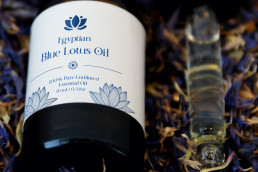
If you are lying awake at one in the morning wondering whether blue lotus oil is worth the money, this article is written for you. Choosing the best blue lotus oil for sleep is less about brand loyalty and more about understanding what kind of sleep problem you actually have, what the oil can realistically do for it, and which extract format delivers the calming chemistry you need. What follows is a practical, honest guide to buying and using it at night.
Table of Contents
- What Sleep Problem Are You Actually Trying to Solve?
- What Makes a Blue Lotus Oil Actually Work for Sleep
- Extraction Method
- Origin and Botanical Identity
- Dilution and Honesty
- Scent Verification
- How Blue Lotus Oil Helps You Sleep
- How to Use Blue Lotus Oil for Sleep
- Diffusion
- Pulse-Point Application
- Pillow and Linen
- A Realistic Nightly Ritual
- What to Expect: Realistic Timeframes
- When Blue Lotus Oil Is Not the Right Choice
- Complementary Approaches That Matter
- Frequently Asked Questions
- Where to Go From Here
- Calmer Nights, Naturally
It is written and clinically reviewed by Antonio Breshears, ND, CCA, a Bastyr-trained naturopathic doctor and certified clinical aromatherapist. For broader context on the oil itself, its chemistry, extraction methods and full safety profile, readers will find The Complete Guide to Blue Lotus Oil a useful companion to this sleep-focused piece.
What Sleep Problem Are You Actually Trying to Solve?
Before choosing any oil, it is worth being honest about which part of sleep is broken. People tend to lump it all under “insomnia”, but blue lotus is better suited to some presentations than others. Broadly, sleep complaints sort into three patterns.
The first is difficulty falling asleep because the mind will not stop. You lie down, and the day replays itself, emails rewrite themselves, conversations repeat on a loop. This is sleep-onset insomnia driven by sympathetic overdrive, and it is the pattern blue lotus oil handles best. The calming flavonoids, particularly apigenin, act at the central benzodiazepine receptor site and nudge the nervous system toward parasympathetic tone. You do not get knocked out; you get quietened, which is often what is needed.
The second is waking at two or three in the morning and being unable to return to sleep. This is sleep-maintenance insomnia, and it is frequently tied to cortisol rhythm, blood sugar dips, perimenopause, or unresolved stress. Blue lotus oil is modestly helpful here, but it is not a strong enough sedative to override a cortisol surge. Other interventions matter more.
The third is non-restorative sleep: you sleep eight hours and still feel like you have been hit by a bus. This is rarely an aromatherapy problem. It points toward sleep apnoea, thyroid dysfunction, or deeper physiology that wants clinical investigation, not a floral extract.
Blue lotus oil is genuinely useful for the first pattern, modestly useful for edges of the second, and not the right tool for the third. Matching your complaint to what the oil can realistically deliver is the first step in buying wisely.
What Makes a Blue Lotus Oil Actually Work for Sleep
Not every bottle labelled “blue lotus” will help you sleep. The chemistry varies enormously across extract types, adulteration is common, and some products on the market contain almost none of the compounds that matter. If sleep is your goal, the following criteria matter more than marketing.
Extraction Method
There are three legitimate ways to produce blue lotus oil, and they give you different chemistry.
Solvent-extracted absolute is the most common and, for sleep purposes, generally the richest. The solvent process preserves the heavier floral molecules and the full flavonoid profile, which is where the calming activity sits. A good absolute is deeply coloured, thick, almost syrupy, and carries that characteristic honeyed-floral heart. This is usually the best choice for a nightly sleep ritual.
Supercritical CO2 extracts are cleaner, with no residual solvent, and often carry a broader aromatic spectrum. They are premium in price and excellent if budget allows, though for strict sleep application the absolute is arguably more targeted.
Steam-distilled essential oil is the rarest and, somewhat counter-intuitively, often the least useful for sleep. Steam distillation loses a substantial portion of the heavier flavonoids, and the result is a brighter, more volatile oil that leans aquatic and green rather than honeyed. Beautiful for daytime perfumery; less potent at night.
Origin and Botanical Identity
Genuine blue lotus is Nymphaea caerulea, the Egyptian blue water lily. It is not the same as blue water lily from Thailand (Nymphaea nouchali) or the sacred lotus (Nelumbo nucifera), despite the overlapping common names. These cousins have some pharmacological overlap but are not chemically identical, and a product labelled simply “lotus oil” without species information deserves suspicion. The best blue lotus oil for sleep is one that names Nymphaea caerulea explicitly on the label.
Dilution and Honesty
Because authentic blue lotus absolute requires three to five thousand flowers per gram of finished extract, it is genuinely expensive. Any product priced like a mass-market essential oil is almost certainly diluted with a carrier or synthesised to smell similar. Reputable sellers are transparent about whether you are buying neat absolute or a pre-diluted blend, and if it is diluted, at what percentage and in what carrier. A ten millilitre bottle of authentic absolute sitting at the price of supermarket lavender is not a bargain; it is a warning.
Scent Verification
Real blue lotus opens with a cool, slightly aquatic top note, moves into a deep honeyed floral heart, and settles into a faintly smoky, balsamic base. If what you smell is one-dimensional, sharp, or synthetic-sweet in the way cheap perfume is sweet, it is not the real thing. A proper absolute evolves on the skin over an hour or more.
How Blue Lotus Oil Helps You Sleep
The mechanism is less about sedation and more about downshift. Inhaled volatile molecules travel from the olfactory epithelium directly to the limbic system, bypassing the usual cortical processing, which is why scent can change mood within seconds rather than minutes. The compounds in blue lotus that reach the limbic system appear to engage pathways associated with anxiolysis and parasympathetic tone rather than strong GABAergic sedation.
Practically, this means the oil works best when applied before the bedtime window and allowed to shift your state slowly. It is not a switch; it is a dimmer. You inhale, your shoulders drop fractionally, the mental chatter softens, breathing slows, and sleep becomes possible. For people whose insomnia is driven by an inability to downshift rather than by physiological sleep pathology, this is often enough.
The aporphine and nuciferine alkaloids contribute to the subjective sense of calm through weak dopaminergic modulation and 5-HT2A activity, though these appear in small quantities in the aromatic fraction and likely contribute more through ingestion of the flower than through topical or inhaled use of the oil. For sleep, the flavonoid contribution is the more relevant story.
How to Use Blue Lotus Oil for Sleep
There are three application routes that genuinely help, and the best approach is usually a combination of two.
Diffusion
A cold-mist ultrasonic diffuser in the bedroom, running for thirty to forty minutes before bed with two to four drops of blue lotus oil, creates an ambient aromatic environment that shifts the nervous system before you lie down. Do not run it all night; the nose habituates within twenty to thirty minutes and you lose the effect, and continuous humidification is not ideal for bedrooms. Set it on a timer or run it as part of the pre-sleep wind-down.
If you want to extend the scent, pair blue lotus with lavender, Roman chamomile, or sweet marjoram at one or two drops each. The combination smells richer than blue lotus alone and reinforces the calming signal.
Pulse-Point Application
A two to three percent dilution in a carrier oil like jojoba or sweet almond, applied to the inner wrists, the sides of the neck, and the chest just before bed, gives you a personal cloud of scent that stays with you through sleep onset. The easiest way to prepare this is a ten millilitre roller bottle with six to nine drops of blue lotus absolute topped with jojoba. Used nightly, one roller will last several weeks.
Pulse points work because the warmth of the skin volatilises the aromatic molecules gradually, releasing scent into the breathing zone over an extended period.
Pillow and Linen
One drop on the corner of a pillowcase, or two drops on a cotton handkerchief tucked near the pillow, is the simplest application. Avoid putting undiluted oil onto the pillow itself, partly because it can stain and partly because prolonged skin contact with neat absolute is not a good habit. The handkerchief method is cleaner and easier to refresh.
A Realistic Nightly Ritual
The combination that most people find works best: start the diffuser thirty minutes before bed, apply the roller to wrists and neck ten minutes before lying down, and place a scented handkerchief near the pillow. The ritual itself matters almost as much as the chemistry. Repeated night after night, the scent becomes a conditioned sleep cue, which is a form of non-pharmaceutical sleep hygiene that compounds over weeks.
What to Expect: Realistic Timeframes
Honest expectations save a lot of disappointment. On the first night, most people notice a mild softening, perhaps falling asleep fifteen or twenty minutes faster, with a sense that the lying-awake phase is less tense. This is real but subtle, and people who expect knockout sedation often mistake it for nothing.
Over a week of consistent use, the conditioned-cue effect starts to build. The ritual itself begins to trigger relaxation before the oil has had time to act chemically, and sleep onset shortens further.
By three to four weeks, most people who respond to blue lotus at all have noticed a clear pattern: easier wind-down in the evenings, faster sleep onset, and a general sense that the nervous system has a more reliable off-switch. If you reach four weeks of consistent nightly use and notice nothing, blue lotus is probably not your oil. This happens; individual aromatic response varies considerably, and not every calming oil suits every person.
What you should not expect: reversal of clinical insomnia, relief from sleep apnoea, recovery from shift-work circadian disruption, or sedation strong enough to compete with prescription hypnotics. Blue lotus is a nudge, not a hammer.
When Blue Lotus Oil Is Not the Right Choice
There are circumstances in which this oil should be set aside or used only after professional guidance.
Pregnancy and breastfeeding. The flower has traditional associations with reproductive effects, the safety data in pregnancy are inadequate, and the sensible position is to avoid it entirely during these periods.
Concurrent use of dopaminergic medication, MAOIs, or strong sedatives. The alkaloid profile includes compounds with weak dopaminergic activity, and while aromatic use is unlikely to produce clinically significant interaction, the interaction question has not been adequately studied. If you are on these medications, ask your prescriber first.
Severe or long-standing insomnia. If you have been sleeping poorly for months, if you are waking more than twice a night, if you snore heavily or your partner reports breathing pauses, or if daytime fatigue is affecting your ability to function, this is a clinical problem that wants proper assessment. Aromatherapy can support the treatment plan but cannot replace it.
Known fragrance sensitivity or allergy. As with any aromatic, a patch test at the chosen dilution is sensible before committing to nightly pulse-point application.
Legal restrictions. Blue lotus is restricted or prohibited in Russia, Poland, Latvia, and the US state of Louisiana, and its regulatory status is complicated in Australia. Check local regulations before ordering.
Complementary Approaches That Matter
If you are spending money on a good bottle of blue lotus oil and still not sleeping, the oil is not the limiting factor. Sleep is built from multiple inputs, and the following matter more than any aromatic.
Light and dark. Bright light in the morning, dim light after sunset, and darkness in the bedroom are the foundation of circadian rhythm. No essential oil will compensate for scrolling a bright phone at midnight.
Caffeine timing. Caffeine has a half-life of around five hours in most people and considerably longer in slow metabolisers. An afternoon coffee is still pharmacologically active at bedtime for many, and removing it is often more impactful than any calming intervention.
Consistent sleep window. Going to bed and waking at similar times, including weekends, is one of the most underrated sleep interventions.
Evening food and alcohol. Large meals late, and alcohol within three hours of bed, both fragment sleep architecture. Alcohol in particular is sedating at first but wrecks the second half of the night.
Other supportive oils. Lavender, Roman chamomile, sweet marjoram, vetiver, and sandalwood all have reasonable evidence for sleep support and blend well with blue lotus. A simple nightly blend of blue lotus with lavender is often more effective than blue lotus alone.
Magnesium and glycine. Supplemental magnesium glycinate in the evening and glycine three grams before bed are two low-cost, reasonably well-evidenced interventions that many people find helpful alongside aromatic support.
Frequently Asked Questions
Is blue lotus oil strong enough to replace a sleep medication?
No. It is a gentle calming aromatic, not a hypnotic. If you currently take prescription sleep medication, do not discontinue it without medical supervision, and do not expect blue lotus to match it in sedative strength. What it can do is support a better wind-down ritual that, over time, may reduce reliance on pharmaceutical support.
Is absolute or essential oil better for sleep?
For sleep purposes, solvent-extracted absolute generally wins. It preserves more of the heavier flavonoids responsible for the calming activity, and its honeyed-floral character signals bedtime more strongly than the brighter, more aquatic profile of steam-distilled oil. If a CO2 extract is available and fits the budget, it is also an excellent choice.
How many drops should I put in the diffuser?
Two to four drops in an average-sized bedroom diffuser, run for thirty to forty minutes before bed. More is not better; the nose habituates quickly, and over-scenting a small room can become unpleasant rather than calming.
Can I apply blue lotus oil neat to my skin at night?
No. Absolutes are concentrated and can sensitise the skin with repeated neat use. Dilute to two or three percent in a carrier oil for pulse-point application. A ten millilitre roller with six to nine drops of blue lotus topped with jojoba is the standard approach.
Will it work the first night?
You will likely notice a mild softening, but the full benefit builds over two to four weeks of consistent nightly use. Part of this is chemistry; part is the conditioned-cue effect of the ritual itself. Give it at least three weeks before deciding whether it works for you.
Can I combine blue lotus with lavender?
Yes, and the combination is often more effective than either alone. Lavender contributes linalool-driven relaxation; blue lotus adds its flavonoid calm and a richer, less medicinal scent profile. One or two drops of each in the diffuser is a good starting point.
Does the smell bother a partner?
Blue lotus is a distinctive floral and not everyone loves it. If a partner finds the scent intrusive, pulse-point application on yourself alone, rather than diffusion in the shared room, keeps the benefit personal.
How long does a bottle last for nightly sleep use?
A five millilitre bottle of absolute, used at two to four drops nightly in a diffuser and topped up into a roller monthly, lasts most people three to four months. A properly stored absolute remains good for three to four years in dark glass in a cool, dark location.
Can I use it during a daytime nap?
Yes. A drop on a handkerchief near the pillow for a twenty or thirty minute nap is a gentle way to use it without committing to the full bedtime ritual.
What if I still cannot sleep after a month of use?
Then blue lotus is not your answer, or it is not the only answer. Either individual aromatic response is not supporting you, or the underlying sleep problem needs clinical assessment. See a doctor who takes sleep seriously; undiagnosed sleep apnoea, thyroid issues, and anxiety disorders all present as insomnia and all warrant proper investigation.
Where to Go From Here
If you have read this far, you have a clearer sense of what the best blue lotus oil for sleep looks like: a properly identified Nymphaea caerulea absolute or CO2 extract, priced honestly, smelling of honeyed florals with an evolving depth, used nightly as part of a ritual rather than reached for as a last-minute remedy. For the broader context of how the oil works and the full chemistry behind it, The Complete Guide to Blue Lotus Oil is the natural next read. From there, the practical application articles on diffuser use and nightly rituals fill in the day-to-day detail. The oil itself is only one part of better sleep, but for the right kind of sleeper, it is a genuinely useful part.

Antonio Breshears
Antonio Breshears is a renowned expert in holistic medicine and beauty, with over 25 years of research experience dedicated to uncovering the secrets of nature's most powerful remedies. Holding a degree in Naturopathic Medicine, Antonio's passion for healing and well-being has driven him to explore the intricate connections between mind, body, and spirit.
Over the years, Antonio has become a respected authority in the field, helping countless individuals discover the transformative power of plant-based therapies, including essential oils, herbs, and natural supplements. He has authored numerous articles and publications, sharing his wealth of knowledge with a global audience seeking to improve their overall health and well-being.
Antonio's expertise extends to the realm of beauty, where he has developed innovative, all-natural skincare solutions that harness the potency of botanical ingredients. His formulations embody his deep understanding of the healing properties found in nature, providing holistic alternatives for those seeking a more balanced approach to self-care.
With his extensive background and dedication to the field, Antonio Breshears is a trusted voice and guiding light in the world of holistic medicine and beauty. Through his work at Pure Blue Lotus Oil, Antonio continues to inspire and educate, empowering others to unlock the true potential of nature's gifts for a healthier, more radiant life.