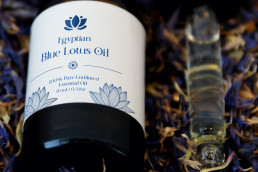
Athletes training hard sit in a peculiar physiological bind: the sympathetic drive that fuels performance is the same drive that, left uncontrolled after training, delays recovery, fragments sleep, and raises baseline cortisol. This article looks at how blue lotus oil athletes find useful (and where it genuinely helps) across pre-competition nerves, post-session wind-down, sleep quality, and the emotional weather of heavy training blocks. It is not a performance enhancer, it is a parasympathetic tool, and used correctly it earns its place alongside your foam roller and your magnesium.
Table of Contents
- What Athletic Recovery Actually Is
- How Blue Lotus Oil Helps With Athletic Recovery
- Parasympathetic activation via scent
- Alkaloid-mediated calm
- Flavonoid anxiolysis
- Sleep architecture support
- How to Use Blue Lotus Oil for Athletes
- Pre-competition nerve management
- Post-training wind-down
- Sore-muscle topical blend
- Pre-sleep ritual during heavy training blocks
- What to Expect: Realistic Timeframes
- When Blue Lotus Oil Is NOT the Right Choice
- Complementary Approaches
- Frequently Asked Questions
- Where to Go From Here
- Recover Like You Train
It is written and clinically reviewed by Antonio Breshears, ND, CCA, a Bastyr-trained naturopathic doctor and certified clinical aromatherapist. For broader context on the oil’s chemistry and applications, see The Complete Guide to Blue Lotus Oil, which covers the foundation material this article builds on.
What Athletic Recovery Actually Is
Recovery is not a single process; it is a stack of overlapping systems returning to baseline after the stressor of training. Muscle fibres repair via satellite cell activation and protein synthesis. Glycogen restocks in the liver and muscle tissue. The nervous system, having been pushed toward sympathetic dominance during effort, needs to shift back into parasympathetic rest-and-digest mode for the repair work to happen efficiently. Inflammation, acute and useful during training, needs to resolve rather than smoulder. Sleep, particularly deep slow-wave sleep, is where most of the hormonal repair work occurs.
When any of these systems lags, you feel it: resting heart rate creeps up, sleep becomes lighter and more fragmented, motivation flags, small injuries accumulate. Overtraining syndrome, in its clinical form, is partly a failure of the autonomic nervous system to downshift. This is precisely where an olfactory-limbic intervention becomes interesting. Blue lotus oil does not build muscle or clear lactate, but it does help the nervous system find the off-switch, and that off-switch is where the real recovery work happens.
How Blue Lotus Oil Helps With Athletic Recovery
The oil’s usefulness for athletes rests on four mechanisms, each modest on its own but meaningful in combination.
Parasympathetic activation via scent
Inhaled aromatic molecules reach the olfactory bulb within seconds and project directly into the limbic system, including the amygdala and hypothalamus. Blue lotus oil’s complex floral profile, specifically the honeyed-floral heart notes, reliably produces a shift toward parasympathetic dominance in people who respond to it. For an athlete finishing a hard session, ten minutes of intentional breathwork with the oil present can measurably accelerate the drop in heart rate variability back toward baseline.
Alkaloid-mediated calm
The trace aporphine and nuciferine alkaloids in the absolute interact with dopaminergic and serotonergic (5-HT2A/2C) pathways. The effect is not intoxication, it is a softening of rumination. After a difficult race or a missed lift, the mental loop of “what went wrong” is itself a sympathetic stressor. A small topical application or a brief inhalation tends to quiet that loop enough to let sleep onset happen.
Flavonoid anxiolysis
Apigenin, present alongside quercetin and kaempferol, is a known partial agonist at the central benzodiazepine receptor. The concentrations delivered via topical or inhaled use are modest, but they compound with the olfactory pathway to produce reliable pre-competition nerve management without dulling reaction time.
Sleep architecture support
Athletes who report fragmented sleep during heavy training blocks often describe “tired but wired” bedtimes. Blue lotus oil, used in a pre-sleep ritual, shortens the gap between lying down and actually falling asleep. It is not a strong sedative, so it does not force sleep on a nervous system that is not ready, but it genuinely helps a ready-but-restless system cross the threshold.
How to Use Blue Lotus Oil for Athletes
There are four protocols worth knowing, each suited to a different moment in the training week.
Pre-competition nerve management
Forty to sixty minutes before start time, apply one drop of blue lotus oil diluted to roughly two percent in a neutral carrier (jojoba works well) to the inner wrists and the sternum. Breathe slowly and deliberately for two minutes. The goal is not to eliminate nerves, which you need, but to prevent them from tipping into counterproductive anxiety. The scent becomes a cue; in subsequent competitions, the smell alone starts to trigger the calm state.
Post-training wind-down
Within thirty minutes of finishing a hard session, diffuse two to four drops in a cool-mist diffuser in the room where you are eating, stretching, or debriefing. This is the single most valuable application for most athletes. Shortening the sympathetic tail after training is where the oil pays its rent. Combine with slow nasal breathing for five to ten minutes.
Sore-muscle topical blend
For localised muscle tension (not acute injury), blend three drops of blue lotus oil with two drops of lavender and one drop of black pepper in 10ml of arnica-infused carrier oil. Apply after showering to the affected area. This is not an anti-inflammatory in the NSAID sense; it works partly via the warming counterirritant action of black pepper and partly via the parasympathetic-shift effect of the lotus. Do not use on broken skin.
Pre-sleep ritual during heavy training blocks
Thirty minutes before bed, apply one drop diluted to roughly one percent (so extremely dilute) to the pulse points at the sides of the neck and the inner wrists. Breathe into the wrists for one full minute. Lights low. No screens. This ritual, done consistently for two weeks, tends to produce noticeably better sleep onset and fewer mid-night awakenings in athletes who had been struggling.
What to Expect: Realistic Timeframes
For pre-competition nerves, the effect is immediate within the same session: most athletes notice a softer internal state within ten to fifteen minutes of application and breathwork. The effect is not dramatic, it is a gentle pulling-back from the edge.
For post-training recovery and sleep, give it two weeks of consistent use before judging. The nervous system learns the cue. The first few nights may feel subtle; by night ten, most athletes describe measurably better sleep onset and a more settled evening state. Heart rate variability, if you track it with a ring or chest strap, often shows modest improvement over a three-to-four-week block.
For muscle tension, the topical blend feels pleasant immediately and contributes to faster perceived recovery over several days, but it is not a substitute for the actual mechanical work of mobility, soft tissue release, and adequate protein intake. Think of it as an adjunct, not a replacement.
Do not expect reduced soreness on the scale of ibuprofen or cold plunge. Do expect a quieter nervous system, better sleep, and a shorter emotional recovery time after hard efforts.
When Blue Lotus Oil Is NOT the Right Choice
There are situations where the oil is either unhelpful or genuinely contraindicated for athletes.
If you are taking dopaminergic medications, MAOIs, or significant sedatives (prescribed or otherwise), skip blue lotus oil until you have spoken to a clinician who knows the oil’s alkaloid profile. The interaction risk is not dramatic, but it is real enough to warrant caution.
During pregnancy and breastfeeding, avoid the oil entirely. This is standard conservative guidance for any essential oil with bioactive alkaloid content.
For acute injuries (sprains, strains, breaks), blue lotus oil is not a treatment. It may help you sleep through the emotional stress of being injured, but the injury itself needs mechanical assessment, ice, compression, and frequently a physiotherapist.
If you are looking for a stimulant, a pre-workout enhancer, or anything that will make you train harder, blue lotus oil is the opposite tool. It is a downshift instrument. Used before a heavy lift or a sprint session, it may actually blunt the sympathetic drive you need.
If you compete in a sport with strict anti-doping frameworks, check with your governing body. Blue lotus is not currently on WADA’s prohibited list, but individual federations sometimes maintain broader lists, and some nations restrict the plant outright (Russia, Poland, Latvia, and the US state of Louisiana among them).
Complementary Approaches
Blue lotus oil works best as one component of a broader recovery stack, not as a standalone fix. The athletes who get the most out of it are the ones who have the fundamentals in place.
Sleep hygiene is non-negotiable. The oil supports sleep onset; it cannot compensate for late-night screens, caffeine after midday, or inconsistent bedtimes. Protein intake in the 1.6 to 2.2 grams per kilogram range, adequate carbohydrates around training, and sufficient total calories do the actual structural repair work. Magnesium glycinate at 200 to 400mg in the evening pairs well with the oil for sleep quality. Zone-two aerobic work on easy days helps parasympathetic tone independently.
Other essential oils that complement blue lotus for athletes include lavender (sleep and mild analgesia), Roman chamomile (for particularly anxious pre-competition states), frankincense (for the slow quiet after long endurance efforts), and black pepper or ginger in topical blends for muscle tension. Vetiver, heavy and grounding, pairs beautifully with blue lotus in a diffuser for deep post-race wind-down.
Breathwork protocols amplify the oil’s effect considerably. Box breathing (four in, four hold, four out, four hold) for five minutes while the oil is diffusing produces a measurable and rapid autonomic shift. Physiological sighs (two nasal inhales followed by a long mouth exhale) are another cheap and effective pairing.
If your training is at a serious level and you suspect overtraining syndrome (persistent fatigue, performance decline, mood disturbance, elevated resting heart rate over weeks), see a sports physician. Blue lotus oil will not fix overtraining; only structured recovery will. It can, however, make the enforced rest phase more tolerable.
Frequently Asked Questions
Will blue lotus oil improve athletic performance?
No, not directly. It does not enhance strength, speed, or endurance. It can indirectly support performance by improving sleep quality and reducing pre-competition anxiety, which over weeks translates into better training adaptation, but treat it as a recovery tool rather than a performance tool.
Can I use blue lotus oil before a competition without feeling drowsy?
Yes, at the dilutions described (one drop at two percent), the effect is calming without sedation. You should feel steadier, not sleepy. If you find yourself feeling dulled, reduce the dose or apply earlier so the peak effect has passed by start time.
Is blue lotus oil tested for in anti-doping screens?
It is not currently on the WADA prohibited list. However, some national federations maintain stricter lists, and some countries restrict the plant itself. If you compete internationally or at a level where testing matters, verify with your governing body.
How soon after training should I use the oil?
Within thirty minutes of finishing is ideal for the post-session wind-down protocol. Earlier is better than later; the sooner you help the nervous system downshift, the more of the recovery window you get to work with.
Can I combine blue lotus oil with CBD or other recovery supplements?
CBD and blue lotus oil are compatible and complement one another for sleep. Avoid stacking with strong sedatives or sleep medications without clinician input. Magnesium, glycine, and standard sports nutrition supplements pose no concern.
Does it help with DOMS (delayed onset muscle soreness)?
Modestly and indirectly. The topical blend described above feels pleasant and may reduce perceived soreness, but it does not accelerate the underlying muscle repair in the way that adequate sleep, protein, and gentle active recovery do. Do not expect it to replace those.
How often can I use it?
Daily use at the dilutions described is well tolerated. Many athletes use it twice a day during heavy training blocks: post-training and pre-sleep. If you notice scent fatigue (where the smell stops registering as pleasant), take a few days off and return; sensitivity resets quickly.
Will it interact with beta-blockers or blood pressure medication?
There is no well-documented interaction, but blue lotus oil’s parasympathetic effect may additively lower resting heart rate and blood pressure slightly. If you are medicated for cardiovascular conditions, raise it with your prescriber before regular use, particularly if you monitor heart rate closely for training zones.
Can I put it directly on sore muscles without diluting?
No. Always dilute in a carrier oil. Neat application risks skin sensitisation over time, and because blue lotus absolute is expensive, dilution also stretches the bottle. Two to three percent in a carrier is the right range for targeted muscle application.
Is the absolute or the CO2 extract better for athletic use?
Either works. The absolute has the fuller, more complex scent profile most people prefer for emotional and sleep work. The CO2 extract is slightly cleaner on the skin and some athletes prefer it for topical blends. Both deliver the relevant alkaloids and flavonoids in useful quantities.
Where to Go From Here
If you are integrating blue lotus oil into your training programme, start with the post-training wind-down protocol for two weeks before layering in the pre-sleep ritual. Keep the competition-day use for events that actually matter; overusing it there dilutes the conditioned calm response you are trying to build. For the fuller picture of how the oil works across contexts beyond athletic recovery, the complete guide to blue lotus oil covers the chemistry, extraction methods, and broader applications in depth. Used intelligently and within realistic expectations, it becomes a quiet but genuinely useful part of the training life.

Antonio Breshears
Antonio Breshears is a renowned expert in holistic medicine and beauty, with over 25 years of research experience dedicated to uncovering the secrets of nature's most powerful remedies. Holding a degree in Naturopathic Medicine, Antonio's passion for healing and well-being has driven him to explore the intricate connections between mind, body, and spirit.
Over the years, Antonio has become a respected authority in the field, helping countless individuals discover the transformative power of plant-based therapies, including essential oils, herbs, and natural supplements. He has authored numerous articles and publications, sharing his wealth of knowledge with a global audience seeking to improve their overall health and well-being.
Antonio's expertise extends to the realm of beauty, where he has developed innovative, all-natural skincare solutions that harness the potency of botanical ingredients. His formulations embody his deep understanding of the healing properties found in nature, providing holistic alternatives for those seeking a more balanced approach to self-care.
With his extensive background and dedication to the field, Antonio Breshears is a trusted voice and guiding light in the world of holistic medicine and beauty. Through his work at Pure Blue Lotus Oil, Antonio continues to inspire and educate, empowering others to unlock the true potential of nature's gifts for a healthier, more radiant life.