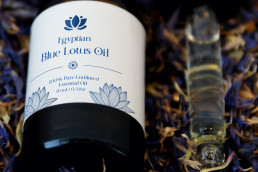
If you are dealing with stubborn dark patches, post-acne marks, melasma, or sun-induced pigmentation, you have likely been told every botanical under the sun will fade them. This article is a careful, honest look at what blue lotus oil hyperpigmentation protocols can reasonably achieve, what the oil’s chemistry actually does at the level of the melanocyte, and where it sits among the options you might consider for an uneven complexion.
Table of Contents
- Understanding Hyperpigmentation: Not One Condition, But Several
- Post-Inflammatory Hyperpigmentation (PIH)
- Sun-Induced Pigmentation
- Melasma
- Drug-Induced or Dermal Pigmentation
- How Blue Lotus Oil Helps With Hyperpigmentation
- 1. Flavonoid-Driven Antioxidant Activity
- 2. Anti-Inflammatory Action on Post-Acne Skin
- 3. Support for Barrier Recovery
- 4. Gentle Encouragement of Cell Turnover
- How to Use Blue Lotus Oil for Hyperpigmentation
- Dilution and Carrier
- A Simple Nightly Protocol
- Morning Considerations
- Spot Treatment Approach
- What to Expect: Realistic Timeframes
- When Blue Lotus Oil Is NOT the Right Choice
- Complementary Approaches That Genuinely Help
- Daily Broad-Spectrum SPF
- Vitamin C in the Morning
- Niacinamide
- Azelaic Acid
- Gentle Exfoliation
- Addressing Internal Drivers
- Frequently Asked Questions
- Where to Go From Here
- Bring Calm to Uneven Skin
It is written and clinically reviewed by Antonio Breshears, ND, CCA, a Bastyr-trained naturopathic doctor and certified clinical aromatherapist. If you want a broader grounding in the oil before diving into pigmentation specifically, start with the complete guide to blue lotus oil, which covers the botany, chemistry, and general skincare applications in more depth.
Understanding Hyperpigmentation: Not One Condition, But Several
Hyperpigmentation is an umbrella term for any darkening of the skin caused by excess melanin, the pigment produced by melanocytes sitting at the base of the epidermis. Whether the discolouration is a freckle, a sunspot, a patch of melasma across the cheekbones, or the brown mark left behind after a spot has healed, the final common pathway is the same: melanocytes, prompted by some trigger, have produced more melanin than the surrounding skin, and that melanin has been packaged into melanosomes and deposited into the upper layers of skin.
The triggers, however, differ, and knowing which form you are dealing with matters enormously for whether any topical, blue lotus included, will help.
Post-Inflammatory Hyperpigmentation (PIH)
These are the brown or purplish marks that linger after acne, eczema, ingrown hairs, or any inflammatory insult to the skin. They tend to be the most responsive to topical care because the underlying trigger, inflammation, has typically resolved, and what remains is simply pigment waiting to be turned over and shed.
Sun-Induced Pigmentation
Lentigines, sunspots, and diffuse mottled darkening on sun-exposed areas are the result of cumulative UV damage. These respond to topicals only if sun exposure is controlled going forward. Without daily SPF, you are pouring water into a leaking bucket.
Melasma
The symmetrical, map-like darkening that appears on the cheeks, forehead, or upper lip, often hormonally driven (pregnancy, oral contraceptives, thyroid disturbance). Melasma is notoriously stubborn, involves both epidermal and dermal pigment, and is only modestly responsive to even prescription-strength treatment. It is the form where blue lotus oil, and frankly most botanicals, offer the least dramatic results.
Drug-Induced or Dermal Pigmentation
Pigmentation sitting deep in the dermis, whether from medication, old trauma, or certain conditions, is largely beyond the reach of topical oils. Laser, prescription actives, or professional treatment are the appropriate tools here.
How Blue Lotus Oil Helps With Hyperpigmentation
Blue lotus essential oil is not a classical skin-lightening agent. It does not contain hydroquinone, kojic acid, tranexamic acid, or the other first-line molecules that directly inhibit tyrosinase, the enzyme that manufactures melanin. What it does offer is a constellation of indirect effects that can meaningfully support a pigmentation-fading routine, particularly for the post-inflammatory type.
1. Flavonoid-Driven Antioxidant Activity
The flavonoid fraction in Nymphaea caerulea, particularly apigenin, quercetin, and kaempferol, are reasonably well-attested antioxidants. Oxidative stress is one of the signals that prompts melanocytes to overproduce pigment, especially in UV-exposed skin and in inflamed tissue. By quenching reactive oxygen species at the surface, the oil reduces one of the signalling inputs that tells melanocytes to keep producing. This is a modest effect, not a dramatic one, but it is cumulative over weeks of use.
2. Anti-Inflammatory Action on Post-Acne Skin
PIH is driven by inflammation. The longer and more intense the inflammation at the site of a spot, the more pigment that melanocytes pump out in response, and the darker and longer-lasting the resulting mark. Blue lotus oil’s flavonoids have demonstrated anti-inflammatory activity on keratinocytes and can calm the low-grade inflammation that perpetuates marks long after the acne lesion itself has healed. This is probably the oil’s most genuinely useful pigmentation-related action.
3. Support for Barrier Recovery
A compromised skin barrier is perpetually inflamed at a subclinical level, and perpetually inflamed skin hyperpigments more readily and heals more slowly. Blue lotus oil, used in a nourishing carrier, supports the lipid-rich environment the barrier needs to repair. A calm, intact barrier is one of the unsexy but essential foundations of pigmentation recovery.
4. Gentle Encouragement of Cell Turnover
This is the weakest of the four claims and I want to be honest about it. Unlike retinoids or alpha hydroxy acids, blue lotus oil does not aggressively accelerate desquamation. However, by keeping inflammation low and the barrier healthy, it creates the conditions under which normal, regular turnover can occur, and it is that turnover that ultimately carries pigmented cells to the surface and sheds them.
Taken together, blue lotus oil is best understood not as a pigment eraser but as a terrain-improver, a botanical that calms and supports the skin so that pigment can fade on its own timeline, and so that new pigment is not continuously being laid down to replace it.
How to Use Blue Lotus Oil for Hyperpigmentation
The protocol below is designed for the most common scenario: an adult with PIH, mild sun-related pigmentation, or early-stage melasma who wants a gentle, plant-led approach as part of a broader routine.
Dilution and Carrier
For facial use, blue lotus oil should be diluted to 1 to 2 percent in a suitable carrier. That works out to roughly 2 to 4 drops of blue lotus per teaspoon (5 ml) of carrier oil. For actively pigmented skin, I would lean toward the lower end (1 percent) to minimise any risk of irritation, because irritation is precisely what drives PIH in the first place.
Suitable carriers for pigmentation-prone skin:
- Rosehip seed oil – high in trans-retinoic acid precursors and linoleic acid, the most evidence-backed carrier for pigmentation.
- Sea buckthorn oil (used sparingly or blended) – rich in carotenoids and tocopherols, excellent antioxidant support.
- Jojoba oil – barrier-friendly, non-comedogenic, a safe neutral base if rosehip feels too active.
- Squalane – for those who prefer a lighter, more elegant finish.
A Simple Nightly Protocol
- Cleanse gently. Avoid harsh foaming cleansers, which can compromise the barrier and worsen pigmentation.
- Apply any water-based serums first (vitamin C in the morning, niacinamide or azelaic acid at night if you use them).
- Warm 3 to 4 drops of your blue lotus blend between your palms, then press, do not rub, into the face.
- Focus on pigmented areas with gentle fingertip pressure for 20 to 30 seconds.
- Follow with a moisturiser if your skin is on the drier side, or leave the oil as the final step if it feels sufficient.
Morning Considerations
I generally recommend keeping blue lotus oil to the evening routine for pigmentation work, with one very important exception: whatever you do at night is undone without broad-spectrum SPF during the day. A mineral sunscreen of SPF 30 or higher, reapplied at midday if you are outside, is the single most important element of any pigmentation protocol. Nothing else matters if this is skipped.
Spot Treatment Approach
For discrete marks (isolated PIH spots rather than diffuse pigmentation), a targeted 3 percent dilution can be used directly on the mark, applied with a cotton bud twice daily. This is the one case where a slightly higher concentration is reasonable, because the surrounding skin is not being treated.
What to Expect: Realistic Timeframes
This is where honesty matters most. Anyone telling you that any oil, blue lotus included, will fade pigmentation in two weeks is either selling something aggressively or has never watched real skin heal.
Weeks 1 to 4: The first visible changes are usually in skin quality rather than in the marks themselves. Skin feels calmer, less reactive, more even in texture. Inflamed PIH marks may shift from red or purplish to a flatter brown, which is actually progress, the inflammation is resolving.
Weeks 4 to 8: Fresh PIH marks (those under two or three months old) begin to visibly lighten. The edges soften, the central pigmentation looks less dense. Older marks may show subtle changes but will need longer.
Months 3 to 6: This is the realistic window for meaningful fading of post-inflammatory pigmentation and for modest improvement in sun-related mottling. Melasma, if it responds at all, will show only partial and often uneven improvement.
Beyond 6 months: The law of diminishing returns applies. If you have not seen reasonable progress by the six-month mark with consistent use and daily SPF, the pigmentation in question is probably one of the forms that will require professional intervention, laser, prescription tyrosinase inhibitors, or chemical peels, to shift meaningfully.
Pigment sitting in the epidermis can be addressed with time. Pigment that has dropped into the dermis essentially cannot be reached by topicals, and no amount of blue lotus oil will change that.
When Blue Lotus Oil Is NOT the Right Choice
There are circumstances in which I would steer a reader elsewhere rather than toward this oil.
- Pregnancy and breastfeeding. Blue lotus oil is avoided during these periods, and pregnancy-related melasma is unfortunately one of the most common forms of stubborn pigmentation. Azelaic acid is the standard safe-in-pregnancy option and should be prioritised.
- Active, inflamed acne. If you still have active breakouts driving fresh PIH, focus on resolving the acne first. Treating marks while new ones continuously form is a losing battle.
- Deep dermal pigmentation or drug-induced pigmentation. Topicals will not reach these. See a dermatologist.
- Very sensitive or reactive skin that flares with essential oils. If previous exposure to any essential oil has caused contact dermatitis, patch test carefully or skip botanicals entirely in favour of fragrance-free routines.
- Rapidly changing pigmented lesions. Any mark that is growing, changing colour, developing irregular borders, or bleeding needs dermatological assessment first. It is not a candidate for any home protocol.
- Severe melasma. The oil can be a supportive element, but expecting it to carry the whole load is unrealistic. A tyrosinase-targeting prescription and diligent photoprotection will do the heavy lifting.
When in doubt, a consultation with a dermatologist or a clinical aromatherapist before starting any new protocol is worth the time.
Complementary Approaches That Genuinely Help
Blue lotus oil works best as part of a broader pigmentation strategy rather than as a solo act. The following are the supporting elements I would pair it with.
Daily Broad-Spectrum SPF
I cannot overstate this. UV exposure, even incidental exposure through windows and on cloudy days, is the single greatest driver of most forms of hyperpigmentation and the single greatest cause of treatment failure. Mineral sunscreens (zinc oxide, titanium dioxide) tend to be better tolerated on pigmentation-prone skin.
Vitamin C in the Morning
L-ascorbic acid at 10 to 20 percent, used under sunscreen, offers antioxidant support and a gentle inhibitory effect on tyrosinase. It pairs well with an evening blue lotus routine, each addressing pigmentation from a different angle.
Niacinamide
At 4 to 5 percent, niacinamide reduces the transfer of pigment from melanocytes to keratinocytes. It is barrier-friendly, well-tolerated, and layers easily with blue lotus oil.
Azelaic Acid
Available over the counter at 10 percent and by prescription at 15 to 20 percent, azelaic acid is one of the most genuinely effective botanical-adjacent actives for pigmentation, safe in pregnancy, and synergistic with a gentle oil-based routine.
Gentle Exfoliation
A low-strength alpha or polyhydroxy acid (lactic acid, mandelic acid) used 2 to 3 times a week supports the turnover that carries pigmented cells to the surface. Used alongside blue lotus oil in the same routine, with the acid first and the oil afterwards.
Addressing Internal Drivers
Especially for melasma, internal factors matter: thyroid function, oral contraceptive use, stress-driven inflammation, gut health. These are worth investigating with a naturopathic doctor or GP if pigmentation is stubborn despite a good topical routine.
Frequently Asked Questions
Does blue lotus oil lighten skin?
Blue lotus oil is not a skin-lightening agent in the traditional sense. It does not directly inhibit melanin production the way hydroquinone or kojic acid do. It supports pigmentation fading indirectly through antioxidant and anti-inflammatory effects, particularly for post-inflammatory marks.
How long does it take to see results on dark spots?
For post-inflammatory hyperpigmentation, expect 4 to 8 weeks for visible lightening of fresh marks and 3 to 6 months for more significant fading. Older marks, sun damage, and melasma take longer and may only respond partially.
Can I use blue lotus oil undiluted on a dark spot?
I would not recommend this. A 3 percent dilution applied with a cotton bud to discrete spots is the strongest reasonable concentration. Undiluted essential oils carry a real risk of contact irritation, and irritation is itself a cause of further pigmentation.
Is blue lotus oil safe to use on melasma during pregnancy?
No. Blue lotus oil is avoided during pregnancy and breastfeeding regardless of the skincare goal. Azelaic acid is the standard pregnancy-safe option for melasma and should be used instead.
Can I use blue lotus oil and vitamin C together?
Yes, but I would separate them by routine. Vitamin C serum in the morning under sunscreen, blue lotus oil in the evening routine. This avoids any pH conflict and gives each active its own window to work.
Will blue lotus oil make my acne worse?
At appropriate dilution in a non-comedogenic carrier such as jojoba or squalane, blue lotus oil is generally well-tolerated by acne-prone skin. If you are currently breaking out, however, address the acne as the priority before focusing on pigmentation.
Does blue lotus oil help with sun damage and age spots?
Modestly. The antioxidant activity can slow ongoing damage and the anti-inflammatory effect supports a calmer terrain, but established lentigines often require more aggressive intervention (laser, prescription tyrosinase inhibitors) for meaningful fading.
Can I use blue lotus oil alongside retinol?
Yes, and the combination can be genuinely useful. Apply your retinol first, wait for it to absorb, then apply the blue lotus blend as a soothing, barrier-supporting final layer. The oil can help offset some of the dryness and irritation retinol causes.
Do I still need sunscreen if I use blue lotus oil?
Absolutely yes. Sunscreen is the single most important element of any pigmentation routine. Without daily broad-spectrum SPF, no topical, botanical or pharmaceutical, will produce lasting results.
Is blue lotus absolute or essential oil better for hyperpigmentation?
Either works. The absolute (solvent-extracted) is more common and more aromatic; the true essential oil (steam-distilled) is rarer and lighter. For topical pigmentation use, quality and purity matter more than extraction method. Ensure whatever you buy is genuine Nymphaea caerulea without adulterants.
Where to Go From Here
Blue lotus oil is a thoughtful, gentle addition to a pigmentation routine, particularly for post-inflammatory marks on calm, non-pregnant skin. It will not outperform a prescription tyrosinase inhibitor, nor will it reach dermal pigment no topical can touch. Within those limits, it offers real, if modest, support. If you want to understand the oil’s broader chemistry, extraction methods, and use cases before committing to a pigmentation protocol, the complete guide to blue lotus oil is the best starting place. And if your pigmentation is stubborn, changing, or causing distress, please see a dermatologist rather than relying on any single topical to carry the weight alone.

Antonio Breshears
Antonio Breshears is a renowned expert in holistic medicine and beauty, with over 25 years of research experience dedicated to uncovering the secrets of nature's most powerful remedies. Holding a degree in Naturopathic Medicine, Antonio's passion for healing and well-being has driven him to explore the intricate connections between mind, body, and spirit.
Over the years, Antonio has become a respected authority in the field, helping countless individuals discover the transformative power of plant-based therapies, including essential oils, herbs, and natural supplements. He has authored numerous articles and publications, sharing his wealth of knowledge with a global audience seeking to improve their overall health and well-being.
Antonio's expertise extends to the realm of beauty, where he has developed innovative, all-natural skincare solutions that harness the potency of botanical ingredients. His formulations embody his deep understanding of the healing properties found in nature, providing holistic alternatives for those seeking a more balanced approach to self-care.
With his extensive background and dedication to the field, Antonio Breshears is a trusted voice and guiding light in the world of holistic medicine and beauty. Through his work at Pure Blue Lotus Oil, Antonio continues to inspire and educate, empowering others to unlock the true potential of nature's gifts for a healthier, more radiant life.