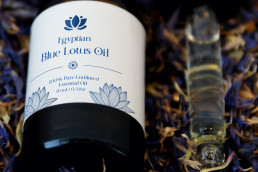
This article is for Reiki practitioners, energy workers, and holistic therapists who want to integrate blue lotus oil reiki practice into their sessions in a way that is botanically sound, client-safe, and genuinely useful rather than merely decorative. It covers why the oil has such a particular affinity for contemplative and energy work, how to anoint yourself and your treatment space, how to handle client sensitivity, and what to realistically expect when you add Nymphaea caerulea to your professional toolkit.
Table of Contents
- Why Reiki Practitioners Keep Returning to Blue Lotus
- What Is Actually Happening, Botanically
- How Blue Lotus Oil Supports a Reiki Session
- For the Practitioner
- For the Treatment Space
- For the Client
- Practical Protocols for Reiki Practitioners
- The Practitioner's Pre-Session Anointing
- Room Preparation
- Client Application (When Consented)
- Hand Anointing for Hands-On Work
- What to Expect: Realistic Timeframes
- When Blue Lotus Oil Is Not the Right Choice
- Complementary Practices
- Choosing an Oil Worth Using in Professional Practice
- Frequently Asked Questions
- Where to Go From Here
- Professional-Grade Blue Lotus for Your Practice
It is written and clinically reviewed by Antonio Breshears, ND, CCA, a Bastyr-trained naturopathic doctor and certified clinical aromatherapist. If you are new to the oil or want a foundational reference to sit alongside this practitioner-focused piece, the complete guide to blue lotus oil covers the chemistry, sourcing, and safety fundamentals in depth.
Why Reiki Practitioners Keep Returning to Blue Lotus
Reiki is, by design, a soft modality. The work happens in the narrow channel between a practitioner’s attentive stillness and a client’s willingness to drop out of sympathetic arousal long enough for something to shift. Anything that helps either party settle into that channel faster, more reliably, and with less effort is worth knowing about. Blue lotus oil earns its place in Reiki rooms for exactly this reason: it is one of the more reliable botanical allies for producing a calm, receptive, mildly introspective state without producing sedation that would blunt either the practitioner’s perception or the client’s awareness of the session.
The oil’s reputation in contemplative work is not new. Ancient Egyptian ritual imagery features Nymphaea caerulea almost obsessively; the flower appears in funerary scenes, temple carvings, and symposium art with a frequency that suggests it was understood as a threshold plant, something that helped move the participant between ordinary and ceremonial awareness. Modern practitioners are rediscovering what that imagery was pointing at, though now with the benefit of knowing what is actually in the oil and why it behaves the way it does.
What Is Actually Happening, Botanically
It helps to be honest about the mechanism, because Reiki practitioners are often asked by curious clients what the oil is doing, and a vague answer erodes professional credibility. Blue lotus absolute contains two classes of compounds that matter for this work. The first is a pair of aporphine alkaloids, aporphine itself and nuciferine, present in small but psychoactive concentrations. Aporphine has weak dopamine agonist activity, while nuciferine has weak antagonist activity at D2 receptors and moderate affinity at 5-HT2A and 5-HT2C serotonin receptors. The net effect of this opposing pair is a gentle modulation rather than a push in any single direction, which is part of why the oil feels balancing rather than stimulating or sedating.
The second class is flavonoids, principally apigenin, quercetin, and kaempferol. Apigenin binds at the central benzodiazepine receptor site with modest affinity, producing a light anxiolytic effect that takes the edge off sympathetic tone without impairing cognition. When inhaled, these compounds act on the olfactory-limbic pathway within seconds, which is why an anointed practitioner notices a shift in their own state before the oil has had time to do anything pharmacologically meaningful via dermal absorption. For Reiki work, this fast-onset limbic response is precisely what you want: the oil is helping you arrive, not sedating you into uselessness.
How Blue Lotus Oil Supports a Reiki Session
For the Practitioner
The most important application is on yourself, before the client arrives. Reiki practitioners carry a cumulative energetic load over a working day, and the quality of the first session and the fifth session can differ markedly if the practitioner has not found a way to reset between clients. A small anointing ritual with blue lotus oil, even just sixty seconds of intentional inhalation and a touch to wrist and heart, reliably shifts the practitioner from logistical mind (schedule, payment, the next client’s presenting concern) into receptive mind. This is not mysticism. It is the olfactory-limbic response doing its job, and it happens whether or not you believe in it.
For the Treatment Space
Scenting the room before a session serves a double purpose. It primes the practitioner’s nervous system through repeated exposure, so the smell itself becomes a conditioned cue for parasympathetic dominance. It also communicates to the client, before any explicit instruction, that they have entered a space designed for a different kind of attention. Clients frequently comment that they felt calmer the moment they walked in, and while part of that is the lighting and the quiet, part of it is genuinely the olfactory signal registering in the amygdala before conscious appraisal catches up.
For the Client
Direct application to the client is optional and should always be consent-based, but when used it tends to deepen the session. A single drop of properly diluted oil placed on the sternum or the inner wrist gives the client something to focus on during the opening minutes of the session, which can shorten the time it takes them to drop into a receptive state. For clients who arrive wound tight from a difficult day, this is often the difference between a session that spends forty minutes unwinding them and one that begins working within the first ten.
Practical Protocols for Reiki Practitioners
The Practitioner’s Pre-Session Anointing
Keep a small rollerball blend at 2 percent dilution in jojoba or fractionated coconut oil (roughly 12 drops of blue lotus absolute in 30 ml of carrier). Before each client, take thirty to sixty seconds of intentional breath, apply the rollerball lightly to the inner wrists, the base of the throat, and the centre of the sternum, and let the scent register. The purpose is not to smell strongly but to create a conditioned internal shift. Over a few weeks of consistent use, the protocol becomes self-reinforcing: the smell itself triggers the state, and the state deepens the smell.
Room Preparation
Twenty to thirty minutes before a session, diffuse 2 to 4 drops of blue lotus oil in a cool-mist ultrasonic diffuser. If you are blending, blue lotus pairs particularly well with frankincense (which reinforces the contemplative quality), sandalwood (which adds grounding depth), or a small amount of neroli (which brightens the top notes without pushing it toward floral perfume territory). Avoid aggressive pairings like peppermint, eucalyptus, or citrus in any real quantity; they will pull the atmospheric tone toward alertness, which is precisely what you are not trying to do.
Turn the diffuser off or down before the client arrives. A room that still smells faintly of the oil is correct. A room that smells strongly of it is too much, and some clients will find an obvious scent distracting or, in rare cases, mildly irritating to sinuses.
Client Application (When Consented)
Always ask, always offer a patch test for new clients, and always disclose that the oil is a floral absolute derived from Nymphaea caerulea. For clients who want to try it, a 1 to 2 percent dilution applied as a single drop to the sternum is sufficient. For clients who prefer not to have the oil on their skin, a scented cotton pad placed near the crown of the head during the session produces most of the benefit through inhalation alone.
Hand Anointing for Hands-On Work
Some practitioners like to apply a small amount to their own palms before laying on hands. If you do this, use a very light dilution (1 percent or less), because the oil is floral and persistent, and you do not want a client with a headache receiving hands that smell assertively of anything. A subtle whisper of scent is atmospheric; an obvious one is intrusive.
What to Expect: Realistic Timeframes
Practitioners who add blue lotus oil to their practice typically notice three things within the first month. The first is that their own transitions between clients become easier, with less bleed-through of one session’s emotional tone into the next. The second is that clients in their established practice occasionally remark that something about the room or the sessions feels different, without being able to articulate what. The third is that newer clients tend to drop into receptivity faster than they did before, though the effect is modest rather than dramatic.
What you should not expect is a qualitative change in the energetic work itself. Reiki is Reiki; an aromatic support does not make a practitioner more skilled, and it does not substitute for training or attunement. The oil is genuinely useful at the margins, helping both parties arrive and settle, but it is supportive rather than transformational. Claims to the contrary are marketing, not clinical reality.
When Blue Lotus Oil Is Not the Right Choice
There are situations in which the oil should not be used in a Reiki session, and practitioners need to be confident about these boundaries.
- Pregnant or breastfeeding clients. The oil is traditionally avoided in pregnancy and lactation because the alkaloid content, though small, has not been adequately studied for safety in these states. Default to no use, regardless of client preference.
- Clients on dopaminergic medications or MAOIs. Because of the aporphine and nuciferine content, there is a theoretical interaction risk with Parkinson’s medications, some antipsychotics, and monoamine oxidase inhibitors. The dermal and inhalation doses are very low, but prudent practice is to skip it entirely for these clients.
- Clients with known floral or absolute sensitivities. Absolutes are chemically complex and occasionally produce contact reactions even when individual components seem safe. A patch test is always the answer for new clients who want direct application.
- Children. Light ambient diffusion during paediatric Reiki is acceptable at very low concentrations, but direct skin application is inappropriate for anyone under twelve without specific paediatric aromatherapy training.
- Clients who simply do not like the scent. This is not a clinical contraindication but a practical one. If a client finds the smell unpleasant, the olfactory-limbic response becomes aversive rather than settling, and you are working against yourself.
Practitioners in certain jurisdictions should also be aware that blue lotus is restricted in a small number of places, including Russia, Poland, Latvia, and the US state of Louisiana, and has some regulatory complexity in Australia. If you travel with your kit or post oils to clients, check the destination regulations.
Complementary Practices
Blue lotus oil sits comfortably alongside several other elements of a considered Reiki practice. A short grounding meditation before the session, whether formal or simply a few minutes of conscious breath, compounds with the oil’s limbic effect and produces a more settled practitioner state than either alone. A cup of chamomile or tulsi tea between sessions hydrates and gently supports parasympathetic tone without caffeine or blood-sugar disruption.
For the treatment room, soft lighting and the absence of blue-spectrum light during sessions matters more than most practitioners credit. The olfactory signal and the visual signal reinforce one another; a blue-lit room with blue lotus diffusing is sending contradictory instructions to the nervous system, and the visual signal usually wins.
Some practitioners find that pairing the oil with crystals (particularly lapis, sodalite, or clear quartz) or with specific sound frequencies deepens the atmospheric effect. These pairings are traditional rather than evidence-based, but they do not conflict with the oil’s action, and if they are meaningful to your practice they are worth keeping.
Finally, do not underestimate the value of sleep, hydration, and your own regular Reiki sessions with a colleague. No aromatic support can compensate for a depleted practitioner, and blue lotus oil is a supplement to good professional hygiene, not a substitute.
Choosing an Oil Worth Using in Professional Practice
If you are using blue lotus oil with paying clients, the quality of the oil matters more than it does for personal use. A diluted or adulterated oil in a professional setting is a problem on three fronts: it does not produce the effect you are relying on, it may contain solvents or synthetic fragrance compounds that could provoke client reactions, and it undermines the trust clients place in your professional judgement. Genuine Nymphaea caerulea absolute is expensive because it genuinely requires 3,000 to 5,000 flowers per gram, and any oil priced significantly below the market rate is, with near certainty, either heavily diluted or not blue lotus at all.
Source from suppliers who can document their extraction method (solvent absolute is most common and entirely acceptable; supercritical CO2 is premium; true steam-distilled essential oil is rare and often prohibitively expensive), provide batch information, and show country of origin. For a working practitioner, the cost difference between a decent absolute and a questionable one is marginal across the life of a bottle, and the professional liability difference is substantial.
Frequently Asked Questions
Can I use blue lotus oil during every Reiki session?
Yes, provided the client has no contraindications and consents to its use in the room. The anointing and ambient protocols are safe for daily practice. Client skin application should still be offered as optional rather than default.
Does blue lotus oil interfere with the Reiki itself?
No. There is no traditional or clinical reason to think the oil disrupts energetic work. Practitioners who use it generally report that it supports rather than competes with the modality.
How many drops should I diffuse during a session?
Two to four drops in a standard ultrasonic diffuser, ideally started twenty to thirty minutes before the client arrives and turned down or off during the session itself. Persistent strong scent during treatment is usually too much.
Is blue lotus safe to apply directly to a client’s skin?
Only when properly diluted (1 to 2 percent in a carrier oil), only with consent, and only after a patch test for new clients. Never apply neat absolute to skin. Avoid application entirely for pregnant, breastfeeding, or medication-contraindicated clients.
What carrier oil works best for a practitioner rollerball?
Jojoba is the professional standard because it is shelf-stable, non-comedogenic, and neutral in scent. Fractionated coconut is a good alternative. Avoid strongly scented carriers like sweet almond or hempseed, which will fight with the absolute.
How long does a 30 ml bottle last in an active practice?
For a practitioner running ten to fifteen sessions per week and using blue lotus in the room and on themselves but not always on clients, a 30 ml bottle of diluted rollerball blend typically lasts two to three months. A 5 ml bottle of undiluted absolute, which is what you mix from, usually lasts six to twelve months of practitioner use depending on volume.
Will clients feel psychoactive effects from a session with blue lotus in the room?
No, not in any meaningful sense. The concentrations reached through ambient diffusion are far below anything that produces measurable psychoactive effects. Clients may feel calmer and more receptive, which is the olfactory-limbic response, not a drug effect.
Can I combine blue lotus with other essential oils in session?
Yes. Frankincense, sandalwood, rose absolute (sparingly, given cost), and small amounts of neroli all blend well. Avoid stimulating oils (peppermint, rosemary, citrus in quantity) during sessions, since they work against the nervous-system state you are trying to cultivate.
Do I need specific training to use blue lotus oil professionally?
You do not need specialised training to use it as a room scent or on yourself. To apply essential oils to clients as part of a professional service, most jurisdictions expect at minimum a recognised aromatherapy certification, and your professional indemnity insurance may require it. Check your local regulations and insurer requirements.
How should I store the oil between sessions?
In a dark glass bottle, tightly capped, in a cool cupboard away from direct light and heat. A properly stored absolute has a usable life of three to four years. A diluted rollerball blend has a shorter life, typically six to twelve months, depending on the carrier.
Where to Go From Here
If you are building a professional aromatic practice around blue lotus and want to deepen your understanding of the oil’s chemistry, sourcing, and the broader safety context, the foundational reference is the complete guide to blue lotus oil. For Reiki practitioners specifically, the most useful next step is usually just to start: anoint yourself before your next session, diffuse a small amount in the room, and notice what shifts over the following two or three weeks of working. The oil teaches its own use faster than any article can, and a month of attentive practice will tell you more about how it fits into your particular work than any amount of reading.

Antonio Breshears
Antonio Breshears is a renowned expert in holistic medicine and beauty, with over 25 years of research experience dedicated to uncovering the secrets of nature's most powerful remedies. Holding a degree in Naturopathic Medicine, Antonio's passion for healing and well-being has driven him to explore the intricate connections between mind, body, and spirit.
Over the years, Antonio has become a respected authority in the field, helping countless individuals discover the transformative power of plant-based therapies, including essential oils, herbs, and natural supplements. He has authored numerous articles and publications, sharing his wealth of knowledge with a global audience seeking to improve their overall health and well-being.
Antonio's expertise extends to the realm of beauty, where he has developed innovative, all-natural skincare solutions that harness the potency of botanical ingredients. His formulations embody his deep understanding of the healing properties found in nature, providing holistic alternatives for those seeking a more balanced approach to self-care.
With his extensive background and dedication to the field, Antonio Breshears is a trusted voice and guiding light in the world of holistic medicine and beauty. Through his work at Pure Blue Lotus Oil, Antonio continues to inspire and educate, empowering others to unlock the true potential of nature's gifts for a healthier, more radiant life.