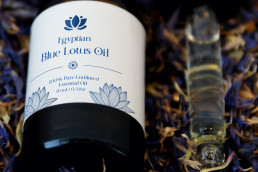
If you have been researching Nymphaea caerulea and have stumbled across conflicting information about its legal status, this article gives you a straight answer on whether blue lotus oil is legal in the UK, what that actually means in practice for buying and using it, and where the sensible edges of the law sit. The short version: yes, blue lotus oil is legal to buy, sell, own and use in the United Kingdom for aromatherapy and cosmetic purposes, but the fuller picture is worth understanding before you purchase.
Table of Contents
- The short answer on blue lotus oil legal UK status
- Why the legality question even comes up
- How UK law actually treats blue lotus oil
- The Misuse of Drugs Act 1971
- The Psychoactive Substances Act 2016
- UK cosmetic and product regulations
- Medicines legislation
- Buying blue lotus oil in the UK
- From UK-based suppliers
- Importing for personal use
- What to verify before buying
- Using blue lotus oil lawfully and sensibly in the UK
- Aromatic and topical use
- Ingestion and tea
- Driving, work and public use
- When blue lotus oil is not the right choice, regardless of legality
- Selling blue lotus oil in the UK: a note for small businesses
- Frequently asked questions
- Final thoughts: where to go from here
- Blue Lotus, Honestly Sourced
It is written and clinically reviewed by Antonio Breshears, ND, CCA, a Bastyr-trained naturopathic doctor and certified clinical aromatherapist. For a broader grounding in what blue lotus oil is, how it is made and how people use it, see The Complete Guide to Blue Lotus Oil, which sits as the master reference behind this piece.
The short answer on blue lotus oil legal UK status
Blue lotus oil, meaning genuine essential oil or absolute extracted from Nymphaea caerulea, is not a controlled substance under UK law. It is not listed in the Misuse of Drugs Act 1971, it is not scheduled under the Psychoactive Substances Act 2016 in a way that prohibits the aromatic oil used for fragrance and topical application, and it does not appear on any current UK prohibited plants list. You can legally purchase it, import it for personal use, sell it as a cosmetic or aromatherapy product, and use it at home in diffusers, rollerballs, bath blends and skincare formulations.
That is the direct answer most readers are looking for. The rest of this article explains the nuance behind that answer, including why some other countries restrict the plant, how UK cosmetic regulations apply, what import considerations matter if you buy from abroad, and when to exercise common sense around claims and consumption.
Why the legality question even comes up
Blue lotus occupies an unusual corner of the plant world. It has a long ceremonial history in ancient Egypt, it contains mildly psychoactive alkaloids (principally aporphine and nuciferine), and it has found renewed interest as a relaxing aromatic and a mild herbal tea ingredient. That combination, ancient ritual plant, modest central nervous system activity, rising popularity, tends to trigger two instinctive responses: either assumption that it must be banned somewhere, or assumption that a handful of countries prohibiting it means the UK probably does too.
Neither is quite right. A small number of jurisdictions have placed restrictions on the plant or its preparations: Russia, Poland, Latvia, and the US state of Louisiana all treat Nymphaea caerulea as a controlled or restricted botanical. Australia has regulatory complexity around it. Most of Europe, including the United Kingdom and the Republic of Ireland, does not restrict it. Blue lotus sits in the same legal category as, say, chamomile absolute or rose absolute: a fragrant, cosmetically useful botanical extract that can be bought and sold freely, subject to the normal cosmetic and consumer protection rules that apply to any such product.
How UK law actually treats blue lotus oil
The Misuse of Drugs Act 1971
This is the main piece of UK drug control legislation, and it works by listing specific substances and plants. Nymphaea caerulea is not listed. Its principal alkaloids, aporphine and nuciferine, are also not listed as controlled substances. There is no schedule, class, or generic definition in the Act that catches blue lotus oil. Owning, selling and using it is therefore not a Misuse of Drugs Act issue.
The Psychoactive Substances Act 2016
This Act was introduced to catch novel psychoactive substances that fell outside the 1971 Act. In principle it applies to any substance capable of producing a psychoactive effect if consumed. In practice it includes significant exemptions, and enforcement has focused on substances sold explicitly for their psychoactive effect, typically synthetic cannabinoids, nitrous oxide canisters before their later control, and similar products marketed for intoxication.
Blue lotus oil sold as aromatherapy, fragrance or cosmetic is not within the spirit or the usual enforcement scope of this Act. The oil is not marketed for ingestion, it is not marketed for intoxication, and at topical or aromatic doses it does not produce a psychoactive effect in any meaningful sense. Responsible suppliers make this framing explicit on their labels and in their product copy, describing the product as a fragrance and aromatherapy oil for external use.
UK cosmetic and product regulations
Cosmetic products sold in Great Britain must comply with the UK Cosmetics Regulation (the retained and amended version of EC 1223/2009). This requires a Cosmetic Product Safety Report, a Responsible Person registered for the UK market, proper labelling, correct INCI naming, and notification through the Submit Cosmetic Product Notifications service. Northern Ireland continues to follow the EU Cosmetics Regulation. A legitimate UK supplier will have these in place.
If a product is sold as aromatherapy rather than as a cosmetic, general product safety and consumer protection rules still apply. Either way, blue lotus oil itself is a permitted ingredient.
Medicines legislation
The point at which a seller strays into unlawful territory is usually not the substance itself but the claims made about it. If a product is marketed as treating, curing or preventing a named medical condition, it may fall under the Human Medicines Regulations 2012 and require a licence from the Medicines and Healthcare products Regulatory Agency. Saying blue lotus oil “treats insomnia” or “cures anxiety” could cross that line. Saying it is “traditionally used for relaxation” or “creates a calming atmosphere” does not. This is a rule for sellers more than for buyers, but it is worth knowing because it tells you something about the suppliers you are looking at. A reputable blue lotus vendor is careful with language for a reason.
Buying blue lotus oil in the UK
From UK-based suppliers
Buying from a UK supplier is the most straightforward route. The product arrives within a few days, there are no customs considerations, and the supplier is contactable under UK consumer law. A genuine UK vendor should be able to tell you the country of origin of the raw material (Egypt is the gold standard, with India as an increasingly common secondary source), the extraction method (solvent-based absolute, steam-distilled essential oil, or supercritical CO2), and provide a GC-MS analysis on request. Absolute is by far the most common form on the market because the flowers are too delicate and low-yielding for efficient steam distillation; roughly three to five thousand flowers are required per gram of absolute.
Importing for personal use
Personal imports of blue lotus oil from Egypt, India, France, the United States or elsewhere are legal. You will be responsible for any import VAT and potentially a small handling fee from the courier if the order value exceeds the low-value threshold. Customs will not seize blue lotus oil because it is not a prohibited import. The practical annoyances of importing essential oils (courier surcharges for flammable liquids, longer transit times, occasional paperwork queries) apply in the normal way.
One caveat: if you travel internationally with blue lotus oil, check the destination country. A bottle you legally bought in London could be confiscated or worse in a country where Nymphaea caerulea is restricted. The UK is permissive; some other jurisdictions are not.
What to verify before buying
Legality is only one part of a good purchase. Beyond confirming that a seller is trading within UK rules, look for the botanical name Nymphaea caerulea clearly stated on the label (not just “blue lotus”), a stated extraction method, dark glass packaging, and an honest description of scent and concentration. Blue lotus absolute is expensive because it is genuinely expensive to produce; suspiciously cheap “blue lotus oil” is almost always either a synthetic fragrance compound or a heavy dilution in jojoba or fractionated coconut oil without that being disclosed.
Using blue lotus oil lawfully and sensibly in the UK
Aromatic and topical use
This is the core lawful use. Two to four drops in a diffuser for an evening. One to two percent dilution in a carrier oil for face, two to three percent for body, up to three percent for a targeted pulse-point rollerball. A few drops added to an unscented bath base for a fragrant soak. These are all straightforward cosmetic and aromatherapy uses that sit well within the normal boundaries of essential oil practice.
Ingestion and tea
Dried blue lotus flowers are widely sold in the UK as a herbal tea ingredient and are not prohibited. The oil is a different matter. Essential oils and absolutes, blue lotus included, are highly concentrated and are not generally recommended for internal use without professional supervision. Absolutes also contain residual extraction solvent traces that are acceptable for fragrance use but not intended for consumption. From a legal standpoint, ingesting your own bottle at home is not a criminal act in the UK; from a clinical and sensible-practice standpoint, the oil is for aromatic and topical use, and that is how reputable suppliers sell it.
Driving, work and public use
Blue lotus at normal aromatic doses does not impair driving and is not a drug-driving issue. It is not detected by standard drug tests. At the diffuser doses most people use, the effect is a gentle settling of the nervous system, not sedation. That said, if you are using a rollerball in a professional context, be considerate about fragrance in shared spaces, which is an etiquette point rather than a legal one.
When blue lotus oil is not the right choice, regardless of legality
Legal does not mean universally appropriate. There are situations where blue lotus oil should be avoided or used with care:
- Pregnancy and breastfeeding. There is insufficient safety data, and the conservative clinical position is to avoid it entirely in both.
- Dopaminergic medications. The alkaloid profile (aporphine has weak dopamine agonist activity, nuciferine has weak antagonist activity) means theoretical interaction with Parkinson’s medications, antipsychotics and certain antidepressants. Speak to your prescriber.
- MAOIs. Caution is warranted with any aromatic plant containing alkaloids alongside monoamine oxidase inhibitors.
- Heavy sedatives or alcohol. Even modest calming effects can stack. Use sensibly.
- Children. Aromatic use in a shared room is generally fine; direct topical or internal use in children is not recommended.
- Known sensitivity to Nymphaeaceae or floral absolutes. Patch test.
None of these are legal restrictions. They are clinical cautions that any sensible user or aromatherapist would observe with this particular oil.
Selling blue lotus oil in the UK: a note for small businesses
If you are reading this because you want to sell blue lotus oil yourself, the legality is the easy part. The compliance work is where most small sellers trip up. A legitimate UK cosmetic or aromatherapy business handling blue lotus oil should have: a Cosmetic Product Safety Report from a qualified assessor for each product, a registered Responsible Person, correct INCI labelling showing Nymphaea caerulea flower extract or the appropriate form, allergen declarations, batch numbering, a period-after-opening symbol or best-before date, safety data sheets for transport and handling, and product liability insurance. Claims must stay within cosmetic territory. Selling imported dilutions as “pure” is both ethically and legally problematic. None of this is about blue lotus being a sensitive substance; it is the same compliance that applies to any cosmetic product.
Frequently asked questions
Is blue lotus oil legal in the UK in 2024 and 2025?
Yes. As of the current legal position, blue lotus oil (Nymphaea caerulea) is not a controlled substance in the United Kingdom and is legal to buy, sell, own and use for aromatherapy and cosmetic purposes. There is no scheduled legislation or pending proposal that would change this.
Can I buy blue lotus oil on the UK high street?
It is unusual to find it in mainstream shops because it is a specialist, high-cost absolute rather than a common essential oil. Most UK buyers purchase online from specialist apothecaries and aromatherapy suppliers. That availability is a reflection of niche demand, not of any legal restriction.
Can I import blue lotus oil from Egypt or India into the UK?
Yes. Personal imports are lawful. You may be charged import VAT and a courier handling fee on orders above the low-value threshold, which is a normal logistics consideration rather than a legal barrier. Keep a copy of the invoice in case customs ask for clarification.
Is blue lotus tea legal in the UK?
Yes. Dried Nymphaea caerulea flowers are legal to buy and consume as a herbal tea. It is not a scheduled plant.
Is blue lotus oil legal to take on a plane from the UK?
Out of the UK, there is no domestic legal issue with travelling with a small bottle of essential oil or absolute, subject to the usual 100 ml liquids rule for cabin baggage. The catch is the destination country. Check whether your destination restricts Nymphaea caerulea before you pack it. A handful of countries do.
Does blue lotus oil show up on a drug test?
No. Standard UK drug tests screen for specific controlled substances and their metabolites. The alkaloids in blue lotus oil are not on those panels and are not metabolised into compounds that would trigger a positive result.
Can I use blue lotus oil and drive afterwards?
Yes. At normal aromatic and topical doses the effect is mild relaxation, not sedation, and it is not a drug-driving concern under UK law. Use common sense: if you are using a heavily sedating blend alongside other calming oils and feel drowsy, do not drive.
Is the oil legal to give as a gift in the UK?
Yes. It is a legal cosmetic product and can be given, sold privately, or included in gift sets without issue, provided the original labelling is intact and any resale complies with normal consumer rules.
Will the UK ban blue lotus oil in future?
There is no current indication of any such move. Regulatory change is always possible in principle, but blue lotus oil sits firmly in the aromatherapy and cosmetic category in the UK and is not part of any active policy conversation about restriction.
How do I know a UK seller is legitimate?
Look for a clearly named Responsible Person on the labelling or website, a UK business address, transparent information on origin and extraction method, a sensible (meaning not suspiciously low) price, and willingness to provide a GC-MS report. Reputable UK suppliers are used to being asked these questions and answer them readily.
Final thoughts: where to go from here
To summarise the position clearly: blue lotus oil is legal in the United Kingdom. You can buy it from UK apothecaries, you can import it from Egypt or India for personal use, you can use it in diffusers, rollerballs, skincare and bath preparations, and you can give it as a gift, all without running into any scheduled substance or prohibited plants legislation. The only caveats worth holding in mind are the small number of overseas destinations where Nymphaea caerulea is restricted, the usual sensible clinical cautions around pregnancy and certain medications, and the ordinary compliance responsibilities that sit on the shoulders of anyone selling cosmetic products rather than on buyers.
With the legal question settled, the more interesting questions become practical ones: how to choose between an absolute and a true essential oil, how to build a simple evening ritual with a diffuser or rollerball, how the oil’s alkaloid and flavonoid chemistry actually interacts with your nervous system, and how to store and preserve a bottle so that its three to four year shelf life is not wasted. The Complete Guide to Blue Lotus Oil covers all of that in one place and is the natural next stop after this article.
If you have arrived here because you are considering a first bottle and simply wanted to confirm you were on safe ground, you are. Blue lotus oil is legal in the UK, available through reputable suppliers, and sits comfortably within ordinary aromatherapy practice when used with the usual care given to any concentrated botanical extract.

Antonio Breshears
Antonio Breshears is a renowned expert in holistic medicine and beauty, with over 25 years of research experience dedicated to uncovering the secrets of nature's most powerful remedies. Holding a degree in Naturopathic Medicine, Antonio's passion for healing and well-being has driven him to explore the intricate connections between mind, body, and spirit.
Over the years, Antonio has become a respected authority in the field, helping countless individuals discover the transformative power of plant-based therapies, including essential oils, herbs, and natural supplements. He has authored numerous articles and publications, sharing his wealth of knowledge with a global audience seeking to improve their overall health and well-being.
Antonio's expertise extends to the realm of beauty, where he has developed innovative, all-natural skincare solutions that harness the potency of botanical ingredients. His formulations embody his deep understanding of the healing properties found in nature, providing holistic alternatives for those seeking a more balanced approach to self-care.
With his extensive background and dedication to the field, Antonio Breshears is a trusted voice and guiding light in the world of holistic medicine and beauty. Through his work at Pure Blue Lotus Oil, Antonio continues to inspire and educate, empowering others to unlock the true potential of nature's gifts for a healthier, more radiant life.