If you have been researching premium blue lotus oil, two names surface repeatedly: Pure Blue Lotus Oil and Florihana. Both are respected, both carry genuine Nymphaea caerulea, and both sit at the upper end of the market. This article is a fair, clinically honest comparison, blue lotus oil vs Florihana, written to help you decide which suits your particular use, budget, and chemistry preferences.
Table of Contents
- Who These Two Brands Are
- Extraction Method and What It Means for You
- Does the Method Change the Effect?
- Chemistry and Transparency
- Aroma Profile: A Side-by-Side
- Price and Value
- Which to Choose for Which Use
- For Sleep and Evening Ritual
- For Daytime Diffusion and Workspace
- For Skincare and Face Serums
- For Perfumery
- For Meditation and Dream Work
- What to Expect: Realistic Outcomes From Either
- When Neither Is the Right Choice
- Complementary Approaches
- Frequently Asked Questions
- Where to Go From Here
- Experience the Traditional Absolute
It is written and clinically reviewed by Antonio Breshears, ND, CCA, a Bastyr-trained naturopathic doctor and certified clinical aromatherapist. For a broader grounding in the plant, its chemistry, and its clinical applications, see The Complete Guide to Blue Lotus Oil, which acts as the parent reference for every comparison article in this series.
Who These Two Brands Are
Florihana is a French aromatherapy house based in the hills above Grasse. They have built a reputation over several decades for clean distillation, transparent GC/MS reporting, and a practitioner-facing approach. Their catalogue is broad, spanning hundreds of essential oils, absolutes, hydrosols, and CO2 extracts. Blue lotus sits among their specialty offerings rather than as a signature product.
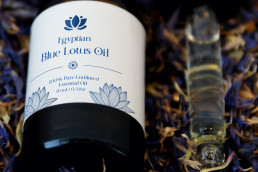
Pure Blue Lotus Oil is a focused apothecary. The entire house is built around one botanical: Egyptian Nymphaea caerulea. The oil is sourced from a single cultivation network in the Nile delta, processed in small batches, and bottled by hand. Where Florihana’s strength lies in breadth and laboratory discipline, Pure Blue Lotus Oil’s strength lies in specialisation and provenance depth.
Both are legitimate. Neither is a fraud. The question is not which is “better” in some universal sense; the question is which better matches what you are trying to do.
Extraction Method and What It Means for You
Florihana typically offers blue lotus as a supercritical CO2 extract, occasionally as an absolute, depending on harvest. The CO2 route uses pressurised carbon dioxide as a solvent. It leaves no chemical residue, preserves volatile top notes that heat would destroy, and produces a material that sits somewhere between a true essential oil and a classical absolute in character. CO2 extracts tend to be slightly paler, slightly greener, and often carry more of the fresh floral-aquatic character of the living flower.
Pure Blue Lotus Oil is a traditional solvent-extracted absolute. This is the historically dominant method for water lilies and jasmines, two families whose delicate aromatic molecules cannot survive steam distillation intact. The resulting material is darker, more viscous, deeper in its honeyed-balsamic base, and closer to what perfumers historically meant when they spoke of “lotus absolute”. A well-made absolute carries the full alkaloid and flavonoid profile, including aporphine, nuciferine, apigenin, quercetin, and kaempferol, in concentrations that reflect the thousands of flowers compressed into each gram.
Does the Method Change the Effect?
Modestly, yes. CO2 extracts tend to smell brighter on first application and dissipate faster. Absolutes settle deeper, last longer on skin, and carry a heavier base that many users find more grounding and more useful for sleep, meditation, and ritual work. For daytime diffusion where you want lift and clarity, CO2 can feel more agreeable. For evening practice, bath rituals, and skin applications where staying power matters, absolute generally wins.
Chemistry and Transparency
Florihana’s great virtue is publishing GC/MS data openly on each batch. If you are a practitioner who needs to document your sourcing for clients or if you are the kind of buyer who wants to see a chromatogram before purchase, this is genuinely valuable. Their analytical rigour is among the most consistent in the industry.
Pure Blue Lotus Oil also provides batch-level analysis on request, but our transparency is more narrative and provenance-led than Florihana’s laboratory-led approach. We tell you which cultivation the flowers came from, how they were harvested, which extraction window they passed through, and what the organoleptic profile of that particular batch looks like. Both approaches are valid. Some buyers want numbers. Some want story. Most serious users want both, which is why asking for documentation directly tends to yield it from either house.
Aroma Profile: A Side-by-Side
A CO2 extract and an absolute of the same botanical are recognisably the same plant but notably different experiences. Compared honestly:
- Florihana CO2: cooler opening, noticeable green-aquatic top note, honeyed middle, lighter base. Dissipates faster. Excellent in diffusion where you want the scent to read clearly and then fade for the next person entering the room.
- Pure Blue Lotus Oil absolute: slower-building opening, deeper honeyed-floral heart, pronounced balsamic and faintly smoky base, longer skin life. Better for perfumery accords, ritual anointing, bath blends, and evening diffusion where depth and persistence matter.
If you were to put a drop of each on separate blotters, most noses would describe the Florihana as “fresher and more floral” and the Pure Blue Lotus Oil as “richer and more resinous”. Neither is truer to the plant. They are two honest portraits of the same flower, painted with different pigments.
Price and Value
Both oils sit at the premium end. Florihana’s blue lotus CO2 is typically priced competitively for the method, with smaller volumes available for those who want to trial before committing. Pure Blue Lotus Oil prices reflect the weight of flowers compressed into the absolute (3,000 to 5,000 blooms per gram) and the artisanal nature of the bottling.
Per drop, absolutes generally cost more than CO2 extracts of the same botanical because the yield per kilogram of flower is lower in the solvent route and because the finished material is denser in aromatic weight. For skin work and perfumery, where you use a drop or two at a time, the absolute tends to go further despite the higher unit price. For heavy diffuser use, the CO2 may offer better value if you are running a diffuser daily.
Which to Choose for Which Use
For Sleep and Evening Ritual
Absolute wins here for most users. The heavier base of Pure Blue Lotus Oil settles the nervous system more slowly and more persistently, which matches the downshift you are trying to create. Two or three drops in a diffuser forty minutes before bed, or a 2 percent blend applied to the chest and wrists, gives a longer arc of calming than a brighter CO2.
For Daytime Diffusion and Workspace
CO2 has a genuine edge. The fresher top note reads more clearly in a bright room, the scent clears more cleanly for the next meeting or next activity, and the lighter character is less likely to feel heavy in a professional setting.
For Skincare and Face Serums
Absolute, almost always. The flavonoid density and the base notes give face blends a richness that CO2 rarely matches, and the staying power means your 1 percent dilution continues to work on the skin for hours rather than dissipating quickly.
For Perfumery
Depends on the accord. If you are building a light, green floral or an aquatic composition, the CO2 sits more naturally in the top and middle. If you are building an oriental, a chypre, a balsamic floral, or anything with incense or resin character, the absolute is the historically correct choice and behaves as perfumers expect “lotus absolute” to behave.
For Meditation and Dream Work
Absolute. The psychoactive-adjacent alkaloid profile is present in both, but the depth of the absolute and its longer skin life tend to suit practices where you want the scent to stay with you through a forty-minute sit or into sleep.
What to Expect: Realistic Outcomes From Either
Both oils produce real, noticeable effects within their realistic range. Neither is a sedative in the pharmacological sense. Neither will abolish anxiety or induce sleep on its own. What you can reasonably expect from regular use of either is:
- A gentle parasympathetic shift within fifteen to thirty minutes of inhalation or topical application
- Improved ease with sleep onset when used as part of a consistent evening ritual over two to three weeks
- Softer skin tone and reduced inflammatory flare when used in a 1 to 2 percent face blend over four to six weeks
- A mild mood lift, often described as “settling” rather than stimulating, that is noticeable but not dramatic
If a vendor of either brand promises more than this, they are overselling. The honest range is real and genuinely useful, but it is modest rather than transformative.
When Neither Is the Right Choice
Regardless of which house you buy from, blue lotus oil is not appropriate for everyone or every situation. Avoid both Florihana and Pure Blue Lotus Oil in the following circumstances:
- Pregnancy and breastfeeding. The alkaloid profile has not been studied sufficiently in these populations and caution is standard.
- Concurrent use of dopaminergic medications, MAOIs, or heavy sedatives. The aporphine and nuciferine content can theoretically interact; discuss with your prescriber.
- Children under five. Essential oils generally, and alkaloid-rich absolutes particularly, are not first-line for this age group.
- Known allergy to water lilies or related botanicals. Patch test always, regardless of source.
- If you live in Russia, Poland, Latvia, or the US state of Louisiana. Local restrictions on Nymphaea caerulea apply and importing may not be legal.
For any condition that is clinically significant, severe insomnia, diagnosed anxiety disorders, depressive episodes, or skin conditions that are not responding, neither brand of blue lotus oil is a substitute for appropriate medical or psychological care. Use these oils as adjuncts to good care, not as replacements for it.
Complementary Approaches
Whichever brand you choose, the oil works better inside a supportive framework than in isolation. For sleep work, pairing either oil with consistent wind-down timing, reduced blue light exposure in the hour before bed, and a cool dark bedroom will outperform the oil alone by a wide margin. For skincare, good hydration, adequate protein intake, and mindful sun exposure do more structural work than any topical. For anxiety and mood, regular movement, social contact, and, where warranted, therapy or clinical support are the main intervention; the oil is a gentle modifier.
Blending partners worth knowing regardless of source brand: sandalwood for grounding in meditation, rose for emotional work, frankincense for ritual depth, lavender for sleep, vetiver for anxiety, jasmine for perfumery accords. All of these sit comfortably alongside blue lotus in either CO2 or absolute form.
Frequently Asked Questions
Is Florihana’s blue lotus “real” blue lotus?
Yes. Florihana sources genuine Nymphaea caerulea and their batch documentation is among the most transparent in the industry. The main difference from Pure Blue Lotus Oil is extraction method (CO2 versus absolute) rather than authenticity.
Which is stronger, CO2 or absolute?
Neither is universally stronger. The CO2 carries more of the fresh top notes; the absolute carries more of the deep base and has longer skin life. For subjective potency in evening or ritual use, most users find the absolute more pronounced. For bright daytime aroma, the CO2 can read more strongly.
Can I substitute one for the other in a recipe?
Yes, with adjustment. If a recipe calls for absolute and you have CO2, expect the finished blend to be brighter and shorter-lived; you may want to add a small touch of benzoin or sandalwood to replace the base weight. If a recipe calls for CO2 and you have absolute, consider using slightly less, since the absolute is heavier per drop.
Does Florihana ship to every country that Pure Blue Lotus Oil does?
Shipping policies differ between the two houses and change periodically. Both respect the legal restrictions in Russia, Poland, Latvia, and Louisiana. Check each vendor’s current shipping page before ordering if you are in a borderline jurisdiction.
Which has better shelf life?
Properly stored in dark glass, cool and dark, both keep well for three to four years. CO2 extracts are sometimes slightly more susceptible to top-note loss over time; absolutes tend to deepen rather than degrade with age, within reason. Keep either out of sunlight and away from heat.
Is one safer than the other on skin?
Both are safe at appropriate dilutions (1 to 2 percent for face, 2 to 3 percent for body). Patch test before wider use with either. Solvent-extracted absolutes occasionally carry trace residual solvent; reputable houses, including those sourced by Pure Blue Lotus Oil, use food-grade ethanol washing that brings residuals well below sensitivity thresholds.
Which is better for beginners?
For someone entirely new to blue lotus who wants to trial the aroma before committing, Florihana’s smaller volumes and CO2 profile are approachable. For someone who already knows they love the classical lotus absolute profile and wants depth, Pure Blue Lotus Oil is the direct route.
Do both contain the same alkaloids and flavonoids?
Yes, broadly. Aporphine, nuciferine, apigenin, quercetin, and kaempferol are present in both. The relative concentrations can shift slightly between CO2 and absolute extraction, with absolutes typically carrying slightly more of the heavier, less volatile constituents.
Which is better value?
Per millilitre, CO2 extracts are typically cheaper. Per application on skin or in a focused blend, the absolute often lasts longer because you use less per use and because its staying power extends the effect. It depends on how you use it.
Can I buy both and compare directly?
That is genuinely the best answer for anyone serious about blue lotus. Side-by-side on two blotters, in two identical diffuser sessions, and in two identical 1 percent skin blends, you will learn more in an afternoon than any article can teach you.
Where to Go From Here
If you have read this far and still feel uncertain, the honest recommendation is this: if you are buying for bright diffusion, daytime work, or a first trial at a lower commitment, Florihana’s CO2 is a fine place to start. If you are buying for evening ritual, skincare, perfumery, or depth of experience, the traditional absolute offered by Pure Blue Lotus Oil is the closer match to what most people actually want when they say “lotus oil”. For a deeper grounding in the botany, chemistry, and clinical considerations that underpin both brands, return to The Complete Guide to Blue Lotus Oil, which covers the full landscape.
Whichever you choose, use it with realistic expectations, appropriate dilutions, and the patience that any plant medicine rewards. The oil is genuinely useful within its range. It is not a miracle. Treating it honestly is how you get the most from it.

Antonio Breshears
Antonio Breshears is a renowned expert in holistic medicine and beauty, with over 25 years of research experience dedicated to uncovering the secrets of nature's most powerful remedies. Holding a degree in Naturopathic Medicine, Antonio's passion for healing and well-being has driven him to explore the intricate connections between mind, body, and spirit.
Over the years, Antonio has become a respected authority in the field, helping countless individuals discover the transformative power of plant-based therapies, including essential oils, herbs, and natural supplements. He has authored numerous articles and publications, sharing his wealth of knowledge with a global audience seeking to improve their overall health and well-being.
Antonio's expertise extends to the realm of beauty, where he has developed innovative, all-natural skincare solutions that harness the potency of botanical ingredients. His formulations embody his deep understanding of the healing properties found in nature, providing holistic alternatives for those seeking a more balanced approach to self-care.
With his extensive background and dedication to the field, Antonio Breshears is a trusted voice and guiding light in the world of holistic medicine and beauty. Through his work at Pure Blue Lotus Oil, Antonio continues to inspire and educate, empowering others to unlock the true potential of nature's gifts for a healthier, more radiant life.