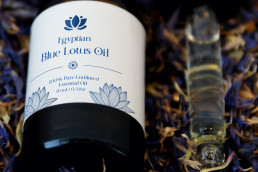
If you are looking for blue lotus oil in Austin, you are in one of the better US cities for it. Austin has a long-standing herbal and apothecary culture, a deep network of wellness practitioners, and enough curious buyers to keep small boutiques stocking unusual botanicals. That said, finding genuinely authentic Nymphaea caerulea in person is harder than it looks, and most of what sits on local shelves is either heavily diluted, mislabelled, or a fragrance oil dressed up as the real thing. This guide walks through where to look in Austin, what to ask before you hand over your card, and how to recognise the real oil from the imitations that dominate the market.
Table of Contents
- Why Austin Is a Reasonable Place to Look
- The Main Categories of Austin Retailers
- Independent Herbal Apothecaries
- Perfumery and Natural Fragrance Boutiques
- Metaphysical and Ritual Supply Shops
- Health Food Chains and General Wellness Stores
- How to Verify What You Are Buying in Person
- Specific Austin Neighbourhoods Worth Exploring
- South Congress (SoCo)
- East Austin and Manor Road
- South Lamar and the Zilker Area
- North Loop and Hyde Park
- Why Most Austin Buyers End Up Ordering Online Anyway
- Red Flags to Avoid, Wherever You Shop
- What a Fair Price Looks Like in Austin
- Using What You Buy
- Frequently Asked Questions
- Where to Go From Here
- Skip the Guesswork, Order Authentic
It is written and clinically reviewed by Antonio Breshears, ND, CCA, a Bastyr-trained naturopathic doctor and certified clinical aromatherapist. For a broader primer on the oil itself, the chemistry, and how it is used, see our complete guide to blue lotus oil, which sits as the parent reference for this article.
Why Austin Is a Reasonable Place to Look
Austin has an unusual concentration of herbalists, acupuncturists, perfumers, and ritual-focused apothecaries, and that ecosystem creates real demand for botanical materials that do not turn up in chain pharmacies. The Rainey Street and South Congress districts, the stretch of South Lamar near Lamar Plaza, and the cluster of shops around East 6th and Manor Road all host small businesses that source from Egyptian, Indian, and European suppliers. You will find frankincense, labdanum, rose otto, and other expensive botanicals stocked by people who can actually speak to provenance.
Blue lotus oil sits at the premium end of that spectrum. A real absolute of Nymphaea caerulea takes roughly three thousand to five thousand flowers per gram to produce, which is why an honest retail price for a small quantity is not small. When you see blue lotus oil in Austin priced at the same level as lavender or sweet orange, something is wrong. Either the oil has been extensively diluted in a cheap carrier and not labelled as such, or it is a synthetic fragrance compound with no meaningful connection to the flower.
The Main Categories of Austin Retailers
Broadly, there are four kinds of places in Austin that claim to sell blue lotus oil. Each has its own strengths and its own failure modes.
Independent Herbal Apothecaries
These are your best bet for real material. Shops focused on Western herbalism, Ayurveda, or traditional Chinese medicine often carry specialist botanicals sourced directly from importers. Staff can usually tell you the extraction method, the country of origin, and the supplier. If they cannot answer those three questions, the product is not worth the price regardless of what is written on the label.
When you visit one of these shops, ask specifically whether the blue lotus oil is an absolute (solvent-extracted), a steam distillation, or a supercritical CO2 extract. All three are legitimate but behave differently. Most authentic material on the market is an absolute, because steam distillation of water lily flowers is notoriously inefficient and the yields are tiny.
Perfumery and Natural Fragrance Boutiques
Austin has a growing niche perfumery scene, and some of these shops stock genuine botanical absolutes because their customers are making their own blends. The oils here are usually authentic but frequently pre-diluted in jojoba or fractionated coconut oil, which is fine for perfumery but changes the price calculation. A five-millilitre bottle that is ninety percent carrier and ten percent actual absolute should cost roughly ten percent of what a pure absolute costs at the same volume. That maths rarely works out in the customer’s favour.
Metaphysical and Ritual Supply Shops
These shops often carry something labelled “blue lotus oil” but it is usually a fragrance oil intended for anointing candles, ritual baths, or charging objects. Fragrance oils have their place, but they are not the same product as a botanical absolute and they will not produce the subtle nervous-system effects associated with real Nymphaea caerulea. If a shop sells a four-ounce bottle of “blue lotus oil” for under twenty dollars, it is almost certainly synthetic. That is not dishonest in itself, provided the labelling is clear, but read before you buy.
Health Food Chains and General Wellness Stores
Chain stores in Austin occasionally carry blue lotus products, but their sourcing is usually opaque and the buyers rarely have the specialist knowledge to vet small-batch botanicals. If you do not see country of origin, extraction method, and a batch number on the label, treat the claim of authenticity with scepticism.
How to Verify What You Are Buying in Person
Once you have found a shop that stocks something claiming to be blue lotus oil, there are a few practical checks you can run before handing over money.
First, ask to smell it. Authentic Nymphaea caerulea absolute has a cool, slightly aquatic floral top note, then opens into a deep, honeyed, almost narcotic floral heart, and settles into a balsamic, faintly smoky base. It is not a bright, airy floral. It is dense, a little strange, and distinctly alive. A synthetic fragrance usually reads as generic “floral perfume”, often with a soapy or cloying quality, and it does not develop in layers over time.
Second, ask for the country of origin. Legitimate blue lotus oil is almost always sourced from Egypt, occasionally from India or Thailand. If the shop cannot tell you, or tells you vaguely “somewhere in Asia”, that is a useful data point about how seriously they vet their stock.
Third, look at the colour and viscosity. A real absolute is typically a thick, dark amber to reddish-brown resinous liquid at room temperature. It does not pour like water. If your “blue lotus oil” is thin, clear, and free-flowing, it is either heavily diluted or it is a synthetic compound in a vegetable oil base.
Fourth, ask for a certificate of analysis or a gas chromatography report. Any supplier who takes their material seriously will either have one or will be able to request one from their importer. A refusal to provide this, or a blank look, tells you the material was not sourced with quality in mind.
Specific Austin Neighbourhoods Worth Exploring
South Congress (SoCo)
South Congress hosts several wellness-adjacent boutiques and niche apothecaries. The density of small businesses here means you can visit three or four shops in an afternoon and compare what they carry. Prices run high, reflecting the rents, but the quality is generally above average if you are willing to ask questions.
East Austin and Manor Road
East Austin has a stronger concentration of herbalist-run businesses and community apothecaries, and the ethos here tends toward transparent sourcing and smaller supply chains. If you prefer dealing directly with people who make or blend their own products, this is the area to start.
South Lamar and the Zilker Area
This corridor mixes yoga studios, acupuncture clinics, and small health food shops. Practitioners here sometimes carry blue lotus oil for their own use with clients and will sell small amounts to the public, though stock is unpredictable. Calling ahead is worth the effort.
North Loop and Hyde Park
Smaller, quieter shops in these neighbourhoods sometimes stock genuinely interesting material because the owners are enthusiasts rather than volume sellers. These are often the places where you will find the best quality for the price, if you can find them open.
Why Most Austin Buyers End Up Ordering Online Anyway
Here is the honest summary. Even in a city as herbally literate as Austin, walk-in availability of authentic, unadulterated blue lotus oil is patchy. Shops that stock it in any volume are rare, stock moves in and out unpredictably, and you often end up paying a premium for the convenience of smelling it before you buy. For most people, after one or two in-person visits to confirm what real material smells like, it makes more sense to order from a specialist supplier online where provenance is documented and the product is priced according to actual production costs rather than retail rent.
The practical pattern I see most often with Austin-based clients is this: they visit one or two local shops to get a sensory benchmark, then they order their ongoing supply from an online supplier who can demonstrate sourcing, extraction method, and batch consistency. That combination, local familiarity plus online reliability, is what tends to work.
Red Flags to Avoid, Wherever You Shop
There are a handful of warnings that apply whether you are buying blue lotus oil in Austin, Dallas, Portland, or online.
A price that is too low is the most reliable signal that something is wrong. Real blue lotus absolute is expensive because the raw material is expensive. If you see a full ounce for under eighty dollars and it is claimed to be pure, it is not pure.
A blue colour is a red flag. The flower is blue. The oil is not. Real blue lotus absolute is amber to reddish-brown. If the oil in the bottle is blue, it has been artificially coloured, which means someone decided aesthetics mattered more than honesty.
Vague labelling, meaning no country of origin, no extraction method, no botanical name in Latin, and no batch identifier, usually indicates a product that has been bought in bulk from an unverified source and rebottled without quality control.
Claims that the oil is a strong sedative, a psychoactive, or a reliable sleep aid are marketing overreach. Blue lotus oil has a gentle, parasympathetic-calming effect mediated through its alkaloids and flavonoids acting on olfactory-limbic pathways, but it is not a pharmaceutical-strength sedative. Anyone selling it as one is either uninformed or deliberately misrepresenting it.
What a Fair Price Looks Like in Austin
For a genuine, undiluted Egyptian blue lotus absolute, expect to pay in the region of forty to seventy dollars per millilitre at retail in Austin, sometimes more at boutique perfumeries. That sounds high until you remember the flower-to-oil ratio. Pre-diluted versions (five to ten percent absolute in jojoba or fractionated coconut) should be proportionally cheaper, and the dilution percentage must be clearly stated on the label. If the label says “blue lotus oil” without specifying dilution and the price is low, the dilution is hidden, not absent.
Using What You Buy
Once you have found a genuine bottle of blue lotus oil in Austin, the usage principles are the same as anywhere else. For facial application, dilute to one to two percent in a light carrier such as jojoba. For body application, two to three percent is appropriate. For diffusion, two to four drops in a cold-air or ultrasonic diffuser is enough to perfume a room without saturation. For the full set of protocols, dilutions, and safety considerations, the complete guide to blue lotus oil covers each application in detail.
Avoid blue lotus oil during pregnancy and breastfeeding, and be cautious if you take dopaminergic medications, MAOIs, or strong sedatives, because the aporphine and nuciferine content can interact with those pathways, at least in theory. The oil is gentle, but gentle is not the same as inert.
Frequently Asked Questions
Is blue lotus oil legal to buy in Austin, Texas?
Yes. Blue lotus (Nymphaea caerulea) is legal in Texas and across most of the United States. The notable exception is the state of Louisiana, where the plant itself is restricted. Austin buyers have no regulatory barrier to purchasing the oil for personal use.
What is the best neighbourhood in Austin for finding herbal or apothecary shops?
East Austin and South Congress have the highest concentration of independent apothecaries and herbalist-run businesses. South Lamar and the area around Hyde Park also host smaller specialist shops. If your goal is comparing several sources in one visit, East Austin is probably the most efficient area.
How can I tell if the blue lotus oil I found in Austin is real?
Smell it first. Real Nymphaea caerulea absolute has a cool aquatic top, a deep honeyed-floral heart, and a balsamic base. It is thick, amber to reddish-brown, and not free-flowing. Ask for country of origin (usually Egypt), extraction method (usually solvent absolute), and a certificate of analysis if available. Low price, blue colouring, and vague labelling are all red flags.
Why is authentic blue lotus oil so expensive?
It takes roughly three thousand to five thousand individual flowers to produce one gram of absolute. The flowers are hand-harvested, often in Egypt, and the extraction yields are low. That production cost is reflected in the retail price. Anything significantly cheaper than specialist market rates is almost certainly adulterated or synthetic.
Do any of the chain health stores in Austin carry real blue lotus oil?
Occasionally, but chain stores rarely have the specialist sourcing knowledge to verify what they stock. The products they carry labelled as blue lotus oil are more often fragrance oils or heavily diluted blends. Independent apothecaries are a more reliable starting point.
Is it better to buy blue lotus oil locally or order online?
Visiting a local shop once to smell genuine material and calibrate your expectations is worthwhile. For ongoing supply, most Austin buyers I know end up ordering from specialist online suppliers who can document sourcing, extraction method, and batch testing, because local stock is unpredictable and often marked up significantly.
What should blue lotus oil actually look like?
A real absolute is a thick, viscous, amber to reddish-brown liquid that moves slowly when you tilt the bottle. It is not blue, not clear, and not thin. If the oil inside is any shade of blue, it has been artificially coloured and that is usually a sign of other issues with the product.
Can I find blue lotus oil at Austin farmers’ markets?
Some of the larger farmers’ markets, particularly those with herbalist or apothecary vendors, occasionally have small producers who blend with blue lotus absolute. These are usually finished products (serums, roll-ons, perfumes) rather than pure absolute, and they are often good quality because the makers are accountable to a local customer base.
What is the difference between blue lotus absolute and blue lotus fragrance oil?
An absolute is a solvent-extracted concentrate of the actual flower, containing the alkaloids and flavonoids that give the plant its properties. A fragrance oil is a synthetic compound designed to smell vaguely floral, with no connection to the plant chemistry. Fragrance oils are fine for scenting candles or soaps, but they have no aromatherapeutic action.
How should I store blue lotus oil after I buy it in Austin?
Austin heat is not kind to essential oils or absolutes. Store your bottle in a dark glass container, away from sunlight, ideally in a cool cupboard or a dedicated refrigerator drawer. Properly stored, a blue lotus absolute has a shelf life of roughly three to four years before the scent profile begins to shift.
Where to Go From Here
If you are just beginning to explore blue lotus oil, spend a little time in one or two of Austin’s independent apothecaries to build a sensory reference, then decide whether local retail or a specialist online supplier makes more sense for your ongoing use. The complete guide to blue lotus oil covers the chemistry, applications, safety profile, and typical use cases in detail, and is the most useful next step if you want to understand what you are buying before you commit to a bottle.

Antonio Breshears
Antonio Breshears is a renowned expert in holistic medicine and beauty, with over 25 years of research experience dedicated to uncovering the secrets of nature's most powerful remedies. Holding a degree in Naturopathic Medicine, Antonio's passion for healing and well-being has driven him to explore the intricate connections between mind, body, and spirit.
Over the years, Antonio has become a respected authority in the field, helping countless individuals discover the transformative power of plant-based therapies, including essential oils, herbs, and natural supplements. He has authored numerous articles and publications, sharing his wealth of knowledge with a global audience seeking to improve their overall health and well-being.
Antonio's expertise extends to the realm of beauty, where he has developed innovative, all-natural skincare solutions that harness the potency of botanical ingredients. His formulations embody his deep understanding of the healing properties found in nature, providing holistic alternatives for those seeking a more balanced approach to self-care.
With his extensive background and dedication to the field, Antonio Breshears is a trusted voice and guiding light in the world of holistic medicine and beauty. Through his work at Pure Blue Lotus Oil, Antonio continues to inspire and educate, empowering others to unlock the true potential of nature's gifts for a healthier, more radiant life.