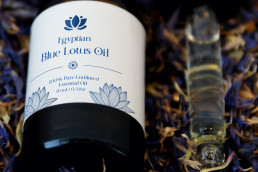
This recipe produces four hand-pressed blue lotus bath bombs, each approximately 65 grams, scented with a gentle 0.5 percent dilution of true Egyptian blue lotus absolute and balanced with skin-kind carrier oils. They fizz generously, colour the water a soft lilac-blue, and release the characteristic honeyed-floral scent of Nymphaea caerulea as they dissolve. The formulation is designed for adults who want an evening ritual bath that supports parasympathetic wind-down rather than a novelty bath bomb that merely looks pretty.
Table of Contents
- What You'll Need
- Equipment
- Ingredients (makes 4 x 65 g bath bombs)
- Why This Formulation Works
- Step-by-Step Instructions
- How to Use Your Blue Lotus Bath Bomb
- Storage and Shelf Life
- Variations
- Sensitive Skin Version
- Extra Calming Evening Blend
- Richer, More Emollient Texture
- Fragrance-Forward Ceremonial Version
- Common Mistakes to Avoid
- Frequently Asked Questions
- Where to Go From Here
- Pure Absolute for Your Bath Ritual
It is written and clinically reviewed by Antonio Breshears, ND, CCA, a Bastyr-trained naturopathic doctor and certified clinical aromatherapist. If you want the broader context for how blue lotus absolute behaves in different preparations, before you commit to pressing a batch, read the complete guide to blue lotus oil first; it covers extraction, chemistry, and the realistic expectations that should shape any formulation you build.
What You’ll Need
Equipment
- Digital kitchen scale accurate to 1 gram (ideally 0.1 gram for the oil phase)
- Two mixing bowls (one large, one small)
- Whisk or gloved hands for blending the dry phase
- Fine mist spray bottle filled with witch hazel or high-proof alcohol (not water)
- Stainless steel bath bomb moulds, 65 mm diameter (makes four standard spheres) or silicone half-sphere moulds
- Parchment-lined tray for curing
- Nitrile or latex gloves (optional, protects skin from colour pigment)
Ingredients (makes 4 x 65 g bath bombs)
- 160 g sodium bicarbonate (baking soda), fine grade
- 80 g citric acid, fine grade
- 40 g cornflour (cornstarch) or arrowroot powder
- 20 g Epsom salts, finely ground
- 15 g sweet almond oil (carrier)
- 5 g fractionated coconut oil (carrier, extends shelf life)
- 1.4 g (approximately 28 drops) blue lotus absolute, warmed gently to pourable viscosity
- 0.5 g cosmetic-grade ultramarine blue pigment, or 3 to 4 drops natural blue food colour
- Optional: 1 to 2 dried blue lotus petals pressed onto the top of each bomb for decoration
Why This Formulation Works
The 2:1 ratio of sodium bicarbonate to citric acid is the classic bath bomb backbone. It produces a vigorous, sustained fizz when the bomb meets water, because the acid-base reaction releases carbon dioxide while simultaneously freeing the oils and fragrance into the bath. Cornflour slows the reaction slightly, giving you a longer dissolve (typically two to three minutes rather than a violent thirty seconds) and allowing the scent to develop rather than flash off. Epsom salts add a modest magnesium sulphate contribution to the bath water, which many readers find genuinely useful for muscle ease after a long day.
On the oil side, the reason this recipe sits at 0.5 percent dilution rather than the 1 to 2 percent typical of skin formulations is simple: a bath bomb disperses its oil into roughly 150 to 200 litres of bath water, and essential oils do not actually dissolve in water. Without sufficient dispersant (the almond and coconut oil carry the absolute, but a bath is not a closed emulsion), the absolute floats to the surface and can concentrate against the skin. Keeping the aromatic load modest avoids irritation while still producing a genuinely scented, atmospheric bath. The blue lotus absolute itself is thick and resinous at room temperature, so warming the bottle in a bowl of warm (not hot) water for five minutes before measuring makes it easier to drop accurately.
Step-by-Step Instructions
- Weigh the dry phase. In the large bowl, combine the sodium bicarbonate, citric acid, cornflour, and finely ground Epsom salts. Whisk thoroughly for at least one minute until the mixture is uniform and lump-free. Any clumps here will cause weak points in the finished bomb.
- Prepare the oil phase. In the small bowl, combine the sweet almond oil and fractionated coconut oil. Add the warmed blue lotus absolute drop by drop, stirring gently with a small spoon. The oil phase should look slightly amber and carry the characteristic honeyed-floral scent.
- Add colour. If using ultramarine pigment, pre-disperse it into the oil phase by stirring until fully incorporated. This prevents blue speckling in the finished bomb. If using liquid colourant, add it in step 4 instead.
- Combine wet and dry. Drizzle the oil phase into the dry phase slowly, whisking or hand-mixing constantly. Work quickly to avoid premature fizzing (citric acid will react with any moisture, including the oil phase if it sits). The mixture should look like damp sand and hold its shape when squeezed firmly in your palm. If it crumbles, mist lightly with witch hazel (one or two sprays at a time, mixing thoroughly between) until the texture is right. Do not over-wet, or the bombs will begin reacting before they are moulded.
- Press the moulds. Overfill each half of the mould, pressing the mixture in firmly with your thumbs. The two halves should have a small mound above the rim. Press the halves together with steady pressure, twist very slightly, and then carefully unmould by tapping one side. Place on the parchment-lined tray.
- Decorate (optional). Gently press a dried blue lotus petal onto the top of each bomb while the surface is still slightly damp.
- Cure. Leave the bombs undisturbed at room temperature, away from humidity, for 24 to 48 hours. They should feel rock-hard before you handle them further. Humid kitchens will extend cure time; a dehumidified room or airing cupboard works well.
How to Use Your Blue Lotus Bath Bomb
Run a bath at a comfortably warm temperature, typically 37 to 39 degrees Celsius. Once the tub is full and the taps are off, drop in one bath bomb and allow it to dissolve fully before you step in. The fizz takes two to three minutes; the scent builds during that window and peaks about five minutes after full dissolution. Soak for 15 to 25 minutes in a dimly lit room. The olfactory-limbic effect is real but subtle: blue lotus tends to encourage a quiet, contemplative state rather than dramatic sedation, and the warm water, magnesium, and scent work together rather than any one element doing heavy lifting.
One bomb per bath is sufficient. Using two does not double the effect; it just increases the chance of skin feeling oily afterwards. A quick rinse under the shower after the bath removes any surface oil if you find your skin greasy, though most people prefer the light emollient finish the carrier oils leave behind.
Storage and Shelf Life
Store cured bombs individually wrapped in cellophane or in an airtight container with silica gel packets, kept somewhere cool, dark, and dry. Bathrooms are, ironically, the worst place to store bath bombs; ambient humidity will cause them to slowly lose fizz and develop a crusty surface. A bedroom drawer or linen cupboard is better.
Shelf life is 4 to 6 months at peak fizz. The blue lotus scent will remain noticeable for the full window, though top notes soften after month three. The bombs remain safe and usable beyond 6 months but fizz progressively less vigorously.
Variations
Sensitive Skin Version
Reduce blue lotus absolute to 0.7 g (approximately 14 drops), giving a 0.25 percent final dilution. Replace sweet almond oil with jojoba oil, which is better tolerated by reactive skin. Omit pigment entirely and rely on natural colour from a pinch of blue butterfly pea flower powder.
Extra Calming Evening Blend
Keep the blue lotus absolute at 1.4 g but add 0.7 g (approximately 20 drops) of true lavender essential oil and 0.3 g (approximately 8 drops) of Roman chamomile to the oil phase. This brings the total aromatic load to just under 1 percent of the oil phase, still safe for bath dispersion, and produces a markedly quieter scent profile suited to bedtime.
Richer, More Emollient Texture
Replace the 5 g of fractionated coconut oil with 5 g of cocoa butter, melted gently into the sweet almond oil before combining with the absolute. This makes a bomb that leaves a more substantial film on the skin, useful in winter months or for dry skin types. Note: cocoa butter shortens shelf life to around 4 months.
Fragrance-Forward Ceremonial Version
For occasional, special-use bombs (not daily), increase the blue lotus absolute to 2.8 g (1 percent of the total oil phase) and add a polysorbate 80 emulsifier at 2 g to improve dispersion in water. This version produces a notably stronger scent and reduces the risk of concentrated oil floating at the surface. Patch test before first use.
Common Mistakes to Avoid
Adding water instead of witch hazel. Water triggers the acid-base reaction immediately and will cause your mixture to fizz and expand in the bowl. Witch hazel or high-proof alcohol evaporates fast enough to bind the mixture without activating it.
Pressing too softly. Bath bombs need firm compression. Under-pressed bombs crumble when you unmould them or develop cracks during curing. Press with genuine force, then hold for a few seconds before releasing.
Not warming the absolute. Blue lotus absolute at room temperature is thick and slow-pouring, and drop counts become unreliable. Warm the bottle gently in a bowl of warm water (around 40 degrees Celsius) for five minutes before measuring. Do not overheat, as volatile top notes will dissipate.
Curing in a humid room. The most common cause of soft, fizzless bath bombs is humid ambient air during cure. If your kitchen runs humid, move the curing tray to a bedroom or airing cupboard.
Over-diluting the colour. Adding liquid colourant directly to the dry phase causes immediate localised fizzing and patchy colour. Always disperse pigment into the oil phase first, or add liquid colour to the oil phase.
Frequently Asked Questions
Can I use blue lotus essential oil instead of absolute?
True steam-distilled blue lotus essential oil is extremely rare and considerably lighter in scent than the absolute. If you have the genuine essential oil, increase the drop count by roughly 50 percent to achieve a similar scent intensity. Most commercially sold “blue lotus essential oil” is in fact absolute, so check your supplier.
Will the bath bombs stain my tub?
At the pigment levels used in this recipe, staining is unlikely in a modern acrylic or porcelain tub. A quick rinse after draining prevents any residue. Natural stone or unsealed surfaces are more vulnerable and I would use the colour-free sensitive skin variation for those tubs.
Are these bath bombs safe during pregnancy?
Blue lotus absolute is traditionally avoided during pregnancy and breastfeeding due to its alkaloid content (aporphine, nuciferine) and the absence of safety data in these populations. Make an unscented or alternative-oil version during pregnancy.
Can children use these?
These bombs are formulated for adults. For children over six, a version with the blue lotus absolute replaced by a skin-safe child-appropriate oil (such as diluted lavender at 0.25 percent) is more suitable. Do not use blue lotus in paediatric baths.
Why is my mixture fizzing before I get it into the mould?
Trace moisture is the culprit, either from humid air, a damp bowl, or too-wet witch hazel misting. Work in a dry room, ensure all equipment is thoroughly dry, and mist in single sprays with thorough mixing between each one.
How long should I soak to notice the effect?
Fifteen to twenty-five minutes is the useful window. The olfactory effect begins within the first five minutes as the scent saturates the bathroom air; the magnesium contribution from Epsom salts benefits from longer immersion. Beyond thirty minutes, skin begins to dry out rather than benefit further.
Can I double or triple the recipe?
Yes, but scale the witch hazel misting carefully. Larger batches are harder to judge for moisture, so add witch hazel more conservatively and mix more thoroughly. A kitchen mixer on low speed helps with batches above 1 kg.
Why does my bomb have a white crust after curing?
A thin white bloom on the surface is usually recrystallised sodium bicarbonate from slight ambient moisture during cure. It does not affect performance. If the crust is thick or the bomb feels spongy, the cure environment was too humid and fizz will be reduced.
Can I skip the Epsom salts?
Yes. Replace with an equivalent weight of fine sea salt or additional cornflour. The Epsom salts contribute magnesium and slow the fizz slightly; the recipe works without them, just with a marginally quicker dissolve.
Is it safe to get this bath water in my eyes?
Bath water containing dispersed essential oils and pigments should not be splashed into the eyes. If it happens, rinse with clean water for several minutes. This is another reason to keep the aromatic load modest.
Where to Go From Here
A bath bomb is one of the gentler ways to work with blue lotus absolute, because the water disperses the aromatic load and the ritual context (warm water, dim light, unhurried time) does much of the therapeutic work. If you want to build a more targeted topical ritual, a rollerball or massage oil gives you tighter control over dilution and application site. If you want to understand why the absolute behaves the way it does in heat and water, and how extraction method changes what ends up in your bottle, revisit the complete guide to blue lotus oil for the full picture. What matters most is that whatever you formulate, you formulate knowingly, with realistic expectations and respect for the material.

Antonio Breshears
Antonio Breshears is a renowned expert in holistic medicine and beauty, with over 25 years of research experience dedicated to uncovering the secrets of nature's most powerful remedies. Holding a degree in Naturopathic Medicine, Antonio's passion for healing and well-being has driven him to explore the intricate connections between mind, body, and spirit.
Over the years, Antonio has become a respected authority in the field, helping countless individuals discover the transformative power of plant-based therapies, including essential oils, herbs, and natural supplements. He has authored numerous articles and publications, sharing his wealth of knowledge with a global audience seeking to improve their overall health and well-being.
Antonio's expertise extends to the realm of beauty, where he has developed innovative, all-natural skincare solutions that harness the potency of botanical ingredients. His formulations embody his deep understanding of the healing properties found in nature, providing holistic alternatives for those seeking a more balanced approach to self-care.
With his extensive background and dedication to the field, Antonio Breshears is a trusted voice and guiding light in the world of holistic medicine and beauty. Through his work at Pure Blue Lotus Oil, Antonio continues to inspire and educate, empowering others to unlock the true potential of nature's gifts for a healthier, more radiant life.