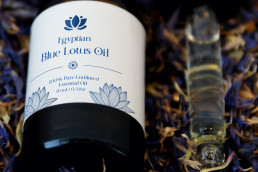
This recipe produces a luxurious blend of blue lotus oil bath salts designed for evening soaks: a slow, parasympathetic wind-down in roughly 400 grams of mineral-rich salts scented with the honeyed floral character of Nymphaea caerulea. It is suited to adults who want a genuinely calming ritual, not a fragrance-bomb of synthetic perfume, and who are happy to spend twenty minutes preparing a batch that will last a fortnight or more.
Table of Contents
- What You'll Need
- Equipment
- Ingredients (makes approximately 400 grams, enough for 8 to 10 baths)
- Why This Formulation Works
- Step-by-Step Instructions
- How to Use Blue Lotus Bath Salts
- Storage and Shelf Life
- Variations
- Sensitive Skin Version
- Extra Calming Evening Blend
- Richer Winter Texture
- Mineral-Intensive Recovery Soak
- Common Mistakes to Avoid
- Frequently Asked Questions
- Where to Go From Here
- Formulate With Genuine Blue Lotus
It is written and clinically reviewed by Antonio Breshears, ND, CCA, a Bastyr-trained naturopathic doctor and certified clinical aromatherapist. If you are new to formulating with this oil, The Complete Guide to Blue Lotus Oil covers the botanical, chemical and safety context that informs every choice in this recipe.
What You’ll Need
Equipment
- A clean glass or ceramic mixing bowl (avoid reactive metals)
- A wooden or silicone spoon for stirring
- A 500 ml amber or cobalt glass jar with tight-fitting lid for storage
- A 0.1 gram kitchen scale (recommended for accuracy)
- A small glass measuring jug for the carrier oil
- A pipette or dropper for the blue lotus oil
Ingredients (makes approximately 400 grams, enough for 8 to 10 baths)
- 250 grams coarse Epsom salts (magnesium sulphate)
- 100 grams fine Himalayan pink salt or Dead Sea salt
- 50 grams bicarbonate of soda (baking soda)
- 10 ml fractionated coconut oil or sweet almond oil (carrier)
- 16 drops pure blue lotus oil (Nymphaea caerulea absolute)
- Optional: 1 tablespoon dried blue lotus petals or rose petals for visual effect
- Optional: 1 teaspoon dried lavender buds
Why This Formulation Works
The salt base is deliberately layered. Epsom salts deliver transdermal magnesium, which the skin absorbs modestly during a twenty-minute soak and which most adults are clinically insufficient in; this is the workhorse of any therapeutic bath. Himalayan or Dead Sea salt adds trace minerals and a gentler, more skin-conditioning feel; used alone, Epsom can leave the skin feeling stripped. The bicarbonate of soda softens the water meaningfully, buffers pH, and is the quiet hero that makes the bath feel silky rather than scratchy on the skin.
The essential oil component sits at roughly 2 percent of the carrier oil by volume, which is the sensible ceiling for a full-body bath exposure where the oil disperses through 150 to 200 litres of water. Blue lotus absolute is viscous and expensive, so the carrier oil serves two purposes: it pre-dilutes the absolute so it actually disperses rather than pooling on the water surface, and it deposits a thin emollient film on the skin as you step out. Fractionated coconut oil is odourless and will not compete with the blue lotus; sweet almond is slightly richer and suits drier skin. I avoid olive oil here because its own scent clashes with the honeyed-floral top notes.
Step-by-Step Instructions
- Prepare your workspace. Clean the mixing bowl and storage jar with hot water and let them dry fully. Any residual moisture will cause the salts to clump over storage.
- Combine the dry ingredients. Weigh 250 grams of Epsom salts, 100 grams of Himalayan or Dead Sea salt, and 50 grams of bicarbonate of soda directly into the mixing bowl. Stir gently with the wooden spoon for about thirty seconds until evenly distributed.
- Prepare the scented oil. In the small glass measuring jug, pour 10 ml of fractionated coconut oil or sweet almond oil. Add 16 drops of pure blue lotus oil, drop by drop, and swirl gently to combine. This gives you roughly a 2 percent dilution in the carrier, which then disperses further in the bathwater itself.
- Incorporate the oil into the salts. Drizzle the scented oil over the dry mixture slowly, stirring continuously as you pour. Work for at least two minutes to break up any damp patches; the goal is lightly coated salt crystals, not wet clumps.
- Add optional botanicals. If using dried blue lotus petals, rose petals or lavender buds, fold them in last so they remain intact and visible.
- Transfer to storage. Spoon the finished salts into the amber or cobalt glass jar. Press down gently to remove air pockets and seal the lid firmly.
- Rest before first use. Let the jar sit in a cool, dark cupboard for at least 24 hours. This allows the oil to bind evenly through the salts and the scent to mature. The difference between salts used straight away and salts rested for a day is genuinely noticeable.
How to Use Blue Lotus Bath Salts
Run a warm (not hot) bath, ideally between 37 and 39 degrees Celsius. Water that is too hot vapourises the volatile aromatic compounds too quickly and leaves you with a thin, ghostly scent rather than the enveloping one you want. Add 40 to 50 grams of salts (roughly a generous quarter-cup) under the running tap so the flow agitates and disperses them.
Soak for fifteen to twenty-five minutes. This is the window where transdermal magnesium absorption is meaningful and where the olfactory-limbic effect of the blue lotus has time to settle the nervous system into parasympathetic dominance. Breathe slowly through the nose; the scent is delivered most effectively via steam rising from the water surface.
Use once or twice a week as an evening ritual, ideally an hour or two before bed. Pat the skin dry rather than rubbing; the thin oil film left behind moisturises on its own.
Storage and Shelf Life
Stored in a tightly sealed amber or cobalt glass jar, away from direct sunlight and heat, these bath salts will keep for 6 to 9 months with minimal loss of scent or efficacy. The Epsom salts themselves are stable for years, but the blue lotus absolute is the limiting factor: its top notes soften noticeably after six months, and by a year the character has shifted from bright floral to a deeper, more resinous register that some people actually prefer.
Keep the jar in a cool cupboard rather than the bathroom itself. Bathroom humidity is the single fastest way to ruin a batch, causing the salts to fuse into a solid brick and diluting the scent.
Variations
Sensitive Skin Version
Reduce the blue lotus oil to 10 drops (approximately 1.2 percent) and replace the Himalayan salt with 100 grams of fine Dead Sea salt, which is gentler. Use sweet almond oil as the carrier. Patch test the first bath by running a small amount over the inner forearm before full-body immersion.
Extra Calming Evening Blend
Keep the 16 drops of blue lotus oil and add 8 drops of true lavender (Lavandula angustifolia) and 4 drops of Roman chamomile to the carrier oil before combining. This pushes the blend firmly into sleep-preparation territory and is my preferred version on high-stress nights.
Richer Winter Texture
Replace the 10 ml of carrier oil with 15 ml of sweet almond oil plus 5 ml of jojoba. Add 1 tablespoon of finely ground colloidal oatmeal to the dry mixture. The result is a bath that feels cloud-soft on the skin and suits cold-weather dryness. Scent with the full 16 drops of blue lotus.
Mineral-Intensive Recovery Soak
Increase the Epsom salts to 350 grams and reduce the Himalayan salt to 50 grams, keeping the bicarbonate at 50 grams. This suits post-exercise or post-travel soaks where muscle recovery is the priority. Keep blue lotus at 16 drops and add 6 drops of frankincense to the carrier.
Common Mistakes to Avoid
Adding the oil directly to the bathwater. Blue lotus absolute is viscous and will float in unpleasant droplets on the water surface if added without a carrier. Always pre-dilute into the oil, then into the salts.
Using hot water. Water above 40 degrees Celsius flashes off the aromatic compounds too fast and can also raise heart rate, which works against the nervous system settling you are trying to achieve.
Skipping the rest period. Salts used immediately after mixing have uneven oil distribution and a sharper, less integrated scent. Twenty-four hours in the jar genuinely matters.
Storing in the bathroom. Humidity turns bath salts into a rock. A cool, dry cupboard elsewhere in the house is far better.
Using too much per bath. More salt does not mean more benefit. Forty to fifty grams is calibrated; doubling it wastes product and can leave the skin feeling tight.
Frequently Asked Questions
Can I use blue lotus bath salts during pregnancy?
No. Blue lotus oil is avoided during pregnancy and breastfeeding because the alkaloid profile is not well-characterised for safety in these stages. A plain Epsom and bicarbonate bath without essential oils is a safe alternative.
How much blue lotus oil do I actually need per bath?
With this recipe, a 40 to 50 gram scoop contains roughly 1.5 to 2 drops of blue lotus oil dispersed through the salt. That is deliberately modest; the olfactory effect in a steamy bathroom is much more prominent than the drop count suggests.
Can I use this as a foot soak instead?
Yes, and it is an efficient use of the oil. Use 20 to 25 grams in a basin of warm water and soak for fifteen minutes. The smaller volume means the scent is actually more concentrated.
Will it stain my bath?
No. Pure blue lotus oil is amber-gold in colour and the dilution is far too low to mark porcelain, acrylic or enamel. Rinse the bath briefly after use to wash away any residual oil film.
What if I have very dry or eczema-prone skin?
Follow the Sensitive Skin Version above, and consider reducing the Epsom salts slightly in favour of more Dead Sea salt, which tends to be kinder to compromised skin barriers. If you have active eczema flares, avoid essential oils entirely until the skin settles.
Can I substitute a different carrier oil?
Yes. Jojoba, sweet almond, fractionated coconut and apricot kernel all work. Avoid strongly scented oils like olive or hemp seed, which will muddy the blue lotus character.
How do I know if my blue lotus oil is real?
Genuine Nymphaea caerulea absolute has a deep honeyed-floral scent with a faintly smoky, balsamic base. It is viscous at room temperature and amber-gold in colour. Cheap substitutes are typically thin, brightly perfumed and synthetic-smelling. The complete guide linked above covers sourcing and authenticity in detail.
Can I double or triple the recipe?
Yes, but keep the proportions identical and mix in batches of no more than 500 grams of dry ingredients at a time. Larger batches are harder to stir evenly, which leads to uneven oil distribution.
Is it safe to use every night?
Physiologically, yes, for most adults. Practically, once or twice a week is usually enough; the ritual value of an occasional dedicated soak tends to exceed nightly habituation. If you are using it nightly for sleep support and feel you are needing more to get the same effect, step back for a week.
Can I add the dried blue lotus petals directly to the bath?
You can, but they will need fishing out of the drain afterwards. A reusable muslin bath bag is the elegant solution: scoop the salts and petals into the bag, tie it off, and hang it under the running tap.
Where to Go From Here
This recipe is one of several formulations I recommend for evening and nervous-system support. If you want to understand the full context of why blue lotus works the way it does, including the alkaloid and flavonoid profile, the olfactory-limbic mechanism, and the realistic expectations around its effects, The Complete Guide to Blue Lotus Oil is the definitive reference on this site. From there you can move into specific formulations for sleep, ritual and skincare as suits your practice.

Antonio Breshears
Antonio Breshears is a renowned expert in holistic medicine and beauty, with over 25 years of research experience dedicated to uncovering the secrets of nature's most powerful remedies. Holding a degree in Naturopathic Medicine, Antonio's passion for healing and well-being has driven him to explore the intricate connections between mind, body, and spirit.
Over the years, Antonio has become a respected authority in the field, helping countless individuals discover the transformative power of plant-based therapies, including essential oils, herbs, and natural supplements. He has authored numerous articles and publications, sharing his wealth of knowledge with a global audience seeking to improve their overall health and well-being.
Antonio's expertise extends to the realm of beauty, where he has developed innovative, all-natural skincare solutions that harness the potency of botanical ingredients. His formulations embody his deep understanding of the healing properties found in nature, providing holistic alternatives for those seeking a more balanced approach to self-care.
With his extensive background and dedication to the field, Antonio Breshears is a trusted voice and guiding light in the world of holistic medicine and beauty. Through his work at Pure Blue Lotus Oil, Antonio continues to inspire and educate, empowering others to unlock the true potential of nature's gifts for a healthier, more radiant life.