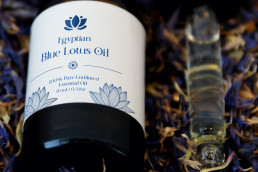
This recipe produces a 30 ml bottle of softening, quietly luxurious beard oil built around Egyptian blue lotus absolute at a skin-safe 2 percent dilution. It is designed for men who want their beard to behave (softer, less itchy, less wiry) while also wearing a scent that is warm, honeyed, and distinctly not another cedarwood-and-sandalwood clone. The finished oil conditions the hair, calms the skin underneath, and leaves a close, intimate trail of floral-balsamic warmth that sits cleanly under other fragrance or works beautifully on its own.
Table of Contents
- What You'll Need
- Equipment
- Ingredients
- Why This Formulation Works
- Step-by-Step Instructions
- How to Use Beard Oil
- Storage and Shelf Life
- Variations
- Sensitive Skin Version (1 percent blue lotus)
- Deeper, Woodier Version
- Richer, Heavier Texture (for long or very coarse beards)
- Lighter, Quick-Absorbing Version (for short stubble)
- Common Mistakes to Avoid
- Frequently Asked Questions
- Where to Go From Here
- Source the Oil, Make the Blend
It is written and clinically reviewed by Antonio Breshears, ND, CCA, a Bastyr-trained naturopathic doctor and certified clinical aromatherapist. For broader context on the botanical itself, including how it is extracted, how it behaves on skin, and why it pairs so well with grooming formulations, see The Complete Guide to Blue Lotus Oil, which sits as the master reference for this series.
What You’ll Need
Gather everything before you begin. Beard oil is a simple formulation, but the quality of the finished product depends almost entirely on the quality of the inputs and on measuring carefully.
Equipment
- One 30 ml amber or cobalt glass dropper bottle (dark glass is essential; clear bottles expose the oils to light and shorten shelf life)
- A small glass beaker or measuring cup with millilitre markings, or a 0.1 gram digital scale for weight-based precision
- A glass stirring rod or a clean stainless steel teaspoon
- A small funnel (optional but sensible)
- A label and a pen, because unlabelled bottles become mystery bottles within a week
Ingredients
- 15 ml jojoba oil (roughly half the base)
- 8 ml sweet almond oil
- 5 ml argan oil
- 1.5 ml castor oil
- 12 drops blue lotus absolute (roughly 2 percent of total volume)
- Optional: 2 drops cedarwood atlas or sandalwood to deepen the base (see Variations)
Total carrier volume is 29.5 ml; the blue lotus absolute brings it to approximately 30 ml. If you are weighing rather than measuring by volume, treat 1 ml as roughly 0.92 grams for these oils and adjust accordingly.
Why This Formulation Works
The carrier blend is not accidental. Jojoba is the backbone because it is not technically an oil but a liquid wax ester, structurally similar to human sebum, which means it absorbs without sitting greasy on the skin and helps regulate the natural oil production of the follicles beneath the beard. Sweet almond oil adds slip and softness and makes the oil glide through coarse facial hair without dragging. Argan contributes vitamin E and a lightweight conditioning feel that smooths the hair cuticle and reduces that wiry, flyaway texture. Castor oil is the finishing touch at a deliberately small percentage; it is thick and sticky on its own, but at roughly 5 percent of the blend it adds shine, a hint of body, and the humectant quality that keeps the beard from drying out through the day.
Blue lotus absolute at 2 percent is the upper end of comfortable daily facial use. The absolute is a viscous, honeyed, slightly smoky floral that layers beautifully with the nutty-sweet profile of the carriers. On a practical level, it also contributes apigenin and other flavonoids that are well tolerated by skin, and the olfactory-limbic effect is genuinely pleasant: you catch the scent softly when you turn your head or stroke the beard, which is exactly the register beard oil should operate in. This is not a cologne; it is a scent-bearing grooming product, and 2 percent is the right pitch.
Step-by-Step Instructions
- Sanitise your equipment. Rinse the bottle, dropper, beaker, and stirring rod with very hot water, then let them air-dry completely. Any residual moisture will shorten shelf life.
- Measure the jojoba. Pour 15 ml of jojoba into your beaker. This goes first because it is the largest single ingredient and gives you a visual anchor.
- Add the sweet almond oil. Measure in 8 ml and stir gently to combine.
- Add the argan. Measure in 5 ml. You should see the blend gain a slight golden warmth.
- Add the castor oil. Measure 1.5 ml carefully; castor is thick and clings to the measuring tool, so pour slowly and use the stirring rod to encourage it into the blend.
- Stir thoroughly. Stir for a full 20 to 30 seconds until the castor is fully dispersed. The blend should look uniform with no streaks of thicker oil.
- Add the blue lotus absolute. Count in 12 drops slowly. Blue lotus absolute is viscous; hold the dropper vertically and be patient. If you are weighing, aim for approximately 0.55 to 0.6 grams.
- Stir again for 30 seconds. The absolute needs to be properly dispersed so the scent is even from the first application to the last.
- Decant into the dropper bottle. Use the funnel if needed. Leave a small headspace at the top.
- Cap, label, and date the bottle. Include the date of blending and the words “2 percent blue lotus beard oil” so you know what you are reaching for.
- Rest the blend. Let it sit in a cool, dark place for 24 to 48 hours before first use. The scent rounds out and integrates noticeably during this window.
How to Use Beard Oil
Apply to a clean, towel-dried beard. Damp hair accepts oil more evenly than bone-dry hair, so the window just after showering is ideal. Place 3 to 6 drops into the palm, rub your hands together briefly to warm the oil, then work it through the beard from the skin outward, making sure to reach the roots and the skin beneath. Comb through with a wooden or horn beard comb to distribute evenly.
For short beards (under 2 cm), 3 drops is usually enough. For medium beards, 4 to 5 drops. For long, full beards, 6 drops or occasionally more. Daily use is fine. Some men prefer morning application for the scent and softness; others prefer evening so the oil can do its conditioning work overnight. Both work. Twice daily is acceptable if your skin tolerates it and your beard is particularly dry or coarse.
Storage and Shelf Life
Store the bottle upright in a cool, dark cupboard, away from direct sunlight, heat, and humidity. A bathroom shelf above a radiator is the worst possible location; a bedroom drawer is close to ideal. Under these conditions, this blend holds well for 9 to 12 months. Jojoba is extraordinarily stable (it resists rancidity better than almost any other cosmetic oil) and it protects the less stable almond and argan from oxidising too quickly.
If the oil develops a sharp, crayon-like smell, or if the colour shifts noticeably darker, it has oxidised and should be discarded. In practice, a 30 ml bottle used daily will be finished in six to eight weeks, so rancidity is rarely an issue if you actually use the product rather than collecting bottles.
Variations
Sensitive Skin Version (1 percent blue lotus)
If your skin is reactive or you are new to blue lotus on the face, drop the absolute to 6 drops (approximately 1 percent) and keep the carrier blend identical. This is the sensible starting point for a first batch and still delivers a clear, honeyed scent.
Deeper, Woodier Version
Keep the 12 drops of blue lotus, then add 3 drops of cedarwood atlas and 2 drops of sandalwood. This pushes the scent into more traditional men’s grooming territory while keeping the blue lotus as the signature top and heart. Total essential oil load remains under 3 percent, which is still safe for daily facial use.
Richer, Heavier Texture (for long or very coarse beards)
Reduce jojoba to 12 ml, reduce sweet almond to 6 ml, and add 4 ml of avocado oil plus 2 ml of extra castor. The finished oil is noticeably thicker and more occlusive, which suits beards over 10 cm or coarse, wiry hair that refuses to lie flat.
Lighter, Quick-Absorbing Version (for short stubble)
Increase jojoba to 20 ml, reduce sweet almond to 6 ml, cut the argan to 3 ml, and drop castor to 0.5 ml. This version feels almost dry-touch within a minute of application and suits men with stubble or short beards who dislike any residual slickness.
Common Mistakes to Avoid
The first and most frequent error is using too much product. Beard oil is designed to condition, not to saturate. If your beard looks wet or your skin feels greasy an hour after application, you used twice what you needed. Start with 3 drops and add if necessary rather than starting high.
The second mistake is skipping the skin. Men focus on the hair and forget that the skin beneath is where the dryness, itching, and flaking actually originate. Work the oil in at the root, not just along the length.
The third is storing the bottle in the bathroom. Steam, heat, and fluctuating humidity accelerate oxidation and degrade the scent profile within weeks. Keep it in the bedroom or a cool cupboard and bring it into the bathroom only for use.
The fourth is over-dosing the blue lotus. Absolutes are rich and the temptation is to add more for a stronger scent. Above 2.5 to 3 percent on facial skin, the risk of sensitisation climbs and the scent actually becomes less pleasant (heavier, almost cloying) rather than more refined.
The fifth mistake is not patch testing. Apply a single drop of the finished blend to the inside of your forearm, leave for 24 hours, and check for redness or irritation before applying to the face. This takes a day and saves a week of regret.
Frequently Asked Questions
Can I use this beard oil on my moustache too?
Yes. The formulation is identical to what you would use on a moustache; simply take a single drop, warm it between finger and thumb, and work it through. Many men find the blue lotus scent is more noticeable on the moustache because of its proximity to the nose, which some enjoy and others find a little close; adjust to preference.
Is 2 percent blue lotus safe for daily facial use?
For most skin types, yes. Two percent is the standard upper limit for leave-on facial products in aromatherapy practice, and blue lotus absolute is generally well tolerated at this concentration. If you have reactive or rosacea-prone skin, start at 1 percent (6 drops in 30 ml) and assess tolerance over two weeks before increasing.
Why jojoba as the main carrier?
Jojoba is structurally a liquid wax ester rather than a triglyceride oil, and it closely resembles human sebum. This means it absorbs cleanly, does not clog follicles, and actively signals the skin to regulate its own oil production. It is also extraordinarily shelf-stable, which extends the life of the finished blend. For a beard oil, there is genuinely no better primary carrier.
Can I substitute fractionated coconut oil for one of the carriers?
You can, although I would not recommend replacing more than 5 to 8 ml of the blend with it. Fractionated coconut oil is light and inexpensive but offers little in the way of conditioning for coarse facial hair. If budget is a factor, substitute it for part of the sweet almond rather than the jojoba.
Will this stain my pillowcase?
A properly used beard oil (3 to 6 drops, fully worked in) should not leave visible staining on cotton within a normal timeframe. Over-application can leave light oily marks, but these wash out with standard laundry detergent. If you apply in the evening, give the oil 10 to 15 minutes to absorb before bed.
Does blue lotus beard oil actually promote beard growth?
There is no good evidence that blue lotus itself promotes hair growth. What a well-formulated beard oil does is improve the appearance of the beard you have: softer hair, calmer skin, less breakage, less patchy-looking texture. If you are specifically seeking growth stimulation, that is a different conversation involving different ingredients (rosemary, peppermint, and nutritional factors) and is outside the scope of this recipe.
How long until I notice a difference?
Softness and reduced itch are usually apparent within the first three to four days of consistent use. The fuller benefit, improved texture, less flyaway hair, calmer skin underneath, tends to establish over two to three weeks.
Can I make a larger batch?
Yes, but I would not recommend blending more than 90 ml (three bottles’ worth) at a time. The almond and argan oils have a finite shelf life, and a blend you will finish within three to four months keeps better than a larger volume that sits for longer. If you make 90 ml, keep two bottles sealed and cool, and only open one at a time.
Is this safe if my partner is pregnant?
Topical use by one partner does not pose the same concerns as direct use by a pregnant person. However, close skin contact transfers trace amounts of the oil, and the scent will be noticeable. As a general precaution, some men switch to an unscented beard oil (just the carrier blend without the blue lotus) during a partner’s pregnancy. This is a conservative choice rather than a strict requirement.
Can I add a preservative?
Anhydrous oil blends (no water content) do not require preservatives in the conventional sense. They can oxidise, which a preservative does not prevent, but they do not support the bacterial or fungal growth that preservatives are designed to control. A drop or two of vitamin E oil per 30 ml can modestly extend shelf life by slowing oxidation, which is worth adding if you plan to keep the bottle for more than six months.
Where to Go From Here
This beard oil is one of the most practical everyday uses of blue lotus absolute, and it demonstrates how a single high-quality aromatic ingredient can transform a simple carrier blend into something distinctive. Once you are comfortable with this formulation, the same 2 percent principle transfers cleanly to facial serums, pulse-point rollerballs, and beard balms built on beeswax and shea. For the deeper background on the botanical, its extraction, its chemistry, and its broader applications, The Complete Guide to Blue Lotus Oil is the place to continue reading.

Antonio Breshears
Antonio Breshears is a renowned expert in holistic medicine and beauty, with over 25 years of research experience dedicated to uncovering the secrets of nature's most powerful remedies. Holding a degree in Naturopathic Medicine, Antonio's passion for healing and well-being has driven him to explore the intricate connections between mind, body, and spirit.
Over the years, Antonio has become a respected authority in the field, helping countless individuals discover the transformative power of plant-based therapies, including essential oils, herbs, and natural supplements. He has authored numerous articles and publications, sharing his wealth of knowledge with a global audience seeking to improve their overall health and well-being.
Antonio's expertise extends to the realm of beauty, where he has developed innovative, all-natural skincare solutions that harness the potency of botanical ingredients. His formulations embody his deep understanding of the healing properties found in nature, providing holistic alternatives for those seeking a more balanced approach to self-care.
With his extensive background and dedication to the field, Antonio Breshears is a trusted voice and guiding light in the world of holistic medicine and beauty. Through his work at Pure Blue Lotus Oil, Antonio continues to inspire and educate, empowering others to unlock the true potential of nature's gifts for a healthier, more radiant life.