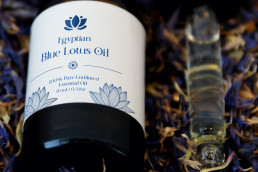
If you live in or near Birmingham and you are trying to work out where to buy blue lotus oil locally, this guide walks you through the realistic options: the Bullring and Grand Central apothecaries, the Jewellery Quarter perfumers, the independent herbalists in Digbeth and Moseley, the wellness shops around Harborne and Kings Heath, and the honest trade-offs of buying in person versus sourcing a verified bottle online. Searching for blue lotus oil in Birmingham will surface a handful of shops with a bottle on the shelf, but not all of them carry genuine Nymphaea caerulea, and the difference matters.
Table of Contents
- What You Are Actually Looking For
- Buying Blue Lotus Oil in Birmingham: The Realistic Options
- City Centre: Bullring, Grand Central, and New Street
- The Jewellery Quarter
- Digbeth, Moseley, and Kings Heath: The Independent Herbalists
- Balsall Heath, Sparkhill, and Alum Rock: The Souks
- Why Most Serious Buyers End Up Ordering Online
- How to Judge Quality at the Point of Purchase
- What You Should Expect to Pay
- Using Blue Lotus Oil Once You Have It Home
- When Blue Lotus Oil Is Not the Right Choice
- Frequently Asked Questions
- Where to Go From Here
- Birmingham Delivery, Verified Quality
It is written and clinically reviewed by Antonio Breshears, ND, CCA, a Bastyr-trained naturopathic doctor and certified clinical aromatherapist. If you want the full picture of what blue lotus oil is, how it behaves, and how to judge a bottle on chemistry rather than packaging, start with The Complete Guide to Blue Lotus Oil, which underpins this buyer’s guide.
What You Are Actually Looking For
Before deciding where in Birmingham to buy, it is worth getting precise about what “blue lotus oil” even means, because the shelf label rarely tells you. The term is used loosely to describe three very different products.
The first is a true blue lotus absolute, produced by solvent extraction from the flowers of Nymphaea caerulea. This is the dominant form on the market, and what most serious aromatherapists and perfumers mean when they talk about blue lotus. It is thick, deeply coloured, and expensive because roughly 3,000 to 5,000 flowers are needed to produce a single gram of absolute. The second is a genuine steam-distilled essential oil, which is rare, lighter in texture, and often significantly more costly per millilitre. The third, and by far the most common thing you will see sitting in a Birmingham high street shop at a suspiciously affordable price, is a pre-diluted blend: a small amount of blue lotus absolute dispersed into jojoba or fractionated coconut oil, sometimes at 5 to 10 percent, sometimes at a fraction of that.
None of these are inherently bad. A diluted blend can be perfectly pleasant and is safer for direct skin application. But you should know which one you are paying for, and at what concentration, before you hand over money. This is the first question to ask any Birmingham retailer: is this an absolute, a distilled oil, or a pre-diluted blend, and what percentage?
Buying Blue Lotus Oil in Birmingham: The Realistic Options
City Centre: Bullring, Grand Central, and New Street
The city centre is the first place most people look, and it is a reasonable starting point if you want to sniff something in person. The larger wellness chains around the Bullring and Grand Central occasionally stock blue lotus, typically as a pre-diluted roller blend marketed for sleep or stress. These are generally safe products, but the blue lotus content is often low, and the retail staff are rarely equipped to tell you the country of origin, extraction method, or batch chemistry. If you walk in and ask for a GC-MS report and the response is a blank look, you have your answer about the level of sourcing rigour behind the product.
The House of Fraser and the higher-end beauty counters sometimes carry niche perfumery that includes blue lotus as a note, but this is perfume rather than aromatherapy-grade oil, and the two are not interchangeable. Perfume is designed to smell beautiful on skin; aromatherapy oil is designed to deliver actual plant chemistry in a form you can diffuse, dilute, and apply therapeutically. If your goal is the latter, the beauty counter is the wrong aisle.
The Jewellery Quarter
The Jewellery Quarter has, in recent years, become home to a cluster of small perfumers, natural apothecaries, and artisan beauty makers. Several of these stock botanical absolutes for fragrance blending, and a few carry blue lotus. The advantage here is that you are usually dealing directly with a maker who understands materials. The disadvantage is that stock is inconsistent: blue lotus is expensive to hold, so you may find a 5 ml bottle one visit and nothing the next.
If you go this route, ask two questions. First, is this a perfumery-grade absolute (intended for scent formulation) or an aromatherapy-grade oil (intended for therapeutic use)? The distinction affects how it has been handled, filtered, and stored. Second, does the maker have any documentation: a certificate of analysis, a supplier name, or at the very least a clear country of origin? Egyptian material is the gold standard for Nymphaea caerulea. Anything described only as “blue lotus” with no origin should prompt a follow-up question.
Digbeth, Moseley, and Kings Heath: The Independent Herbalists
Birmingham’s independent herbalist and health food scene is strongest in Digbeth, Moseley, and along the Kings Heath high street, with further outposts in Harborne and Bournville. These shops tend to have better-informed staff than the chains and are more likely to stock niche botanicals. You will often find small-batch aromatherapy brands here, and occasionally a proper blue lotus absolute at a realistic price.
The trade-off is availability. Independent shops rotate stock based on what moves, and blue lotus is not a fast-moving item in the way lavender or peppermint are. You may need to phone ahead or order in. When you do find it, examine the bottle: it should be dark glass (amber or cobalt), small in volume (typically 1 to 5 ml for absolute, occasionally 10 ml for diluted blends), and clearly labelled with the botanical name Nymphaea caerulea. If it says only “blue lotus” or “lotus oil” with no Latin binomial, be cautious, as Nelumbo nucifera (sacred lotus, a different plant) is sometimes sold under the same common name.
Balsall Heath, Sparkhill, and Alum Rock: The Souks
Birmingham’s South Asian and Middle Eastern shopping districts are worth mentioning because several shops along the Coventry Road, Stratford Road, and Alum Rock Road stock attars, oudh, and concentrated perfume oils. You will occasionally see “blue lotus” among them. These can be genuinely lovely products, particularly the attars blended by experienced perfumers, but they are almost always perfumery blends rather than pure single-species oils. A true single-note blue lotus attar does exist, but it is rare and expensive. If the “blue lotus attar” is 10 ml for twelve pounds, it is a blend, and the blue lotus content is likely minimal.
Why Most Serious Buyers End Up Ordering Online
After walking the city, most people looking for genuine blue lotus oil in Birmingham come to the same realisation: the best bottles are ordered online from specialist suppliers rather than bought in person. There are three reasons for this.
The first is chemistry transparency. A specialist online supplier can publish, or supply on request, the GC-MS analysis for the exact batch you are buying. This document shows you the actual constituent profile of the oil: the nuciferine and aporphine alkaloid content, the flavonoid markers, and any contaminants or adulterants. No Birmingham high street shop I am aware of provides batch-level GC-MS at point of sale. If you care about what you are actually putting on your skin or diffusing into your home, this documentation is the single most important signal of quality.
The second is provenance. Serious online suppliers name their source: Egyptian-grown, artisan-distilled, and traceable to a specific grower or cooperative. Shelf products in a general wellness shop rarely carry that information, because the retailer is several steps removed from the producer.
The third is freshness. Blue lotus absolute is a low-volume product with a realistic shelf life of three to four years when stored correctly, which means a bottle that has been sitting on a shop shelf in a brightly lit Bullring unit for eighteen months is already well into its usable life. A direct-from-supplier bottle, stored in temperature-controlled conditions until despatch, arrives with most of its shelf life intact.
How to Judge Quality at the Point of Purchase
Whether you are buying in person in Moseley or ordering online to a Birmingham postcode, the checks are the same. Treat this as a short quality checklist rather than a formality.
- Botanical name. The label must say Nymphaea caerulea. If it does not, ask. “Blue lotus” alone is ambiguous.
- Extraction method. Absolute (solvent-extracted), steam-distilled essential oil, or CO2 extract. Each has a slightly different aroma and slightly different chemistry. None of them is cheap.
- Dilution status. Is this 100 percent oil, or is it pre-diluted in a carrier? If diluted, at what percentage?
- Origin. Egyptian is the reference standard for Nymphaea caerulea. Thai and Sri Lankan material exists but is less consistent.
- Packaging. Dark glass, small volume, tight seal. Clear glass or plastic is a red flag for an oil this delicate.
- Price sanity. A 5 ml bottle of genuine, pure Egyptian blue lotus absolute priced at ten pounds is not genuine. The raw material cost alone exceeds that.
- Documentation. Ask for a GC-MS report or certificate of analysis. A good supplier will produce one without hesitation.
What You Should Expect to Pay
Price expectations help filter the market quickly. As a rough guide, genuine Egyptian blue lotus absolute sits in the range of roughly 40 to 80 pounds for a well-packaged 5 ml bottle from a reputable supplier, more for larger volumes or premium grades. A pre-diluted roller blend at 5 to 10 percent in jojoba might reasonably sell for 20 to 35 pounds for 10 ml. A genuine steam-distilled blue lotus essential oil, being much rarer, can run significantly higher per millilitre than the absolute.
Anything dramatically below these figures is almost certainly either heavily diluted without disclosure, synthetic fragrance labelled as natural, or a different botanical sold under a similar common name. Blue lotus is one of the genuinely expensive botanical materials in aromatherapy, and the price reflects the raw material requirement.
Using Blue Lotus Oil Once You Have It Home
A realistic Birmingham buyer’s guide should also cover what to do with the bottle once you have sourced it. Blue lotus oil, whether absolute or distilled, is not an oil you use generously. It is a small-dose, high-impact material. For diffusion, two to four drops in a standard 100 ml ultrasonic diffuser is plenty, often more than enough to scent a whole room. For topical use, standard dilution guidance applies: 1 to 2 percent in a carrier for facial applications, 2 to 3 percent for general body use, and up to 3 percent for targeted areas such as the base of the skull or the inner wrists during an evening ritual.
Store the bottle upright, tightly capped, in a cool dark cupboard. Kitchen shelves, bathroom cabinets, and sunny window ledges are all poor storage locations. A drawer in a bedroom or a dedicated apothecary box works well. Treated this way, a 5 ml bottle of absolute will comfortably last a year or more of regular use for one person.
When Blue Lotus Oil Is Not the Right Choice
There are situations where I would not recommend blue lotus oil regardless of how beautiful the bottle. It should be avoided in pregnancy and while breastfeeding, as the alkaloid profile has not been adequately studied in these populations and the precautionary principle applies. Caution is also warranted if you take dopaminergic medications (for Parkinson’s disease, restless leg syndrome, or hyperprolactinaemia), MAO inhibitors, or heavy sedatives, because the aporphine and nuciferine alkaloids have modest activity at dopamine and serotonin receptors and the theoretical interaction risk, while not dramatic, is real.
Blue lotus is also not a substitute for clinical care. It is a gentle mood-supportive and sensory botanical with modestly attested effects on relaxation and parasympathetic tone. It is not a treatment for clinical depression, severe anxiety disorders, or insomnia with underlying medical causes. If you are in Birmingham and struggling with any of those, a visit to your GP or a qualified naturopathic practitioner is a better first step than a bottle of anything.
Frequently Asked Questions
Can I buy blue lotus oil in Birmingham city centre today?
Possibly, but realistically you will find either pre-diluted blends in wellness chains or occasional stock in Jewellery Quarter perfumers and independent herbalists in Moseley, Kings Heath, or Digbeth. For a verified pure bottle with chemistry documentation, ordering from a specialist online supplier to a Birmingham address is usually the more reliable option.
Is blue lotus oil legal in the UK?
Yes. Blue lotus (Nymphaea caerulea) is legal to buy, sell, and use in the United Kingdom, including Birmingham. Restrictions exist in a small number of jurisdictions internationally, notably Russia, Poland, Latvia, and the US state of Louisiana, but not in the UK.
How can I tell if the blue lotus oil I bought is real?
The label should state Nymphaea caerulea, the extraction method, the country of origin, and the concentration if diluted. A reputable supplier will provide a GC-MS batch report on request. The aroma should be layered: a cool floral-aquatic top, a deep honeyed-floral heart, and a balsamic, slightly smoky base. A flat, one-note, overly sweet scent suggests synthetic fragrance.
Why is blue lotus oil so expensive?
Because roughly 3,000 to 5,000 flowers are required to produce a single gram of absolute. The harvesting is manual, the flowers are fragile, and the extraction process is labour-intensive. Genuine material is, and should be, expensive. Suspiciously cheap blue lotus is almost always diluted, blended, or synthetic.
Do Birmingham health food shops stock blue lotus?
Some do, particularly the independent shops in Moseley, Kings Heath, Harborne, and Digbeth. Availability is inconsistent, and staff knowledge varies widely. Phoning ahead is sensible.
Can I use blue lotus oil directly on my skin?
No. Like any undiluted absolute or essential oil, it should be diluted in a carrier oil such as jojoba, fractionated coconut, or sweet almond before skin application. Standard guidance is 1 to 2 percent for the face and 2 to 3 percent for the body.
Is the “blue lotus” sold in Bullring gift shops the same as aromatherapy-grade blue lotus?
Usually not. Gift shop and novelty products are frequently fragrance oils, synthetic blends, or heavily diluted blends with minimal active content. They can smell pleasant but they are not therapeutic-grade material and should not be used interchangeably with an aromatherapy-grade oil.
What is the best way to use blue lotus oil for sleep and relaxation?
Two to three drops in a diffuser thirty to sixty minutes before bed, or a 2 percent dilution in jojoba applied to the inner wrists and the base of the skull as part of an evening wind-down ritual. Expect a gentle, cumulative effect rather than a dramatic sedative one; blue lotus is not a strong sedative.
How should I store blue lotus oil in a Birmingham flat?
Upright, tightly capped, in a dark cupboard away from heat sources and direct sunlight. Avoid bathrooms (humidity) and kitchens (temperature swings). A bedroom drawer or a dedicated apothecary box is ideal. Stored properly, an absolute keeps its character for three to four years.
Can I return blue lotus oil if I am not happy with it?
Return policies vary by retailer. Most reputable online suppliers accept returns on unopened bottles within a reasonable window. Opened bottles of a sensitive natural product are generally non-returnable for hygiene and stability reasons. Check the specific policy before buying.
Where to Go From Here
If you are a Birmingham reader who has made it this far, you are already ahead of most casual buyers. The practical path forward is straightforward: decide whether you want a pure absolute or a ready-to-use diluted blend, set a realistic budget that reflects the raw material cost, and prioritise suppliers who publish batch chemistry and name their provenance. For the wider context of how blue lotus oil works, how to blend it, and what the evidence actually supports, The Complete Guide to Blue Lotus Oil is the reference point I would send any new buyer to before they spend a penny.

Antonio Breshears
Antonio Breshears is a renowned expert in holistic medicine and beauty, with over 25 years of research experience dedicated to uncovering the secrets of nature's most powerful remedies. Holding a degree in Naturopathic Medicine, Antonio's passion for healing and well-being has driven him to explore the intricate connections between mind, body, and spirit.
Over the years, Antonio has become a respected authority in the field, helping countless individuals discover the transformative power of plant-based therapies, including essential oils, herbs, and natural supplements. He has authored numerous articles and publications, sharing his wealth of knowledge with a global audience seeking to improve their overall health and well-being.
Antonio's expertise extends to the realm of beauty, where he has developed innovative, all-natural skincare solutions that harness the potency of botanical ingredients. His formulations embody his deep understanding of the healing properties found in nature, providing holistic alternatives for those seeking a more balanced approach to self-care.
With his extensive background and dedication to the field, Antonio Breshears is a trusted voice and guiding light in the world of holistic medicine and beauty. Through his work at Pure Blue Lotus Oil, Antonio continues to inspire and educate, empowering others to unlock the true potential of nature's gifts for a healthier, more radiant life.