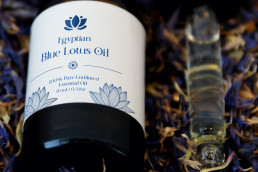
If you are pregnant, or trying to conceive, and wondering whether blue lotus oil is safe to use, the short answer is no: blue lotus oil and pregnancy are not a combination we recommend, and the reasons are rooted in the plant’s alkaloid chemistry rather than cultural squeamishness. This article sets out exactly why the precautionary position exists, what the known and theoretical concerns are, which situations warrant the most caution, and what you can reasonably use instead during pregnancy and breastfeeding.
Table of Contents
- Why Pregnancy Changes the Safety Calculus
- What Makes Blue Lotus Oil Pharmacologically Active
- The Specific Concerns During Pregnancy
- Placental Transfer of Psychoactive Alkaloids
- Potential Effects on Uterine Tone
- Hormonal and Neurochemical Modulation
- Interaction With Pregnancy Medications
- What the Precautionary Position Actually Means
- Breastfeeding Is Treated the Same Way
- Partners, Diffusion, and Shared Living Spaces
- Safer Aromatherapy Alternatives During Pregnancy
- What to Expect: Realistic Timeframes for Resuming Use
- When Blue Lotus Oil Is Not the Right Choice (Beyond Pregnancy)
- Complementary Approaches for Pregnancy Wellbeing
- Frequently Asked Questions
- Where to Go From Here
- For After Pregnancy and Beyond
It is written and clinically reviewed by Antonio Breshears, ND, CCA, a Bastyr-trained naturopathic doctor and certified clinical aromatherapist. For broader context on this oil, its chemistry, and its wider safety profile, readers may also want to consult The Complete Guide to Blue Lotus Oil, which covers the foundational material this article draws upon.
Why Pregnancy Changes the Safety Calculus
Pregnancy is not a disease, but it is a physiological state in which the usual rules of botanical medicine tighten considerably. Two overlapping reasons drive this. First, the developing foetus is exquisitely sensitive to compounds that cross the placenta, particularly during the first trimester when organogenesis is taking place. Second, a pregnant woman’s own physiology changes: increased blood volume, altered hepatic enzyme activity, shifts in hormonal signalling, and changes in the cardiovascular and immune systems all mean that substances tolerated easily outside of pregnancy may behave differently inside it.
Clinical aromatherapy takes a conservative stance for this reason. Where a plant’s chemistry contains compounds that are psychoactive, hormonally active, or capable of affecting smooth muscle tone, the default position is to avoid that plant during pregnancy unless there is robust safety data to say otherwise. Blue lotus falls squarely into the first category, and for a small number of its constituents, arguably into the third as well. Robust human pregnancy safety data does not exist. That is the entire basis for the recommendation to avoid it.
What Makes Blue Lotus Oil Pharmacologically Active
Blue lotus (Nymphaea caerulea) is not a neutral floral. Its absolute and essential oil concentrate the plant’s alkaloid and flavonoid chemistry, which is the very reason it has a reputation for relaxation, mood lift, and mild euphoria. The two alkaloids most often discussed are aporphine, which shows weak dopamine receptor agonism, and nuciferine, which has weak dopamine antagonist activity along with effects at 5-HT2A and 5-HT2C serotonin receptors. The flavonoids include apigenin, which binds at the central benzodiazepine site, together with quercetin and kaempferol.
In normal adult use, in small aromatherapy doses, these compounds produce the gentle parasympathetic shift that makes blue lotus pleasant and useful. In pregnancy, however, the same chemistry becomes a reason for caution. Compounds that cross into the central nervous system in adults will, in principle, cross the placenta too. The developing foetal brain is building its own dopaminergic and serotonergic systems from early in gestation, and introducing exogenous modulators of those systems, even at low doses, is simply not something that has been studied or that any responsible practitioner would encourage.
The Specific Concerns During Pregnancy
Placental Transfer of Psychoactive Alkaloids
Small, lipophilic molecules, which is what aporphine and nuciferine are, readily cross both the blood-brain barrier and the placental barrier. We have no human pregnancy data on these specific compounds in isolation, and we have no pregnancy data on blue lotus absolute as an aromatherapy product. The absence of evidence is not evidence of safety; it is a reason for restraint.
Potential Effects on Uterine Tone
Several related water lily and lotus species have historical uses that include emmenagogue activity, meaning promotion of menstrual flow. While this reputation is not strongly attested for Nymphaea caerulea specifically, the precautionary aromatherapy literature treats the entire family cautiously. Any compound with even a theoretical risk of affecting uterine smooth muscle is one we would set aside in pregnancy rather than guess about.
Hormonal and Neurochemical Modulation
The serotonergic and dopaminergic activity of nuciferine, and the GABAergic activity of apigenin, all touch pathways that are actively involved in both maternal mood regulation and foetal neurodevelopment. Medications that act on these same pathways (SSRIs, antipsychotics, benzodiazepines) are prescribed in pregnancy only when the maternal benefit clearly outweighs the foetal risk, and only under obstetric supervision. A scented oil used for relaxation does not meet that threshold.
Interaction With Pregnancy Medications
Many pregnant women are on additional medications: anti-nausea drugs, thyroid medication, labetalol for blood pressure, progesterone support in early pregnancy. Introducing a psychoactive botanical with dopaminergic and serotonergic activity into that pharmacological landscape, without any clinical evidence to guide dosing, is not a sensible thing to do.
What the Precautionary Position Actually Means
It is important to be clear about what we are and are not saying. We are not claiming that a single accidental inhalation of blue lotus oil will harm a pregnancy. The evidence does not exist to make that claim, and it would be irresponsible to suggest otherwise. What we are saying is that deliberate, repeated use of blue lotus oil (diffusion, topical application, perfumery, bath soaks, massage blends) is not something that should continue once a pregnancy is known or suspected, and it should not be started during pregnancy.
If you used blue lotus oil in the weeks before you knew you were pregnant, the sensible response is to stop using it now, mention it to your midwife or obstetrician at your next appointment, and move on without anxiety. The same principle applies to most aromatherapy exposures during the earliest weeks of gestation: they are not grounds for alarm, but they are grounds for changing practice going forward.
Breastfeeding Is Treated the Same Way
The same precautionary logic extends to breastfeeding. Lipophilic alkaloids that circulate in maternal blood can, in principle, pass into breast milk. A nursing infant’s liver and blood-brain barrier are immature, and even small doses of psychoactive compounds can have disproportionate effects. There is no safety data on blue lotus absolute during lactation, which means, again, the responsible answer is to avoid it until breastfeeding has ended.
This is not a statement about the quality or purity of the oil. Our own Pure Blue Lotus Oil is produced to the highest artisanal standard. The issue is simply that any psychoactive botanical, no matter how cleanly produced, does not belong in the pregnancy or breastfeeding toolkit when safer alternatives exist.
Partners, Diffusion, and Shared Living Spaces
A reasonable question: if a partner uses blue lotus oil in the home, does that pose a risk to the pregnant person? In almost all practical cases, no. Ambient diffusion in a well-ventilated living space produces extremely low airborne concentrations, and passive exposure to a diffuser running in another room for half an hour will not deliver a pharmacologically meaningful dose. That said, sensitivities heighten during pregnancy, and many women find that scents they previously enjoyed become nauseating or headache-inducing. If the pregnant partner does not want the oil diffused in the home, that preference should be honoured for comfort reasons alone.
Direct topical contact, sharing massage blends, or applying the oil to skin that will contact a pregnant partner’s skin closely and repeatedly is a different matter and should be avoided for the duration of pregnancy.
Safer Aromatherapy Alternatives During Pregnancy
The good news is that pregnancy does not have to be an aromatherapy desert. There are several essential oils with reasonable safety profiles in pregnancy (after the first trimester, under appropriate dilution, and with practitioner guidance for anything beyond occasional use). These include:
- Lavender (Lavandula angustifolia) at low dilution, widely used for sleep, anxiety, and relaxation from the second trimester onwards.
- Roman chamomile (Chamaemelum nobile), gentle and calming, generally considered acceptable in low dilution after the first trimester.
- Neroli (Citrus aurantium var. amara flower), often used for anxiety in pregnancy under practitioner supervision.
- Sweet orange (Citrus sinensis) for mood and nausea, well tolerated by most women.
- Ginger (Zingiber officinale) for nausea, typically inhaled rather than applied topically in early pregnancy.
None of these replicate the particular scent or psychoactive character of blue lotus, and honesty compels us to say so. What they offer is a realistic path to using aromatherapy for the normal wants of pregnancy (sleep, calm, nausea relief, mood support) without the uncertainty that surrounds psychoactive botanicals.
What to Expect: Realistic Timeframes for Resuming Use
After delivery, if you are not breastfeeding, blue lotus oil can be reintroduced once you feel physically recovered and once any postpartum medications have been finalised with your care team. If you are breastfeeding, the oil should remain on the shelf until breastfeeding has fully ended. For most women, that means a gap of somewhere between nine months and two years or more between the last pre-pregnancy use and the first post-weaning use. Absolute stored properly in dark glass in a cool, dark location retains its character for three to four years, so a bottle set aside at the start of pregnancy will still be usable later.
When Blue Lotus Oil Is Not the Right Choice (Beyond Pregnancy)
Pregnancy and breastfeeding are the clearest contraindications, but a few others are worth noting for completeness, because people who ask about pregnancy safety often ask about these too:
- Children under twelve, for whom psychoactive botanicals are not appropriate.
- People taking dopaminergic medications (Parkinson’s drugs, certain antipsychotics) where interaction with nuciferine and aporphine is theoretically possible.
- People taking MAOIs, where caution is standard for any psychoactive botanical.
- People on heavy sedatives or benzodiazepines, where the apigenin component may potentiate effects.
- People with known sensitivity to the oil or its carrier.
Complementary Approaches for Pregnancy Wellbeing
Pregnancy often drives people towards aromatherapy because they are trying to manage things (anxiety, insomnia, low mood, physical discomfort) that deserve real support. Rather than reaching for an oil that is not suitable, consider the broader options: prenatal yoga and breathwork for anxiety and sleep, gentle prenatal massage with pregnancy-safe oils from a qualified practitioner, magnesium supplementation (under midwife or obstetrician guidance) for muscle cramps and sleep, cognitive behavioural therapy for antenatal anxiety and depression, and conversations with your care team about any symptom that feels beyond the ordinary. These are not poor substitutes for aromatherapy; they are, in many cases, considerably more effective for the symptoms that drive people to look for help.
Frequently Asked Questions
Is blue lotus oil safe during pregnancy?
No. Because of its psychoactive alkaloid content (aporphine and nuciferine) and the absence of human pregnancy safety data, blue lotus oil should be avoided throughout pregnancy, including the first trimester.
I used blue lotus oil before I knew I was pregnant. Should I be worried?
Almost certainly not. Stop using it now, mention it to your midwife or obstetrician at your next appointment, and carry on. A brief pre-awareness exposure to an aromatherapy product is not a cause for alarm.
Can I use blue lotus oil in the third trimester only?
No. The precautionary recommendation covers the entire pregnancy. While organogenesis is an early-pregnancy concern, the psychoactive and hormonally active compounds in blue lotus are relevant throughout gestation.
Is blue lotus tea or flower use different from the oil?
The same alkaloid and flavonoid chemistry is present in the plant material, the tea, and the oil, although concentrations differ. The same precautionary position applies. This article addresses the oil specifically, but we would not recommend blue lotus tea or flowers during pregnancy either.
Can my partner use blue lotus oil at home while I am pregnant?
Ambient use in another room, with reasonable ventilation, does not deliver a meaningful dose to the pregnant person. Direct topical contact or skin-to-skin sharing of the oil should be avoided. If the scent bothers you, ask your partner to pause use; heightened scent sensitivity is common and worth respecting.
Is blue lotus oil safe while breastfeeding?
No. The same lipophilic alkaloids that cross the placenta can, in principle, pass into breast milk, and the nursing infant’s immature liver and blood-brain barrier heighten the concern. Wait until breastfeeding has ended.
What aromatherapy can I use for anxiety or sleep during pregnancy?
Lavender, Roman chamomile, neroli, and sweet orange, all at low dilution and generally from the second trimester onwards, are reasonable options. Discuss any ongoing aromatherapy use with your midwife, obstetrician, or a qualified clinical aromatherapist who works with pregnant clients.
Are there any published studies on blue lotus in pregnancy?
No robust human clinical trials exist on Nymphaea caerulea absolute or essential oil in pregnancy. The precautionary position is based on the known pharmacology of its constituent alkaloids and the general principle of avoiding psychoactive botanicals without pregnancy-specific safety data.
When can I start using blue lotus oil again after birth?
If you are not breastfeeding, once you have recovered physically and any postpartum medications have been reviewed with your care team. If you are breastfeeding, wait until breastfeeding has fully ended.
Does it matter how the oil is extracted (solvent, steam, CO2)?
No. The alkaloid profile that drives the precautionary recommendation is present regardless of extraction method. Solvent-extracted absolute, steam-distilled essential oil, and supercritical CO2 extracts all carry the same concerns during pregnancy and breastfeeding.
Where to Go From Here
If you are pregnant, set the blue lotus oil aside and bookmark it for later. There is no hurry, the oil keeps well, and your pregnancy and postpartum period will pass. In the meantime, work with your care team on the symptoms you were hoping the oil might help, and consider the pregnancy-appropriate aromatherapy options listed above. For deeper reading on the oil’s chemistry, the regulatory picture, and its wider safety profile once pregnancy is behind you, The Complete Guide to Blue Lotus Oil remains the best starting point.

Antonio Breshears
Antonio Breshears is a renowned expert in holistic medicine and beauty, with over 25 years of research experience dedicated to uncovering the secrets of nature's most powerful remedies. Holding a degree in Naturopathic Medicine, Antonio's passion for healing and well-being has driven him to explore the intricate connections between mind, body, and spirit.
Over the years, Antonio has become a respected authority in the field, helping countless individuals discover the transformative power of plant-based therapies, including essential oils, herbs, and natural supplements. He has authored numerous articles and publications, sharing his wealth of knowledge with a global audience seeking to improve their overall health and well-being.
Antonio's expertise extends to the realm of beauty, where he has developed innovative, all-natural skincare solutions that harness the potency of botanical ingredients. His formulations embody his deep understanding of the healing properties found in nature, providing holistic alternatives for those seeking a more balanced approach to self-care.
With his extensive background and dedication to the field, Antonio Breshears is a trusted voice and guiding light in the world of holistic medicine and beauty. Through his work at Pure Blue Lotus Oil, Antonio continues to inspire and educate, empowering others to unlock the true potential of nature's gifts for a healthier, more radiant life.