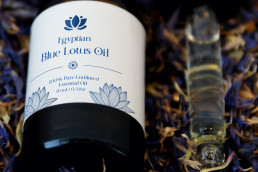
If you are searching for blue lotus oil in Bristol, you have probably already walked past half a dozen shops that claim to stock it and come away unsure whether any of them actually do. This guide is for the Bristol reader who wants the real thing, Nymphaea caerulea absolute or genuine essential oil, and who would rather spend a bit more once than waste money on fragrance oils labelled to look like the genuine article. It covers where to look in the city, what to ask at the counter, and how to verify authenticity whether you buy in person or online.
Table of Contents
- What Bristol Buyers Are Actually Looking For
- Where to Look in Bristol: A Realistic Tour
- Clifton and the Triangle
- Stokes Croft and Gloucester Road
- The Harbourside and St Nicholas Market
- Specialist Perfumers and Natural Fragrance Studios
- What to Check Before You Pay
- Why Buying Online Often Makes More Sense
- Common Bristol Buying Mistakes
- How to Use What You Buy
- Frequently Asked Questions
- Where to Go From Here
- Bristol-Delivered, Honestly Sourced
It is written and clinically reviewed by Antonio Breshears, ND, CCA, a Bastyr-trained naturopathic doctor and certified clinical aromatherapist. For broader context on the oil itself, its chemistry and its uses, this guide pairs well with The Complete Guide to Blue Lotus Oil, which covers the material in depth before you bring any of it home.
What Bristol Buyers Are Actually Looking For
Blue lotus oil is not a single product. The name covers at least three distinct things on the UK market, and knowing which one you want before you step into a Bristol shop is half the battle.
The most common form is the absolute, a solvent-extracted concentrate from the petals of Nymphaea caerulea, the Egyptian blue water lily. It takes between 3,000 and 5,000 flowers to produce a single gram, which is why genuine absolute is expensive and why shops that sell it for a few pounds a bottle are almost certainly selling something else. The absolute is thick, deeply coloured, and smells of honeyed floral heart with a balsamic, faintly smoky base.
The second form is a true steam-distilled essential oil, which is rare. Very few distilleries produce it because the yield is poor and the process demands a lot of plant material. If a Bristol shop claims to have steam-distilled blue lotus at an ordinary essential oil price point, treat the claim with scepticism.
The third form is supercritical CO2 extract, considered by most clinical aromatherapists to be the cleanest representation of the flower’s chemistry. It is the most expensive option and almost always ordered online rather than picked up on a high street.
Most “blue lotus oil” sold casually in gift shops and market stalls is none of the above. It is a fragrance oil, often synthetic, sometimes a pre-dilution of a tiny amount of real absolute in a cheap carrier, sold at a mark-up that flatters neither the buyer nor the flower.
Where to Look in Bristol: A Realistic Tour
Bristol is, happily, a city where independent apothecaries, herbalists and specialist perfumers still exist. If you prefer to handle a product before buying it, a few areas are worth your time.
Clifton and the Triangle
Clifton has historically housed several independent holistic and natural health shops catering to the university crowd and the long-standing alternative health community of the city. The smaller apothecary-style shops on and around Whiteladies Road and Park Street occasionally stock niche absolutes, including blue lotus, though availability is inconsistent. Phone ahead rather than travelling on spec. When you arrive, ask specifically for “blue lotus absolute” or “Nymphaea caerulea“, not just “blue lotus oil”, which is ambiguous enough that staff may point you to an incense blend or a roller-ball fragrance.
Stokes Croft and Gloucester Road
Stokes Croft and the long stretch of Gloucester Road running north from it are the natural home of Bristol’s independent retail. Health food shops, vegan grocers, witchcraft and occult shops, and herbal dispensaries all cluster in this corridor. These are the likeliest places in the city to find genuine blue lotus absolute held as a small-batch stock item. Spiritual and metaphysical shops tend to carry it because of the flower’s association with meditation, dream work and Egyptian sacred history, and some of them are scrupulous about sourcing. Others are not. The usual signals apply: ask to see the botanical name printed on the bottle, ask what country it was produced in, and ask whether they can tell you the extraction method.
The Harbourside and St Nicholas Market
St Nicholas Market contains a rotating cast of independent traders, including stalls selling incense, oils, crystals and apothecary goods. Some of these are excellent; others are volume sellers of cheap fragrance oil repackaged with evocative names. If you are new to blue lotus, the market is a reasonable place to learn what the real thing smells like if you can find a trader who will let you sample their absolute on a smelling strip. Just be cautious about buying anything in St Nick’s without reading the label carefully and comparing the price to the realistic market rate, which I cover below.
Specialist Perfumers and Natural Fragrance Studios
Bristol has a small but serious community of independent natural perfumers. These studios occasionally carry blue lotus absolute as a working material. They will rarely have it on open display, but if you ask, they may sell a small decant. Expect to pay a premium, and expect the quality to be genuinely good, because a perfumer who uses a material professionally cannot afford to be fooled by an adulterated supplier.
What to Check Before You Pay
Whether you are in a Clifton boutique or a Stokes Croft apothecary, the same short checklist will tell you almost everything you need to know about the bottle in front of you.
Botanical name on the label. Look for Nymphaea caerulea. Not “blue lotus”, not “lotus blossom”, not “Egyptian lily”. If the Latin binomial is missing, the product is either sloppily labelled or deliberately vague, and neither is reassuring.
Country of origin. Genuine material is typically produced in Egypt, Sri Lanka, or Thailand from plants grown in those regions. A producer who cannot tell you where the flowers were grown is a producer you should not trust.
Extraction method. Ask: absolute, steam-distilled, or CO2? If the person at the counter does not know, they have not been trained properly on what they are selling, which tells you something about the supplier.
Price sanity check. Genuine blue lotus absolute in the UK usually costs somewhere between £25 and £80 for a small bottle of 2 to 5 ml of pure undiluted material, or proportionately less for a properly disclosed dilution. Anything dramatically cheaper than that is almost certainly not pure absolute. Anything dramatically more expensive should come with very good documentation explaining why.
Dilution disclosure. Many reputable sellers sell blue lotus pre-diluted in jojoba or another carrier, which is a perfectly respectable product and often the better choice for skin use. What matters is that the dilution is disclosed honestly on the label, for example “5 percent Nymphaea caerulea absolute in organic jojoba”. If the label says only “blue lotus oil” and the price is suspiciously low, you are likely looking at a heavy dilution not disclosed.
GC-MS report. The gold standard. Ask whether the shop has a gas chromatography-mass spectrometry report from the supplier. Serious sellers are happy to show it; casual ones will not know what you are asking about.
Why Buying Online Often Makes More Sense
Bristol has many virtues as a shopping city, but for a rare material like blue lotus, the honest answer is that the online specialist market is usually a better place to buy. A handful of reasons explain this.
First, turnover. A dedicated online retailer who sells blue lotus every day moves stock quickly, which means the bottle you receive is fresher. Absolutes are relatively stable, with a shelf life of three to four years when stored properly in dark glass, cool and dark. But a bottle that has sat on a Bristol gift shop shelf under warm LED lights for eighteen months has already lost part of its volatile top notes.
Second, traceability. Online specialists tend to publish their sourcing, their extraction method, and often their GC-MS reports directly on the product page. A Bristol shop, however well-intentioned, has usually bought from a wholesaler who bought from a broker who bought from the producer, and the trail gets murky.
Third, price. The markup on a niche botanical absolute passing through multiple intermediaries to reach a small high street shop is significant. Buying direct from a specialist typically means paying less for better-documented material.
The argument for buying in person is sensory. You can smell before you pay. If that matters to you, visit a reputable Bristol shop to smell the absolute, then order your working bottle from a specialist who publishes full documentation. That combined approach, sample in person, buy online, is how most serious users handle rare materials.
Common Bristol Buying Mistakes
Several patterns repeat in the emails and questions I receive from UK buyers, and Bristol is no exception.
The first is assuming that a shop with a beautifully curated aesthetic must, by extension, sell beautifully curated oils. Aesthetic and sourcing are independent variables. A shop can have gorgeous packaging and mediocre supply chains. Ask the same questions regardless of how the shop looks.
The second is buying based on the label word “pure”. The word “pure” is legally meaningless on its own. “Pure blue lotus oil” can be sold in the UK while containing as little as a trace of real material dissolved in a synthetic carrier. Look for the botanical name, the percentage disclosure, and the extraction method, not adjectives.
The third is mistaking incense or perfume oil for blue lotus absolute. In Bristol’s market stalls and metaphysical shops, “blue lotus” often appears on small roll-on bottles that are overwhelmingly synthetic fragrance with possibly a drop of genuine material. These are not dangerous, but they are not what you want if you are buying for aromatherapy or clinical purposes.
The fourth is not asking about solvent residue on absolutes. A well-produced absolute has negligible residual solvent, typically hexane, below any level of biological significance. A poorly-produced one can have more. A reputable seller will have tested for this and will tell you.
How to Use What You Buy
Assuming you find a genuine bottle, whether in Clifton, on Gloucester Road, or via an online specialist delivered to your Bristol postcode, a brief note on use.
For skin, blue lotus absolute should be diluted. A 1 to 2 percent dilution is appropriate for facial applications, 2 to 3 percent for body, and up to 3 percent for targeted use on small areas. Jojoba is the carrier I most commonly recommend because it is stable, non-comedogenic, and respectful of the absolute’s scent profile.
For diffusion, 2 to 4 drops in a standard ultrasonic diffuser is sufficient. Blue lotus is a slow-reveal scent; give it ten or fifteen minutes before judging it.
For meditation or evening ritual, a single drop on the pulse points, diluted first in jojoba, is often enough. The olfactory-limbic pathway responds to this small quantity surprisingly well, and more is not better.
Avoid during pregnancy and breastfeeding. Use caution if you are taking dopaminergic medications, MAOIs, or heavy sedatives, because the alkaloid profile of the oil (aporphine and nuciferine in particular) can interact with these drug classes at least theoretically. If you are in any doubt, speak to a naturopathic doctor, a clinical aromatherapist or your GP before beginning use.
Frequently Asked Questions
Is blue lotus oil legal to buy in Bristol?
Yes. Blue lotus is legal to buy and own in the United Kingdom, including in Bristol. Restrictions exist in a small number of countries and US states (Russia, Poland, Latvia and Louisiana are the most commonly cited), and Australian regulation is complex, but in the UK it is freely sold and used.
What is a reasonable price for genuine blue lotus oil in Bristol?
For pure, undiluted absolute, expect somewhere between £25 and £80 for a small bottle of 2 to 5 ml. For honest pre-dilutions in jojoba or similar carriers, the price scales with the percentage disclosed. Anything significantly cheaper than this range is almost certainly adulterated or mislabelled.
Can I find blue lotus oil in the larger health food chains in Bristol?
Occasionally, but rarely as genuine absolute. Larger chains tend to stock the common essential oils (lavender, peppermint, tea tree, eucalyptus) and do not generally carry niche absolutes like blue lotus. If you want the real material, look at independents or specialist online retailers.
Is the blue lotus oil sold at St Nicholas Market genuine?
It varies by trader. Some market traders source carefully and sell genuine material; others sell synthetic fragrance oils labelled evocatively. Apply the checklist: botanical name, country of origin, extraction method, price, dilution disclosure. If the trader cannot answer these questions confidently, assume the product is not what you are looking for.
What is the difference between blue lotus absolute and blue lotus essential oil?
The absolute is solvent-extracted, usually with hexane, which is then removed, and it represents the most complete aromatic profile of the flower. True steam-distilled essential oil is rare and captures only the volatile fraction. CO2 extract sits between the two. Most of what you will find in Bristol shops and online is the absolute.
How should I store blue lotus oil once I have bought it?
In its original dark glass bottle, tightly capped, in a cool and dark place. Avoid the bathroom, where humidity and temperature fluctuations are unfriendly to volatile oils. Stored properly, the absolute should hold its character for three to four years.
Can I buy blue lotus oil at Bristol’s independent perfumery studios?
Sometimes. Independent natural perfumers occasionally sell small decants of their working materials. These are rarely on open display; ask. Expect to pay a premium, but the quality is usually very good because perfumers cannot afford to use adulterated material in their own work.
Is it worth travelling across Bristol to source this in person, or should I buy online?
For a first purchase, travelling to smell the real thing is worthwhile if you can find a shop that will let you sample. For repeat purchases and for anyone who wants documented sourcing, online specialists are almost always the better option in terms of freshness, price and traceability.
How do I know the bottle I bought in Bristol is genuine once I get it home?
Open it carefully. The scent should be complex and slow-revealing: a cool, slightly aquatic floral top, a deep honeyed and tea-like heart, and a balsamic, faintly smoky base. Pure absolute is viscous and deeply coloured, not thin and watery. If what you have is thin, pale and smells like a single flat fragrance note, you have almost certainly bought a dilution or a synthetic.
Will a clinical aromatherapist in Bristol help me use it safely?
Yes. Bristol has a number of qualified clinical aromatherapists who are registered with professional bodies like the IFPA. A single consultation is a sensible step if you plan to use blue lotus for a specific clinical purpose, particularly alongside any existing medication.
Where to Go From Here
If you have read this far, you have a clear sense of what genuine blue lotus oil looks like, where to find it in Bristol, and what questions to ask before you pay. The practical next step is either a phone call to one of the independent apothecaries or perfumery studios mentioned above, or an order from a specialist online retailer who publishes their sourcing. For a deeper grounding in the oil itself, its chemistry, history and full range of uses, The Complete Guide to Blue Lotus Oil is the companion reference to this buying guide, and the place to go before you start using whatever you bring home.

Antonio Breshears
Antonio Breshears is a renowned expert in holistic medicine and beauty, with over 25 years of research experience dedicated to uncovering the secrets of nature's most powerful remedies. Holding a degree in Naturopathic Medicine, Antonio's passion for healing and well-being has driven him to explore the intricate connections between mind, body, and spirit.
Over the years, Antonio has become a respected authority in the field, helping countless individuals discover the transformative power of plant-based therapies, including essential oils, herbs, and natural supplements. He has authored numerous articles and publications, sharing his wealth of knowledge with a global audience seeking to improve their overall health and well-being.
Antonio's expertise extends to the realm of beauty, where he has developed innovative, all-natural skincare solutions that harness the potency of botanical ingredients. His formulations embody his deep understanding of the healing properties found in nature, providing holistic alternatives for those seeking a more balanced approach to self-care.
With his extensive background and dedication to the field, Antonio Breshears is a trusted voice and guiding light in the world of holistic medicine and beauty. Through his work at Pure Blue Lotus Oil, Antonio continues to inspire and educate, empowering others to unlock the true potential of nature's gifts for a healthier, more radiant life.