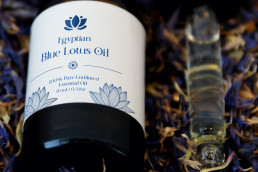
Blue lotus oil owes its effect to a small number of active compounds working through several converging pathways. Understanding the chemistry clarifies what the oil can reasonably do, what it cannot, and why certain use patterns (aromatic versus topical, daily versus occasional) produce different results. This pillar is the chemistry and mechanism reference cited from the cluster articles across the site, written for the interested reader rather than the specialist biochemist.
Table of Contents
- What Is Actually in Blue Lotus Oil
- Alkaloids
- Flavonoids
- The Fragrant (Aromatic) Fraction
- Fatty and Waxy Components
- How These Compounds Produce the Oil's Effect
- Olfactory-Limbic Pathway
- Dopaminergic Modulation (Alkaloid Fraction)
- GABAergic Modulation (Apigenin Benzodiazepine-Receptor Binding)
- Ritual and Conditioning Effect
- Therapeutic Properties: What the Chemistry Translates To
- Aromatic Versus Topical: Different Mechanisms, Different Applications
- Extraction Method Affects Composition
- The Research Landscape: Honest Limits
- Safety Context
- Frequently Asked Questions
- Where to Go From Here
- The Chemistry, In a Bottle
It is written and clinically reviewed by Antonio Breshears, ND, CCA, a Bastyr-trained naturopathic doctor and certified clinical aromatherapist. For the broader view of the oil itself, our complete guide to blue lotus oil is the parent reference.
What Is Actually in Blue Lotus Oil
Blue lotus (Nymphaea caerulea) contains a characteristic mix of alkaloids, flavonoids, and aromatic volatile compounds. The oil (most commonly an absolute, occasionally an essential oil) captures a substantial fraction of this profile, with the exact composition depending on the extraction method. The extraction detail matters because different methods concentrate different compounds; our article on blue lotus oil extraction and production covers this in detail.
For the purposes of this chemistry reference, the active fractions break down into four categories.
Alkaloids
The alkaloid content of blue lotus is small compared with dedicated alkaloid-rich plants, but it is clinically meaningful. Two compounds in particular appear consistently in chemical analyses of the flower and its extracts.
Aporphine is an aporphine-class alkaloid with weak dopamine-agonist activity. It binds with low affinity at dopamine D1 and D2 receptors, producing a mild dopaminergic modulation. At pharmaceutical doses (which blue lotus at aromatic or topical use does not approach), aporphines have been studied for Parkinson’s-type indications. At the low doses delivered through the oil, the effect is subtle: a gentle quieting of sympathetic arousal rather than a pharmacological push.
Nuciferine is a closely related aporphine-type alkaloid, more commonly associated with sacred lotus (Nelumbo nucifera) but also present in Nymphaea caerulea. It acts as a weak dopamine D2 antagonist and has serotonergic activity at 5-HT2A and 5-HT2C receptors. The combination of mildly agonist aporphine and mildly antagonist nuciferine is part of why blue lotus produces a balancing effect rather than a strong directional one: the system is nudged toward equilibrium rather than pushed.
Smaller quantities of other aporphine-type alkaloids may be present depending on flower source and extraction method.
Flavonoids
The flavonoid fraction is often underestimated. It contributes substantially to the oil’s effect profile.
Apigenin is the most important single flavonoid in blue lotus for therapeutic purposes. It binds with mild affinity to the central benzodiazepine receptor site on the GABA-A receptor, producing the low-level anxiolytic and mildly sedative effect that overlaps with how chamomile (another apigenin-rich plant) works. Apigenin has a well-documented research base, though much of that research concerns oral dosing at concentrations higher than aromatic or topical blue lotus delivers. The effect in the oil is real but modest.
Quercetin and kaempferol contribute antioxidant and anti-inflammatory support. These are widely distributed plant flavonoids found in many foods and herbs; their presence in blue lotus is part of what supports the mild topical anti-inflammatory effect, relevant to the use of the oil for tension headaches and menstrual cramping discussed in those respective cluster articles.
Various flavonoid glycosides (apigenin glucosides in particular) are also present in the raw flower but may be partially hydrolysed during extraction.
The Fragrant (Aromatic) Fraction
The volatile fraction of the oil is responsible for its characteristic scent, and is the primary driver of the olfactory-limbic effect. This fraction contains a mix of benzenoid compounds, terpenoids, and sesquiterpenoids. Gas chromatography-mass spectrometry analyses of blue lotus absolute identify varying specific compounds depending on sample origin and processing, with consistent characteristic markers that contribute to the recognisable floral-aquatic scent signature.
Important for understanding the oil’s effect: the fragrant fraction is the dominant component by mass in most blue lotus absolutes, and the dominant contributor to the aromatic effect during diffusion and inhalation. The alkaloid and flavonoid fractions become more relevant during topical application, where the carrier oil aids dermal absorption of the less-volatile compounds.
Fatty and Waxy Components
Absolutes, as solvent-extracted products, retain fatty acids and waxy compounds from the flower that would not survive steam distillation. These contribute to the slightly viscous character of a good blue lotus absolute and to the skin-feel of topical applications. They are pharmacologically inert but practically important for how the oil behaves in use.
How These Compounds Produce the Oil’s Effect
Four mechanisms converge, each of which operates differently depending on the method of use.
Olfactory-Limbic Pathway
The fastest of the four. The olfactory bulb connects directly to the limbic system (amygdala, hippocampus, hypothalamus) without passing through the thalamus, which means aromatic input can shift nervous-system state within seconds to a few breaths.
The fragrant fraction of blue lotus activates this pathway on inhalation, producing a rapid parasympathetic shift that is the basis of the oil’s acute anxiety and stress-support applications. This mechanism is independent of the alkaloid or flavonoid content; it is an effect of scent itself, mediated through limbic-system conditioning and the autonomic responses that follow. For more on the practical applications, see our pillar on blue lotus oil health and wellness benefits.
Dopaminergic Modulation (Alkaloid Fraction)
On topical application at standard dilutions (2 to 3 percent), a small but measurable quantity of the alkaloid fraction is absorbed through the skin into systemic circulation. The doses delivered are well below pharmaceutical-grade dopaminergic interventions, but they contribute a gentle tone-setting effect on the reward and arousal pathways that dopamine modulates.
The aporphine-agonist and nuciferine-antagonist combination means the net dopaminergic effect is balanced rather than strongly pushing in either direction. This is consistent with the subjective experience most users report: a quieting of over-arousal without either sedation or euphoria.
GABAergic Modulation (Apigenin Benzodiazepine-Receptor Binding)
Apigenin and related flavonoids reach the central nervous system through both the topical absorption pathway and the olfactory mucosa. At the central benzodiazepine receptor site, apigenin acts as a weak positive allosteric modulator, producing mild anxiolytic and sedative effects similar to a well-brewed chamomile tea.
The effect is subtle. Apigenin does not carry the tolerance, rebound, or dependence risks of pharmaceutical benzodiazepines, which makes it suitable for daily use over extended periods. This is part of why blue lotus, unlike stronger sedatives, tolerates long-term use without the diminishing returns that plague pharmaceutical approaches to chronic anxiety and insomnia.
Ritual and Conditioning Effect
The slowest to develop and the most valuable once established. Consistent use of a specific scent in a specific context (evening wind-down, morning ritual, pause points during work) creates a conditioned association between the scent and the desired nervous-system state. Subsequent inhalations then access that state more quickly and more fully than they would in the absence of conditioning.
This is not a pharmacological effect but a psychological and neurological one; it is robust, well-documented in the broader olfactory-learning literature, and compounds over weeks to months of consistent use. Much of the long-term benefit of blue lotus practice comes through this pathway, and it is the mechanism that rewards the daily-use patterns described across our cluster articles.
Therapeutic Properties: What the Chemistry Translates To
Mapping the mechanisms above to the applications covered across this site.
- Anxiolytic (anxiety, stress). Apigenin at the benzodiazepine receptor site plus olfactory-limbic calming plus the ritual component.
- Sedative and sleep-supporting (sleep, insomnia). Same three pathways with added parasympathetic nervous-system support.
- Oneirogenic (dream recall, lucid dreaming). The dopaminergic modulation influences REM sleep content intensity; the olfactory conditioning supports the pre-sleep intention-setting practice.
- Antispasmodic (menstrual pain, tension headaches). Primarily through flavonoid action plus parasympathetic muscle-tone effects.
- Anti-inflammatory (general topical use). Quercetin, kaempferol, and apigenin contribute modest anti-inflammatory activity on topical application.
- Mildly euphoric and emotionally opening (aphrodisiac uses, meditation practice). Dopaminergic modulation plus scent-based limbic activation.
Aromatic Versus Topical: Different Mechanisms, Different Applications
A useful practical distinction emerges from the chemistry. Aromatic use (diffusion, inhalation) engages primarily the olfactory-limbic and ritual pathways, delivering speed but limited systemic effect. Topical use (diluted in carrier oil) adds the alkaloid and flavonoid absorption pathways, delivering slower but broader systemic effect at the cost of the immediate olfactory-limbic speed.
For acute moments (a surge of anxiety, a tension headache starting to build), aromatic use alone is often sufficient. For cumulative effect over weeks (baseline anxiety, chronic sleep fragmentation, mood stabilisation), combining aromatic and topical use produces substantially better results than either alone. This is reflected in the daily practice framework described in the health and wellness pillar.
Extraction Method Affects Composition
Three extraction methods produce blue lotus oil, and the resulting products differ chemically in important ways.
Solvent extraction (absolute). The most common method, typically using food-grade hexane or ethanol. Produces a rich, viscous product that captures most of the flower’s aromatic, flavonoid, and fatty-acid content, and a modest fraction of the alkaloids. This is what most users buy as “blue lotus essential oil” even though technically it is an absolute.
Steam distillation (true essential oil). Produces a light, volatile product dominated by the fragrant fraction. Alkaloids and flavonoids are largely absent because they do not volatilise at steam-distillation temperatures. Rare in the market and substantially more expensive per unit.
Supercritical CO2 extraction. A newer method producing a profile intermediate between absolute and essential oil, with good capture of most active fractions and no solvent residue. Premium price, limited availability.
For most users and most applications, a good Egyptian absolute is the right choice. It delivers the full therapeutic profile at reasonable cost. For the extraction detail, our article on blue lotus oil extraction and production is the fuller reference.
The Research Landscape: Honest Limits
A realistic assessment of what is and is not established in the research literature matters here.
Formal clinical trials specifically on blue lotus oil are limited. The bulk of the supporting evidence comes from three sources: traditional use records spanning several thousand years; the broader research base on the oil’s individual active compounds (particularly apigenin, which has substantial laboratory and some clinical evidence); and practitioner-level observation in contemporary clinical aromatherapy and naturopathic practice.
This is a reasonable evidence base for the kinds of claims made across this site, which are modest and framed as practitioner-level guidance rather than clinical recommendation. It is not a sufficient evidence base for medical claims in the strict regulatory sense, which is part of why the cluster articles consistently position blue lotus as a supportive practice alongside clinical care rather than a treatment in its own right.
For conditions where stronger evidence is needed (severe depression, significant pain, endocrine disorders, neurological conditions), the clinical care pathway remains primary. Blue lotus sits alongside that care, not instead of it.
Safety Context
The modest intensity of blue lotus’s pharmacology is directly responsible for its strong safety record. Compounds acting at low affinity through multiple balanced pathways tend to produce fewer adverse effects than single-target, high-affinity compounds, and the traditional use record across millennia supports this in practice.
The full safety detail, including medication interactions, pregnancy considerations, and dosing ranges, is in our dedicated reference on blue lotus oil safety, side effects and precautions.
Frequently Asked Questions
What are the main active compounds in blue lotus oil?
The alkaloids aporphine and nuciferine (acting on dopaminergic pathways), the flavonoid apigenin (acting at the central benzodiazepine receptor), secondary flavonoids quercetin and kaempferol (antioxidant and anti-inflammatory), and a complex fragrant fraction of volatile compounds responsible for the scent and the olfactory-limbic effect.
Is blue lotus oil psychoactive?
Mildly, through the dopaminergic and GABAergic pathways described above. The effect at normal aromatic and topical doses is best described as a quieting and emotional opening rather than an intoxication. Stronger effects reported in the literature usually refer to higher-dose whole-flower preparations (wine infusion, tea) rather than the oil.
How does blue lotus oil affect the brain?
Through four pathways: immediate olfactory-limbic calming on inhalation; mild dopaminergic modulation via aporphine and nuciferine on topical absorption; GABAergic support via apigenin at the benzodiazepine receptor; and ritual/conditioning effects that compound over weeks of consistent use.
Does blue lotus oil contain alkaloids?
Yes, in modest amounts. Aporphine and nuciferine are the two most notable, present in the absolute but largely absent from true steam-distilled essential oils. The alkaloid content is meaningful but small compared with dedicated alkaloid-rich plants.
What is apigenin, and why does it matter for blue lotus?
Apigenin is a flavonoid also found in chamomile, parsley, and celery. It binds with mild affinity to the central benzodiazepine receptor site on the GABA-A receptor, producing gentle anxiolytic and sedative effects. In blue lotus, it contributes significantly to the anxiety- and sleep-supporting applications.
Is blue lotus oil a sedative?
Mildly, through the apigenin-GABAergic pathway. The effect is closer to chamomile than to pharmaceutical benzodiazepines, and it does not produce the morning grogginess or dependence risks of stronger sedatives. This is part of why blue lotus tolerates daily use.
Does blue lotus oil work pharmacologically or just through scent?
Both. The olfactory-limbic effect is purely scent-mediated and operates in seconds. The alkaloid and flavonoid effects require either topical absorption or accumulated aromatic exposure and operate on a slower timescale. The combined effect of both pathways is larger than either alone.
How does extraction method affect the oil’s chemistry?
Substantially. Solvent extraction (absolute) captures most of the flower’s profile including alkaloids, flavonoids, and fatty compounds. Steam distillation captures mainly the volatile fragrant fraction and loses most of the alkaloid and flavonoid content. CO2 extraction produces an intermediate profile. For most applications, a good absolute is the appropriate choice.
Can the active compounds in blue lotus be synthesised?
Some, in principle. Apigenin is commercially available as a purified supplement. Aporphine and nuciferine have been isolated and studied in their purified forms. The whole-oil effect, however, depends on the interaction of many compounds and the olfactory-limbic effect, which purified synthetic fractions do not replicate.
Is there clinical research on blue lotus oil specifically?
Limited. Most supporting evidence comes from the research base on individual active compounds (particularly apigenin), the long traditional use record, and practitioner-level observation. This is sufficient for the practitioner-framed guidance this site provides but is not a clinical-grade evidence base for medical claims.
Where to Go From Here
For the practical applications that follow from this chemistry, see our pillar on blue lotus oil health and wellness benefits. For extraction detail, the article on extraction and production. For the safety picture, safety, side effects and precautions. For the broader view of the oil and its tradition, the complete guide. Everything on this site is hosted at Pure Blue Lotus Oil.

Antonio Breshears
Antonio Breshears is a renowned expert in holistic medicine and beauty, with over 25 years of research experience dedicated to uncovering the secrets of nature's most powerful remedies. Holding a degree in Naturopathic Medicine, Antonio's passion for healing and well-being has driven him to explore the intricate connections between mind, body, and spirit.
Over the years, Antonio has become a respected authority in the field, helping countless individuals discover the transformative power of plant-based therapies, including essential oils, herbs, and natural supplements. He has authored numerous articles and publications, sharing his wealth of knowledge with a global audience seeking to improve their overall health and well-being.
Antonio's expertise extends to the realm of beauty, where he has developed innovative, all-natural skincare solutions that harness the potency of botanical ingredients. His formulations embody his deep understanding of the healing properties found in nature, providing holistic alternatives for those seeking a more balanced approach to self-care.
With his extensive background and dedication to the field, Antonio Breshears is a trusted voice and guiding light in the world of holistic medicine and beauty. Through his work at Pure Blue Lotus Oil, Antonio continues to inspire and educate, empowering others to unlock the true potential of nature's gifts for a healthier, more radiant life.