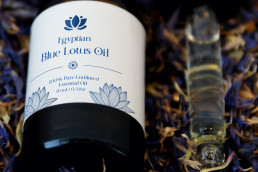
If you live in Edinburgh and you have been searching for genuine blue lotus oil, you will have noticed that the local market for Nymphaea caerulea is smaller and less obvious than for lavender or frankincense. This guide walks you through where to find blue lotus oil in Edinburgh, what separates a real Egyptian absolute from a scented imitation, and how to judge authenticity before you spend serious money on a tiny amber bottle.
Table of Contents
- What You Are Actually Looking For
- Absolute, Essential Oil, or CO2 Extract?
- Where Edinburgh Shoppers Actually Buy Blue Lotus Oil
- Independent Apothecaries and Herbal Dispensaries
- Health Food Shops and Wellness Boutiques
- Farmers Markets and Craft Events
- Online Specialists Shipping to Edinburgh
- How to Verify Authenticity Before You Pay
- What Edinburgh's Climate Means for Storage
- Realistic Expectations for Local Edinburgh Sourcing
- Typical Prices in the Edinburgh Market
- When Blue Lotus Oil Is Not the Right Purchase
- Complementary Oils Edinburgh Shops Stock Well
- Frequently Asked Questions
- Where to Go From Here
- Ready to Buy Authentic Blue Lotus Oil
It is written and clinically reviewed by Antonio Breshears, ND, CCA, a Bastyr-trained naturopathic doctor and certified clinical aromatherapist. For a broader grounding in this oil before you make a purchasing decision, readers may find The Complete Guide to Blue Lotus Oil a useful companion to this geographic buying guide.
What You Are Actually Looking For
Before you compare Edinburgh shops, it helps to know what authentic blue lotus oil looks like on a label. The botanical name is Nymphaea caerulea, the Egyptian blue water lily, and it is almost always sold as an absolute rather than a true steam-distilled essential oil. The absolute is a solvent-extracted concentrate, richly floral with a honeyed, slightly smoky base, and it is genuinely expensive because three to five thousand flowers are needed to yield a single gram of finished oil.
What this means practically is that anything labelled “blue lotus oil” selling for a few pounds per 10 ml is not blue lotus absolute. It is usually fragrance oil, a blue-tinted synthetic, or a blue lotus scented base diluted heavily into jojoba or fractionated coconut oil without disclosure. A real Edinburgh retailer carrying genuine blue lotus absolute will price a 5 ml bottle in the higher double or low triple figures, and they will tell you openly which extraction method was used.
Absolute, Essential Oil, or CO2 Extract?
Three types of extract are legitimately sold. The solvent-extracted absolute is the most common and arguably the most aromatically complete. True steam-distilled essential oil of blue lotus is rare, lighter in aroma, and tends to command a premium because yields are even smaller. Supercritical CO2 extracts sit in between, capturing a broad volatile profile without residual solvent. Any Edinburgh shop selling blue lotus should be able to tell you which of these three you are buying. If they cannot, treat that as a sign to look elsewhere.
Where Edinburgh Shoppers Actually Buy Blue Lotus Oil
Edinburgh has a thoughtful wellness and apothecary scene, but genuine blue lotus oil sits at the niche end of even that market. In my experience advising clients across the UK, there are four practical routes Edinburgh buyers tend to use, each with different trade-offs.
Independent Apothecaries and Herbal Dispensaries
Edinburgh has a handful of independent apothecaries, primarily around the Old Town, Stockbridge, and Bruntsfield, that carry a curated selection of unusual essential oils and absolutes. These shops are often run by qualified herbalists or aromatherapists, and they are worth visiting even if they do not currently stock blue lotus, because they can often special-order from their distributors or point you to a trusted supplier. Prices will reflect the small-batch, independent model, but so will the quality of advice.
When you walk in, ask three questions: what country is the oil from, what extraction method was used, and can you see a recent gas chromatography report. A good shopkeeper will welcome these questions. An evasive answer is itself an answer.
Health Food Shops and Wellness Boutiques
Larger health food retailers along George Street, Morningside, and Leith sometimes carry blue lotus in rotation, especially if they have a dedicated essential oil section. The quality here is more variable. Some boutiques stock reputable brands with proper sourcing, while others carry fragrance-grade oil dressed up with wellness marketing. The price is usually the giveaway. If the bottle is cheap, the contents are not genuine absolute.
Farmers Markets and Craft Events
The Stockbridge Market and occasional craft fairs around the city sometimes feature small-batch perfumers and natural fragrance makers who work with true blue lotus. These vendors often have interesting stock precisely because they use the oil in their own formulations, so they source carefully. The limitation is intermittency: you might find exactly what you want one Sunday and nothing the next.
Online Specialists Shipping to Edinburgh
For most Edinburgh buyers, the practical route to reliably sourced, properly documented blue lotus oil is an online specialist that ships to Scotland. The advantages are straightforward. You get access to a wider range of extraction types, you can read full sourcing and batch information before you buy, and you are not limited to whatever a local shop happened to order six months ago. The trade-off is that you cannot smell before you purchase, which matters more than most people realise with an oil this distinctive.
How to Verify Authenticity Before You Pay
Authenticity with blue lotus oil is not a matter of trust alone; there are concrete things you can check. Whether you are standing in a shop on Victoria Street or looking at a website at home in Morningside, the same checklist applies.
First, look for the full botanical name, Nymphaea caerulea, on the label or product page. If the label only says “blue lotus” or “lotus flower”, you have no botanical guarantee. Genuine sellers are specific because they know the buyer is specific.
Second, confirm the country of origin. Authentic blue lotus absolute is overwhelmingly Egyptian. Some legitimate material is grown in Thailand or India, but the classical Egyptian extract is the benchmark. If the origin is vague or listed as “multiple sources”, ask for clarification.
Third, ask for the extraction method in writing. “Solvent extracted absolute”, “steam distilled”, or “supercritical CO2 extracted” are acceptable answers. “Proprietary process” is not.
Fourth, check the price. A 5 ml bottle of genuine Egyptian blue lotus absolute from a reputable source generally sits in the middle to upper double figures sterling. A 10 ml bottle often sits in triple figures. If you are seeing a 30 ml bottle for less than thirty pounds, you are looking at a pre-diluted blend or a fragrance oil, regardless of what the marketing says.
Fifth, smell matters. Real blue lotus absolute has a cooler, aquatic floral top note, a deeply honeyed floral heart, and a balsamic, faintly smoky base. Fragrance oil by comparison smells flat, linear, and sweeter in an almost candy-like way. If an Edinburgh retailer offers samples, use your nose.
What Edinburgh’s Climate Means for Storage
Edinburgh’s mild, humid climate is actually reasonably kind to blue lotus oil, but storage still matters. Once you have bought a bottle, keep it in dark amber or cobalt glass, in a cool drawer or cupboard away from direct sunlight and radiators. A properly stored absolute has a shelf life of three to four years. The tenement flat reality of fluctuating central heating is not ideal, so if your kitchen or living room swings warm in winter, store the oil in a bedroom wardrobe or a north-facing room instead.
Avoid the bathroom. The humidity cycles that come with daily showers are not kind to volatile aromatic compounds, and the temperature swings accelerate oxidation at the neck of the bottle.
Realistic Expectations for Local Edinburgh Sourcing
To be honest with you, walking into an Edinburgh shop and finding exactly the blue lotus oil you want on the day you want it is the exception rather than the rule. The oil is niche enough that even good apothecaries stock it intermittently. If you are planning to use blue lotus regularly, whether in a personal fragrance practice, a meditation ritual, or a skincare formulation, it makes more sense to establish a relationship with a specialist supplier than to hope your local shop has it this week.
That said, Edinburgh’s independent scene is worth engaging with. Even if the shop does not stock the oil today, a conversation with a knowledgeable herbalist or aromatherapist is often more useful than the oil itself, particularly if you are new to working with absolutes.
Typical Prices in the Edinburgh Market
As a rough guide for someone comparing options, you can expect the following price ranges in 2024 and 2025. A 2 ml sample or tester of genuine blue lotus absolute typically costs between twenty and forty pounds. A 5 ml bottle ranges from roughly fifty to one hundred and twenty pounds, depending on extraction method and sourcing transparency. A 10 ml bottle sits between one hundred and two hundred and fifty pounds. Steam-distilled essential oil and supercritical CO2 extracts sit at the upper end of these ranges.
Pre-diluted rollerballs and blends are a separate category. A reputable 10 ml rollerball at two or three percent dilution in jojoba should cost between twenty and forty pounds. Anything significantly cheaper is either very weakly dosed or not the real thing.
When Blue Lotus Oil Is Not the Right Purchase
Before you spend in the three-figure range, it is worth asking whether blue lotus is actually the right choice for your intended use. Blue lotus is a subtle, contemplative oil. Its effects on mood and relaxation are real but modest, driven by flavonoids like apigenin and alkaloids including nuciferine and aporphine acting on the olfactory-limbic pathway. It is not a strong sedative, it is not a clinical anxiolytic, and it is not a substitute for proper care if you are dealing with significant anxiety, insomnia, or depression.
It is also not appropriate during pregnancy or breastfeeding, and caution is warranted for anyone taking dopaminergic medications, MAOIs, or strong sedatives. If any of those apply to you, speak to a qualified clinician before purchasing, regardless of how good the Edinburgh supplier is.
Finally, if your primary interest is a pleasant fragrance for a diffuser and nothing more, you might genuinely be better served by a well-made blue lotus blend rather than a neat absolute, simply because the neat material is expensive and your nose will not distinguish between a premium absolute and a beautifully constructed blend at one percent dilution in a diffuser.
Complementary Oils Edinburgh Shops Stock Well
Blue lotus pairs beautifully with several oils that Edinburgh apothecaries tend to keep in stock year-round. Sandalwood, particularly Indian or Australian, deepens the base and lengthens the scent. Roman chamomile complements the soothing flavonoid profile. Frankincense carterii adds a meditative lift. Jasmine sambac echoes the floral heart. Neroli adds citrus freshness to the top note.
For skin applications, jojoba and fractionated coconut oil are the standard carriers, both widely available across Edinburgh health shops. For perfumery, a clean grain alcohol base is preferred, and a few Edinburgh specialists stock perfumer’s alcohol in small quantities.
Frequently Asked Questions
Can I buy blue lotus oil in Edinburgh high street shops?
Occasionally, yes, but inconsistently. Independent apothecaries and curated wellness boutiques are more likely to stock it than chain health food shops. Even then, availability varies month to month. For reliable access, an online specialist that ships to Edinburgh is usually the more practical route.
How much should I pay for genuine blue lotus oil in Edinburgh?
A 5 ml bottle of authentic Egyptian blue lotus absolute typically sits between fifty and one hundred and twenty pounds. Anything significantly cheaper at that volume is almost certainly pre-diluted, blended, or synthetic. Samples of two or three millilitres from reputable suppliers usually fall in the twenty to forty pound range.
Is blue lotus oil legal in Scotland?
Yes. Blue lotus is legal to buy, sell, and possess in the United Kingdom, including Scotland. It is restricted or regulated in a small number of other jurisdictions, including Russia, Poland, Latvia, and the US state of Louisiana, but Edinburgh buyers do not face any legal barriers to purchasing the oil for personal use.
How do I know if an Edinburgh seller is offering fragrance oil instead of real blue lotus?
Three quick tests. Check the botanical name on the label; genuine sellers state Nymphaea caerulea. Check the price; fragrance oil is cheap and absolute is not. Smell the oil if you can; fragrance oil smells linear and sweet, while real absolute has a layered, honeyed, slightly smoky character.
Can I order a sample before committing to a full bottle?
Yes, and you should. Most reputable suppliers, whether local Edinburgh apothecaries or online specialists, offer small sample vials. Given the price of full bottles, investing ten to thirty pounds in a sample first is sensible, particularly because individual response to floral absolutes is subjective.
Does Edinburgh’s damp climate affect blue lotus oil quality?
Not significantly, provided storage is reasonable. Dark glass, a cool drawer or cupboard away from radiators and direct sunlight, and a tightly sealed cap are sufficient. Avoid bathroom storage because of humidity and temperature cycling. Properly stored, a blue lotus absolute holds well for three to four years.
Which extraction type is best for someone new to blue lotus?
A solvent-extracted absolute is the most accessible entry point. It is the most widely available, the aromatic profile is the fullest, and the price sits at the more approachable end of the market. Steam-distilled essential oil and supercritical CO2 extracts are worth exploring later, once you know you enjoy the oil and want to compare nuances.
Can I use blue lotus oil bought in Edinburgh directly on my skin?
Not neat, no. Blue lotus absolute should always be diluted in a carrier oil before skin application: typically one to two percent for the face, two to three percent for the body, and three percent for targeted application. For a 10 ml rollerball at two percent, that is roughly four drops of absolute in 10 ml of jojoba.
Are there Edinburgh aromatherapists who work with blue lotus professionally?
Yes. Several qualified clinical aromatherapists in Edinburgh and the surrounding Lothians include blue lotus in their materia medica, particularly for stress, emotional regulation work, and ceremonial or meditative applications. A consultation is genuinely useful if you plan to use the oil regularly and want a protocol tailored to your situation.
Is it worth paying more for organic blue lotus oil?
For blue lotus specifically, certified organic status is less of a differentiating factor than with conventionally farmed crops, because the flowers are typically harvested from less intensively treated environments. Sourcing transparency, extraction method, and batch documentation matter more than the organic label itself. That said, if a supplier offers certified organic material with full documentation, it is a reasonable added assurance.
Where to Go From Here
If you have narrowed your Edinburgh search and you are ready to make a purchase, the practical next step is to decide between a local apothecary visit and an online specialist order. For a first-time buyer, a sample from an online specialist with full documentation is usually the lower-risk entry point, followed by a full bottle once you know you enjoy the oil. For an experienced user who wants to build a relationship with a local supplier, an in-person visit to an independent Edinburgh apothecary is worth the effort even if stock is intermittent.
For deeper background on mechanism, chemistry, history, and clinical applications before you buy, The Complete Guide to Blue Lotus Oil covers the territory in detail. It is the companion text to this buying guide and answers most of the questions that come up once you have the oil in hand.

Antonio Breshears
Antonio Breshears is a renowned expert in holistic medicine and beauty, with over 25 years of research experience dedicated to uncovering the secrets of nature's most powerful remedies. Holding a degree in Naturopathic Medicine, Antonio's passion for healing and well-being has driven him to explore the intricate connections between mind, body, and spirit.
Over the years, Antonio has become a respected authority in the field, helping countless individuals discover the transformative power of plant-based therapies, including essential oils, herbs, and natural supplements. He has authored numerous articles and publications, sharing his wealth of knowledge with a global audience seeking to improve their overall health and well-being.
Antonio's expertise extends to the realm of beauty, where he has developed innovative, all-natural skincare solutions that harness the potency of botanical ingredients. His formulations embody his deep understanding of the healing properties found in nature, providing holistic alternatives for those seeking a more balanced approach to self-care.
With his extensive background and dedication to the field, Antonio Breshears is a trusted voice and guiding light in the world of holistic medicine and beauty. Through his work at Pure Blue Lotus Oil, Antonio continues to inspire and educate, empowering others to unlock the true potential of nature's gifts for a healthier, more radiant life.