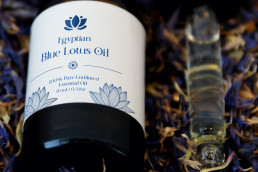
This recipe produces a 30 ml facial serum built around pure blue lotus absolute, formulated at a gentle 1 percent dilution for nightly use on normal, dry, mature, or stressed skin. It is designed to be genuinely useful rather than theatrical: a calming, mildly anti-inflammatory, aromatically grounding oil that doubles as a two minute pre-sleep ritual. You will finish with a single 30 ml amber dropper bottle of serum, enough for roughly two to three months of regular evening use.
Table of Contents
- What You Will Need
- Equipment
- Ingredients
- Why This Formulation Works
- Step-by-Step Instructions
- How to Use the Serum
- Storage and Shelf Life
- Variations
- Sensitive Skin Version
- Extra Calming Evening Version
- Richer, More Occlusive Version for Mature or Very Dry Skin
- Morning-Friendly Lighter Version
- Common Mistakes to Avoid
- Frequently Asked Questions
- Where to Go From Here
- Make It With Real Blue Lotus
It is written and clinically reviewed by Antonio Breshears, ND, CCA, a Bastyr-trained naturopathic doctor and certified clinical aromatherapist. If you want the wider context for how blue lotus behaves on skin and why dilution discipline matters, read The Complete Guide to Blue Lotus Oil alongside this recipe; it covers the alkaloid and flavonoid chemistry that underpins the choices made here.
What You Will Need
Equipment
- One 30 ml amber or cobalt glass dropper bottle (UV protective, essential for shelf life)
- A small glass beaker or measuring jug, 50 ml capacity
- A glass stirring rod or stainless steel mini-whisk
- A small funnel that fits the bottle neck
- Optional but recommended: a 0.1 gram kitchen scale for precision
- A label and a fine-tipped pen
Ingredients
- 15 ml jojoba oil (cold-pressed, organic if possible)
- 10 ml squalane (olive-derived or sugarcane-derived)
- 5 ml rosehip seed oil (cold-pressed, unrefined)
- 6 drops pure blue lotus absolute (Nymphaea caerulea)
- Optional: 4 drops vitamin E (mixed tocopherols) as a mild antioxidant
This gives a total of 30 ml of carrier with 6 drops of blue lotus absolute, which lands at approximately 1 percent dilution. That is the sweet spot for facial skin: enough to carry the aromatic and chemical signature of the absolute, well below the threshold where sensitisation becomes a real concern.
Why This Formulation Works
The carrier blend is not arbitrary. Jojoba forms the backbone because its molecular structure is technically a liquid wax ester that closely mirrors human sebum; it sits on skin without clogging, absorbs reasonably well, and has an excellent shelf life. Squalane is added for slip, lightness, and a clean, almost weightless finish, which prevents the serum from feeling greasy overnight. Rosehip provides the active fraction: it is genuinely rich in linoleic acid, trans-retinoic acid precursors, and carotenoids, and it earns its place in any serum aimed at tone, texture, and mature skin.
Blue lotus absolute is held at 1 percent for three reasons. First, the face is more permeable and more reactive than body skin, so the conservative end of the dilution range is appropriate. Second, the absolute itself is extraordinarily concentrated; 6 drops in 30 ml carries more aromatic presence than the arithmetic suggests because of the density of the material. Third, the flavonoids in blue lotus (apigenin, quercetin, kaempferol) contribute modestly to the calming and anti-inflammatory character of the serum at this dose; pushing higher delivers diminishing returns and increases the risk of irritation without a meaningful gain in benefit.
Step-by-Step Instructions
- Sterilise your equipment. Wash the bottle, beaker, rod, and funnel in hot soapy water, rinse thoroughly, and either air-dry completely on clean paper or wipe with 70 percent isopropyl alcohol and allow to evaporate. Any water residue will shorten the serum’s life.
- Measure the jojoba. Pour 15 ml of jojoba oil into the beaker. If you are using a scale instead of volume, 15 ml of jojoba is close to 13.5 grams.
- Add the squalane. Measure 10 ml of squalane into the beaker. It should blend instantly with the jojoba; squalane is thin and mixes with almost no resistance.
- Add the rosehip. Measure 5 ml of rosehip seed oil into the beaker. You should now have 30 ml of carrier, amber-gold in colour, with a faint, earthy-sweet rosehip note.
- Add the blue lotus absolute. Count 6 drops of pure blue lotus absolute directly into the carrier. If the absolute is particularly viscous (which is normal at cooler room temperatures), warm the bottle briefly in your hands before dosing; do not heat it artificially.
- Add vitamin E if using. Drop in 4 drops of mixed tocopherols. This will extend shelf life slightly and contributes to skin repair.
- Stir gently. Use the glass rod or mini-whisk to stir in slow circles for 30 to 45 seconds. Do not shake aggressively; you want to integrate the absolute without introducing air.
- Decant into the bottle. Place the funnel in the neck of the 30 ml amber bottle and pour the serum through. Leave a small headspace at the top.
- Cap, label, and rest. Secure the dropper, label with the date of production and contents, and let the serum rest in a cool, dark cupboard for 24 to 48 hours before first use. This allows the absolute to bind fully into the carrier matrix and the scent to mature.
How to Use the Serum
Use this serum at night, on cleansed, slightly damp skin. Dispense three to five drops into clean palms, warm briefly between the hands to release the aroma, and press gently into the face, neck, and décolletage. Do not rub aggressively; pressing is the correct technique for oil serums because it encourages absorption without dragging delicate facial skin.
Pause for two or three breaths after application and let the aromatic layer settle. This is where blue lotus earns its keep in a skincare routine: the olfactory signal reaches the limbic system within seconds, and the subjective shift toward parasympathetic dominance is part of why this serum doubles as a wind-down ritual. Allow 60 to 90 seconds of absorption before layering any other product on top, though most users find this serum works best as the final step.
Frequency: nightly is fine for most skin types. Sensitive skin may prefer every other night for the first two weeks. A rough guideline is one 30 ml bottle lasting eight to twelve weeks with consistent evening use.
Storage and Shelf Life
Store the finished serum upright in a cool, dark cupboard, ideally between 15 and 20 degrees Celsius. A bathroom cabinet is acceptable only if the room does not become steamy; heat and humidity shorten the life of cold-pressed carriers noticeably. Avoid direct sunlight, avoid the fridge (cold causes some carriers to cloud and behave unpredictably on rewarming), and keep the dropper clean.
Expected shelf life is 6 to 9 months from the date of production. Rosehip is the limiting ingredient: it is rich in polyunsaturated fatty acids and will oxidise faster than jojoba or squalane. If the serum develops a sharp, crayon-like, or distinctly rancid note, discard it. The blue lotus component itself is stable for 3 to 4 years in dark glass, so the absolute is not your shelf-life concern here; the carriers are.
Variations
Sensitive Skin Version
Reduce blue lotus to 3 drops (0.5 percent dilution), replace rosehip with an additional 5 ml of jojoba, and omit vitamin E if you are reactive to tocopherols. This gives a gentler, quieter serum suitable for reactive or rosacea-prone skin. Patch test on the inner forearm for 48 hours before facial use.
Extra Calming Evening Version
Keep the carrier blend as written, reduce blue lotus to 4 drops, and add 2 drops of Roman chamomile and 2 drops of sandalwood. Total essential oil load remains at 8 drops, still under 1.5 percent, and the serum becomes a more pronounced pre-sleep ritual. This variation pairs well with those who use the serum primarily for stress and secondarily for skin.
Richer, More Occlusive Version for Mature or Very Dry Skin
Replace the 10 ml of squalane with 5 ml of squalane and 5 ml of marula oil. Marula is heavier, richer in oleic acid, and more nourishing for dehydrated or papery skin. Keep blue lotus at 6 drops. The serum will feel more substantial on application and slightly slower to absorb, which is exactly what very dry skin wants overnight.
Morning-Friendly Lighter Version
Use 20 ml squalane, 8 ml jojoba, and 2 ml rosehip, with 4 drops blue lotus absolute. This produces a very light, quickly absorbed serum that wears well under SPF or makeup. Morning use should always be followed by broad-spectrum sun protection, particularly because rosehip contains photosensitising compounds in small amounts.
Common Mistakes to Avoid
Overdosing the absolute. More blue lotus does not mean more benefit. Above 2 percent on facial skin, you risk sensitisation without a proportional aromatic or therapeutic gain. Stay at 1 percent for daily use.
Using clear glass. UV light degrades the carrier oils and dulls the aromatic top of the blue lotus. Amber or cobalt is not an aesthetic choice; it is functional.
Skipping the 24 to 48 hour rest. Freshly blended serums smell noticeably different from rested ones. The absolute needs time to integrate into the carrier matrix, and rushing this stage produces a harsher, less rounded scent.
Applying to wet skin incorrectly. Damp skin is ideal, soaking wet skin is not. A light mist of water or a barely-towelled face allows the oil to form a soft emulsion on contact; pooling water will cause the serum to bead and roll off.
Shaking rather than stirring. Shaking introduces microbubbles and can slightly oxidise the blend. Gentle stirring is all that is needed.
Storing beside the shower. Temperature cycling and humidity are the two biggest enemies of an oil-based serum’s shelf life. Move it to a cool cupboard.
Frequently Asked Questions
Can I use this serum in the morning?
Yes, but the richer version written here is designed for evening. For morning use, follow the lighter variation above and always apply SPF over the top. The aromatic character of blue lotus is also better suited to wind-down than wake-up for most people.
Is 1 percent dilution really enough to feel a difference?
For facial use, yes. Facial skin is thinner and more permeable, and the olfactory pathway delivers the aromatic effect regardless of dilution strength on skin. Higher dilutions do not produce a proportionally stronger outcome on the face; they mostly increase sensitisation risk.
Can I substitute argan oil for jojoba?
You can, but be aware that argan has a distinct nutty scent that will compete with the floral-honeyed character of blue lotus. If you prefer argan for skin reasons, reduce it to 10 ml and keep 5 ml of jojoba in the blend to preserve the aromatic clarity.
Is this safe during pregnancy?
No. Blue lotus absolute should be avoided throughout pregnancy and breastfeeding. If you are pregnant, omit the blue lotus entirely; the carrier blend on its own is an excellent unscented facial serum.
Can I use this serum on body skin too?
Yes, though for body skin you can comfortably increase the blue lotus to 12 drops in 30 ml (roughly 2 percent). Keep the 1 percent ceiling for face.
Why does my serum smell slightly different from the pure absolute?
Because it is diluted and combined with carriers that each contribute their own subtle note: rosehip adds a dry, earthy undertone, jojoba is nearly neutral, and squalane is fully neutral. The blue lotus top notes also soften within the first week as the blend matures.
Can I add other essential oils?
Yes, within the total dilution budget. If you add 2 drops of another oil, reduce blue lotus to 4 drops so the combined load stays around 1 percent. Good partners include Roman chamomile, sandalwood, frankincense, rose otto, and neroli.
What if I develop redness or irritation?
Stop use immediately and wash the area gently with a mild cleanser and water. Irritation at 1 percent is uncommon but possible, usually indicating sensitivity to one of the carriers (more often rosehip than jojoba) rather than the blue lotus itself. Patch test any replacement batch on the inner forearm for 48 hours before returning to facial use.
How do I know if the blue lotus I bought is genuine?
Genuine blue lotus absolute is deeply viscous, amber to brown in colour, and has a complex aromatic profile: a cool floral-aquatic top, a honeyed floral heart, and a smoky-balsamic base. Pale, thin, or single-note sweet oils are usually either heavily diluted or synthetic. Source from suppliers who publish batch information and lot numbers.
Can I scale this recipe up to 100 ml?
Yes. Multiply every ingredient by 3.33: 50 ml jojoba, 33 ml squalane, 17 ml rosehip, 20 drops blue lotus absolute, and 13 drops vitamin E. Be aware that larger batches sit in the bottle for longer, so unless you use the serum daily, it is often better to make smaller, fresher batches every two to three months.
Where to Go From Here
Once you have made this serum and used it for a few weeks, you will have a clear sense of how your skin responds to blue lotus at a gentle facial dilution. From there, the natural next steps are either to experiment with the variations above or to explore other formulations in this category: body oils, sleep rollerballs, bath blends, and diffuser protocols all use similar principles with different dilution ceilings. If you want to understand the underlying chemistry and safety framework in more depth, The Complete Guide to Blue Lotus Oil is the reference text; it covers everything from extraction method to clinical context, and it will make every recipe on this site easier to adapt to your own skin and preferences.

Antonio Breshears
Antonio Breshears is a renowned expert in holistic medicine and beauty, with over 25 years of research experience dedicated to uncovering the secrets of nature's most powerful remedies. Holding a degree in Naturopathic Medicine, Antonio's passion for healing and well-being has driven him to explore the intricate connections between mind, body, and spirit.
Over the years, Antonio has become a respected authority in the field, helping countless individuals discover the transformative power of plant-based therapies, including essential oils, herbs, and natural supplements. He has authored numerous articles and publications, sharing his wealth of knowledge with a global audience seeking to improve their overall health and well-being.
Antonio's expertise extends to the realm of beauty, where he has developed innovative, all-natural skincare solutions that harness the potency of botanical ingredients. His formulations embody his deep understanding of the healing properties found in nature, providing holistic alternatives for those seeking a more balanced approach to self-care.
With his extensive background and dedication to the field, Antonio Breshears is a trusted voice and guiding light in the world of holistic medicine and beauty. Through his work at Pure Blue Lotus Oil, Antonio continues to inspire and educate, empowering others to unlock the true potential of nature's gifts for a healthier, more radiant life.