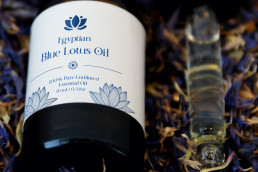
Dark circles are one of the most persistent complaints in the consulting room, and one of the most misunderstood. This article looks at whether blue lotus oil dark circles protocols genuinely help, what mechanisms are plausible, and where the oil sits alongside sleep, circulation, pigmentation, and the simple reality of thin periorbital skin. It is written for readers who want an honest assessment rather than a marketing promise.
Table of Contents
- What Dark Circles Actually Are
- How Blue Lotus Oil Helps With Dark Circles
- Flavonoid-led antioxidant activity
- Soothing action on inflamed, rubbed skin
- Microcirculatory and lymphatic encouragement
- Parasympathetic and sleep-adjacent effects
- How to Use Blue Lotus Oil for Dark Circles
- The base formulation
- The evening ritual
- An inhalation element for the sleep side
- What to Expect: Realistic Timeframes
- When Blue Lotus Oil Is Not the Right Choice
- Complementary Approaches That Matter
- Sleep quality, not just quantity
- Sleeping position and head elevation
- Daily sun protection
- Addressing allergies and congestion
- Iron, hydration, and the inside-out view
- Gentle complementary oils
- Frequently Asked Questions
- Where to Go From Here
- Soften Shadows, Slowly and Honestly
It is written and clinically reviewed by Antonio Breshears, ND, CCA, a Bastyr-trained naturopathic doctor and certified clinical aromatherapist. For a broader grounding in the oil’s chemistry, origins, and applications, see The Complete Guide to Blue Lotus Oil, which covers the foundations this article builds on.
What Dark Circles Actually Are
Before considering any oil, it helps to understand that “dark circles” is a single name for at least four distinct problems, and the treatment that works for one will be useless for another. If you cannot tell which type you have, no topical, including blue lotus, will reliably deliver what you want.
The first type is vascular. The skin around the eyes is the thinnest on the body, often less than half a millimetre, and the dense network of small veins beneath it shows through as a bluish or purplish shadow. Fatigue, poor sleep, nasal congestion, and dehydration all make this worse by dilating those vessels or slowing lymphatic drainage.
The second is pigmentary. Excess melanin deposits in the periorbital skin, producing a true brown rather than blue tone. This is more common in darker skin phototypes, is often genetic, and can be aggravated by sun exposure, eczema-related rubbing, or post-inflammatory pigmentation from conditions like allergic dermatitis.
The third is structural: hollow tear troughs, loss of fat pads with ageing, or a prominent orbital rim that casts a shadow. No topical reverses this; it is a lighting problem, not a skin problem.
The fourth is mixed, which is most people. Some vascular, some pigmentary, sometimes some structural contribution as well.
A simple self-test: gently stretch the skin below your eye. If the darkness fades significantly, it is likely vascular or structural. If it stays the same, pigmentation is a larger part of the picture.
How Blue Lotus Oil Helps With Dark Circles
Blue lotus oil is not a dermatological miracle for this area, and I want to be direct about that up front. What it offers is a set of modest, scientifically plausible contributions that can make a real but gradual difference for vascular and mild pigmentary circles, particularly when combined with addressing the root causes.
Flavonoid-led antioxidant activity
The periorbital skin is thin, highly vascularised, and readily oxidatively stressed by UV, blue light, and rubbing. Blue lotus oil contains flavonoids including apigenin, quercetin, and kaempferol, all of which have well-documented antioxidant activity and can help quench the reactive oxygen species that drive pigment formation and capillary fragility. This is a slow, cumulative benefit rather than an overnight change.
Soothing action on inflamed, rubbed skin
If your dark circles have a post-inflammatory component, often seen in people with hay fever, eczema, or chronic sinus congestion who rub their eyes, calming that low-grade inflammation is genuinely useful. Apigenin and the oil’s broader phytochemistry have a soft, anti-irritant character that suits this tissue. Less rubbing, less inflammation, less melanin dumped into the dermis over time.
Microcirculatory and lymphatic encouragement
The periorbital vascular bed responds to gentle manual movement and warmth. A diluted oil used with careful lymphatic-direction massage (inner corner outward, along the orbital rim) encourages drainage of the stagnant venous blood that produces the bluish cast. The oil itself is a vehicle and a mild enhancer here; the manual technique does most of the work.
Parasympathetic and sleep-adjacent effects
This one matters more than it sounds. A great proportion of dark circles, particularly the vascular variety, is simply poor sleep written on the face. Blue lotus is mildly relaxing through its aporphine and nuciferine alkaloids and its olfactory-limbic effect. Used in a bedtime ritual, it can nudge deeper rest, which in turn reduces circles from the inside. This is often the single most effective thing the oil does for the under-eye area.
How to Use Blue Lotus Oil for Dark Circles
The periorbital skin needs gentler handling than the rest of the face. Never apply neat oils here, never apply directly to the lash line or lid margin, and always keep the application about one centimetre below the lower lash line and on the orbital bone rather than the soft tissue immediately beneath the eye.
The base formulation
A safe under-eye dilution for blue lotus oil is 0.5 to 1 percent, which is lower than a standard face dilution. That is roughly one to two drops of blue lotus oil per 10 ml (two teaspoons) of carrier. Exceeding this does not improve results and increases the risk of irritation or sensitisation in this delicate zone.
Choose a carrier suited to thin skin: squalane (light, non-comedogenic, very well tolerated), rosehip seed oil (useful if pigmentation is a feature), or jojoba (stable, broadly tolerated). Avoid heavier carriers like coconut or shea butter on the under-eye; they can settle into fine lines and feel waxy.
The evening ritual
After cleansing, warm a single drop of the diluted oil between your ring fingers (the ring finger applies least pressure). Tap, rather than rub, the oil along the orbital rim, starting at the inner corner and working outward toward the temple. Avoid pulling the skin. Follow with two or three very light sweeping motions along the same line to encourage lymphatic flow.
Do this once daily at night, for at least six to eight weeks, before judging results. Twice daily is acceptable if skin tolerates it, but once at night is generally sufficient and safer.
An inhalation element for the sleep side
Because sleep quality contributes so much to circles, it is worth adding a diffuser component to the routine. Two to four drops of pure blue lotus oil in a bedroom diffuser for thirty to forty minutes before bed supports the parasympathetic shift that better sleep requires. Many readers find this contributes as much to their under-eye improvement as the topical work.
What to Expect: Realistic Timeframes
If I am honest with patients, I tell them this: topical approaches to dark circles tend to improve things by 15 to 30 percent at best, and almost never over weeks. Thinking in months is more accurate.
In the first two weeks, expect very little visible change. The skin may look a touch smoother and better hydrated, which softens the appearance of shadows slightly, but deeper pigmentary or vascular change has not yet occurred.
Between weeks three and six, if you are also sleeping better, hydrating properly, and not rubbing your eyes, you may notice that the circles look less pronounced in morning light, that puffiness settles faster after waking, and that the skin feels more resilient.
Between two and three months, genuine improvement is possible for vascular and mild pigmentary circles, particularly when the routine is combined with sun protection (UV reliably worsens periorbital pigmentation and most people underprotect this area) and sleep improvement.
Structural circles, hollows from fat-pad loss or a deep tear-trough, will not change from any topical, blue lotus included. These are addressed, if at all, by clinical interventions such as hyaluronic acid fillers, which sit outside the scope of essential oil care.
When Blue Lotus Oil Is Not the Right Choice
There are circumstances where I would steer someone away from a periorbital blue lotus protocol entirely.
- Pregnancy and breastfeeding. Blue lotus oil is best avoided during these periods given its alkaloid content and the absence of safety data, regardless of the application area.
- Known sensitivity to florals. If you react to jasmine, ylang ylang, or other floral absolutes, test carefully on the inner forearm for 72 hours before using anything near the eye.
- Active eczema, dermatitis, or broken skin around the eye. Heal the barrier first, with plain, bland emollients and medical advice as needed. Essential oils on compromised periorbital skin is a recipe for sensitisation.
- Predominantly structural circles. If the darkness is entirely shadow from a hollow, you are wasting good oil. A cosmetic dermatology consult is the appropriate path.
- Contact lens wearers. Apply the oil at least thirty minutes before inserting lenses and keep the application well away from the lash line.
If circles appear suddenly, are unilateral, or are accompanied by swelling, pain, or visual changes, see a doctor rather than reaching for any topical. New or asymmetric periorbital changes can occasionally signal conditions that need medical assessment.
Complementary Approaches That Matter
This is where the honest advice sits. Blue lotus oil is a useful adjunct, but the biggest under-eye improvements almost always come from things that have nothing to do with what you put on your skin.
Sleep quality, not just quantity
Seven to eight hours with stable circadian rhythm, cool room, and minimal screen exposure for the hour before bed does more for vascular circles than any serum on the market. If you sleep badly, prioritise fixing that. Blue lotus as a bedtime inhalation helps; the underlying sleep hygiene helps more.
Sleeping position and head elevation
Sleeping flat allows fluid to pool around the eyes overnight. A slightly elevated pillow reduces morning puffiness and, over time, reduces the stretched, shadowed appearance that comes with chronic fluid retention.
Daily sun protection
This one is underrated. UV exposure is a major driver of periorbital pigmentation, and most people apply sunscreen to the cheeks and forehead but skimp on the eye area. A mineral SPF and UV-protective sunglasses matter as much as any night-time oil.
Addressing allergies and congestion
Chronic nasal congestion and allergic rhinitis produce what dermatologists call “allergic shiners”, venous congestion that darkens the under-eye area. Managing allergies properly, whether through antihistamines, nasal sprays, or allergen avoidance, can transform the appearance of chronic dark circles.
Iron, hydration, and the inside-out view
Iron deficiency can produce pallor elsewhere that makes the blood vessels under the eyes look more prominent by contrast. Dehydration shrinks skin slightly and deepens shadows. If circles are persistent, a blood test for ferritin and basic dietary review is more valuable than another serum.
Gentle complementary oils
Rosehip seed oil, as a carrier, contributes trans-retinoic acid precursors that support gentle pigment turnover. Carrot seed (very low dilution) and sea buckthorn (used with caution because it stains) are traditional allies for pigmented circles. None of these are blue lotus alternatives; they are companions.
Frequently Asked Questions
Can I apply blue lotus oil directly under my eyes?
No. Always dilute to 0.5 to 1 percent in a suitable carrier such as squalane or jojoba. Undiluted essential oils are not appropriate for periorbital skin and can cause sensitisation, irritation, or ocular discomfort if they migrate toward the eye.
How long before I see results on my dark circles?
Expect a six to twelve week timeframe to judge genuine change, and remember that topical improvement is generally modest, in the 15 to 30 percent range for vascular and mild pigmentary circles. Structural (hollow) circles will not respond to any topical.
Will blue lotus oil help hereditary dark circles?
Partly. If the hereditary component is pigmentary (common in darker skin phototypes), the antioxidant and soothing actions can offer modest improvement over months, particularly paired with sun protection. If it is structural, no topical will change it meaningfully.
Can I use blue lotus oil with retinol or vitamin C around the eyes?
With care. Use them on alternate evenings rather than layering on the same night, and start slowly. The under-eye area tolerates less than the rest of the face. If irritation appears, step back to blue lotus alone for a fortnight.
Is it safe during pregnancy?
No. Blue lotus oil is best avoided throughout pregnancy and breastfeeding. The alkaloid content and lack of safety data make it an unnecessary risk in these periods, even in low periorbital dilutions.
What carrier oil works best for the under-eye area?
Squalane is my usual first choice: lightweight, non-comedogenic, very well tolerated. Rosehip seed oil is a strong second if pigmentation is a feature. Jojoba is broadly safe and shelf-stable. Avoid coconut oil and heavy butters in this zone.
Can blue lotus oil reduce puffiness as well as darkness?
It can help modestly with the fluid-retention component of puffiness when paired with gentle lymphatic-direction massage, but it is not a decongestant in the way caffeine-based eye products are. For acute puffiness, a cold compress is more effective; for chronic puffiness, address sleep position, salt, and allergies.
Should I apply in the morning or at night?
At night is preferable. The oil absorbs gradually and its relaxing aromatic component supports the sleep that reduces vascular circles from the inside. If you prefer morning application, use an even lighter dilution and follow with sunscreen.
How do I know if my dark circles are vascular, pigmentary, or structural?
A simple self-test: gently stretch the skin below the eye. If the darkness fades noticeably, vascular or structural factors dominate. If it persists unchanged, pigmentation is the main driver. Most people have a mixed presentation.
Can I use blue lotus oil if I wear contact lenses?
Yes, with sensible precautions. Apply the oil at least thirty minutes before inserting lenses, keep application well away from the lash line, and wash hands thoroughly after use.
Where to Go From Here
Dark circles are rarely solved by a single product, and blue lotus oil is no exception. Where it earns its place is as a gentle, well-tolerated adjunct: modestly antioxidant, mildly soothing, quietly supportive of the sleep and parasympathetic rhythm that influence the under-eye area more than most people realise. Use it with realistic expectations, consistent technique, and attention to the lifestyle factors that drive the problem in the first place, and the results will, over months rather than weeks, speak for themselves.
For the broader context on the oil’s chemistry, sourcing, and safety, revisit The Complete Guide to Blue Lotus Oil. It covers the foundational material that any specific protocol, including this one, rests upon.

Antonio Breshears
Antonio Breshears is a renowned expert in holistic medicine and beauty, with over 25 years of research experience dedicated to uncovering the secrets of nature's most powerful remedies. Holding a degree in Naturopathic Medicine, Antonio's passion for healing and well-being has driven him to explore the intricate connections between mind, body, and spirit.
Over the years, Antonio has become a respected authority in the field, helping countless individuals discover the transformative power of plant-based therapies, including essential oils, herbs, and natural supplements. He has authored numerous articles and publications, sharing his wealth of knowledge with a global audience seeking to improve their overall health and well-being.
Antonio's expertise extends to the realm of beauty, where he has developed innovative, all-natural skincare solutions that harness the potency of botanical ingredients. His formulations embody his deep understanding of the healing properties found in nature, providing holistic alternatives for those seeking a more balanced approach to self-care.
With his extensive background and dedication to the field, Antonio Breshears is a trusted voice and guiding light in the world of holistic medicine and beauty. Through his work at Pure Blue Lotus Oil, Antonio continues to inspire and educate, empowering others to unlock the true potential of nature's gifts for a healthier, more radiant life.