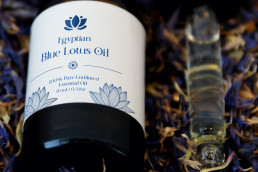
If you are wondering whether blue lotus oil for eczema is worth considering, the honest answer is: sometimes yes, often as a supporting player rather than a headline treatment, and never as a replacement for the dermatological basics that actually keep atopic skin calm. This article is for readers with mild to moderate eczema, dry patches, or flare-prone skin who want to know precisely where a luxury botanical like Nymphaea caerulea fits into a sensible routine, and where it does not.
Table of Contents
- What Eczema Actually Is
- How Blue Lotus Oil Helps With Eczema
- Flavonoid-mediated anti-inflammatory activity
- Olfactory-limbic calming and the itch-stress loop
- Gentle support for compromised skin
- How to Use Blue Lotus Oil for Eczema
- Patch test first, always
- Dilution and carrier
- Application method
- Frequency
- Diffuser use alongside topical
- What to Expect: Realistic Timeframes
- When Blue Lotus Oil Is NOT the Right Choice
- Complementary Approaches
- Frequently Asked Questions
- Where to Go From Here
- Calm, Considered Skincare
It is written and clinically reviewed by Antonio Breshears, ND, CCA, a Bastyr-trained naturopathic doctor and certified clinical aromatherapist. For broader context on how this oil behaves in skincare generally, readers may also want to explore the complete guide to blue lotus oil, which covers chemistry, extraction methods, and safe dilution across use cases.
What Eczema Actually Is
Eczema is not a single disease. It is a family of inflammatory skin conditions, the most common being atopic dermatitis, characterised by a compromised skin barrier, heightened immune reactivity, and a tendency to flare in response to dryness, friction, allergens, stress, and certain foods. The visible symptoms (redness, itch, scaling, weeping, lichenification in chronic patches) are the downstream expression of two underlying problems: a leaky barrier that loses water too easily, and an immune system that over-responds to things it encounters through that leaky barrier.
Any topical approach, whether pharmaceutical or botanical, works by addressing one or both of those problems. Emollients and occlusives repair and protect the barrier. Anti-inflammatories (topical steroids, calcineurin inhibitors, certain plant compounds) quiet the immune response. Nothing applied to the surface “cures” eczema in a constitutional sense; what good topicals do is restore calm long enough for the skin to rebuild itself and for the person to live comfortably.
Understanding this framing matters because it tells you what to expect from an oil like blue lotus. It is not a steroid substitute. It is not a barrier-repair miracle. What it can offer, used thoughtfully, is a modest anti-inflammatory and anti-irritant contribution alongside a proper emollient base, plus a genuine psychological calming effect that matters more than people realise for an itch-scratch condition driven partly by stress.
How Blue Lotus Oil Helps With Eczema
There are three reasonably well-attested mechanisms by which blue lotus absolute may contribute to eczema care. None of them is dramatic in isolation; together, and within a sensible routine, they can be genuinely useful.
Flavonoid-mediated anti-inflammatory activity
Blue lotus contains notable quantities of apigenin, quercetin, and kaempferol, flavonoids with documented anti-inflammatory and antioxidant activity in cell and animal studies. Apigenin in particular has been studied for its capacity to modulate inflammatory cytokine signalling relevant to inflammatory skin conditions. The concentrations delivered through a diluted topical application are modest, and the evidence for botanical flavonoids in eczema is supportive rather than definitive, but the mechanism is real and the direction of effect is the right one: less reactivity, less redness, less itch.
Olfactory-limbic calming and the itch-stress loop
Eczema is notoriously stress-reactive. Elevated cortisol and sympathetic arousal worsen barrier function and amplify itch perception; scratching in turn damages the barrier further and perpetuates the flare. The scent of blue lotus, acting through the olfactory-limbic pathway, produces a parasympathetic shift in most people: slower breathing, reduced rumination, a softening of the low-grade anxiety that keeps hands moving toward itchy patches at 2am. Breaking the stress-itch-scratch loop, even partially, is one of the most underrated interventions in chronic eczema.
Gentle support for compromised skin
Properly diluted in a well-chosen carrier, blue lotus absolute can be incorporated into oil blends that serve as a light occlusive layer over a moisturiser. The oil itself is not a primary emollient; the carriers (jojoba, squalane, sweet almond) do most of that work. But the combination can feel noticeably more comforting on dry, reactive skin than a plain unscented product, and the sensory pleasure of a well-made blend matters for adherence in a condition where daily consistency is the real treatment.
How to Use Blue Lotus Oil for Eczema
The protocol below assumes mild to moderate eczema on body or limbs. For facial eczema, reduce dilutions further. For weeping, broken, or infected skin, do not apply any essential oil blend until the barrier has closed; use a clinician-recommended emollient or prescription treatment first.
Patch test first, always
Eczema-prone skin is reactive by definition. Before committing to any new topical, apply a small amount of your intended blend to the inner forearm or behind the ear and leave for 24 to 48 hours. If there is no itching, burning, or redness beyond a mild transient warmth, proceed. If there is a reaction, stop. This step is not optional.
Dilution and carrier
Use a 1 percent dilution for eczema-prone skin: approximately 6 drops of blue lotus absolute per 30ml of carrier oil. Jojoba is the preferred carrier because it is structurally similar to human sebum, non-comedogenic, and well tolerated by reactive skin. Squalane is a fine alternative. Avoid heavy mineral oils, which occlude without nourishing, and avoid coconut oil on active eczema because it can be too occlusive for some and drying for others depending on skin chemistry.
Application method
The best time to apply any oil blend on eczematous skin is immediately after bathing, within three minutes of stepping out, while skin is still damp. Pat (do not rub) skin to remove excess water, apply your regular unscented emollient or ceramide cream first, then layer a small amount of the blue lotus blend over dry-feeling patches as a finishing oil. This “moisturiser then oil” sequence traps hydration more effectively than oil alone.
Frequency
Twice daily during a flare, once daily as maintenance. Do not exceed 1 percent dilution on eczema skin even if you tolerate higher concentrations elsewhere. More is not better with reactive skin; consistency is.
Diffuser use alongside topical
Given that stress is a major eczema trigger, consider using blue lotus in a diffuser (2 to 4 drops) in the evening as part of a wind-down routine. The calming olfactory effect addresses the itch-scratch loop from a different angle than topical application, and the two approaches combine well.
What to Expect: Realistic Timeframes
Set expectations honestly. A well-formulated blue lotus blend is not going to clear an active flare in 48 hours. What it can reasonably be expected to do, within a proper routine, looks roughly like this:
- Days 1 to 3: Immediate sensory comfort. Skin feels softer, less tight. Scent contributes to a calmer bedtime. No dramatic change in the eczema itself.
- Week 1 to 2: Reduction in the low-grade background itch between flares, assuming consistent twice-daily use. Dry patches may appear less flaky.
- Week 3 to 6: If the blend is working for your skin, baseline reactivity often decreases. Flares may be less frequent or less severe, though trigger exposure still matters more than any topical.
- Beyond 6 weeks: Continue as maintenance. If no meaningful benefit has appeared by six weeks of consistent, correct use, it is probably not the right tool for your particular eczema pattern, and that is worth knowing.
If the eczema is worsening at any point, stop immediately. Reactive skin can turn on a product that seemed fine initially, and the correct response is always to simplify rather than persist.
When Blue Lotus Oil Is NOT the Right Choice
There are several situations in which blue lotus oil should not be applied to eczematous skin, and being honest about them matters more than trying to position the product as universally appropriate.
Acute weeping or infected eczema. If skin is broken, oozing, crusted yellow, or you suspect bacterial or viral infection (eczema herpeticum is a medical emergency), do not apply essential oil blends. See a dermatologist or GP.
Severe atopic dermatitis. Moderate to severe eczema requires proper medical management, usually including topical corticosteroids, calcineurin inhibitors, or in some cases systemic therapy. A botanical adjunct may have a role in maintenance between flares, but it is not a substitute for prescription treatment, and framing it as one would be irresponsible.
Pregnancy and breastfeeding. Blue lotus absolute is avoided during pregnancy and lactation as a precautionary measure because the alkaloid profile has not been adequately studied for gestational safety. Eczema during pregnancy should be managed with clinician-approved topicals only.
Known sensitivity to floral absolutes. If you have reacted to jasmine, rose, or other heavy floral absolutes in the past, the likelihood of reacting to blue lotus is higher. Patch test with extra care, or choose a different approach.
Contact dermatitis masquerading as eczema. If your “eczema” is actually allergic contact dermatitis to a specific trigger, adding any new botanical introduces risk without addressing the cause. If patches appear only in specific locations (watch strap, waistband, earring contact), consider allergy testing before experimenting with oils.
Complementary Approaches
Blue lotus oil is most useful when it sits inside a sensible, layered approach to eczema care. The scaffolding that actually keeps atopic skin calm has little to do with any single product; it has to do with daily rhythm and trigger management.
Barrier support first. A ceramide-containing moisturiser or a bland petrolatum-based emollient, applied generously and often, is the foundation. No scented oil, however luxurious, replaces this. Think of blue lotus as the final decorative layer on a cake that is mostly structural.
Bathing practices. Short, lukewarm baths or showers (under 10 minutes), gentle non-foaming cleansers, no scrubbing, and immediate post-bath moisturising do more for eczema than most people realise.
Stress and sleep. Because stress amplifies eczema and sleep deprivation amplifies stress, anything that genuinely improves either tends to show up in the skin within weeks. This is one of the strongest arguments for using blue lotus in a diffuser at night.
Dietary and environmental triggers. House dust mite reduction, humidifier use in dry seasons, cotton rather than wool next to skin, and identifying any genuine food triggers with a clinician rather than guessing.
When to see a professional. If eczema covers more than 10 percent of body surface area, disturbs sleep regularly, is not responding to over-the-counter emollients, or shows any signs of infection, see a GP or dermatologist. Early proper treatment prevents the chronic lichenification that becomes much harder to reverse.
Frequently Asked Questions
Can blue lotus oil cure eczema?
No. Eczema is not curable by any topical, botanical or pharmaceutical. What can be managed is the frequency and severity of flares, and the comfort level between them. Blue lotus oil can contribute modestly to that management in some people.
Is blue lotus oil safe on broken skin?
No. Do not apply essential oil blends to weeping, cracked, or infected skin. Wait until the barrier has closed and the skin is dry and intact, then reintroduce cautiously with a patch test.
What dilution is safe for eczema-prone skin?
1 percent or lower, approximately 6 drops per 30ml of carrier oil. For facial eczema, reduce further to around 0.5 percent.
Which carrier oil is best?
Jojoba is generally the best first choice because it is non-comedogenic and structurally similar to human sebum. Squalane is an excellent alternative. Avoid heavy mineral oils.
How long before I see results?
Immediate sensory comfort within days, measurable reduction in background itch within one to two weeks, and reduced flare frequency within three to six weeks if the blend suits your skin. If nothing meaningful has changed by six weeks, it is probably not the right tool for you.
Can I use blue lotus oil alongside prescription eczema creams?
Generally yes, but sequence and spacing matter. Apply any prescription topical first, wait for it to absorb (typically 20 to 30 minutes), then apply your emollient, then finish with a light oil blend. Ask your prescriber if uncertain.
Is blue lotus oil safe for children with eczema?
Caution is warranted. For children under 12, it is best to use only very low dilutions (0.5 percent or less) under guidance from a qualified practitioner, and to avoid entirely in children under 2. A plain unscented emollient is almost always the better choice for paediatric eczema.
Can blue lotus oil trigger a flare?
Yes, any new topical can. Patch testing first, starting with a low dilution, and stopping immediately if skin worsens are the correct precautions. Reactive skin does not tolerate experimentation at high concentrations.
Is the diffuser approach actually effective for eczema?
For the stress and sleep components of eczema, yes, modestly. It will not heal a skin patch directly, but reducing the anxiety and poor sleep that drive scratching has a real downstream effect on skin over weeks.
Can I use blue lotus oil on eyelid or facial eczema?
Only with extreme caution and at very low dilutions (0.5 percent or less), and never on the eyelids themselves. Facial and periocular eczema is often better managed with dermatologist-recommended formulations rather than essential oil blends.
Where to Go From Here
If your eczema is mild, well-controlled, and you are looking for a thoughtful addition to a maintenance routine that also happens to bring some genuine calm to your evenings, blue lotus oil is a reasonable option. Use it at 1 percent in jojoba, layered over an emollient, applied consistently, and in combination with the boring fundamentals (short baths, daily moisturising, trigger awareness) that actually do the heavy lifting. If your eczema is moderate to severe, unresponsive, or showing any signs of infection, skip the botanical experimentation and see a dermatologist first; once the skin is stable, there may be room for a product like this in your maintenance phase.
For more on how this oil behaves across different skin applications and what to look for in a quality absolute, the complete guide to blue lotus oil is the best starting point.

Antonio Breshears
Antonio Breshears is a renowned expert in holistic medicine and beauty, with over 25 years of research experience dedicated to uncovering the secrets of nature's most powerful remedies. Holding a degree in Naturopathic Medicine, Antonio's passion for healing and well-being has driven him to explore the intricate connections between mind, body, and spirit.
Over the years, Antonio has become a respected authority in the field, helping countless individuals discover the transformative power of plant-based therapies, including essential oils, herbs, and natural supplements. He has authored numerous articles and publications, sharing his wealth of knowledge with a global audience seeking to improve their overall health and well-being.
Antonio's expertise extends to the realm of beauty, where he has developed innovative, all-natural skincare solutions that harness the potency of botanical ingredients. His formulations embody his deep understanding of the healing properties found in nature, providing holistic alternatives for those seeking a more balanced approach to self-care.
With his extensive background and dedication to the field, Antonio Breshears is a trusted voice and guiding light in the world of holistic medicine and beauty. Through his work at Pure Blue Lotus Oil, Antonio continues to inspire and educate, empowering others to unlock the true potential of nature's gifts for a healthier, more radiant life.