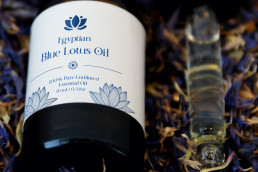
Trauma recovery is slow, non-linear work, and no essential oil will shortcut it. What a well-chosen oil can do is make the nervous system a slightly more hospitable place to do the work, softening hypervigilance, easing the body out of freeze, and giving you a sensory anchor for grounding between therapy sessions. This article examines blue lotus oil trauma applications honestly: what the chemistry plausibly supports, how to use it alongside professional care, and where its limits sit.
Table of Contents
- Understanding Trauma and the Nervous System
- How Blue Lotus Oil Helps With Trauma Recovery
- Parasympathetic Tone and Amygdala Quieting
- Creating a Safety Anchor
- Softening Hyperarousal Without Numbing
- Supporting Sleep Without Forcing It
- How to Use Blue Lotus Oil for Trauma Recovery
- The Anchor Inhalation (Primary Protocol)
- The Evening Ritual
- Diffusion During Therapy or Journaling
- Grounding Roller for Activation
- What to Expect: Realistic Timeframes
- When Blue Lotus Oil Is NOT the Right Choice
- Complementary Approaches
- Using Blue Lotus Between Therapy Sessions
- Frequently Asked Questions
- Where to Go From Here
- A Quiet Anchor for Steady Days
It is written and clinically reviewed by Antonio Breshears, ND, CCA, a Bastyr-trained naturopathic doctor and certified clinical aromatherapist. For a broader overview of the oil itself, its chemistry, and its wider therapeutic profile, see the complete guide to blue lotus oil, which serves as the master reference for this and related articles on nervous-system and emotional applications.
Understanding Trauma and the Nervous System
Trauma is not simply a memory of something bad; it is a physiological state that persists after the original event has passed. When the brain encodes an experience as overwhelming, the autonomic nervous system can become stuck in patterns of sympathetic activation (fight or flight) or dorsal vagal shutdown (freeze, numbness, dissociation). The amygdala, which flags threat, grows more reactive. The prefrontal cortex, which contextualises and regulates, loses some of its braking power. The body remembers what the mind cannot fully articulate.
This is why trauma recovery involves more than talking about what happened. Approaches such as somatic experiencing, EMDR, sensorimotor psychotherapy, trauma-focused CBT, and internal family systems all recognise that the body must be invited back into a felt sense of safety before cognitive work can fully settle. Breath, touch, smell, rhythm, and pace all become therapeutic tools, not because they erase the trauma, but because they teach the nervous system that the present moment is not the past.
Aromatherapy sits naturally within this somatic frame. Scent is the only sensory modality with direct, largely uncensored access to the limbic system, particularly the amygdala and hippocampus. A thoughtfully chosen aroma can become an anchor: a cue that signals, “you are here, you are safe, this is a different moment.” Blue lotus, with its layered honeyed-floral profile and calming chemistry, lends itself well to this role.
How Blue Lotus Oil Helps With Trauma Recovery
The value of blue lotus in trauma work is not that it sedates or suppresses. It is that it gently tips the autonomic balance toward parasympathetic dominance and provides a distinctive, unfamiliar scent that the brain can associate with deliberate self-regulation. Several mechanisms contribute.
Parasympathetic Tone and Amygdala Quieting
Blue lotus absolute contains apigenin, a flavonoid that interacts modestly with central benzodiazepine receptors, alongside aporphine and nuciferine, alkaloids with serotonergic and dopaminergic activity. Inhaled, these compounds enter the bloodstream via the nasal mucosa and, more importantly, trigger olfactory signalling directly into the limbic system. The clinical effect most people report is a subtle lowering of baseline alertness: shoulders drop, the breath deepens, the throat releases. For someone whose nervous system has been running hot for months or years, this is not nothing. It is also not a substitute for vagal tone built through breath, movement, connection, and therapy.
Creating a Safety Anchor
One of the most practical applications of scent in trauma recovery is anchoring. A specific aroma, used only during moments of deliberate calm, safe imagery, or grounding exercises, becomes conditioned to those states. Over weeks, the scent alone begins to elicit a fragment of the calmed state. Blue lotus is particularly suited to this because its scent is uncommon; the brain has few pre-existing associations to override. You are writing on a relatively blank page.
Softening Hyperarousal Without Numbing
Trauma survivors often reject heavy sedatives or strongly hypnotic oils because the loss of alertness feels unsafe. Blue lotus is not a strong sedative. It takes the edge off sympathetic activation without producing the blunted, defenceless feeling that benzodiazepines or high-dose lavender can sometimes induce. For someone whose hypervigilance has been protective, this matters: the oil supports rest without asking the nervous system to let its guard down entirely.
Supporting Sleep Without Forcing It
Sleep disruption (insomnia, nightmares, early waking) is one of the most exhausting aspects of post-traumatic stress. Blue lotus does not work as a knockout agent, but used as part of an evening ritual it can reduce the arousal that keeps the body from settling, and the ritual itself, the predictable sequence of the same scent at the same time in the same room, teaches the nervous system that bedtime is safe.
How to Use Blue Lotus Oil for Trauma Recovery
Protocol matters more here than with many other applications, because the goal is to build conditioned associations over time. Random or occasional use will not produce the same effect as consistent, deliberate practice.
The Anchor Inhalation (Primary Protocol)
Place one drop of blue lotus absolute on a clean cloth, aromatherapy inhaler, or the inside of your wrist (neat use on skin is acceptable for a single drop in this context, though a personal inhaler stick is cleaner and more portable). Use this only during moments of deliberate regulation: after a grounding exercise, during a breath practice, at the start of a meditation, or following a therapy session when you are actively integrating. Inhale slowly through the nose for a count of four, hold briefly, exhale for a count of six to eight. Repeat for two to three minutes.
Do this daily for at least three weeks. The goal is classical conditioning: the scent becomes associated with the regulated state. After that window, the scent alone can be used in harder moments (before difficult conversations, during flashback onset, in crowded environments) to draw on the conditioned association.
The Evening Ritual
Dilute blue lotus absolute to 2 percent in a carrier such as jojoba or fractionated coconut oil (roughly 12 drops per 30 ml). Apply a small amount to the chest, inner wrists, or the back of the neck thirty minutes before bed. Pair this with a consistent sequence: dim lights, slow breathing, perhaps a body scan or a soothing audio practice. The oil is not the mechanism; the ritual is the mechanism, and the oil marks it.
Diffusion During Therapy or Journaling
Two to four drops in an ultrasonic diffuser, run for twenty to thirty minutes, creates a mildly fragranced space suitable for journaling, trauma-focused reading, or (if your therapist agrees) during sessions. Some survivors find having the same scent present in both therapy and home integration work helps the nervous system carry the therapeutic state across environments.
Grounding Roller for Activation
Make a 2 to 3 percent blend in a 10 ml roller: roughly 6 to 9 drops of blue lotus in jojoba, optionally combined with a grounding base note such as sandalwood or vetiver. Keep this in a pocket or bag. When you notice early signs of activation (racing heart, shallow breath, tunnel attention), roll onto inner wrists, cup the hands loosely over the nose, and breathe slowly for ninety seconds. This is a pattern-interrupt, not a cure.
What to Expect: Realistic Timeframes
The first thing to understand is that blue lotus oil will not make trauma go away. No oil will. What reasonably well-conducted aromatherapy can produce, within a trauma-informed framework, is the following rough arc.
Within the first session or two, most users notice a subtle softening: breath deepens, the chest feels less braced, attention settles a little. This effect is real but modest, and it should not be mistaken for resolution of underlying patterns. Within two to three weeks of daily use in a structured ritual, the conditioning begins to take hold; the scent itself starts to cue a fraction of the regulated state. This is where the practice becomes genuinely useful as a portable resource.
Across two to three months of consistent use alongside trauma-focused therapy, many people report that their window of tolerance (the range of activation in which they can think clearly and remain present) widens somewhat. Sleep often improves. Startle responses may soften. None of this is dramatic, and none of it should be attributed to the oil alone. The therapy, the somatic work, the relational repair, the lifestyle foundations: these are the primary agents. The oil is a supportive tool within that larger ecology.
If you are expecting the oil to produce the effects of an anxiolytic medication, it will disappoint. If you are using it as one ingredient in a broader recovery practice, it can earn its place.
When Blue Lotus Oil Is NOT the Right Choice
Honesty here is more important than sales. There are situations in which blue lotus is not appropriate, and others in which it is simply inadequate.
Active crisis or acute PTSD episodes. If you are in the middle of a flashback, dissociating severely, or in suicidal crisis, essential oils are not the intervention. Grounding via a clinician, crisis line, or trusted support person is the intervention. An oil can be a small sensory tool within a stabilisation plan designed with a professional, not a substitute for that plan.
Pregnancy and breastfeeding. Blue lotus absolute is not recommended during pregnancy or lactation. The alkaloid content has not been adequately studied in these contexts, and the precautionary principle applies. Trauma work during pregnancy is valuable, but choose safer tools (grounding practices, safe-for-pregnancy oils under practitioner guidance, therapist support).
Medication interactions. If you take MAOIs, strong dopaminergic medications, heavy sedatives, or are under psychiatric care for a complex medication regimen, speak with your prescriber before incorporating blue lotus. The alkaloid profile, though present in small amounts, is not inert.
Substance use recovery with scent sensitivity. Some survivors in recovery from substances that were marketed as “calming” (benzodiazepines, alcohol) find that anything framed as calming can feel triggering or can mimic a craving pattern. Notice your own response honestly. If the oil feels like a chemical crutch rather than a supportive anchor, set it aside.
Trauma tied to smell. If an abuser wore cologne, or if a traumatic environment had a distinctive smell, scent-based work can occasionally surface material before you are resourced to handle it. This is not a reason to avoid aromatherapy permanently, but it is a reason to introduce new scents slowly and, ideally, with therapist awareness.
Complementary Approaches
Blue lotus is at its most useful when it sits alongside practices that address trauma at the levels it actually lives: body, relationship, meaning, and physiology. A short list of what tends to matter more than any oil:
- Professional trauma-focused therapy: EMDR, somatic experiencing, sensorimotor psychotherapy, IFS, trauma-focused CBT, or a well-trained integrative therapist. This is non-negotiable for substantive trauma work.
- Somatic daily practice: orienting exercises, gentle yoga, tai chi, qigong, walking in nature, co-regulation with safe others. The nervous system learns safety through repeated embodied experience.
- Sleep architecture: consistent sleep and wake times, limited late caffeine and alcohol, morning light exposure. Trauma recovery without sleep recovery is uphill work.
- Nutrition and blood sugar: steady protein, minimised stimulants, attention to iron and B vitamins and omega-3s. A dysregulated metabolism amplifies a dysregulated nervous system.
- Community and safe relationship: trauma is relational in origin for most people; it heals, substantially, in safe relationship. Isolation deepens dysregulation.
Within aromatherapy, blue lotus pairs well with grounding base notes like vetiver or sandalwood for roller blends, and with gentle heart notes like rose or neroli for diffusion during tender emotional work. Lavender is well-tolerated but can feel too familiar and sleepy for some; frankincense suits reflective or spiritual integration; Roman chamomile suits those with strong somatic distress. Rotation is fine; consistency of at least one anchor scent is what builds the conditioned response over time.
Using Blue Lotus Between Therapy Sessions
One of the most practical frames is to treat the oil as a between-session tool. Therapy opens material; integration happens in the six days that follow. A simple between-session practice might look like this: each evening for ten to fifteen minutes, sit in a comfortable chair with the lights low. Apply your diluted blue lotus blend to the chest. Breathe slowly. Let the body do whatever it needs, which may be stillness, tears, small movements, sighs. You are not trying to process anything; you are giving the nervous system unstructured, supported time to settle. Over weeks, this kind of practice tends to reduce the intensity of between-session activation and make sessions themselves more productive.
Discuss this with your therapist. Most trauma-informed clinicians welcome the addition of a grounding sensory practice to the client’s home work, and some may have refinements specific to your case.
Frequently Asked Questions
Can blue lotus oil cure PTSD?
No. PTSD is a complex condition that requires trauma-focused professional treatment. Blue lotus oil can support the nervous-system regulation that makes such treatment more effective, but it is not a treatment in itself and should not be framed as one.
Is blue lotus oil safe to use alongside SSRIs or other psychiatric medications?
In most cases, inhalation-based and low-dilution topical use of blue lotus absolute is unlikely to cause clinically significant interactions, but the alkaloid profile is not inert. If you are on SSRIs, SNRIs, MAOIs, antipsychotics, mood stabilisers, or benzodiazepines, check with your prescriber before regular use.
How quickly will I feel a difference?
Most people notice a subtle calming effect within the first use or two. The more meaningful benefit, a conditioned anchor that supports regulation across contexts, develops over two to three weeks of daily use, and the broader supportive effect on trauma recovery unfolds across months of combined therapeutic work.
Can I use blue lotus oil during a flashback?
It can be a useful sensory anchor during the early signs of activation or during the come-down phase, but in an active flashback your priority is grounding interventions (feet on floor, naming five things you see, orienting to the present room, contacting a support person). The oil is a tool within that process, not a replacement for it.
Does the oil cause any emotional release?
Sometimes. Some users find that slowing down with a calming scent allows held emotion to surface. This is usually a sign that the nervous system feels safe enough to let something move, which is generally a good thing, but if it feels overwhelming, pause the practice and discuss with a therapist.
Is it addictive?
Blue lotus oil does not produce physical dependence. Psychological reliance on a ritual can develop with any tool, which is fine as long as the ritual is supporting your life rather than replacing engagement with it.
Can children or teenagers use it for trauma?
Essential oils in young people should be used with professional guidance, particularly for trauma. Diffusion at low concentration is generally the safest route. Topical use in children under twelve is not recommended for blue lotus specifically without practitioner oversight.
What dilution is safest for daily use?
For daily topical use on the chest or wrists, 2 percent in a skin-safe carrier (roughly 12 drops per 30 ml) is a sensible standard. For a targeted roller used during activation, 2 to 3 percent is acceptable. Neat single-drop use on the wrist for inhalation purposes is reasonable occasionally but not as a daily habit.
How should I store the oil?
In its dark glass bottle, tightly capped, in a cool, dark location away from heat and light. Properly stored, blue lotus absolute retains quality for three to four years.
Can I combine it with meditation apps or guided practices?
Yes, and this is one of the best ways to build the conditioned anchor. Consistently pairing the scent with a specific guided practice (a body scan, a safe-place visualisation, a somatic tracking exercise) accelerates the association.
Where to Go From Here
If you are newer to the oil itself and want to understand its chemistry, sourcing, and wider applications before committing to a trauma-recovery protocol, the complete guide to blue lotus oil is the place to start. From there, build the practice slowly. Choose one protocol, anchor inhalation or an evening ritual, and commit to it for three weeks before judging its usefulness. Keep your therapist in the loop. Trust your own nervous system’s feedback more than any article, including this one. Trauma recovery is long, patient work, and the tools that last are the ones that earn their keep quietly over time.

Antonio Breshears
Antonio Breshears is a renowned expert in holistic medicine and beauty, with over 25 years of research experience dedicated to uncovering the secrets of nature's most powerful remedies. Holding a degree in Naturopathic Medicine, Antonio's passion for healing and well-being has driven him to explore the intricate connections between mind, body, and spirit.
Over the years, Antonio has become a respected authority in the field, helping countless individuals discover the transformative power of plant-based therapies, including essential oils, herbs, and natural supplements. He has authored numerous articles and publications, sharing his wealth of knowledge with a global audience seeking to improve their overall health and well-being.
Antonio's expertise extends to the realm of beauty, where he has developed innovative, all-natural skincare solutions that harness the potency of botanical ingredients. His formulations embody his deep understanding of the healing properties found in nature, providing holistic alternatives for those seeking a more balanced approach to self-care.
With his extensive background and dedication to the field, Antonio Breshears is a trusted voice and guiding light in the world of holistic medicine and beauty. Through his work at Pure Blue Lotus Oil, Antonio continues to inspire and educate, empowering others to unlock the true potential of nature's gifts for a healthier, more radiant life.