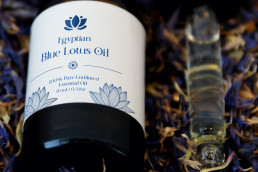
If you are looking to buy blue lotus oil in Germany, the good news is that Nymphaea caerulea is legal to purchase and possess here, and the German apothecary tradition means you have access to some of the most quality-conscious botanical suppliers in Europe. The slightly more complicated news is that most of what is sold under the label “Blauer Lotus Öl” at low prices is either a synthetic fragrance, a dilution in jojoba, or a mislabelled Indian Nelumbo nucifera product. This guide walks through what is legally available in Germany, what genuine blue lotus oil should cost in euros, how to read a German supplier’s paperwork, and where the reliable sources sit.
Table of Contents
- Is Blue Lotus Oil Legal in Germany?
- Why the German Market Is Actually Good for Blue Lotus Buyers
- The Three Things Sold as "Blue Lotus Oil" in Germany
- 1. Genuine Egyptian Blue Lotus Absolute
- 2. Indian "Blue Lotus" (Nelumbo nucifera)
- 3. Synthetic or Reconstituted Fragrance Oils
- What Genuine Blue Lotus Oil Should Cost in Euros
- How to Read a German Supplier's Product Page
- Where to Buy Blue Lotus Oil in Germany
- Specialist Aromatherapy and Naturopathy Shops
- Online German Retailers
- Direct International Suppliers Shipping to Germany
- Where Not to Buy
- Shipping, Customs, and Storage in Germany
- How to Use Blue Lotus Oil Once You Have It
- When Blue Lotus Oil Is Not the Right Choice
- Frequently Asked Questions
- Where to Go From Here
- Delivered Across Germany
It is written and clinically reviewed by Antonio Breshears, ND, CCA, a Bastyr-trained naturopathic doctor and certified clinical aromatherapist. For broader context on the oil itself, its chemistry, and how to use it safely, readers may wish to start with the complete guide to blue lotus oil before returning to the country-specific details below.
Is Blue Lotus Oil Legal in Germany?
Yes. Nymphaea caerulea, the Egyptian blue water lily, is not listed under the German Betäubungsmittelgesetz (BtMG), the federal narcotics law. It is not classified as a new psychoactive substance under the Neue-psychoaktive-Stoffe-Gesetz (NpSG) either. You can legally buy, import, possess, and use blue lotus flowers, absolute, and essential oil in Germany for personal aromatherapy, perfumery, and cosmetic use.
What you cannot legally do, and this is worth stating plainly, is market blue lotus oil as a medicine, a treatment for any named condition, or a food supplement without going through the relevant approval processes. German regulators, particularly the Bundesinstitut für Arzneimittel und Medizinprodukte (BfArM) and the state-level food safety authorities, take therapeutic claims seriously. Reputable German suppliers therefore describe blue lotus oil as a “Parfümöl”, a “Raumduft”, or a cosmetic ingredient rather than as a remedy. This is a regulatory framing, not a reflection on the oil’s quality or traditional use.
For comparison, blue lotus is fully banned in Russia, Poland, and Latvia, and restricted in the US state of Louisiana. Germany is one of the more permissive major European markets alongside the UK, France, the Netherlands, and the Nordic countries.
Why the German Market Is Actually Good for Blue Lotus Buyers
Germany’s Apothekenkultur, the centuries-old apothecary tradition, means several things work in the buyer’s favour. First, there is a mature infrastructure of independent herbalists, aromatherapy specialists, and naturopathic pharmacies (Naturheilkunde-Apotheken) that actually understand essential oils as a category rather than treating them as novelty scents. Second, cosmetic ingredient labelling under EU regulation 1223/2009 is strictly enforced, which means that what is listed on a bottle sold legally in Germany has to be what is actually in it. Third, German consumers expect GC-MS (gas chromatography-mass spectrometry) documentation on premium oils, and reputable suppliers provide it as a matter of course.
This does not mean every bottle labelled “Blauer Lotus” on a German e-commerce site is genuine. It means that when you find a supplier operating to proper German standards, the paperwork is usually real.
The Three Things Sold as “Blue Lotus Oil” in Germany
Before comparing prices, it helps to understand that the German market contains three quite different products sold under similar names.
1. Genuine Egyptian Blue Lotus Absolute
This is solvent-extracted from Nymphaea caerulea flowers, usually in Egypt, and is the most common form of authentic blue lotus oil on the market. It is dark, viscous, honeyed, and expensive. Three thousand to five thousand flowers go into each gram of absolute, which is why the price reflects what it does.
2. Indian “Blue Lotus” (Nelumbo nucifera)
The sacred lotus of India, Nelumbo nucifera, is a completely different plant. It produces a pink or white flower, not blue, and its oil has a different chemistry and a different scent profile. Some German suppliers, particularly those sourcing through generic wholesale channels, sell Nelumbo oil as “Blue Lotus” either through genuine confusion or deliberate mislabelling. The INCI name on the bottle tells you which you have. If it says Nelumbo nucifera, it is not Nymphaea caerulea.
3. Synthetic or Reconstituted Fragrance Oils
A large share of the “Blauer Lotus Öl” on Amazon.de, eBay, and various German gift and esoteric shops is synthetic. These are perfumer’s compounds designed to evoke a waterlily scent. They are legal to sell as fragrance, they cost a fraction of genuine absolute, and they have no clinical or aromatherapeutic value. They are not dangerous, but they are not what experienced buyers are looking for.
What Genuine Blue Lotus Oil Should Cost in Euros
Price is the single most reliable indicator in the German market. Genuine Egyptian blue lotus absolute, undiluted and traceable, sits in the following range at the time of writing:
- 1 ml pure absolute: 45 to 90 EUR depending on vintage and harvest
- 5 ml pure absolute: 180 to 380 EUR
- 10 ml pure absolute: 320 to 650 EUR
- 5 ml of a 10 percent dilution in jojoba: 25 to 55 EUR (note: this is diluted, not pure)
If you see “100 percent reines Blauer Lotus Öl, 10 ml” offered for 15 EUR on a marketplace, the maths simply does not work. A genuine 10 ml bottle of pure absolute cannot retail for less than the cost of the flowers it took to produce.
How to Read a German Supplier’s Product Page
A trustworthy German listing for blue lotus oil should include most or all of the following. Missing items are not always a red flag, but accumulated omissions are.
- Botanischer Name: Nymphaea caerulea, stated clearly
- INCI-Bezeichnung: Nymphaea Caerulea Flower Extract or similar
- Herkunftsland: country of origin, typically Egypt (Ägypten)
- Extraktionsverfahren: extraction method, typically “Lösungsmittelextraktion” (absolute), “Wasserdampfdestillation” (rare true essential oil), or “CO2-Extraktion”
- Chargennummer: a batch number
- Mindesthaltbarkeit: best-before date
- GC-MS-Analyse: gas chromatography certificate, either attached or available on request
- Verdünnung: whether the oil is diluted, and if so, in what carrier and at what percentage
The German phrase “verdünnt in Jojobaöl” means “diluted in jojoba oil”, which is perfectly legitimate and often genuinely useful for application, but you should pay the diluted price, not the pure absolute price.
Where to Buy Blue Lotus Oil in Germany
Specialist Aromatherapy and Naturopathy Shops
The most reliable physical buying experience in Germany is a specialist Naturheilkunde or Aromatherapie shop with staff who actually work with essential oils. These exist in every major German city, Berlin, Munich, Hamburg, Frankfurt, Cologne, and most Mittelstadt centres. They will not always stock blue lotus because the margins are difficult and the turnover slow, but those that do usually source it properly and can show you the documentation.
Online German Retailers
A handful of German-language online retailers specialise in premium absolutes and carry blue lotus as part of a wider range of florals alongside rose, jasmine, tuberose, and frangipani. These are typically run by perfumers or aromatherapists and ship across Germany and the EU. Look for sites that publish the GC-MS analysis openly rather than requiring a request, and that give you a traceable harvest year rather than a vague “frisch” marker.
Direct International Suppliers Shipping to Germany
Because blue lotus is a niche product and the Egyptian producer base is small, many serious German buyers order directly from specialist international suppliers rather than through domestic resellers. Shipping into Germany from a UK or EU-based specialist is straightforward, with standard customs and VAT handling through the IOSS system for EU-facing sellers. For non-EU sellers, expect to pay German import VAT (19 percent) on delivery, which is worth factoring into the total cost.
Where Not to Buy
Avoid generic Amazon.de listings with no named supplier, no botanical name, and no country of origin. Avoid eBay listings described as “Parfümöl” being sold as essential oil. Avoid esoteric-shop brands with elaborate packaging, lotus-themed marketing, and no technical documentation. These are almost always synthetic or heavily cut.
Shipping, Customs, and Storage in Germany
For parcels originating within the EU, there are no customs implications. For non-EU parcels, German customs will assess VAT at 19 percent on the declared value plus shipping. Essential oils are not prohibited but can be subject to additional IATA dangerous-goods handling if shipped by air in larger volumes, which is why most international blue lotus oil arrives in small bottles by regular post.
German summers, particularly in the Rhine valley and southern regions, can push indoor temperatures well above the 15 to 20 degrees Celsius at which absolutes ideally sit. If you are storing blue lotus oil in Germany, keep it in a dark cupboard on a cool interior wall, and consider refrigeration in August if your flat gets hot. Properly stored in dark glass, a good absolute holds for three to four years with minimal degradation.
How to Use Blue Lotus Oil Once You Have It
Once you have a genuine bottle in hand, application is straightforward. For diffusion, two to four drops in a standard ultrasonic Aromadiffuser is sufficient; blue lotus is dense and does not need to be used in large quantities. For topical use, the absolute is thick and should be diluted: 1 to 2 percent in jojoba or sweet almond oil for facial application, 2 to 3 percent for a body blend, and up to 3 percent for a targeted rollerball on pulse points before bed or during stressful afternoons.
The scent itself is the primary route by which blue lotus does its gentle work, activating the olfactory-limbic pathway and shifting the nervous system toward parasympathetic dominance. You are not looking for a dramatic sedative effect; you are looking for a modest, honest softening of background tension, the kind that accumulates in a working week and does not quite release on its own.
When Blue Lotus Oil Is Not the Right Choice
Blue lotus oil is not appropriate during pregnancy or breastfeeding, a position taken by most clinical aromatherapy bodies including those recognised in German practice. It should be used with caution by anyone taking dopaminergic medications (the alkaloids aporphine and nuciferine have documented, if weak, dopaminergic activity), MAO inhibitors, or heavy sedatives. It is not a substitute for clinical care where clinical care is warranted; if you are dealing with persistent insomnia, major depression, or significant anxiety, the appropriate first step in Germany is a visit to your Hausarzt or a qualified Heilpraktiker, not a bottle of absolute.
Frequently Asked Questions
Is blue lotus oil legal in Germany?
Yes. Nymphaea caerulea is not scheduled under the German narcotics law (BtMG) or the new psychoactive substances law (NpSG). You can legally buy, import, possess, and use it for personal aromatherapy, perfumery, and cosmetic purposes.
What should genuine blue lotus oil cost in euros?
Pure Egyptian blue lotus absolute typically retails at 45 to 90 EUR per millilitre in Germany. A 5 ml bottle of pure absolute will cost between 180 and 380 EUR. Prices significantly below this range almost always indicate dilution, synthetic composition, or substitution with Indian Nelumbo nucifera.
Is blue lotus the same as the Indian sacred lotus sold in German shops?
No. Indian sacred lotus is Nelumbo nucifera, a botanically unrelated plant with pink or white flowers and a different scent profile. Egyptian blue lotus is Nymphaea caerulea. Always check the INCI name on the label; this is the one piece of information that cannot legally be wrong under EU cosmetic regulations.
Can I buy blue lotus oil in a regular German Apotheke?
Rarely. Most general pharmacies do not stock it because turnover is low and sourcing is specialised. Naturopathy-focused pharmacies and independent aromatherapy shops are more likely to carry it, and specialist online retailers are the most reliable source.
Will I pay German VAT on an international order?
If the seller is EU-based and registered for IOSS, German VAT is typically collected at checkout. If the seller is outside the EU and does not use IOSS, German customs will charge 19 percent VAT plus a small handling fee on delivery.
What does GC-MS mean and why does it matter?
GC-MS is gas chromatography-mass spectrometry, a laboratory analysis that identifies the chemical constituents of an oil. For blue lotus, a GC-MS report confirms the presence of the expected alkaloids and flavonoids and rules out synthetic adulteration. Reputable German suppliers publish or provide this report on request.
Can I use blue lotus oil in cosmetic formulations I sell in Germany?
Yes, provided you comply with EU cosmetic regulation 1223/2009, submit a Cosmetic Product Safety Report (CPSR) through a qualified Sicherheitsbewerter, register via the CPNP portal, and respect standard dermal dilution limits. You cannot market it with therapeutic or medicinal claims without separate regulatory approval.
How should I store blue lotus oil in a warm German summer?
Keep it in its original dark glass bottle, tightly closed, on a cool interior wall or in a cupboard away from windows. If your flat regularly exceeds 25 degrees Celsius in summer, refrigeration is worth considering. Properly stored, a quality absolute holds for three to four years.
Is there a true essential oil of blue lotus, or only absolute?
True steam-distilled blue lotus essential oil exists but is extremely rare and even more expensive than absolute. Most of what is sold, including in Germany, is solvent-extracted absolute. CO2 extracts sit in between and are occasionally available from premium suppliers.
Can I bring blue lotus oil from Egypt in my luggage when flying into Germany?
For personal use, yes. There are no import restrictions on Nymphaea caerulea into Germany. Observe standard liquid limits for hand luggage (100 ml containers in a clear bag) and declare if asked, though it is unlikely to be queried.
Where to Go From Here
If you are ready to buy, focus on suppliers who publish botanical name, origin, extraction method, batch number, and GC-MS documentation, and whose pricing reflects the genuine cost of the raw material. If you want to understand the oil itself before spending, spend some time with the chemistry, dilution guidance, and safety notes in the broader reference material linked at the top of this article. Germany is one of the better markets in Europe for buying blue lotus oil well; the structure is there, you just have to choose carefully within it.

Antonio Breshears
Antonio Breshears is a renowned expert in holistic medicine and beauty, with over 25 years of research experience dedicated to uncovering the secrets of nature's most powerful remedies. Holding a degree in Naturopathic Medicine, Antonio's passion for healing and well-being has driven him to explore the intricate connections between mind, body, and spirit.
Over the years, Antonio has become a respected authority in the field, helping countless individuals discover the transformative power of plant-based therapies, including essential oils, herbs, and natural supplements. He has authored numerous articles and publications, sharing his wealth of knowledge with a global audience seeking to improve their overall health and well-being.
Antonio's expertise extends to the realm of beauty, where he has developed innovative, all-natural skincare solutions that harness the potency of botanical ingredients. His formulations embody his deep understanding of the healing properties found in nature, providing holistic alternatives for those seeking a more balanced approach to self-care.
With his extensive background and dedication to the field, Antonio Breshears is a trusted voice and guiding light in the world of holistic medicine and beauty. Through his work at Pure Blue Lotus Oil, Antonio continues to inspire and educate, empowering others to unlock the true potential of nature's gifts for a healthier, more radiant life.