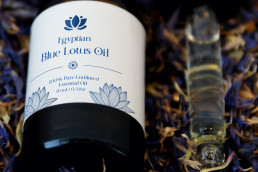
If you are trying to source genuine blue lotus oil in Hong Kong, this guide is for you. Hong Kong is a relatively friendly market for botanical imports, but the blue lotus oil on offer varies enormously in quality, from pure Nymphaea caerulea absolute at the top end down to synthetic fragrance oils mislabelled as the real thing. This article covers what is legal, where to buy, how to spot authentic product, and what to expect to pay so you can make a confident, informed purchase.
Table of Contents
- Is Blue Lotus Oil Legal in Hong Kong?
- Cosmetic and Skincare Classification
- Edible or Ingestible Claims
- Understanding What You Are Actually Buying
- Where to Buy Blue Lotus Oil in Hong Kong
- Specialist Aromatherapy and Apothecary Shops
- Traditional Chinese Medicine and Herbal Shops
- Direct Online Purchase From Specialist Producers
- General E-Commerce Platforms
- How to Spot Genuine Blue Lotus Oil
- Realistic Pricing in Hong Kong
- Storage in Hong Kong's Climate
- Bringing Blue Lotus Oil Through Hong Kong Customs
- When Blue Lotus Oil Is Not the Right Choice
- Frequently Asked Questions
- Where to Go From Here
- Genuine Blue Lotus, Shipped to Hong Kong
It is written and clinically reviewed by Antonio Breshears, ND, CCA, a Bastyr-trained naturopathic doctor and certified clinical aromatherapist. For a broader grounding in the chemistry, extraction methods, and use of this oil, readers may want to pair this guide with The Complete Guide to Blue Lotus Oil, which is the master reference that sits behind this buyer-focused article.
Is Blue Lotus Oil Legal in Hong Kong?
Yes. Blue lotus (Nymphaea caerulea) is not a controlled substance under Hong Kong’s Dangerous Drugs Ordinance, and the oil, whether sold as an absolute, a supercritical CO2 extract, or a rare steam-distilled essential oil, can be legally imported, sold, and used for personal purposes. This puts Hong Kong in a very different position from jurisdictions such as Russia, Poland, Latvia, or the US state of Louisiana, where regulatory restrictions complicate ownership and sale.
There are, however, a few practical regulatory threads worth knowing about before you buy, particularly if you intend to apply the oil to your skin, diffuse it, or gift it to someone else.
Cosmetic and Skincare Classification
If you buy blue lotus oil as part of a blended skincare product (a facial serum, a pulse-point roller, a perfume oil), that finished product is regulated as a cosmetic. Hong Kong’s cosmetic oversight is less prescriptive than the EU’s or mainland China’s, but reputable sellers should still be able to provide batch information, an ingredients list, and ideally a certificate of analysis (COA) for the lotus component. A product that arrives with no labelling, no batch number, and no supplier detail is a red flag regardless of how pretty the bottle looks.
Edible or Ingestible Claims
Blue lotus oil sold in Hong Kong should not be marketed for oral consumption. A seller who encourages you to “add a drop to your tea” or “take it sublingually” is either uninformed or unconcerned with safety. Essential oils and absolutes are concentrated plant chemistry and are not formulated for ingestion. Inhalation and properly diluted topical use are the appropriate routes.
Understanding What You Are Actually Buying
Before you compare sellers, it helps to know what blue lotus oil genuinely is, because the phrase gets attached to wildly different products in the Hong Kong market.
The authentic article is one of three things. First, and most common, is a solvent-extracted absolute: a thick, honey-coloured to deep amber liquid with a complex floral-balsamic scent, produced by washing the flowers in a food-grade solvent that is then removed. Second is a true steam-distilled essential oil, which is genuinely rare because the flower’s fragile aromatic molecules do not survive distillation well; if a seller offers large volumes of “blue lotus essential oil” at low prices, this is the first claim to question. Third is a supercritical CO2 extract, which uses pressurised carbon dioxide to pull the aromatic compounds cleanly from the flower and typically sits at the premium end of the market.
What you do not want is a “blue lotus fragrance oil”, a “blue lotus perfume compound”, or a bottle of jojoba with a whisper of absolute floated into it and sold at absolute prices. All of these exist in Hong Kong’s market, particularly on general e-commerce platforms and in tourist-oriented shops in Tsim Sha Tsui and Mong Kok.
Where to Buy Blue Lotus Oil in Hong Kong
There are four realistic buying channels in Hong Kong, each with strengths and trade-offs.
Specialist Aromatherapy and Apothecary Shops
Central, Sheung Wan, and parts of Causeway Bay host a handful of genuinely knowledgeable aromatherapy suppliers, some of whom carry blue lotus absolute either as a stocked item or by request. The advantage is that you can smell the oil before you buy, ask the shopkeeper about sourcing, and often see a batch COA on request. The disadvantage is that stock is inconsistent, prices are relatively high, and volumes tend to be small (1 ml or 2 ml vials rather than 5 ml or 10 ml).
Traditional Chinese Medicine and Herbal Shops
Some TCM-adjacent herbal shops, particularly in Sheung Wan’s dried seafood and herb district along Des Voeux Road West and Ko Shing Street, occasionally carry imported floral extracts. Quality here is highly variable. A reputable shop with long-standing clientele is usually trustworthy; a tourist-oriented stall offering a dozen “exotic essential oils” in identical bottles is usually not.
Direct Online Purchase From Specialist Producers
For most Hong Kong-based buyers who want genuine pure blue lotus oil with documentation, direct online purchase from a specialist producer is the most reliable route. International shipping into Hong Kong is straightforward, customs treatment of botanical oils in small personal quantities is generally uneventful, and a specialist producer can provide the batch data, extraction method, and country of origin that a general retailer cannot.
This is the channel we would recommend for anyone serious about using the oil therapeutically rather than decoratively, because provenance and freshness matter more than minor differences in shipping time.
General E-Commerce Platforms
HKTVmall, Taobao, and various Instagram storefronts all carry listings for “blue lotus oil”. A minority of these are genuine. The majority are either heavily diluted absolute, fragrance oil, or simply mislabelled. If you buy this way, treat the listing with active scepticism: ask for batch information, extraction method, country of origin, and a COA. If the seller cannot provide these, assume the product is not what it claims.
How to Spot Genuine Blue Lotus Oil
Regardless of where you buy, the same quality markers apply.
Botanical name on the label. A genuine product will list Nymphaea caerulea (sometimes spelled Nymphaea coerulea) explicitly. A bottle that only says “blue lotus” in English or Chinese is not telling you what it actually contains.
Extraction method stated. Absolute, CO2 extract, or steam distilled. A seller who cannot or will not tell you how the oil was produced does not know their product.
Country of origin. Most genuine blue lotus absolute in the world comes from Egypt, with smaller volumes from India, Thailand, and Sri Lanka. “Origin undisclosed” is a warning sign.
Reasonable price. It takes between 3,000 and 5,000 flowers to yield one gram of absolute. Prices in Hong Kong for 1 ml of genuine pure absolute typically range from HK$400 to HK$900 depending on grade, packaging, and seller markup. A 10 ml bottle selling for HK$150 is not pure blue lotus oil. It is almost certainly a dilution in jojoba or a fragrance oil.
Scent profile. Genuine blue lotus has a distinctive three-phase scent: a cool, slightly aquatic floral top note, a deep honeyed-floral heart, and a balsamic, faintly smoky base. If a sample smells simply “sweet” or “generic floral”, it is very likely synthetic.
Colour and viscosity. Absolute is typically thick at room temperature and ranges from deep gold to rich amber or brown. A thin, pale liquid is either diluted or fragrance oil.
Realistic Pricing in Hong Kong
Because Hong Kong is a high-rent retail environment with significant tourist markup on botanicals, expect to pay more than you would for the same product purchased directly from a reputable overseas producer. As a rough guide for 2024 to 2025 pricing:
- 1 ml pure absolute in a specialist shop: HK$500 to HK$900
- 5 ml pure absolute via direct online purchase from specialist producers: HK$1,500 to HK$2,800
- 10 ml dilutions (absolute in jojoba or similar, properly disclosed): HK$300 to HK$700
- CO2 extract, premium grade: 20 to 40 per cent higher than solvent-extracted absolute of equivalent volume
Prices significantly below these ranges almost always indicate dilution, adulteration, or outright substitution with a synthetic. Prices significantly above are usually marketing theatre rather than superior product.
Storage in Hong Kong’s Climate
Hong Kong’s heat and humidity are genuine considerations for anyone storing blue lotus oil at home. Properly stored in dark glass, kept cool and away from direct light, a pure absolute will hold its aromatic quality for three to four years. In a Hong Kong flat without consistent air conditioning, oxidation and scent degradation happen faster.
Practical steps: keep the bottle in a cupboard or drawer, not on a dressing table or windowsill. Keep it tightly closed between uses. If you have space in the refrigerator (not the freezer), a cool shelf is ideal, though the oil will become very thick and need to warm to room temperature before use. Avoid bathroom storage; the humidity and temperature swings are the worst environment for an absolute.
Bringing Blue Lotus Oil Through Hong Kong Customs
Personal-use quantities of blue lotus oil, whether posted in or carried in luggage, do not normally attract customs attention in Hong Kong. The oil is not a controlled substance and does not fall under CITES protection. Commercial quantities are a different matter and require proper import documentation, including invoice, botanical identification, and in some cases a certificate of analysis; if you are importing for resale, work with a licensed freight forwarder familiar with cosmetic and aromatic ingredients.
Travellers flying out of Hong Kong to destinations where blue lotus is restricted (notably Russia, Poland, and parts of the United States) should check the destination country’s rules, not Hong Kong’s. Exporting from Hong Kong is unrestricted; importing into the destination country may not be.
When Blue Lotus Oil Is Not the Right Choice
A buyer’s guide would be incomplete without a note on who should not be buying this oil.
Blue lotus oil is avoided during pregnancy and breastfeeding because the alkaloid profile (aporphine, nuciferine) has not been adequately studied in these populations and the precautionary default for novel botanicals in pregnancy is non-use. It should be used with caution by anyone taking dopaminergic medications (Parkinson’s medications, some antipsychotics), MAO inhibitors, or heavy sedatives, because of the theoretical interaction potential with the oil’s receptor activity. It is not a substitute for clinical care in anxiety, depression, or sleep disorders that warrant professional attention.
It is also not a dramatic psychoactive. If you are looking for something that will produce a strong altered state, blue lotus oil (applied topically or inhaled) is not that substance. Its action is subtle, calming, and mood-softening rather than intoxicating; buyers expecting otherwise will be disappointed.
Frequently Asked Questions
Is blue lotus oil legal to buy in Hong Kong?
Yes. Blue lotus (Nymphaea caerulea) is not a controlled substance under Hong Kong law, and the oil can be legally purchased, imported in personal quantities, and used topically or via diffusion.
What is a fair price for genuine blue lotus oil in Hong Kong?
Expect HK$500 to HK$900 for 1 ml of pure absolute in a specialist shop, and HK$1,500 to HK$2,800 for 5 ml purchased directly from a specialist overseas producer. Prices substantially below these ranges usually indicate dilution or synthetic fragrance.
Where in Hong Kong can I smell the oil before buying?
Specialist aromatherapy and apothecary shops in Central, Sheung Wan, and Causeway Bay will often let you sample before purchase. This is the best way to learn the authentic scent profile before committing to a larger purchase online.
Can I buy blue lotus oil on HKTVmall or Taobao safely?
You can, but treat listings sceptically. Ask for batch number, extraction method, country of origin, and a certificate of analysis. If a seller cannot provide these, assume the product is not genuine pure Nymphaea caerulea.
Will customs stop my order?
Personal-use quantities of blue lotus oil posted into Hong Kong do not normally attract customs action. Commercial-scale imports require proper documentation and are best handled through a licensed freight forwarder.
What is the difference between absolute, CO2 extract, and essential oil?
Absolute is solvent-extracted and is the most common form of pure blue lotus oil. CO2 extract uses pressurised carbon dioxide and sits at the premium end of the market. True steam-distilled essential oil is rare because the flower’s aromatic molecules do not survive distillation well, so most “essential oil” listings are actually absolute mislabelled.
How should I store blue lotus oil in Hong Kong’s humidity?
Keep it in dark glass, tightly closed, in a cool cupboard or drawer away from sunlight. A refrigerator shelf is excellent if available, though the oil will thicken and need to warm before use. Avoid bathroom storage.
Is it safe to put blue lotus oil on my skin?
Yes, when properly diluted. Standard dilutions are 1 to 2 per cent in a carrier oil for facial use, 2 to 3 per cent for body use, and up to 3 per cent for targeted application. Always patch-test first.
Can I take blue lotus oil internally?
No. Blue lotus oil is not formulated for oral consumption. Use it via inhalation (diffuser, personal inhaler) or properly diluted topical application only.
Is blue lotus oil useful for sleep and anxiety?
It has a genuinely calming, mood-softening effect via its alkaloid and flavonoid profile, and many users find it helpful for winding down and for gentle anxiety support. It is not a strong sedative and is not a substitute for clinical care where that is warranted.
Where to Go From Here
If you are buying in Hong Kong, the practical priorities are these: verify botanical name, extraction method, and origin; buy from a specialist rather than a general retailer; expect a realistic price; and store the oil properly once it arrives. For deeper reading on how the oil actually works, how to use it, and how it compares across formulations, The Complete Guide to Blue Lotus Oil is the most useful next step.

Antonio Breshears
Antonio Breshears is a renowned expert in holistic medicine and beauty, with over 25 years of research experience dedicated to uncovering the secrets of nature's most powerful remedies. Holding a degree in Naturopathic Medicine, Antonio's passion for healing and well-being has driven him to explore the intricate connections between mind, body, and spirit.
Over the years, Antonio has become a respected authority in the field, helping countless individuals discover the transformative power of plant-based therapies, including essential oils, herbs, and natural supplements. He has authored numerous articles and publications, sharing his wealth of knowledge with a global audience seeking to improve their overall health and well-being.
Antonio's expertise extends to the realm of beauty, where he has developed innovative, all-natural skincare solutions that harness the potency of botanical ingredients. His formulations embody his deep understanding of the healing properties found in nature, providing holistic alternatives for those seeking a more balanced approach to self-care.
With his extensive background and dedication to the field, Antonio Breshears is a trusted voice and guiding light in the world of holistic medicine and beauty. Through his work at Pure Blue Lotus Oil, Antonio continues to inspire and educate, empowering others to unlock the true potential of nature's gifts for a healthier, more radiant life.