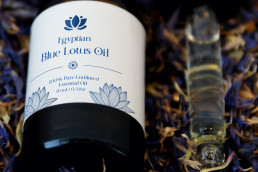
If you are shopping for blue lotus oil in Ireland and want to be sure what you are buying is the real thing, this guide walks you through the current legal picture, what quality actually looks like in a bottle, realistic pricing, and the red flags that separate authentic Nymphaea caerulea absolute from the cheap fragrance oils that dominate online marketplaces. The Irish market is small but genuinely accessible, which works in your favour if you know what to ask for.
Table of Contents
- Is Blue Lotus Oil Legal in Ireland?
- Why Buying Blue Lotus in Ireland Is Trickier Than It Looks
- What Authentic Blue Lotus Oil Actually Looks Like
- Buying Blue Lotus Oil in Ireland: The Four Realistic Channels
- 1. UK-Based Specialist Aromatherapy Suppliers
- 2. European Union Direct-to-Consumer Suppliers
- 3. Irish Apothecaries and Wellness Boutiques
- 4. Direct-from-Egypt Sellers
- Pricing Benchmarks for the Irish Market
- How to Verify Authenticity Before and After Purchase
- Shipping, Customs, and Practical Notes for Irish Buyers
- When to Hold Off on Buying
- Frequently Asked Questions
- Where to Go From Here
- Authentic Blue Lotus, Delivered to Ireland
It is written and clinically reviewed by Antonio Breshears, ND, CCA, a Bastyr-trained naturopathic doctor and certified clinical aromatherapist. For broader context on chemistry, extraction methods, and how blue lotus behaves in the body, readers in Ireland may find it useful to pair this guide with The Complete Guide to Blue Lotus Oil, which covers the background this article deliberately leaves out.
Is Blue Lotus Oil Legal in Ireland?
Yes. Blue lotus (Nymphaea caerulea) is legal to purchase, possess, and use in Ireland at the time of writing. It is not listed as a controlled substance under the Misuse of Drugs Acts, and the psychoactive plant substances legislation that tightened the Irish market around 2010 did not sweep up blue lotus along with it. The flower, the absolute, and oil-based dilutions can all be bought and shipped within Ireland and imported from within the European Union without special permits.
This is worth stating plainly because the situation elsewhere is different. Russia, Poland, Latvia, and the US state of Louisiana restrict blue lotus in various forms, and Australia has a complicated regulatory picture depending on preparation. Ireland is not one of those jurisdictions. You can order a bottle, receive it at an Irish address, and use it at home without any legal grey area, provided you are buying it as an aromatherapy product rather than as something marketed for human consumption.
The caveat is that sellers are not permitted to market essential oils or absolutes as medicines, and they should not be making therapeutic claims on the label. A reputable supplier sells blue lotus oil as a cosmetic or aromatherapy ingredient, and any educational content about its traditional uses sits separately from the product listing itself.
Why Buying Blue Lotus in Ireland Is Trickier Than It Looks
The legality is straightforward. The authenticity question is not. Blue lotus absolute is one of the most counterfeited aromatic materials on the market, for a reason that has nothing to do with Ireland specifically and everything to do with the maths of the flower itself. It takes somewhere between 3,000 and 5,000 blue lotus flowers to produce a single gram of absolute. That is not a number a cheap product can sustain.
When you see a 10 ml bottle labelled “blue lotus oil” for fifteen euro on an Irish marketplace, you are almost certainly looking at one of three things: a synthetic fragrance oil coloured blue, a jojoba or coconut base with a tiny homeopathic amount of real absolute added, or a completely unrelated aquatic-floral blend using the blue lotus name as a marketing hook. None of these carry the chemistry that makes blue lotus interesting in the first place, namely the aporphine and nuciferine alkaloids and the flavonoids apigenin, quercetin, and kaempferol.
The small size of the Irish market compounds this. Unlike the UK or Germany, there is no meaningful domestic aromatherapy distribution network specialising in rare absolutes. Most Irish buyers are routed through one of three channels: UK-based aromatherapy suppliers shipping across the Irish Sea, European Union suppliers shipping from the Netherlands, Germany, or France, or direct-to-consumer sellers based in Egypt or Southeast Asia. Each channel has its own trade-offs.
What Authentic Blue Lotus Oil Actually Looks Like
Before you compare Irish suppliers, it helps to know what you are comparing against. Genuine blue lotus absolute has several characteristics that are difficult to fake simultaneously, even if any single one can be imitated.
The colour is a deep amber to brownish-gold, sometimes with a faintly greenish cast. It is not blue. The name refers to the flower, not the extract. Any oil that is visibly blue in the bottle is either synthetic, dyed, or blended with something like blue tansy or German chamomile, which are genuinely blue but are not blue lotus.
The viscosity is notably thick, particularly at cooler temperatures. Solvent-extracted absolute is semi-solid below about 20 degrees Celsius and needs warming in the hand or under warm water before it flows. If your bottle pours like water at Irish room temperature, which hovers well below 20 degrees for much of the year, something is off.
The scent profile unfolds in layers. There is a cool, slightly green, almost aquatic top note, then a deep honeyed-floral heart that is unmistakably waxy and resinous, and finally a smoky, balsamic base that lingers for hours on skin. A flat, one-dimensional “pretty floral” scent that disappears within twenty minutes is a fragrance oil, not an absolute.
The price, finally, tells you most of what you need to know. Genuine blue lotus absolute is expensive. A 5 ml bottle of pure absolute from a reputable supplier typically costs between 90 and 180 euro, depending on extraction method and country of origin. Pre-diluted versions in jojoba or fractionated coconut oil, usually at 5 to 10 percent concentration, sit between 40 and 80 euro for a similar volume. Anything dramatically cheaper is either diluted far beyond what the label admits or is not the real material at all.
Buying Blue Lotus Oil in Ireland: The Four Realistic Channels
1. UK-Based Specialist Aromatherapy Suppliers
Since the end of the Brexit transition period, buying from UK suppliers into Ireland has become more paperwork-heavy but remains the most common route for quality aromatics. A handful of established UK aromatherapy houses carry blue lotus absolute or blue lotus dilutions, and they ship to Irish addresses without much fuss. Expect customs processing on anything above the low-value threshold, which will add VAT at the Irish rate and sometimes a small handling fee from the courier.
The advantage is that these suppliers tend to publish gas chromatography and mass spectrometry reports for their oils, which is the single most reliable way to verify authenticity. Ask for the GC-MS report by batch number before buying. A supplier who cannot produce one, or who offers vague reassurance instead of a document, is not the right supplier.
2. European Union Direct-to-Consumer Suppliers
Suppliers based in the Netherlands, Germany, and France ship within the single market without customs friction, which makes them attractive for Irish buyers wanting to avoid Brexit-related delays. The quality range is wide. Some EU suppliers are serious operations with proper extraction partnerships in Egypt and laboratory verification; others are repackagers buying bulk material of unknown provenance and relabelling it.
The key questions to ask a European supplier are where the flowers were grown, what extraction method was used, and whether the supplier can provide a certificate of analysis. If the answers are “Egypt” with no farm detail, “essential oil” with no clarification on solvent or steam or CO2, and “yes it is pure” with no document, be cautious.
3. Irish Apothecaries and Wellness Boutiques
A small number of Irish apothecaries and wellness shops, particularly in Dublin, Cork, and Galway, stock rare aromatic ingredients including blue lotus. The selection is limited and the price reflects the retail markup, but the advantage of buying in person is that you can smell before you commit, which rules out the most obvious fragrance-oil fakes immediately. If you are new to blue lotus, paying a bit more at a physical Irish apothecary for your first bottle is not a bad way to calibrate your nose before ordering online.
4. Direct-from-Egypt Sellers
Blue lotus has a long history in Egypt, and some Egyptian producers sell direct to European consumers through their own websites or through platforms like Etsy. Authenticity varies wildly. Some of these sellers are genuine extractors producing excellent absolute; others are tourism-adjacent operations selling fragrance oils to buyers who associate Egypt with authenticity and assume the provenance guarantees the chemistry. Shipping to Ireland from Egypt is reliable but slow, and customs can occasionally hold aromatic imports for inspection.
Pricing Benchmarks for the Irish Market
Based on what reputable suppliers currently charge, and adjusting for the fact that shipping and VAT land differently in Ireland than in mainland Europe, these are the ranges a careful Irish buyer should expect in 2024 and 2025.
- Pure blue lotus absolute, 1 ml: 25 to 45 euro. A reasonable way to sample before committing.
- Pure blue lotus absolute, 5 ml: 90 to 180 euro. The most common purchase size for serious users.
- Pure blue lotus absolute, 10 ml: 170 to 320 euro. A year or more of supply for typical personal use.
- Pre-diluted blue lotus in jojoba, 10 ml at 5 to 10 percent: 40 to 80 euro. Ready to use for skin application without further blending.
- Blue lotus CO2 extract, 5 ml: 150 to 280 euro. Rarest and most expensive form, cleanest aromatic profile.
If an Irish or EU listing is dramatically below these ranges, the most likely explanation is that the product is diluted beyond what the label claims, or is not blue lotus at all. This is not a market where genuine bargains appear often. The flower-to-extract ratio sets a floor on price that cannot be argued around.
How to Verify Authenticity Before and After Purchase
Before buying, look for four specific things on the supplier’s website or in direct correspondence with them. First, a clear botanical name, Nymphaea caerulea, not the generic “blue lotus” or “sacred lotus” (the latter refers to Nelumbo nucifera, which is a different plant with a different chemistry). Second, an explicit statement of extraction method, solvent absolute or steam distillate or supercritical CO2. Third, a country of origin, with Egypt being the traditional source but with legitimate production now also occurring in Sri Lanka and Thailand. Fourth, a certificate of analysis or GC-MS report for the specific batch, available on request if not published openly.
After the bottle arrives, the in-person checks matter as much as the documentation. Open the bottle in a warm room and let it sit for a minute. The initial impression should be a slightly cool, green-floral top note, not an immediate burst of sweet perfume. Warm a single drop between your fingers. Real absolute feels waxy and slightly tacky, not slippery. Apply a pinhead amount to the inside of your wrist and smell it again after fifteen minutes, then after an hour, then after three hours. The scent should develop and deepen, not flatten and disappear.
If the oil passes all four pre-purchase checks and all three post-arrival checks, you have almost certainly bought the real material. If it fails more than one check, document the failures with photographs and the batch number and request a refund. Reputable suppliers do not argue with specific, evidence-based quality complaints.
Shipping, Customs, and Practical Notes for Irish Buyers
Within the European Union, shipping to Ireland is straightforward and typically arrives within three to seven working days. No customs declaration is required for personal-use quantities, and VAT is collected at the point of sale by compliant EU sellers.
From the UK, expect five to ten working days and a customs processing step on anything above the low-value consignment threshold. Irish VAT at 23 percent will be collected either by the seller (if they are registered for Irish VAT) or by the courier on delivery. Factor this into your total cost when comparing UK prices to EU prices; a bottle that looks fifteen percent cheaper from a UK supplier can end up more expensive than a Dutch or German equivalent once VAT and handling are added.
From outside the EU and UK, shipping takes two to four weeks and customs inspection is more likely, particularly for aromatic liquids which occasionally trigger additional checks. The oil itself is legal to import, but delays are more common on this route, and if something goes wrong with the shipment you have very little practical recourse against a seller several thousand kilometres away.
Storage matters in the Irish climate. The relatively cool, damp Irish weather is actually good for absolute storage; the enemy is warmth and light, not cool. Keep the bottle in a dark cupboard away from radiators and windows. Stored properly in dark glass in a cool dark location, a bottle of blue lotus absolute will hold its character for three to four years.
When to Hold Off on Buying
Blue lotus oil is not the right purchase for everyone, regardless of where you are shopping. The oil is avoided in pregnancy and breastfeeding, largely on precautionary grounds given the alkaloid content and the limited clinical data in these populations. It also warrants caution alongside dopaminergic medications, MAOIs, and strong sedatives, because the aporphine and nuciferine content interacts with the same receptor systems those medications target.
If you are trying to treat a specific medical condition, such as a diagnosed anxiety disorder or clinical insomnia, blue lotus oil is at best a gentle adjunct and is not a substitute for proper care from a GP or a mental health professional. Buying a bottle in the hope that it will resolve something that genuinely needs clinical attention is a disappointing use of money. The oil is modestly effective for everyday stress, sleep support, and atmosphere in a ritual or meditative sense. Within those realistic expectations it earns its place. Beyond them it does not.
Frequently Asked Questions
Is blue lotus oil legal in Ireland?
Yes. Blue lotus (Nymphaea caerulea) is not a controlled substance under Irish law, and the oil can be bought, possessed, and used legally in Ireland, provided it is marketed and used as an aromatherapy or cosmetic product rather than as a medicine or food.
Can I import blue lotus oil into Ireland from outside the EU?
Yes, personal-use imports of blue lotus oil are legal. Shipments from the UK require customs processing and VAT payment, and shipments from outside Europe take longer and are occasionally held for inspection, but the product itself is not restricted.
Why does blue lotus oil cost so much?
Genuine blue lotus absolute requires 3,000 to 5,000 flowers per gram of extract. The labour of harvesting, the volume of plant material, and the solvent extraction process combine to set a price floor that is significantly higher than most essential oils. Dramatically cheaper listings are almost always diluted, adulterated, or synthetic.
Is the oil supposed to be blue?
No. Authentic blue lotus absolute is deep amber to brownish-gold. The name refers to the flower. Any product that is visibly blue in the bottle is either synthetic, artificially coloured, or blended with a genuinely blue oil such as blue tansy.
Can I buy blue lotus oil in a pharmacy in Ireland?
Generally no. Irish pharmacies do not typically stock rare aromatic absolutes. Specialist aromatherapy suppliers, apothecaries, and wellness boutiques are the usual retail channels, and most Irish buyers end up ordering online from a UK or EU supplier.
How should I store blue lotus oil in Ireland?
Keep the bottle in dark glass, in a cool, dark cupboard, away from radiators and direct sunlight. The Irish climate is naturally favourable for absolute storage because ambient temperatures are usually well below the threshold where oxidation accelerates.
How do I know I am not being sold a fragrance oil?
Ask for a GC-MS report or certificate of analysis tied to the batch number. Check the colour is amber, not blue. Warm a drop and confirm the texture is waxy, not watery. Smell the oil over a three-hour window and confirm the scent evolves through top, heart, and base notes rather than disappearing quickly.
Is Egyptian-sourced blue lotus better than oil from Sri Lanka or Thailand?
Not automatically. Egypt is the traditional source and has a long cultural association with the flower, but quality depends on the specific producer and their extraction practice rather than on the country alone. A well-run Sri Lankan or Thai extractor can produce excellent absolute; a careless Egyptian operation can produce poor material.
Can I use blue lotus oil during pregnancy?
No. Blue lotus oil is avoided in pregnancy and breastfeeding on precautionary grounds, given its alkaloid content and the limited safety data in these populations.
What is a reasonable first purchase size?
A 1 ml sample of pure absolute, or a 10 ml pre-diluted bottle at 5 to 10 percent, is a sensible first purchase. Both let you calibrate your response and verify authenticity before investing in a larger bottle.
Where to Go From Here
If you are new to blue lotus and want the broader context on chemistry, traditional use, and how the oil fits into a wider aromatic toolkit, The Complete Guide to Blue Lotus Oil is the best place to read next. From there, working through specific application guides for diffusion, topical use, and ritual preparation will give you a practical framework for actually using the bottle once it arrives at your Irish address.
The short answer to the question this article set out to address: yes, you can buy authentic blue lotus oil in Ireland, the legal picture is clean, and the main risk you face is quality rather than regulation. Spend time on the supplier rather than on the bargain, ask for the laboratory document, and trust your nose when the bottle arrives.

Antonio Breshears
Antonio Breshears is a renowned expert in holistic medicine and beauty, with over 25 years of research experience dedicated to uncovering the secrets of nature's most powerful remedies. Holding a degree in Naturopathic Medicine, Antonio's passion for healing and well-being has driven him to explore the intricate connections between mind, body, and spirit.
Over the years, Antonio has become a respected authority in the field, helping countless individuals discover the transformative power of plant-based therapies, including essential oils, herbs, and natural supplements. He has authored numerous articles and publications, sharing his wealth of knowledge with a global audience seeking to improve their overall health and well-being.
Antonio's expertise extends to the realm of beauty, where he has developed innovative, all-natural skincare solutions that harness the potency of botanical ingredients. His formulations embody his deep understanding of the healing properties found in nature, providing holistic alternatives for those seeking a more balanced approach to self-care.
With his extensive background and dedication to the field, Antonio Breshears is a trusted voice and guiding light in the world of holistic medicine and beauty. Through his work at Pure Blue Lotus Oil, Antonio continues to inspire and educate, empowering others to unlock the true potential of nature's gifts for a healthier, more radiant life.