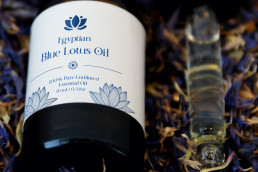
If you are looking for blue lotus oil in Japan, the landscape is friendlier than you might expect. Unlike several countries that restrict Nymphaea caerulea, Japan treats it as an ordinary botanical, which means personal import, online ordering, and purchase through specialty aromatherapy channels are all generally available. What is harder than legality is finding a bottle that is genuinely pure, properly extracted, and accurately labelled. This guide walks you through how to buy blue lotus oil in Japan with confidence, from regulatory status to verifying authenticity, and how to avoid the diluted fragrance oils that dominate the market.
Table of Contents
- Is Blue Lotus Oil Legal in Japan?
- Understanding What You Are Actually Buying
- True Blue Lotus Oil Is Rare and Expensive
- Most "Blue Lotus Oil" in Japan Is Not Pure
- Where to Buy Blue Lotus Oil in Japan
- 1. Direct International Order from a Reputable Producer
- 2. Specialty Aromatherapy Shops in Tokyo, Osaka, and Kyoto
- 3. Rakuten, Amazon Japan, and Yahoo Shopping
- 4. Import Through a Personal Shopper or Translator Service
- How to Verify Authenticity Before You Buy
- Check the Price Against the Raw Material Cost
- Read the Ingredient List Carefully
- Assess the Scent Profile
- Check the Colour and Viscosity
- What to Expect in Terms of Price in Japan
- How to Use Blue Lotus Oil Once You Have It
- Realistic Timeframes and Expectations
- When Blue Lotus Oil Is Not the Right Choice
- Complementary Approaches Worth Considering
- Frequently Asked Questions
- Where to Go From Here
- Genuine Blue Lotus, Shipped With Care
It is written and clinically reviewed by Antonio Breshears, ND, CCA, a Bastyr-trained naturopathic doctor and certified clinical aromatherapist. For broader context on the oil itself, its chemistry, and its uses, see The Complete Guide to Blue Lotus Oil, which serves as the master reference for every article in this series.
Is Blue Lotus Oil Legal in Japan?
Yes. Nymphaea caerulea, the Egyptian blue water lily from which true blue lotus oil is extracted, is not listed under Japan’s Cannabis Control Law, the Narcotics and Psychotropics Control Law, or the Stimulants Control Law. It is not scheduled as a controlled substance, not flagged by the Ministry of Health, Labour and Welfare (MHLW) as a designated drug (指定薬物), and not restricted under the Pharmaceutical and Medical Device Act when sold as a cosmetic-grade aromatherapy material or a botanical absolute.
This is worth emphasising because blue lotus occupies a legal grey zone in several other countries. Louisiana bans it outright. Russia, Poland, and Latvia restrict it. Australia’s regulatory picture is complex. Japan, by contrast, treats blue lotus the way it treats most botanical extracts: as long as the product is not being sold with unapproved medical claims or marketed as a recreational drug analogue, it can be imported, sold, and used freely.
There are two practical caveats worth understanding. First, if a seller makes explicit therapeutic claims (treating insomnia, curing anxiety, and so on), they move into pharmaceutical territory and risk falling under the Pharmaceutical and Medical Device Act. Reputable sellers avoid this language. Second, if a product is marketed or sold for smoking or ingestion as a psychoactive substance, customs officials have discretion to scrutinise the shipment more closely, even though the plant itself is not controlled. Buying blue lotus oil as an aromatherapy product avoids both concerns.
Understanding What You Are Actually Buying
Before discussing where to buy, it helps to be clear about what blue lotus oil actually is, because the market in Japan (as elsewhere) is full of mislabelled products.
True Blue Lotus Oil Is Rare and Expensive
Blue lotus is a water lily, and water lilies do not yield oil easily. A single gram of true blue lotus absolute requires roughly 3,000 to 5,000 hand-harvested flowers. Three extraction methods exist: solvent extraction (producing an absolute, the most common form), steam distillation (producing a true essential oil, extremely rare and very low yield), and supercritical CO2 extraction (premium, yielding a clean product with a broad aromatic profile). Each of these produces a concentrated, thick, deeply aromatic material that commands a high price.
Most “Blue Lotus Oil” in Japan Is Not Pure
The vast majority of products sold as blue lotus oil in Japan, whether on Rakuten, Amazon Japan, Yahoo Shopping, or in small aromatherapy boutiques, are one of three things:
- Diluted absolute, often at 5 to 10 percent in a carrier oil like jojoba or fractionated coconut, sometimes without disclosing the dilution.
- Fragrance oils, which are synthetic aroma compounds designed to smell like blue lotus but containing none of the plant’s alkaloids or flavonoids.
- Blended florals, where a base of cheaper florals (ylang-ylang, jasmine sambac, lotus-adjacent notes) is tinted with a tiny fraction of real blue lotus, then sold under the blue lotus name.
None of these is inherently dishonest if disclosed. A pre-diluted 10 percent blend can be a fine product at a fair price. The problem arises when pre-diluted or synthetic products are marketed as pure and priced accordingly.
Where to Buy Blue Lotus Oil in Japan
There are four realistic channels, each with trade-offs.
1. Direct International Order from a Reputable Producer
For anyone wanting verifiable purity, ordering direct from an established blue lotus producer and having the bottle shipped to Japan is usually the best route. Personal import of aromatherapy-grade botanical extracts is permitted without special paperwork for reasonable quantities (generally interpreted as under two months of personal use). You pay customs duty and consumption tax on arrival, but the bottle itself passes through without issue.
The advantage is traceability. A producer who hand-harvests in Egypt and bottles in small batches can tell you the harvest season, the extraction method, and the country of origin. A Japanese reseller buying anonymous bulk from a trading house often cannot.
2. Specialty Aromatherapy Shops in Tokyo, Osaka, and Kyoto
Japan has an unusually developed aromatherapy culture, reflected in the presence of the Japan Aromatherapy Association (AEAJ) and a network of certified shops. Tokyo’s Omotesando and Daikanyama areas, Osaka’s Shinsaibashi, and parts of Kyoto host boutiques carrying a serious range of absolutes and rare florals. Some of these shops carry genuine blue lotus absolute, usually pre-diluted to 10 percent in jojoba, priced in the range of 4,000 to 8,000 yen for 5ml.
Ask the shop staff directly: “これは100パーセント純粋ですか、それとも希釈されていますか?” (Is this 100 percent pure, or is it diluted?) A reputable shop will answer honestly, because pre-dilution is a legitimate practice and they have no reason to hide it.
3. Rakuten, Amazon Japan, and Yahoo Shopping
These platforms carry hundreds of products labelled as blue lotus oil. Most are fragrance oils or heavily diluted blends at prices between 1,500 and 4,000 yen for 10ml. A product priced at 2,000 yen for 10ml is not pure blue lotus absolute. It cannot be, given the raw material cost. That does not mean it is worthless, but it is not what the label implies.
A small number of listings on these platforms do carry genuine absolute, usually pre-diluted, at prices that reflect the real cost (typically 6,000 yen and upward for 5ml of 10 percent dilution). Look for sellers who disclose the dilution percentage, the carrier oil, the country of origin (Egypt), and the extraction method.
4. Import Through a Personal Shopper or Translator Service
For Japanese customers who prefer to deal in Japanese and avoid international credit card transactions, services like Buyee or personal shopping agents can handle the import from an overseas producer. This adds a small fee but removes the language and payment friction.
How to Verify Authenticity Before You Buy
Whether you are shopping in Omotesando or scrolling Rakuten at midnight, the same verification checklist applies.
Check the Price Against the Raw Material Cost
Pure blue lotus absolute, undiluted, costs producers roughly 40 to 70 USD per gram at the extraction stage, before packaging, shipping, import duty, and retail margin. A retail bottle of 1 gram of pure absolute will therefore rarely sell for less than 15,000 yen, and more typically 20,000 to 35,000 yen. If a 10ml bottle is listed at 3,000 yen and described as pure, the maths does not work.
Read the Ingredient List Carefully
A pure absolute should list one ingredient: Nymphaea caerulea flower absolute (or extract). A pre-diluted product should list two: the absolute and the carrier oil (commonly jojoba, fractionated coconut, or sweet almond). If the ingredient list includes “fragrance”, “parfum”, “aroma”, or any synthetic identifier, it is not a pure botanical product, regardless of what the product name says.
Assess the Scent Profile
Real blue lotus absolute has a distinctive three-phase scent. The top notes are cooler and slightly aquatic, with a green floral edge. The heart is deep, honeyed, and floral, with a quality that has been described as warm and meditative. The base is balsamic, slightly smoky, and long-lasting. A fragrance oil smells pretty but flat, with no evolution on the skin. If the scent hits you all at once and stays static, it is not real absolute.
Check the Colour and Viscosity
Blue lotus absolute is not blue. This catches many first-time buyers. The absolute is typically a deep amber, honey-gold, or reddish-brown colour, and it is thick and viscous at room temperature, sometimes needing gentle warming between the hands to flow from a dropper. A thin, clear, watery liquid in a blue-tinted bottle is almost certainly a diluted or synthetic product.
What to Expect in Terms of Price in Japan
Rough price ranges, current at the time of writing, for what you can realistically find in the Japanese market:
- Pure blue lotus absolute, undiluted, 1ml sample: 6,000 to 10,000 yen
- Pure absolute, 5ml: 20,000 to 35,000 yen
- 10 percent dilution in jojoba, 5ml: 4,000 to 8,000 yen
- 10 percent dilution in jojoba, 10ml: 7,000 to 14,000 yen
- Fragrance oil or synthetic, 10ml: 1,500 to 4,000 yen (not comparable, different product)
Prices above this range are not automatically a sign of superior quality, and prices below this range are a warning sign. Producers at the top end often justify their prices with traceability, organic cultivation, or premium extraction methods, all of which are legitimate. But a 50,000 yen bottle of 5ml does not contain different molecules than a 25,000 yen bottle; it contains the same molecules in more elegant packaging with a better story.
How to Use Blue Lotus Oil Once You Have It
Japan’s climate (humid summers, dry winters) and small living spaces make a few application methods particularly well suited.
Diffuser use: 2 to 4 drops in a cold-mist diffuser. In a typical Japanese apartment or single room, this is plenty. Blue lotus’s heavier base notes carry well in enclosed spaces and last longer than citrus oils.
Pulse points: For a personal fragrance or evening ritual, dilute to 2 to 3 percent in jojoba (roughly 2 drops per 5ml of carrier for pure absolute, or apply a 10 percent pre-diluted product directly in small amounts). Apply to wrists, inner elbows, or behind the ears.
Futon or pillow mist: 5 to 8 drops of absolute in 30ml of water with a tiny amount of solubiliser (or witch hazel), shaken before each use, lightly misted on the pillow or futon cover 20 minutes before sleep.
Bath use: Japan’s bath culture (ofuro) pairs well with blue lotus, but the oil must be emulsified first. Add 3 to 5 drops to a tablespoon of sesame oil, jojoba, or unscented bath milk before dispersing in the water. Adding pure absolute directly to bathwater will leave it floating on the surface, where it can irritate skin.
Realistic Timeframes and Expectations
Blue lotus is a genuinely useful aromatic botanical, not a pharmaceutical. Used in the evening, most people notice a softening of mental noise and a parasympathetic shift within 10 to 20 minutes of inhalation. This is modest rather than dramatic. The oil does not sedate like a prescription hypnotic, and it will not override significant anxiety or insomnia on its own.
Used as a ritual, over weeks rather than single sessions, people tend to report that the oil becomes associated with winding down, which strengthens the behavioural component of good sleep hygiene. This conditioning effect is often more valuable than any single pharmacological action of the alkaloids themselves.
When Blue Lotus Oil Is Not the Right Choice
Avoid blue lotus during pregnancy and breastfeeding. The alkaloid profile (aporphine and nuciferine in particular) has not been adequately studied in these populations, and the precautionary standard applies.
Use caution if you are taking dopaminergic medications (for Parkinson’s disease or restless legs syndrome), MAOIs, or heavy sedatives. The interactions are theoretical rather than well-documented, but the precaution is reasonable.
If you have a diagnosed sleep disorder, clinical anxiety, or depression, blue lotus is not a replacement for proper clinical care. It can sit alongside a treatment plan as a supportive ritual, but it is not a substitute for therapy, medication, or medical assessment when those are warranted.
Patch test before first use. A small number of people are sensitive to concentrated floral absolutes, and the only way to know is to apply a diluted drop to the inner forearm and wait 24 hours.
Complementary Approaches Worth Considering
If your reason for wanting blue lotus is sleep, pair it with consistent sleep and wake times, a darkened bedroom, and a wind-down routine that excludes screens for the final 30 minutes before bed. The oil will work noticeably better inside a good routine than outside of one.
If the reason is stress or anxiety, blue lotus combines well with practices that engage the parasympathetic nervous system directly: slow nasal breathing, gentle stretching, or a warm bath. In Japan, the natural pairing is the evening bath, which already engages thermoregulatory relaxation; adding a small amount of emulsified absolute simply deepens what is already happening.
Complementary oils worth considering alongside blue lotus in a Japanese household are yuzu (for daytime mood), hinoki (for grounding and a familiar cultural resonance), and lavender (for sleep, if the scent pairing works for you). Each of these is widely available in Japan at honest quality.
Frequently Asked Questions
Is blue lotus oil legal to buy and own in Japan?
Yes. Nymphaea caerulea is not scheduled under any Japanese drug control law, and blue lotus oil sold as an aromatherapy product can be legally purchased, imported for personal use, and owned without special permission.
Can I import blue lotus oil from overseas to Japan?
Yes, for personal use and in reasonable quantities (generally under two months of personal supply, or roughly 24ml for aromatherapy oils). You pay customs duty and consumption tax on arrival, but no special licence is required.
Why is blue lotus oil so expensive in Japan?
Because the raw material is expensive everywhere. It takes thousands of hand-harvested flowers to produce a single gram of absolute. Japanese retail prices also reflect import costs, consumption tax, and the relatively small market, which prevents economies of scale.
Is the cheap blue lotus oil on Rakuten or Amazon Japan fake?
Not necessarily fake, but usually not what the name suggests. Most inexpensive products are either synthetic fragrance oils, heavily diluted blends (sometimes under 1 percent real absolute), or mislabelled floral mixtures. They can still smell pleasant but will not have the chemistry of a genuine absolute.
What colour should real blue lotus oil be?
Deep amber, honey-gold, or reddish-brown, and thick in texture. It is never blue. A watery, pale, or blue-coloured liquid in a clear bottle is not pure absolute.
Can I bring blue lotus oil into Japan in my luggage?
Yes, for personal use. Bottle sizes should comply with airline liquid rules for carry-on, or be packed in checked luggage. Customs will generally not flag small personal quantities of aromatherapy oils.
Are Japanese aromatherapy shops a reliable place to buy?
Often yes, particularly AEAJ-affiliated shops in Tokyo, Osaka, and Kyoto that specialise in absolutes and rare florals. Ask directly whether the product is pure or pre-diluted, and at what percentage. Honest answers indicate a trustworthy shop.
How do I store blue lotus oil in Japan’s humid climate?
In a cool, dark cupboard, in the original dark glass bottle, away from humidity and temperature swings. Avoid bathroom storage. Stored well, a pure absolute lasts 3 to 4 years without meaningful degradation.
Can I use blue lotus oil in an ofuro bath?
Yes, but emulsify it first. Add 3 to 5 drops to a tablespoon of carrier oil or unscented bath milk, then disperse in the water. Adding pure absolute directly to the bath leaves it floating on the surface, which can irritate skin.
Is the blue lotus sold as tea the same as the oil?
No. Blue lotus tea and blue lotus oil are different products from the same plant. Tea is the dried flower steeped in water; the oil is a concentrated extraction, usually an absolute. They are used differently, carry different risks, and are regulated differently in some jurisdictions, though both are legal in Japan.
Where to Go From Here
If you are new to blue lotus and want to understand the botany, chemistry, and full range of uses before committing to a bottle, start with The Complete Guide to Blue Lotus Oil. If you already know what you want and are focused on sourcing, the checklist in this article (price sanity, ingredient list, scent profile, colour and viscosity) applies whether you buy in Japan or anywhere else. Either way, buy from a seller who can answer questions honestly about origin, extraction, and dilution; that single filter removes most of the risk.

Antonio Breshears
Antonio Breshears is a renowned expert in holistic medicine and beauty, with over 25 years of research experience dedicated to uncovering the secrets of nature's most powerful remedies. Holding a degree in Naturopathic Medicine, Antonio's passion for healing and well-being has driven him to explore the intricate connections between mind, body, and spirit.
Over the years, Antonio has become a respected authority in the field, helping countless individuals discover the transformative power of plant-based therapies, including essential oils, herbs, and natural supplements. He has authored numerous articles and publications, sharing his wealth of knowledge with a global audience seeking to improve their overall health and well-being.
Antonio's expertise extends to the realm of beauty, where he has developed innovative, all-natural skincare solutions that harness the potency of botanical ingredients. His formulations embody his deep understanding of the healing properties found in nature, providing holistic alternatives for those seeking a more balanced approach to self-care.
With his extensive background and dedication to the field, Antonio Breshears is a trusted voice and guiding light in the world of holistic medicine and beauty. Through his work at Pure Blue Lotus Oil, Antonio continues to inspire and educate, empowering others to unlock the true potential of nature's gifts for a healthier, more radiant life.