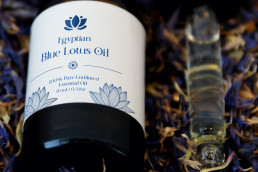
This is a formulation for a genuine blue lotus oil perfume you can make at home: a roll-on botanical fragrance built around pure Nymphaea caerulea absolute, supported by a small cast of complementary notes and diluted in a skin-friendly carrier. The recipe yields one 10 ml rollerball (roughly thirty to forty applications) at a 15 percent fragrance load, which sits at the upper edge of an eau de toilette and the lower edge of an eau de parfum. It is designed for someone who wants the distinctive honeyed-aquatic-floral signature of blue lotus to lead, rather than to sit in the background.
Table of Contents
- What You Will Need
- Equipment
- Ingredients
- Why This Formulation Works
- Step-by-Step Instructions
- How to Use This Perfume
- Storage and Shelf Life
- Variations
- For Sensitive Skin (10 percent strength)
- Warmer and More Resinous
- Green and Cooler
- Solid Perfume Version
- Common Mistakes to Avoid
- Frequently Asked Questions
- Where to Go From Here
- Blend With The Real Thing
It is written and clinically reviewed by Antonio Breshears, ND, CCA, a Bastyr-trained naturopathic doctor and certified clinical aromatherapist. If you want broader context on the oil itself before you blend, the complete guide to blue lotus oil covers its chemistry, safety and scent profile in full, and is worth reading alongside this recipe.
What You Will Need
Equipment
- One 10 ml amber or cobalt glass rollerball bottle with stainless steel ball and cap
- A 0.1 gram digital scale (strongly recommended) or a set of accurate pipettes
- A small glass beaker or shot glass for pre-blending
- A glass stirring rod or a clean stainless steel needle
- Labels and a fine permanent marker
- Paper blotter strips or plain card cut into 5 mm wide strips for scent testing
Ingredients
- Blue lotus absolute (Nymphaea caerulea), 20 drops, approximately 1.0 ml
- Sandalwood essential oil (Santalum album or sustainably sourced Santalum spicatum), 6 drops
- Bergamot essential oil, bergapten-free (FCF), 3 drops
- Pink pepper essential oil (Schinus molle), 1 drop
- Fractionated coconut oil or jojoba (Simmondsia chinensis), top up to the 10 ml line, approximately 8.5 ml
The fragrance total of thirty drops in 10 ml lands close to 15 percent, which is appropriate for a skin-applied perfume. Blue lotus absolute is viscous and sometimes semi-solid at room temperature, so gently warm the bottle in your hands or stand it in warm (not hot) water for a minute or two before measuring.
Why This Formulation Works
Blue lotus absolute sits in an unusual olfactory position. It opens with a cool, slightly aquatic floral character, settles into a deep honeyed heart with hints of hay and dried fruit, and finishes on a soft balsamic-smoky base. On its own it is beautiful but quiet on the skin; it needs a structure around it to carry and prolong the effect without masking the signature. That is what the other three materials do.
Sandalwood provides a creamy, long-lasting base that bonds well with the balsamic end of blue lotus and extends its longevity on skin by several hours. Bergamot gives a short, bright lift at the top that opens the blend and reads as “clean floral” rather than “heavy floral” in the first ten minutes. Pink pepper, used at a single drop, adds a subtle sparkle and rounds out the heart without introducing a competing floral note. The carrier ratio, roughly 85 percent, keeps the blend skin-safe for most adults while still giving a clearly perceptible fragrance.
Step-by-Step Instructions
- Warm the blue lotus absolute. Stand the sealed bottle in a cup of warm water for one to two minutes until the absolute flows easily. Do not microwave it and do not use boiling water.
- Prepare the rollerball. Remove the roller fitment from a clean, dry 10 ml glass bottle and set it aside on a clean tissue.
- Add the blue lotus first. Drop 20 drops of blue lotus absolute into the empty bottle. Because it is viscous, count slowly and allow each drop to fall fully before counting the next.
- Add sandalwood. Drop in 6 drops of sandalwood essential oil. Swirl gently.
- Add pink pepper. Add 1 drop of pink pepper. This is potent, so resist the temptation to add a second drop at this stage.
- Add bergamot. Add 3 drops of bergapten-free bergamot last among the aromatics; its volatility means it disperses quickly and you want it sitting on top of the blend until the carrier goes in.
- Swirl and rest. Cap the bottle with a finger, swirl gently for about thirty seconds, then let it sit for one to two minutes so the aromatic materials begin to integrate.
- Top up with carrier. Slowly fill to the 10 ml mark with fractionated coconut oil or jojoba. Leave a small air gap at the top so the roller fitment can seat without overflow.
- Seal and roll. Press the roller fitment firmly back into place and screw on the cap. Invert the bottle several times to mix; do not shake vigorously.
- Label and date. Write the contents, the date of blending, and the batch percentage (15 percent) on the label. This matters when you revisit the recipe in six months.
- Mature before judging. Rest the finished perfume in a cool, dark place for at least seven days before full use. Blue lotus blends change noticeably in the first week as the materials settle into each other.
How to Use This Perfume
Apply by rolling once or twice on each pulse point: inner wrists, behind the ears, at the base of the throat, or at the inner elbows. One full application uses roughly 0.05 to 0.1 ml, which means a 10 ml rollerball lasts between thirty and forty wearings depending on how generously you apply. Projection is close to the skin rather than loud; blue lotus is a perfume that rewards people standing near you, not people across the room. Expect a noticeable scent for three to five hours, with a quiet skin-scent phase continuing for several hours beyond that.
For evening wear or higher-emotion occasions, apply to the throat and wrists. For daywear, a single application to one wrist is usually enough. Avoid reapplying within the first hour; the base notes take time to develop, and over-application flattens the top.
Storage and Shelf Life
Stored in a cool, dark cupboard in its original dark glass rollerball, this perfume keeps well for 9 to 12 months. Jojoba, as a liquid wax rather than a true oil, resists oxidation and extends shelf life at the longer end of that range; fractionated coconut oil is similarly stable. Avoid storing the bottle on a sunny windowsill, in a bathroom that gets hot and humid, or in a car. If the scent goes flat, sour or waxy, the blend has oxidised and should be replaced rather than salvaged.
Never decant into clear glass for travel. A clear 2 ml sample atomiser left in daylight will degrade in weeks, not months. If you want a travel version, use a mini rollerball in the same dark glass.
Variations
For Sensitive Skin (10 percent strength)
Reduce the fragrance load: 14 drops blue lotus, 4 drops sandalwood, 2 drops bergamot FCF, 1 drop pink pepper (20 drops total), topped up to 10 ml with jojoba. This sits at roughly 10 percent and is gentler for reactive or mature skin, while still giving a recognisable blue lotus presence.
Warmer and More Resinous
Replace the pink pepper with 1 drop of frankincense (Boswellia carterii) and add 2 drops of benzoin resinoid (pre-diluted if thick). This shifts the base into a warmer, slightly ambery direction and pairs beautifully with blue lotus in cooler months.
Green and Cooler
Swap bergamot for 3 drops of neroli and add 1 drop of violet leaf absolute. The blend becomes more aquatic and green, emphasising the cooler top of the blue lotus rather than its honeyed heart. Good for warm weather.
Solid Perfume Version
Gently melt 6 grams of jojoba with 2 grams of beeswax in a bain-marie. Remove from heat, cool until just warm to the touch, then stir in the same 30-drop aromatic blend used above. Pour into a 10 ml tin or lip balm pot and allow to set. Apply with a fingertip to pulse points.
Common Mistakes to Avoid
Measuring blue lotus cold. Cold absolute does not drop accurately and you will underdose. Always warm it first.
Using regular bergamot instead of bergapten-free. Standard bergamot is phototoxic and unsuitable for leave-on skin products at this concentration. Insist on FCF or bergapten-free bergamot for any perfume you apply before sun exposure.
Skipping the maturation week. Freshly blended blue lotus perfumes can smell sharp, slightly alcoholic or strangely hollow in the first 48 hours. They need time. Judge the blend on day seven, not day one.
Overdosing pink pepper. One drop in 10 ml is the upper limit for most noses. Two drops tips the blend into something that smells like a spice rack rather than a perfume.
Using olive or sunflower carrier. Both smell, and both oxidise quickly. Stick to jojoba or fractionated coconut for perfumery.
Shaking instead of swirling. Vigorous shaking introduces air and can aerate the viscous absolute into streaks. Gentle inversion is enough.
Frequently Asked Questions
Can I use alcohol instead of carrier oil to make a spray perfume?
Yes, but the formulation changes. For a spray version, use 190-proof perfumer’s alcohol (not rubbing alcohol, not vodka) at around 80 percent, with 15 percent aromatics and 5 percent distilled water added after a two-week maceration. The recipe above is designed for oil-based application and will not atomise cleanly in a spray bottle.
How much blue lotus absolute do I actually need?
One 10 ml bottle of this perfume uses 1 ml of absolute. If you plan to make this recipe regularly, a 5 ml bottle of pure blue lotus absolute will produce five rollerballs, which is roughly a year of daily wear. Because the absolute is concentrated, a little goes further than most people expect.
Is this safe during pregnancy?
No. Blue lotus absolute is avoided during pregnancy and breastfeeding because safety data in these groups is not established. This perfume should not be used while pregnant or nursing.
Will it stain clothing?
Applied to skin in small amounts, it is unlikely to stain. Blue lotus absolute on its own, undiluted, can leave a faint oily mark on silk or pale fabric. Let the perfume absorb for a minute before dressing.
Can I wear this to work?
The close-to-skin projection makes it well suited for shared workspaces. Others will notice it only when near you, which is often the preferred signal in professional settings.
Why does my blend smell different after a week?
The top notes soften, the heart notes settle, and the base notes bind to the carrier. This is normal maturation. A well-made blue lotus perfume is always better at day seven than at day zero.
Can I use coconut oil from the kitchen as the carrier?
Only fractionated coconut oil, which is liquid at room temperature and odourless. Virgin coconut oil solidifies below 24 degrees Celsius and has a coconut smell that will compete with the blend.
What if I do not have a scale?
Use drops and work carefully. The recipe is written in drops so that it is reproducible without a scale. A 0.1 gram scale is useful if you want to weigh the carrier, but you can simply fill to the 10 ml line on a measured rollerball bottle.
Can I substitute something cheaper for sandalwood?
Sandalwood is hard to replace faithfully. The closest honest substitute is a small amount of amyris (Amyris balsamifera), which gives a similar creamy base, though it lacks the silkiness of true sandalwood. Use 6 drops of amyris in place of sandalwood if budget is a factor.
How soon can I wear it after blending?
You can wear it immediately, but it will not represent the finished blend. Wait at least a week for a fair assessment, and two weeks for the full settled character.
Where to Go From Here
A perfume is one of the most forgiving ways to work with blue lotus, because the margin for error is wide and the reward, a private, skin-warm fragrance, is immediate. Once this recipe feels familiar, try the variations above in small 5 ml test batches before committing to a full bottle. If you want to understand more about the material itself, its chemistry, its sourcing, its broader uses beyond perfumery, the complete guide to blue lotus oil is the natural next step. From there, you can branch into facial oils, bath blends and meditation roll-ons, all of which build on the same foundational skill: treating blue lotus as the quiet centrepiece and letting everything else serve it.

Antonio Breshears
Antonio Breshears is a renowned expert in holistic medicine and beauty, with over 25 years of research experience dedicated to uncovering the secrets of nature's most powerful remedies. Holding a degree in Naturopathic Medicine, Antonio's passion for healing and well-being has driven him to explore the intricate connections between mind, body, and spirit.
Over the years, Antonio has become a respected authority in the field, helping countless individuals discover the transformative power of plant-based therapies, including essential oils, herbs, and natural supplements. He has authored numerous articles and publications, sharing his wealth of knowledge with a global audience seeking to improve their overall health and well-being.
Antonio's expertise extends to the realm of beauty, where he has developed innovative, all-natural skincare solutions that harness the potency of botanical ingredients. His formulations embody his deep understanding of the healing properties found in nature, providing holistic alternatives for those seeking a more balanced approach to self-care.
With his extensive background and dedication to the field, Antonio Breshears is a trusted voice and guiding light in the world of holistic medicine and beauty. Through his work at Pure Blue Lotus Oil, Antonio continues to inspire and educate, empowering others to unlock the true potential of nature's gifts for a healthier, more radiant life.