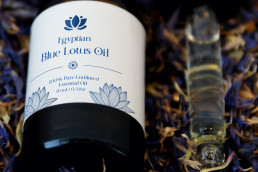
If you own a bottle of blue lotus oil and you are not sure whether it is the real thing, this blue lotus oil quality quiz gives you a structured way to find out. You will score the oil across seven categories (colour, aroma, viscosity, provenance, extraction, price and behaviour on skin), add up the results, and land somewhere on a simple scale that tells you whether you have a genuine Nymphaea caerulea absolute, a diluted version, or a fragrance oil pretending to be something it is not. This is not a laboratory test, but it is a surprisingly effective triage tool.
Table of Contents
- Why a Quiz Rather Than a Lab Test
- Before You Begin: Set Up a Fair Test
- Category 1: Colour (0 to 3 points)
- Category 2: Aroma Signature (0 to 4 points)
- Category 3: Viscosity and Texture (0 to 2 points)
- Category 4: Provenance and Labelling (0 to 3 points)
- Category 5: Extraction Method Disclosure (0 to 2 points)
- Category 6: Price Plausibility (0 to 3 points)
- Category 7: Skin Behaviour (0 to 3 points)
- Add Up Your Score
- What to Do With Your Score
- What the Quiz Cannot Tell You
- Frequently Asked Questions
- Where to Go From Here
- Oil That Would Score 20 of 20
It is written and clinically reviewed by Antonio Breshears, ND, CCA, a Bastyr-trained naturopathic doctor and certified clinical aromatherapist. If you want the full technical background on authenticity, extraction methods and what genuine blue lotus actually smells like, start with the complete guide to blue lotus oil and return here when you are ready to score the bottle on your counter.
Why a Quiz Rather Than a Lab Test
Gas chromatography mass spectrometry is the gold standard for verifying essential oils and absolutes. It will tell you precisely which compounds are present and in what ratios, and it is what reputable suppliers use during quality control. For the average buyer, however, GC-MS is neither affordable nor practical for a single bottle. What you need instead is a structured sensory and documentary assessment: a way to combine what your eyes, nose and skin tell you with what the label and the supplier claim.
That is what this quiz does. Each category awards points based on whether the oil behaves the way genuine Nymphaea caerulea absolute behaves. No single category is decisive on its own; a suspicious colour might just reflect dilution in jojoba, and a modest price might reflect a smaller supplier with lower margins. Taken together, though, seven signals produce a picture that is genuinely informative. If the oil fails six of seven checks, you are almost certainly holding something other than pure absolute.
Before You Begin: Set Up a Fair Test
Bring the bottle to room temperature. Blue lotus absolute is viscous, and cold temperatures thicken it further, which will skew your viscosity score. Put the bottle somewhere warm (not hot) for an hour before you start. Have clean white paper, a glass dropper if your bottle does not have one, a small patch of clean skin on the inner forearm, and a cup of coffee beans or a glass of water to reset your nose between smells.
Work through the seven categories in order. Write your score for each on a piece of paper. At the end, add them up.
Category 1: Colour (0 to 3 points)
Place a single drop on white paper and look at it in natural daylight. Genuine blue lotus absolute is almost never blue. The name refers to the flower, not the oil. Solvent-extracted absolute is typically a deep amber to reddish-brown, sometimes with an olive-green undertone depending on the batch. Supercritical CO2 extract can run slightly lighter. True steam-distilled essential oil (rare and expensive) may be pale yellow to almost colourless.
- 3 points: Amber, reddish-brown, olive-gold, or pale yellow depending on extraction type.
- 1 point: Very pale or nearly water-clear (could indicate heavy dilution in carrier, or could be a genuine distillate).
- 0 points: Bright blue, turquoise, or any synthetic-looking hue. This is a fragrance oil with dye. Stop the quiz and discard.
Category 2: Aroma Signature (0 to 4 points)
This is the most diagnostic category, so it is worth the most points. Place a single drop on a paper blotter (not directly under your nose) and wait ten seconds. Then smell from about ten centimetres away. Then smell again at thirty seconds, at two minutes, and at five minutes. Genuine blue lotus has a three-part olfactory arc.
The top note is cool, slightly aquatic, and softly floral, with hints of cucumber, lily, and something almost metallic. The heart note, which appears after a minute or two, is where the oil comes alive: a deep, honeyed, waxy floral that is unmistakably lotus, sometimes with a faint hay or tobacco edge. The base note, which emerges after five minutes or so, is balsamic and slightly smoky, with a resinous sweetness that lingers on the skin for hours.
- 4 points: All three phases present and distinct. Complex, changing, not linear.
- 2 points: Recognisably lotus but one-dimensional; smells the same at thirty seconds as it does at five minutes.
- 1 point: Generic floral sweetness with no real lotus character. Could be jasmine, ylang, or synthetic floral accord.
- 0 points: Sharp, chemical, perfume-shop sweetness; no evolution over time; fades quickly.
Category 3: Viscosity and Texture (0 to 2 points)
Tilt the bottle slowly. Genuine solvent-extracted absolute is noticeably viscous; it moves more slowly than water or a light essential oil, and it can feel almost syrupy on cool days. Supercritical CO2 extract is slightly less viscous but still thicker than a typical essential oil. Steam-distilled blue lotus behaves more like a conventional essential oil, which is thin and mobile.
If the oil sits in jojoba or another carrier, viscosity will be closer to the carrier itself, which is still moderate rather than watery.
- 2 points: Noticeably viscous; syrupy or honey-like (absolute) or moderately thick (CO2 or carrier dilution).
- 1 point: Thin and mobile but with some body (possible steam distillate or heavy dilution).
- 0 points: Watery, runny, behaves exactly like alcohol or water.
Category 4: Provenance and Labelling (0 to 3 points)
Look at the bottle, the box, and the supplier’s website. A legitimate supplier will tell you the botanical name (Nymphaea caerulea, sometimes spelled coerulea), country of origin (typically Egypt, India, or Sri Lanka for the true blue lotus, though be cautious; the Indian/Sri Lankan trade sometimes substitutes Nymphaea stellata or white lotus under a similar name), extraction method, and ideally a batch number. Many premium suppliers will provide a certificate of analysis on request.
- 3 points: Botanical name, country of origin, extraction method and batch number all present.
- 2 points: Most of the above, but one or two pieces missing.
- 1 point: Only “blue lotus” on the label with no botanical name or provenance.
- 0 points: No botanical name, no origin, no extraction detail; or the label claims something implausible like “100% pure blue lotus essential oil” at a price that would be impossible for a genuine distillate.
Category 5: Extraction Method Disclosure (0 to 2 points)
This deserves its own category because it is often where suppliers are deliberately vague. There are only three legitimate extraction methods for blue lotus: solvent extraction (producing an absolute, by far the most common), supercritical CO2 extraction (producing a clean, solvent-free extract), and steam distillation (producing a true essential oil, rare and very expensive because yields are tiny).
Any oil labelled simply “blue lotus oil” with no extraction method specified is suspicious. Any oil labelled “blue lotus essential oil” sold at a low price is almost certainly either an absolute mislabelled as an essential oil, or a fragrance oil altogether.
- 2 points: Extraction method clearly stated and consistent with price and appearance.
- 1 point: Extraction method mentioned but vague or inconsistent with what you see.
- 0 points: No extraction method stated.
Category 6: Price Plausibility (0 to 3 points)
Blue lotus absolute requires roughly 3,000 to 5,000 flowers to produce one gram of finished extract. This is not a marketing claim; it is agricultural arithmetic. A supplier selling 10ml of “pure blue lotus oil” for ten pounds or fifteen dollars is not selling you pure absolute. They cannot be. The maths does not work.
Genuine absolute sits in the range of roughly 40 to 120 pounds (or equivalent in USD or EUR) per 5ml, depending on grade and supplier margins. Dilutions in jojoba can be cheaper but should still reflect the cost of the absolute they contain. Supercritical CO2 extract tends to sit at the higher end. Steam-distilled essential oil, if you can find it, is the most expensive of all.
- 3 points: Price consistent with genuine absolute or a disclosed dilution.
- 2 points: Price lower than expected but within reason; could reflect a smaller supplier or a dilution not fully disclosed.
- 1 point: Price significantly below market; possible heavy dilution with undisclosed ratios.
- 0 points: Price so low it cannot possibly represent genuine material.
Category 7: Skin Behaviour (0 to 3 points)
Dilute one drop of the oil in roughly ten drops of jojoba or another neutral carrier and apply a small amount to the inner forearm. Genuine absolute will sink in gradually, leave a faint warmth, and the scent will evolve on the skin over the next hour, often becoming more honeyed and balsamic as it warms. There should be no stinging, no sharp chemical edge, and no rapid fade.
- 3 points: Gradual absorption, scent evolves over the hour, no irritation.
- 2 points: Absorbs fine but scent stays static or fades within fifteen minutes.
- 1 point: Slight tingling or unusual sensation; scent fades quickly.
- 0 points: Stings, burns, leaves a greasy chemical residue, or the scent disappears within minutes.
Add Up Your Score
Total possible: 20 points.
- 17 to 20: Almost certainly genuine Nymphaea caerulea absolute or high-grade CO2 extract. Trust your supplier and use with confidence within normal dilution guidelines.
- 13 to 16: Likely genuine but possibly a dilution. Could also be a lower grade of absolute. Usable, but ask the supplier for clarity on ratios and extraction method.
- 9 to 12: Suspect. Probably a significant dilution, a mislabelled product, or a blend. Usable for scent perhaps, but do not rely on it for the therapeutic properties associated with pure absolute.
- 5 to 8: Very likely a fragrance oil with a small amount of real material, or a synthetic blend. Not recommended for aromatherapy use.
- 0 to 4: Synthetic fragrance oil. Discard or return.
What to Do With Your Score
If you scored well, you can use the oil with confidence within the usual guidelines: 1 to 2 percent dilution for facial application, 2 to 3 percent for body, 2 to 4 drops in a diffuser. Store it in dark glass, away from heat and light, and it should hold up for three to four years.
If you scored poorly, you have a few options. You can request a refund if the supplier offers one, particularly if the labelling was misleading. You can keep it as a fragrance-only product, understanding that it will not deliver the effects people associate with genuine blue lotus. Or you can use it as a lesson in what to look for next time and source a replacement from a supplier who publishes extraction method, origin, and ideally a certificate of analysis.
What the Quiz Cannot Tell You
This is a triage tool, not a laboratory. It cannot detect low-level adulteration where a supplier has blended genuine absolute with a small amount of synthetic floral accord to stretch a batch. It cannot verify organic status. It cannot rule out contamination with pesticide residues or solvents left over from extraction. For those questions, you need a certificate of analysis from GC-MS testing, which reputable suppliers can provide on request.
The quiz also cannot resolve the Nymphaea caerulea versus Nymphaea stellata question on its own. Some Indian and Sri Lankan producers sell N. stellata (Indian blue water lily) as “blue lotus”, and while it is a related species with overlapping chemistry, it is not the same plant as Egyptian blue lotus. If this distinction matters to you, insist on the botanical name in writing.
Frequently Asked Questions
Is blue lotus oil supposed to be blue?
No. The flower is blue, but the extracted oil is amber, reddish-brown, olive-gold, or pale yellow depending on extraction method. A bright blue oil is a fragrance product with dye added, not a genuine botanical extract.
How can I tell if my blue lotus oil is pure without a lab test?
Work through the seven categories in this quiz: colour, aroma signature, viscosity, provenance, extraction method disclosure, price plausibility, and skin behaviour. No single check is definitive, but combined they produce a reliable picture of what you have.
What should genuine blue lotus oil smell like?
A three-part arc. Cool, slightly aquatic-floral top with hints of cucumber and lily; deep honeyed, waxy, unmistakably lotus heart with hay or tobacco edges; balsamic, slightly smoky, resinous base that lingers for hours. If the scent is flat, linear, or generically sweet, it is probably not genuine absolute.
Why is real blue lotus oil so expensive?
Because it takes roughly 3,000 to 5,000 flowers to produce one gram of absolute. The flowers must be hand-harvested at dawn when they open, and extraction is labour-intensive. There is no shortcut that preserves the chemistry, so cheap blue lotus oil is almost always diluted, adulterated, or synthetic.
What if my oil is diluted in jojoba; does that mean it is fake?
No. Dilutions in jojoba or fractionated coconut oil are legitimate and often the best way to buy blue lotus for regular use, because the absolute is very concentrated. What matters is whether the supplier discloses the dilution ratio honestly and prices the product to reflect the amount of absolute it contains.
Can I test my oil with water to see if it is real?
The water test (dropping oil in water to see if it dissolves) is often cited online but is not reliable for blue lotus. Absolutes can behave unpredictably in water because of their viscosity and solvent residues. The sensory and documentary checks in this quiz are far more informative.
What if I scored in the middle range, around 10 to 13?
You probably have a genuine but heavily diluted product, or a lower-grade absolute. It is usable, but do not expect the same strength of effect as a premium product. Ask the supplier directly about extraction method, origin, and dilution ratio.
Should I insist on a certificate of analysis?
For a small personal bottle, a COA is not essential if the supplier is reputable and transparent. For larger purchases, professional aromatherapy use, or any application where you need to be certain of purity, yes, request a GC-MS certificate of analysis. Reputable suppliers will provide one.
What is the difference between blue lotus absolute and blue lotus essential oil?
Absolute is produced by solvent extraction and is the most common form on the market. Essential oil, strictly speaking, is produced by steam distillation and is rare and expensive because yields are low. Supercritical CO2 extract is a third category sometimes marketed under either name. Any product labelled “blue lotus essential oil” at a low price is almost certainly a mislabelled absolute or a fragrance product.
Where should I buy blue lotus oil to avoid these problems?
From suppliers who publish botanical name, country of origin, extraction method, batch numbers, and ideally offer certificates of analysis. Price should be consistent with the agricultural reality of producing the oil. Transparency is the single best indicator of quality.
Where to Go From Here
If your oil scored well, you are in a good position to explore its uses with confidence. If it scored poorly, treat it as a learning experience and source something better next time. Either way, understanding what genuine blue lotus actually looks, smells and behaves like is the foundation for everything else you do with it. For the full technical picture, including extraction methods, chemistry and the historical context of Nymphaea caerulea, return to the complete guide to blue lotus oil. For sourcing that passes all seven quiz categories, consider starting from a supplier who already publishes the information you would otherwise have to ask for.

Antonio Breshears
Antonio Breshears is a renowned expert in holistic medicine and beauty, with over 25 years of research experience dedicated to uncovering the secrets of nature's most powerful remedies. Holding a degree in Naturopathic Medicine, Antonio's passion for healing and well-being has driven him to explore the intricate connections between mind, body, and spirit.
Over the years, Antonio has become a respected authority in the field, helping countless individuals discover the transformative power of plant-based therapies, including essential oils, herbs, and natural supplements. He has authored numerous articles and publications, sharing his wealth of knowledge with a global audience seeking to improve their overall health and well-being.
Antonio's expertise extends to the realm of beauty, where he has developed innovative, all-natural skincare solutions that harness the potency of botanical ingredients. His formulations embody his deep understanding of the healing properties found in nature, providing holistic alternatives for those seeking a more balanced approach to self-care.
With his extensive background and dedication to the field, Antonio Breshears is a trusted voice and guiding light in the world of holistic medicine and beauty. Through his work at Pure Blue Lotus Oil, Antonio continues to inspire and educate, empowering others to unlock the true potential of nature's gifts for a healthier, more radiant life.