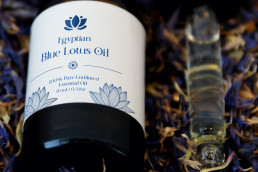
If you have been researching Nymphaea caerulea and keep running into two different product categories, blue lotus oil and blue lotus extract, you are not imagining things. They are genuinely different preparations, made through different processes, intended for different uses, and carrying different safety profiles. This article walks through the blue lotus oil vs extract comparison in plain terms so you can decide which form actually matches what you want to do with the plant.
Table of Contents
- What "Blue Lotus Oil" Actually Refers To
- What "Blue Lotus Extract" Actually Refers To
- The Core Difference: Aromatic vs Ingestible
- Chemistry: What Is Actually in Each
- Blue Lotus Oil (Absolute)
- Blue Lotus Extract (Water or Alcohol)
- What Each Form Is Good For
- Where Blue Lotus Oil Wins
- Where Blue Lotus Extract Wins
- Can You Use Them Together?
- Safety Considerations for Each Form
- Blue Lotus Oil Safety
- Blue Lotus Extract Safety
- How to Choose Between Them
- Quality Markers for Each
- For the Oil
- For the Extract
- Frequently Asked Questions
- Where to Go From Here
- Begin With The Aromatic Form
It is written and clinically reviewed by Antonio Breshears, ND, CCA, a Bastyr-trained naturopathic doctor and certified clinical aromatherapist. For a full grounding in the plant itself, its chemistry, and the range of available preparations, readers may want to start with The Complete Guide to Blue Lotus Oil before deciding which product category fits their intention.
What “Blue Lotus Oil” Actually Refers To
In current usage, “blue lotus oil” almost always refers to one of three things: a solvent-extracted absolute, a supercritical CO2 extract, or (rarely) a steam-distilled essential oil. All three are aromatic, concentrated, and lipophilic, meaning they dissolve in fats and carrier oils rather than water. They contain the volatile aromatic molecules of the flower along with a small, variable fraction of the plant’s alkaloids and flavonoids.
The absolute is the most common form on the market. It is produced by washing the flowers with a non-polar solvent, usually hexane, to create a waxy concrete, and then washing the concrete with ethanol to lift out the aromatic fraction. The ethanol evaporates, leaving a thick, dark, intensely perfumed liquid. Three to five thousand flowers go into a single gram, which is why genuine absolute is expensive and why cheap “blue lotus oil” on the open market is almost always diluted, adulterated, or synthetic.
CO2 extracts use pressurised carbon dioxide instead of solvent and capture a slightly different chemical profile, often closer to the fresh flower. Steam-distilled true essential oil exists but is rare because the yield is pitifully small. For the purposes of this article, “blue lotus oil” refers to the aromatic, oil-soluble, topical and olfactory form, which in most cases means the absolute.
What “Blue Lotus Extract” Actually Refers To
“Blue lotus extract” is a looser term and covers a wider range of preparations. Most commonly it refers to one of the following:
- Water or tea extract: dried flowers steeped in hot water, sometimes concentrated by simmering. This is the most traditional preparation, used in ancient Egypt and still common today for drinking.
- Alcohol tincture: dried flowers macerated in ethanol or a water-ethanol mix, sometimes for several weeks. Produces a liquid that can be taken in drops, added to drinks, or used sublingually.
- Glycerite: flowers extracted into vegetable glycerine, producing a sweeter, alcohol-free tincture-style liquid.
- Powdered extract: the water or alcohol extract dried down into a powder, often standardised to a specific ratio (for example, 10:1 or 50:1) and sold in capsules or loose powder.
- Resin or paste: a thick, reduced extract, sometimes sold for smoking or vaporising.
All of these are water-compatible or at least partially so. They contain the water-soluble fraction of the plant, which is rich in flavonoids (apigenin, quercetin, kaempferol), some of the alkaloids (nuciferine and aporphine have partial water solubility), and various polysaccharides and plant acids. What they do not contain, or contain only in trace amounts, is the volatile aromatic fraction that gives the flower its smell. An extract smells faintly of hay or honey at best. An absolute hits you across the room.
The Core Difference: Aromatic vs Ingestible
The cleanest way to understand blue lotus oil vs extract is to think of them as targeting two different delivery routes into the body.
Blue lotus oil, being lipophilic and aromatic, is designed for the olfactory and transdermal routes. You smell it, which routes scent molecules directly to the limbic system, the emotional and autonomic control centre of the brain. You apply it diluted to skin, where lipid-soluble compounds cross the skin barrier into local tissues and, to a smaller extent, systemic circulation. This is the aromatherapy and topical route, and it is where blue lotus oil excels.
Blue lotus extract, being water or alcohol based, is designed for the ingestion and mucosal routes. You drink it as tea, hold a tincture under the tongue, swallow a capsule of powdered extract. The compounds enter through the digestive tract or oral mucosa and circulate systemically before crossing into the central nervous system. This route delivers a meaningfully different dose of alkaloids and flavonoids, often at higher systemic concentrations than topical or inhalation routes can achieve.
Neither route is superior in the abstract; they are suited to different intentions. If you want a calming bedtime ritual, a face serum, a perfume, or a massage oil, you want the oil. If you want something closer to the traditional ceremonial or entheogenic use, where the goal is a perceptible shift in mood or consciousness, you want an extract, almost certainly a tea or tincture.
Chemistry: What Is Actually in Each
Blue Lotus Oil (Absolute)
Dominated by aromatic compounds: long-chain fatty acids and their esters, phenolic compounds, and a characteristic set of floral aroma molecules. The alkaloid content is present but modest and variable; aporphine and nuciferine are lipid-soluble enough to carry through into the absolute, but they arrive alongside a large matrix of other lipophilic plant compounds. Flavonoid content is lower than in water-based extracts because most flavonoids prefer a more polar solvent. What the oil offers, chemically speaking, is a rich aromatic profile with a background of mood-active alkaloids, not a concentrated alkaloid payload.
Blue Lotus Extract (Water or Alcohol)
Dominated by flavonoids and water-soluble plant compounds, with a decent fraction of the alkaloid content depending on the solvent. Alcohol tinctures pull more alkaloid than plain water tea. Standardised powdered extracts, particularly those labelled 10:1 or higher, concentrate these compounds further. The aromatic fraction is largely absent; these preparations smell mildly floral at best, sometimes vegetal or faintly grassy. What they offer is a higher systemic dose of the plant’s bioactive non-volatile chemistry, which is where the reported mood and relaxation effects of traditional use come from.
What Each Form Is Good For
Where Blue Lotus Oil Wins
Sleep and evening wind-down rituals. Diffused into the bedroom air or applied diluted to pulse points, the aromatic profile signals “end of day” to the limbic system. The effect is gentle rather than sedating, and it pairs well with a broader sleep routine.
Anxiety and nervous system regulation. Inhalation engages the parasympathetic branch of the autonomic nervous system quickly, within minutes. The oil is modestly effective here, not dramatic, but genuinely useful as part of a calming practice.
Skincare. The antioxidant flavonoids that do carry into the oil, combined with its gentle floral character, make it a lovely addition to face serums at 1 to 2 percent dilution. This is territory that no extract can touch.
Massage, perfumery, sensual use. All aromatic and topical applications favour the oil. Diluted in a carrier, it becomes a beautifully luxurious body oil with a reputation as a gentle aphrodisiac.
Where Blue Lotus Extract Wins
Traditional ceremonial or contemplative use. Historically, blue lotus was prepared as a wine infusion or tea. If your interest is in the traditional Egyptian use pattern, an extract is the authentic form.
Internal consumption. Tea, tincture, glycerite, or capsule. The oil is not intended for internal use and most aromatherapists, myself included, caution against ingesting absolutes.
Perceptible mood shifts. When people describe blue lotus as having a “gentle euphoric” or “dreamy” quality, they are almost always describing the effect of a strong extract or tea, not the effect of inhaling an absolute. The systemic alkaloid dose is simply higher.
Sleep support with a stronger nudge. For those who want something closer to a mild herbal sleep aid, a tincture taken before bed has a more pronounced effect than inhalation of the oil, though it is still not a strong sedative and should not be treated as one.
Can You Use Them Together?
Yes, thoughtfully. Some people enjoy a blue lotus tea or tincture in the evening while diffusing the oil in the bedroom, which layers the aromatic and systemic effects. The oil creates the olfactory atmosphere; the extract provides the internal shift. This is the most complete version of a traditional-style blue lotus ritual.
A few cautions if you decide to combine them. First, both preparations can interact with dopaminergic medications, MAOIs, and heavy sedatives; if you are on any of these, consult a prescriber before combining routes. Second, start low on both. The effects are not additive in a predictable way, and most people find that a single route is sufficient. Third, avoid combining either form with alcohol, especially in larger quantities, as the sedating effects can potentiate.
Safety Considerations for Each Form
Blue Lotus Oil Safety
Used topically at 1 to 3 percent dilution, the oil has a clean safety profile for most adults. Standard aromatherapy cautions apply: patch test first, avoid mucous membranes, keep out of reach of children and pets. Never use undiluted on skin. Do not ingest absolutes; they are formulated for external use and the solvent residues, while within safety limits for topical use, are not intended for consumption.
Avoid during pregnancy and breastfeeding. Use caution if you take dopaminergic medications, as the aporphine and nuciferine content, modest though it is, has theoretical interaction potential.
Blue Lotus Extract Safety
Internal preparations carry a different risk profile. Start with low doses; a cup of mild tea, or a few drops of tincture, is plenty for a first experience. The alkaloids in Nymphaea caerulea have a dual dopaminergic profile (aporphine is a weak D-agonist, nuciferine a weak D-antagonist), and while this typically produces a gentle, contemplative mood, it also means interactions with Parkinson’s medications, antipsychotics, SSRIs, and MAOIs are plausible. Consult a qualified practitioner if you take any psychotropic medication.
Pregnancy and breastfeeding are contraindications for internal use as well. Do not drive or operate machinery until you know how your body responds. And be aware of regional legality: blue lotus is restricted in Russia, Poland, Latvia, the US state of Louisiana, and is regulatorily complex in Australia.
How to Choose Between Them
The simplest framework is to match the form to your actual intention.
Choose blue lotus oil if you want: aromatherapy, diffuser use, a bedtime scent ritual, skincare, perfumery, massage oil, sensual use, or a subtle calming atmosphere in a room. You will work with it through smell and skin.
Choose blue lotus extract if you want: a traditional tea ceremony, internal herbal support, a more noticeable mood shift, a mild sleep-supportive nightcap, or alignment with historical ceremonial use. You will work with it through ingestion.
Choose both if you want the most complete ritual and you have cleared any medication interactions, with a preference for layering a mild extract inside an aromatic environment.
What you should not do is expect the oil to produce the perceptible euphoric effects sometimes described in traditional accounts; that is the territory of the extract. Nor should you expect the extract to replace the skincare or perfumery role of the oil. They are different tools.
Quality Markers for Each
For the Oil
Look for the botanical name Nymphaea caerulea on the label, ideally with country of origin (Egypt is the traditional source), extraction method (absolute, CO2, or steam distilled), and a batch or lot number. The oil should be thick, dark amber to brown, and powerfully aromatic from the moment you open the bottle. If it is thin, pale, or barely smells, it is either heavily diluted in carrier or not the real thing. Genuine absolute is expensive; be sceptical of very low prices.
For the Extract
Dried flowers should be clearly whole or cut flowers of Nymphaea caerulea, not the unrelated Nymphaea stellata or Nelumbo nucifera (sacred lotus is a different genus and species). Tinctures should state the solvent, the ratio (for example, 1:4 in 40 percent ethanol), and the source. Powdered extracts should state the concentration ratio. Cheap or vaguely labelled “blue lotus” products are frequently adulterated or substituted with other water lily species.
Frequently Asked Questions
Is blue lotus oil stronger than blue lotus extract?
They are not comparable on a single scale because they deliver different chemistry through different routes. The oil has a stronger aromatic presence; the extract has a stronger systemic alkaloid effect. Neither is objectively “stronger”; they do different things.
Can I drink blue lotus oil?
No. Aromatic absolutes and essential oils are formulated for external use. Use an extract, tea, or tincture for internal consumption.
Can I apply blue lotus extract to my skin?
A tincture can be used cosmetically in small amounts, particularly as part of a toner or facial mist, but it lacks the aromatic character and lipid compatibility of the oil. For skincare proper, the oil is the better tool.
Which form is closer to traditional Egyptian use?
The extract. Ancient use centred on infusing flowers into wine or water. The absolute is a modern extraction method developed for perfumery.
Do both forms cause the same effects?
Partially. Both can support relaxation and mood, but the oil works primarily through olfactory and topical pathways, while the extract works systemically. The extract tends to produce more noticeable internal sensations; the oil produces more atmospheric and emotional ones.
Are there safety differences?
Yes. Internal use of the extract carries higher potential for medication interactions and is generally a larger systemic dose. Topical and inhaled use of the oil is gentler but requires proper dilution and pregnancy avoidance.
Is the oil cheaper than the extract per use?
Per bottle the oil is often more expensive, but because it is used by the drop, the cost per use is usually lower than a daily tincture regimen. Extracts vary widely in price depending on concentration.
Can I make blue lotus extract at home?
Yes; a simple tea from dried flowers is the easiest form. Alcohol tinctures are also straightforward to make with dried flowers and vodka. Making a genuine aromatic absolute at home is not realistic; it requires solvent extraction equipment and vast quantities of fresh flowers.
Do both forms expire?
Yes, though differently. A well-stored absolute in dark glass holds up for 3 to 4 years. Tinctures in alcohol last several years. Water-based teas and glycerites are more perishable and should be used promptly or refrigerated.
Which should a beginner start with?
The oil, in most cases. It has a gentler safety profile for first-time users, does not involve ingestion, and lets you experience the plant’s aromatic character before deciding whether you want to explore the internal route through an extract.
Where to Go From Here
If you have decided the aromatic form matches your intention, the next step is understanding how to work with it well: proper dilution, choice of carrier, and application method. The Complete Guide to Blue Lotus Oil covers the full landscape of the oil’s chemistry, uses, and safety, and is the logical next stop for anyone ready to move from comparison to practice. If instead you find yourself drawn toward the extract route, the traditional tea and tincture preparations are the place to begin, always starting low and observing carefully before increasing dose.
Both forms have a place in a thoughtful relationship with Nymphaea caerulea. The key is knowing which one serves the thing you are actually trying to do.

Antonio Breshears
Antonio Breshears is a renowned expert in holistic medicine and beauty, with over 25 years of research experience dedicated to uncovering the secrets of nature's most powerful remedies. Holding a degree in Naturopathic Medicine, Antonio's passion for healing and well-being has driven him to explore the intricate connections between mind, body, and spirit.
Over the years, Antonio has become a respected authority in the field, helping countless individuals discover the transformative power of plant-based therapies, including essential oils, herbs, and natural supplements. He has authored numerous articles and publications, sharing his wealth of knowledge with a global audience seeking to improve their overall health and well-being.
Antonio's expertise extends to the realm of beauty, where he has developed innovative, all-natural skincare solutions that harness the potency of botanical ingredients. His formulations embody his deep understanding of the healing properties found in nature, providing holistic alternatives for those seeking a more balanced approach to self-care.
With his extensive background and dedication to the field, Antonio Breshears is a trusted voice and guiding light in the world of holistic medicine and beauty. Through his work at Pure Blue Lotus Oil, Antonio continues to inspire and educate, empowering others to unlock the true potential of nature's gifts for a healthier, more radiant life.