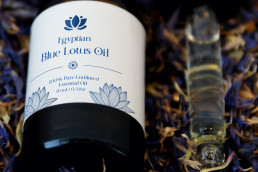
The question of blue lotus oil vs tea comes up constantly, and it deserves a proper answer rather than a marketing one. These two preparations of Nymphaea caerulea share a flower, a cultural heritage, and a vague reputation for being relaxing, but they are fundamentally different products that act on the body through different pathways, carry different risks, and suit different purposes. Understanding the distinction helps you choose the right form for what you actually want, rather than buying both and hoping something works.
Table of Contents
- What Each Preparation Actually Is
- How the Two Forms Act on the Body
- Blue lotus oil: olfactory and topical pathways
- Blue lotus tea: gastrointestinal and systemic pathways
- What Each Form Actually Does, Subjectively
- Blue Lotus Oil vs Tea: A Direct Comparison
- Which Form Suits Which Purpose
- Choose the oil when
- Choose the tea when
- Use both when appropriate
- How to Use Each Form Well
- Using the oil
- Using the tea
- What to Expect: Realistic Timeframes
- Safety and Limits
- When Neither Is the Right Choice
- Complementary Practices
- Frequently Asked Questions
- Where to Go From Here
- Bring Home the Scent of the Nile
It is written and clinically reviewed by Antonio Breshears, ND, CCA, a Bastyr-trained naturopathic doctor and certified clinical aromatherapist. If you want a broader grounding before diving into this comparison, the complete guide to blue lotus oil covers chemistry, sourcing, and uses in full depth, and this article focuses specifically on how the oil differs from the tea in mechanism and practical use.
What Each Preparation Actually Is
Blue lotus oil, in almost every case sold commercially, is a solvent-extracted absolute. A large quantity of petals (typically three thousand to five thousand flowers per gram of finished absolute) is processed with a food-grade solvent to draw out the aromatic and lipophilic compounds, the solvent is then removed, and what remains is a thick, deeply scented oil that concentrates the flower’s fragrance molecules along with a portion of its alkaloids and flavonoids. Some rarer versions are produced by steam distillation or supercritical CO2 extraction, but the absolute is by far the most common form. It is designed for topical and olfactory use.
Blue lotus tea is an entirely different preparation. Dried petals, and sometimes whole dried flowers, are steeped in hot water. Water is a poor solvent for most of the lipophilic aromatic compounds, so the tea smells only faintly floral, but water does extract a meaningful amount of the water-soluble alkaloids and some flavonoids. The resulting liquid is consumed, and its constituents pass through the digestive tract, undergo first-pass metabolism in the liver, and then circulate systemically. It is designed for ingestion.
So the starting point is already decisive. One is an aromatic concentrate for the nose and skin. The other is an herbal infusion for the gut and bloodstream. They share a plant, but they are no more interchangeable than lavender essential oil and lavender tisane.
How the Two Forms Act on the Body
Blue lotus oil: olfactory and topical pathways
When you smell blue lotus oil, volatile molecules enter the nasal cavity and bind to receptors in the olfactory epithelium. The signal travels along the olfactory nerve directly into the limbic system, the emotional and memory-processing region of the brain, without the delay or dilution of systemic circulation. This is why scent can shift mood within seconds. The measurable effects of inhaling blue lotus oil, slower breathing, softened facial tension, a sense of parasympathetic settling, come primarily through this pathway rather than through the alkaloids reaching the brain in meaningful concentration.
Topically, when diluted in a carrier and applied to the skin, a small fraction of the oil’s constituents, including flavonoids like apigenin and quercetin, can absorb through the stratum corneum. The systemic dose from this route is low, but local effects on skin (antioxidant, mildly anti-inflammatory, barrier-supportive) are genuine and form the basis for blue lotus oil’s place in skincare.
Blue lotus tea: gastrointestinal and systemic pathways
When you drink blue lotus tea, the extracted alkaloids, principally nuciferine and aporphine, along with water-soluble flavonoids, enter the stomach and small intestine. Absorption varies depending on the individual, the strength of the brew, and what else is in the stomach. Once absorbed, these compounds pass through the liver where a portion is metabolised before the remainder reaches systemic circulation and, in some cases, crosses the blood-brain barrier.
Nuciferine is the most pharmacologically interesting constituent. It shows weak dopamine D2 antagonism and activity at serotonin 5-HT2A and 5-HT2C receptors. Aporphine acts as a weak dopamine agonist. At the doses typically achieved through tea consumption, these effects are modest, and most users describe a mild sedative warmth, slight mental softening, and a gentle reduction in anxiety rather than anything psychoactive in the recreational sense.
The key clinical point is that the tea’s action is systemic and metabolic. The oil’s action, when used by inhalation, is neurological and rapid via the olfactory route. These are not redundant. They are doing different things.
What Each Form Actually Does, Subjectively
In practice, people describe the two experiences quite differently.
Blue lotus oil, inhaled from a bottle or diffused, tends to produce an almost immediate shift in emotional texture. The scent itself, cooler and floral on top, deeply honeyed in the heart, faintly smoky at the base, seems to slow the breath and relax the face. Used before bed, it sets an atmosphere conducive to sleep without being overtly sedating. Worn on the skin, it becomes a mood-anchoring ritual, with the scent resurfacing gently throughout the day.
Blue lotus tea, consumed as an evening infusion, tends to produce a slower, warmer, body-level softening that arrives twenty to forty minutes after drinking. Users describe feeling physically heavier, mentally quieter, and slightly drowsy. At higher doses some describe mild dreamlike imagery or increased dream vividness, which is part of why the tea has become popular with lucid dreaming practitioners.
Both are modest in their effects. Neither is a sedative in the pharmacological sense of a benzodiazepine or a proper hypnotic. Both work best when the rest of your life (sleep hygiene, stress load, caffeine intake) is reasonably ordered.
Blue Lotus Oil vs Tea: A Direct Comparison
Setting them side by side helps clarify which to reach for.
Onset. Oil, via inhalation, acts within seconds to a minute. Tea acts within twenty to forty minutes as it is absorbed and metabolised.
Duration. The olfactory effect of the oil fades within the half hour after you stop smelling it, though a diffused session can extend this. The tea’s effect typically lasts one to three hours depending on strength.
Dominant mechanism. Oil works primarily through scent-limbic activation and, secondarily, skin-level flavonoid effects. Tea works primarily through systemic alkaloid and flavonoid absorption.
Ritual character. The oil is a ritual of scent and touch, suited to evening routines, meditation, yoga, skincare, and intimate settings. The tea is a ritual of preparation and ingestion, closer to a traditional herbal tisane taken in the hour before bed.
Precision of dosing. The oil’s effects on mood and skin are relatively consistent when used correctly, because olfactory response does not require systemic absorption. The tea’s effects vary more between individuals because absorption, metabolism, and stomach contents all influence the outcome.
Regulatory status. Both are legally restricted in certain jurisdictions (Russia, Poland, Latvia, the US state of Louisiana, and regulatory complexity in Australia). Check your local position before purchasing either.
Which Form Suits Which Purpose
Choose the oil when
Choose blue lotus oil when your goal is atmospheric, emotional, or sensory. If you want to set a mood for sleep, meditation, or intimacy using scent. If you are building a facial oil or serum and want the antioxidant and skin-softening properties of the flower’s flavonoids. If you want a portable, wearable form you can dab on wrists or inhale from the bottle during a stressful moment. If you value the ritual of applying a beautiful, rare oil to the skin as part of an evening unwind. If you want something that acts in seconds rather than in thirty minutes.
The oil is also the right choice if you are uneasy about ingesting an herb whose precise alkaloid content you cannot verify, which is almost always the case with loose dried flowers bought online.
Choose the tea when
Choose blue lotus tea when your goal is a body-level, systemic effect. If you want a mild evening herbal infusion that helps you settle into sleep gradually over the following hour. If you are specifically interested in the alkaloid effects on dopaminergic and serotonergic tone that only systemic absorption can deliver. If you are exploring the historical and cultural dimension of the flower, since tea preparation has a long documented lineage in Egyptian ritual contexts. If you enjoy the practice of brewing and drinking herbs as part of your evening routine.
Use both when appropriate
There is no rule against using both, and in some contexts they complement each other well. A cup of tea in the hour before bed paired with a diffused ambient scent of the oil in the bedroom creates both the systemic softening and the atmospheric cue. Each form reinforces the other through a different pathway, and neither undermines the other pharmacologically at sensible doses.
How to Use Each Form Well
Using the oil
For diffusion, two to four drops in a standard ultrasonic diffuser with water, run for twenty to thirty minutes at the start of an evening wind-down routine. For direct inhalation, open the bottle, hold it a few centimetres below your nose, and take three or four slow breaths. For topical use on skin, dilute the absolute to one to two percent in a carrier oil (jojoba works well for the face, sweet almond or fractionated coconut for the body). A rollerball at two to three percent on wrists and behind the ears is a practical daily option.
Avoid applying the undiluted absolute directly to skin, and keep it away from eyes and mucous membranes. Store it in dark glass in a cool, dark place; well-kept absolute holds its quality for three to four years.
Using the tea
Traditional preparation is roughly three to five grams of dried petals per cup, steeped in hot (not boiling) water for ten to fifteen minutes, covered to retain volatile compounds. Strain and drink slowly in the hour before bed. Start with a weaker brew and a smaller volume on the first occasion to see how your body responds, since individual sensitivity varies.
Do not combine the tea with alcohol, sedative medications, or other central nervous system depressants. Do not consume if pregnant or breastfeeding. Do not drink the tea before driving.
What to Expect: Realistic Timeframes
With the oil, the scent-driven mood shift is immediate, within the first minute of inhalation. Skin effects from regular topical use at one to two percent dilution typically become visible over three to six weeks as the flavonoid content supports barrier function and antioxidant status. If you are expecting dramatic changes in either mood or skin within a single session, you will be disappointed. The oil rewards consistency.
With the tea, the onset is twenty to forty minutes. Regular evening use often produces a cumulative settling pattern over one to two weeks, where the body starts to associate the ritual with the wind-down state. The tea does not produce tolerance in the way a pharmaceutical hypnotic might, but expectations should remain modest. It is a mild herbal support, not a clinical intervention.
Safety and Limits
Both forms should be avoided in pregnancy and during breastfeeding. Both warrant caution in people taking dopaminergic medications, MAOIs, or heavy sedatives, because the alkaloid content may interact unpredictably. The tea carries the greater interaction risk because of its systemic absorption. The oil, used by inhalation and in correctly diluted topical applications, delivers a much smaller systemic alkaloid load.
People with known sensitivities to aquatic plants or water lily species should patch-test the oil before broader topical use. The tea should not be consumed by anyone with compromised liver function without first consulting a clinician, since hepatic metabolism handles the absorbed alkaloids.
Neither preparation substitutes for proper clinical care. If you are dealing with persistent insomnia, clinical anxiety, or mood symptoms severe enough to disrupt daily life, see a qualified practitioner. Blue lotus, in any form, is a supporting ritual rather than a treatment.
When Neither Is the Right Choice
There are situations where both forms are simply the wrong tool. Acute panic, severe depression, or post-traumatic stress reactions are not conditions that an aromatic absolute or a herbal tea will address meaningfully. Post-operative pain, active infection, and any medical condition under pharmaceutical management should be handled through the appropriate medical pathway, not through botanicals. Children and adolescents should not be given the tea, and the oil should only be used around them in very dilute diffusion if at all, on the judgement of a knowledgeable practitioner.
The oil is also not the right choice if you are primarily looking for sedation. It is a mood-shaping, atmosphere-setting scent, not a sleeping aid in the pharmacological sense. If sedation is what you need, work with a clinician on that directly.
Complementary Practices
Whichever form you choose, the effect is amplified by the rest of your routine. A consistent bedtime, reduced screen exposure in the final hour before sleep, moderated caffeine intake after midday, and a cool, dark sleeping environment all do more for sleep quality than any botanical on its own. Breath work, particularly slow nasal breathing with an extended exhalation, pairs beautifully with the oil because the scent is drawn in with each inhalation and the parasympathetic effect compounds. Gentle evening movement, whether restorative yoga or a walk, settles the nervous system into a state where either the oil or the tea lands more effectively.
Other botanicals that pair well without overlapping pharmacologically include lavender and chamomile (both for scent and tea), ashwagandha for longer-term adrenal support, and magnesium glycinate for muscular relaxation in the evening.
Frequently Asked Questions
Is blue lotus oil stronger than blue lotus tea?
Stronger is the wrong frame. The oil is concentrated aromatically but acts mainly through scent and skin, delivering a small systemic alkaloid load. The tea is more dilute in aromatic molecules but delivers a larger systemic alkaloid load through ingestion. Each is strong in its own pathway.
Can I drink blue lotus oil?
No. The oil is an absolute, extracted with a solvent and intended for inhalation and topical use. It is not formulated, dosed, or tested for ingestion, and consuming it is not safe. If you want the ingestion pathway, use properly sourced dried petals to make tea.
Can I put blue lotus tea on my skin instead of the oil?
You can rinse your face with cooled blue lotus tea and get a mild flavonoid effect, but the aromatic and concentrated topical benefits of the oil are not replicated by the tea. They are different products for different uses.
Which form is better for sleep?
Depends on what you mean by sleep support. The oil sets the atmosphere and shifts mood through scent, which helps you wind down. The tea produces a mild systemic drowsiness thirty or so minutes after drinking. Many people find using both in sequence works better than either alone.
Which form is better for anxiety?
The oil, inhaled in the moment of rising anxiety, acts within seconds through the olfactory-limbic pathway. The tea acts more slowly and is better suited to baseline evening settling than to acute anxious moments.
Is the tea psychoactive?
At typical consumption levels, the tea produces mild relaxation, slight drowsiness, and sometimes more vivid dreaming. It is not recreationally psychoactive at sensible doses, and expectations of anything dramatic should be set aside.
Can I use both on the same evening?
Yes, at sensible doses. A cup of tea in the hour before bed combined with a diffused ambient scent of the oil in the bedroom is a common pairing. Avoid combining either with alcohol or sedative medication.
Is blue lotus oil legal where tea is not?
The legal position varies by jurisdiction and sometimes treats the plant material and its preparations differently. Both forms are restricted in Russia, Poland, Latvia, the US state of Louisiana, and face regulatory complexity in Australia. Check your local position before purchasing either.
Does the oil lose potency faster than the tea?
Stored properly in dark glass in a cool, dark place, a good absolute holds its quality for three to four years. Dried tea petals degrade faster with exposure to light, air, and moisture, and should be used within twelve to eighteen months of purchase for best effect.
Why does the tea smell so much less than the oil?
Because water is a poor solvent for the lipophilic aromatic molecules that give the flower its scent. Those molecules come out into a fat or solvent extraction but stay largely in the spent petals when you brew tea. The tea gives you alkaloids and flavonoids; the oil gives you aroma.
Where to Go From Here
If this article has clarified that the oil is what you want, the next step is sourcing a genuine, well-produced Egyptian absolute rather than one of the diluted or adulterated versions that have proliferated in recent years. If you are still weighing the options, the complete guide to blue lotus oil is the best starting point for understanding what a quality oil looks like and how to use it properly. If the tea is what suits your purpose better, work with a herbalist or reputable supplier who can confirm the material is genuine Nymphaea caerulea and not one of the adulterants occasionally sold under its name.
Whichever form you choose, remember that the flower has been used for three thousand years because of a modest, genuine effect on mood and atmosphere, not because of any dramatic pharmacological action. Used within realistic expectations, and integrated into a sensible evening routine, either form can become a reliable and beautiful part of how you wind down.

Antonio Breshears
Antonio Breshears is a renowned expert in holistic medicine and beauty, with over 25 years of research experience dedicated to uncovering the secrets of nature's most powerful remedies. Holding a degree in Naturopathic Medicine, Antonio's passion for healing and well-being has driven him to explore the intricate connections between mind, body, and spirit.
Over the years, Antonio has become a respected authority in the field, helping countless individuals discover the transformative power of plant-based therapies, including essential oils, herbs, and natural supplements. He has authored numerous articles and publications, sharing his wealth of knowledge with a global audience seeking to improve their overall health and well-being.
Antonio's expertise extends to the realm of beauty, where he has developed innovative, all-natural skincare solutions that harness the potency of botanical ingredients. His formulations embody his deep understanding of the healing properties found in nature, providing holistic alternatives for those seeking a more balanced approach to self-care.
With his extensive background and dedication to the field, Antonio Breshears is a trusted voice and guiding light in the world of holistic medicine and beauty. Through his work at Pure Blue Lotus Oil, Antonio continues to inspire and educate, empowering others to unlock the true potential of nature's gifts for a healthier, more radiant life.