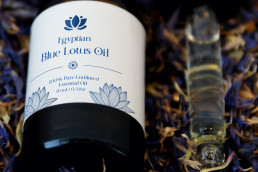
If you are trying to decide between blue lotus oil and a blue lotus tincture, the short answer is that they are two quite different products with overlapping romance but almost no overlap in how they actually work on the body. An oil, whether absolute, CO2, or a rare true essential oil, is an aromatic preparation designed primarily for inhalation and topical use; a tincture is an alcohol-based internal preparation that delivers the flower’s water- and alcohol-soluble constituents through the digestive tract. This article lays out the blue lotus oil vs tincture question properly, so you can pick the form that matches your actual intention rather than the one with the prettiest label.
Table of Contents
- What Each Preparation Actually Is
- Blue Lotus Oil
- Blue Lotus Tincture
- How the Chemistry Differs
- Blue Lotus Oil vs Tincture: What Each Is Actually Good For
- Where Oil Wins
- Where a Tincture Wins
- Safety: Two Different Risk Profiles
- Oil Safety
- Tincture Safety
- How to Choose Between Them
- Common Misconceptions
- "The Tincture Is Stronger"
- "You Can Make a Tincture From the Oil"
- "You Can Diffuse a Tincture"
- "They Are Interchangeable Because They Come From the Same Plant"
- Quality Markers for Each
- When Neither Is Right
- Frequently Asked Questions
- Where to Go From Here
- Choose the Right Blue Lotus
It is written and clinically reviewed by Antonio Breshears, ND, CCA, a Bastyr-trained naturopathic doctor and certified clinical aromatherapist. For the wider context on aromatic preparations of Nymphaea caerulea, readers may find The Complete Guide to Blue Lotus Oil a useful companion, since this cluster article focuses narrowly on how oil preparations compare with alcohol tinctures rather than on oil chemistry itself.
What Each Preparation Actually Is
Clarity begins with definitions, because the blue lotus market is full of loosely labelled products that blur categories.
Blue Lotus Oil
“Blue lotus oil” is an umbrella term that in practice covers three distinct aromatic products. The most common is blue lotus absolute, produced by solvent extraction of the fresh flowers and yielding a thick, richly coloured aromatic concentrate that carries the floral-aquatic top, honeyed-floral heart, and balsamic-smoky base the plant is known for. Less commonly, producers offer a true essential oil obtained by steam distillation, which is low-yielding and expensive; and occasionally a supercritical CO2 extract, which tends to sit closest to the living flower in character. All three are designed for aromatic and topical use, not ingestion. They concentrate volatile aromatic molecules and a fraction of the heavier fragrant constituents, but they do not carry the full water-soluble profile of the flower.
Blue Lotus Tincture
A tincture is a liquid preparation in which plant material is steeped in a solvent, typically food-grade ethanol at a concentration somewhere between 40 and 70 percent, sometimes with a portion of glycerine or water. Over days or weeks the alcohol pulls out alkaloids, flavonoids, and other soluble compounds from the dried or fresh flowers. The result is a flavoured liquid that is taken by mouth, usually a few drops to a millilitre or so at a time, either neat, diluted in water, or placed under the tongue. Tinctures are an internal herbal preparation in the Western herbalist tradition; they are not aromatherapy products.
So the basic difference is not marketing. It is route of delivery and the chemistry that survives the process. An oil is inhaled or applied to skin. A tincture is swallowed.
How the Chemistry Differs
Blue lotus contains several classes of constituents that are relevant to its traditional reputation. The aporphine alkaloids, including aporphine itself and nuciferine, are of interest for their mild modulation of dopamine and serotonin signalling. The flavonoids, including apigenin, quercetin, and kaempferol, contribute mild central calming and antioxidant effects. There are also volatile aromatic molecules responsible for the scent, along with sugars, mucilage, pigments, and other water-soluble material.
An aromatic oil preparation concentrates the volatile and semi-volatile aromatic fraction. Absolutes retain some of the heavier pigmented material and a portion of the flavonoid profile; true essential oils retain less; CO2 extracts typically sit between the two. Very little of the alkaloid content survives at therapeutically meaningful levels in a bottle of oil that you smell or dab on your wrists, and what does get through arrives via the olfactory-limbic pathway or slow transdermal absorption rather than through the gut.
A tincture, by contrast, concentrates what dissolves in ethanol, which includes a reasonable fraction of the alkaloid content and a solid share of the flavonoids, along with pigments, resins, and some of the aromatic molecules. When you swallow a tincture, those compounds enter the portal circulation via the gut, pass through first-pass liver metabolism, and reach the bloodstream in a systemic way. This is a fundamentally different pharmacology from inhaling a scent.
The practical implication is that tinctures can have more pronounced, if still modest, systemic effects; oils work more through mood, scent, and ritual, with a softer and more diffuse action on the nervous system.
Blue Lotus Oil vs Tincture: What Each Is Actually Good For
Once you accept that these are different categories of product, the choice becomes easier.
Where Oil Wins
An oil preparation is the right choice if your interest is primarily aromatic, ritual, or topical. That covers a broad range of genuine uses: evening wind-down with a few drops in a diffuser, a scented pulse-point anointing before bed or meditation, perfumery and personal fragrance, facial serums where the floral and antioxidant character are pleasant and mild, bath preparations, and massage blends. The scent itself is the main therapeutic agent; the work happens through the olfactory-limbic pathway and through the psychological reset that a considered ritual provides. Oil is also the safer option for people who do not want to take anything internally, who are on medications where adding an alcoholic herbal extract would be a complication, or who simply want the pleasure of the flower without pharmacological ambition.
Where a Tincture Wins
A tincture is the better choice if the user specifically wants the internal herbal effect the plant is known for in traditional use: a gentle, modestly euphoric, mildly sedative internal experience used in contemplative or ceremonial contexts. That is a more pharmacologically active territory and also a more legally complicated one, depending on jurisdiction. Tinctures are not the correct tool for skincare, perfumery, diffusion, or massage; dropping tincture into a diffuser produces no aromatherapeutic benefit and wastes alcohol. They are not interchangeable with oil in a ritual sense either, because the sensory experience is completely different.
Safety: Two Different Risk Profiles
Because route of delivery differs, so does safety.
Oil Safety
A correctly produced blue lotus oil used topically at sensible dilutions (1 to 2 percent for the face, 2 to 3 percent for the body, up to 3 percent for small targeted areas) and diffused at modest amounts (2 to 4 drops in a diffuser) has a reasonable safety profile for most healthy adults. It should still be avoided in pregnancy and breastfeeding, used cautiously by people taking dopaminergic medications, MAOIs, or strong sedatives, and patch tested first to rule out sensitivity. It is not meant to be ingested, full stop; a blue lotus absolute in particular will contain solvent residues and is formulated for external use only.
Tincture Safety
A tincture carries the safety considerations of an internal herbal preparation. It contains alcohol, which matters for anyone avoiding ethanol for reasons of pregnancy, liver disease, recovery, or medication interaction. It delivers alkaloids systemically, which matters more than mild topical exposure when it comes to interactions with psychiatric medication, sedatives, or alcohol itself. It should be avoided in pregnancy and breastfeeding. Dosing is small and should be approached conservatively; the traditional guidance is to start low, observe effect over several hours, and avoid combining with other sedatives or alcohol. Legality is an additional consideration: blue lotus is restricted or regulated in places including Russia, Poland, Latvia, the US state of Louisiana, and parts of Australia, and tinctures are more likely than oils to run into regulatory attention because they are clearly intended for ingestion.
How to Choose Between Them
A simple framework helps. Ask yourself three questions.
First, what do you actually want to do with it? If the answer involves scent, skin, sleep ritual, meditation ambience, massage, perfume, or facial care, the aromatic oil is the right product. If the answer involves internal herbal effect in a ceremonial or contemplative context, the tincture is the right product. There is no virtue in buying the “wrong” tool because it is more famous or sounds more serious.
Second, what is your medical and medication picture? If you take psychiatric medication, sedatives, blood-thinners, or dopaminergic drugs; if you are pregnant or breastfeeding; if you have liver disease; or if you avoid alcohol for any reason, an oil used externally is the more conservative choice. A tincture raises more questions that should be answered with a clinician, not a retailer.
Third, where do you live? Regulatory status varies meaningfully between countries and sometimes between provinces or states. Oils used externally tend to travel with fewer complications than ingestible herbal tinctures of the same plant. Check local rules before ordering a tincture across borders.
Common Misconceptions
“The Tincture Is Stronger”
“Stronger” depends on what you want the product to do. A tincture delivers more alkaloid content systemically and is therefore more pharmacologically noticeable; an oil delivers scent molecules to the brain through an ancient, direct, and surprisingly powerful pathway. The olfactory-limbic route is not a weaker route; it is a different route. People who expect a tincture to smell as beautiful as the absolute are routinely disappointed, and people who expect an oil to produce the gentle internal state of a traditional tincture preparation are also disappointed. The tools are not in competition.
“You Can Make a Tincture From the Oil”
You cannot. Pouring aromatic oil into alcohol produces an alcohol-and-oil mixture that does not contain the water- and alcohol-soluble constituents of the flower, because those are not in the oil to begin with. The resulting liquid is a scented ethanol, not a tincture, and drinking it would expose you to residual extraction solvents and unnecessary risk.
“You Can Diffuse a Tincture”
You can, but it is pointless. A tincture is mostly ethanol and plant solubles; its aromatic content is low compared with an oil, and putting alcohol through a diffuser evaporates the solvent without giving you a meaningful fragrance or olfactory effect. If you want the scent in the room, use an oil.
“They Are Interchangeable Because They Come From the Same Plant”
Coffee beans and decaffeinated coffee come from the same plant too. Process matters. The chemistry and the route of delivery together define what a herbal product actually does.
Quality Markers for Each
For a blue lotus oil, quality markers include an honest disclosure of extraction method (absolute, steam-distilled essential oil, or CO2), a clear botanical name (Nymphaea caerulea), country of origin, and a realistic price. Blue lotus absolute requires roughly 3,000 to 5,000 flowers per gram; a suspiciously cheap “pure” oil is almost always diluted, adulterated, or synthetic.
For a blue lotus tincture, quality markers include a stated herb-to-alcohol ratio (for example 1:4 or 1:5), the alcohol strength, whether fresh or dried flowers were used, batch information, and responsible dosing guidance on the label. A tincture without any of that is essentially an unknown product.
In both categories, clear sourcing, small-batch production, and a willingness from the vendor to answer detailed questions are better signs than marketing language about ancient Egypt.
When Neither Is Right
If you are looking for a treatment for a diagnosed condition, clinical-grade anxiety, major depression, chronic insomnia that does not respond to sleep hygiene, or any psychiatric disorder, neither an oil nor a tincture is the primary tool. Both can have a place as part of a supportive ritual or mood practice alongside proper care, but a botanical preparation is not a substitute for an assessment with a qualified clinician. Blue lotus in either form is modestly effective as a nervous-system support within realistic expectations; it is not a medicine for serious illness.
Frequently Asked Questions
Is blue lotus oil or tincture stronger?
They are not on the same scale. A tincture has a more noticeable systemic effect because it is swallowed and contains alkaloids that survive alcohol extraction. An oil has a more noticeable aromatic and mood effect because it works through scent and skin. Asking which is stronger is like asking whether a lamp is brighter than a candle: the question depends on what kind of light you need.
Can I drink blue lotus oil?
No. Blue lotus oils, especially absolutes, contain solvent residues from extraction and are formulated for external aromatic and topical use only. If you want an internal preparation, a properly made tincture, tea, or wine infusion from reputable herbal tradition is the correct product category.
Can I make a blue lotus tincture by putting oil in alcohol?
No. Tinctures extract water- and alcohol-soluble constituents directly from plant material. An oil already lacks most of that content and also carries extraction solvent residues that should not be consumed.
Which is better for sleep?
For most people, an oil used as part of a pre-bed ritual (a few drops in a diffuser, or diluted onto pulse points) is the more accessible and safer option. A carefully used tincture may produce a more pronounced sedative experience for some users but brings more interaction and dosing considerations. If you are on sleep medication or sedatives, talk to a clinician before using either.
Which is better for anxiety?
An oil has the advantage of acting quickly through inhalation and of being easy to pair with breathing and grounding practices that do most of the real work. A tincture may contribute a gentler baseline calm for some people. Neither is a treatment for clinical anxiety disorder; both are supports within a broader approach.
Can I use them together?
Some people use an oil aromatically and a tincture internally in the same evening ritual. That is not inherently unsafe for a healthy adult, but it does combine two forms of exposure, which matters more if you are on medication or if you plan to use alcohol or other sedatives. Start with one or the other to understand how you respond before combining.
Is either legal to order to my country?
Legality varies. Russia, Poland, Latvia, the US state of Louisiana, and parts of Australia restrict blue lotus in various ways. Tinctures are more likely than externally used oils to encounter regulatory attention because they are intended for ingestion. Always check local rules before ordering.
Which one is safe in pregnancy?
Neither is recommended in pregnancy or while breastfeeding. The plant has a traditional reputation for effects on the nervous system and uterine tone that make caution the sensible default in both aromatic and ingestible forms.
Do they both go off?
A properly stored blue lotus absolute in dark glass, kept cool and away from light, typically holds well for three to four years. A tincture stored in the same conditions tends to last longer, because alcohol is an excellent preservative; many well-made tinctures retain quality for five years or more. Both should be replaced if the aroma or colour shifts noticeably.
If I only buy one, which should it be?
For most people whose interest is scent, sleep ritual, skincare, massage, meditation ambience, or perfume, the oil is the more versatile and more forgiving purchase. It covers more use cases and carries a lighter safety profile. A tincture is a more specialised tool for a more specific intention.
Where to Go From Here
If this comparison has clarified that an aromatic preparation is what you actually want, the next step is understanding which type of oil (absolute, true essential oil, or CO2 extract) suits your use, and how to build a realistic ritual around it. The Complete Guide to Blue Lotus Oil is a thorough starting point for extraction methods, safety, dilutions, and practical protocols. If a tincture turns out to be the right tool for your intention, the sensible next step is to speak with a qualified herbalist or naturopathic clinician who can advise on dosing, interactions, and local legality rather than relying on retailer copy.

Antonio Breshears
Antonio Breshears is a renowned expert in holistic medicine and beauty, with over 25 years of research experience dedicated to uncovering the secrets of nature's most powerful remedies. Holding a degree in Naturopathic Medicine, Antonio's passion for healing and well-being has driven him to explore the intricate connections between mind, body, and spirit.
Over the years, Antonio has become a respected authority in the field, helping countless individuals discover the transformative power of plant-based therapies, including essential oils, herbs, and natural supplements. He has authored numerous articles and publications, sharing his wealth of knowledge with a global audience seeking to improve their overall health and well-being.
Antonio's expertise extends to the realm of beauty, where he has developed innovative, all-natural skincare solutions that harness the potency of botanical ingredients. His formulations embody his deep understanding of the healing properties found in nature, providing holistic alternatives for those seeking a more balanced approach to self-care.
With his extensive background and dedication to the field, Antonio Breshears is a trusted voice and guiding light in the world of holistic medicine and beauty. Through his work at Pure Blue Lotus Oil, Antonio continues to inspire and educate, empowering others to unlock the true potential of nature's gifts for a healthier, more radiant life.