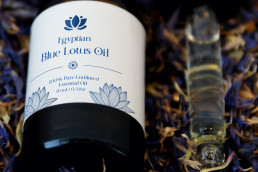
If you have landed here, you are probably trying to decide between two very different botanicals that both get marketed for calm: blue lotus oil and CBD. They sound similar in the wellness aisle, and people stack them interchangeably, but chemically and functionally they do quite different things. This article sets out, in plain terms, where the blue lotus vs CBD comparison is genuinely close, where it is misleading, and how to choose between them (or, quite reasonably, use both).
Table of Contents
- What Each Substance Actually Is
- Blue Lotus Oil
- CBD (Cannabidiol)
- How They Work: Two Very Different Mechanisms
- Blue Lotus Oil: Olfactory-Limbic and Topical
- CBD: Systemic and Receptor-Level
- Where They Overlap: Anxiety and Calm
- Where They Do Not Overlap
- Scent and Ritual
- Pain and Inflammation
- Sleep
- Sensuality
- Legality and Accessibility
- Safety and Interactions
- How to Choose Between Them
- Choose Blue Lotus Oil If
- Choose CBD If
- Use Both If
- A Simple Protocol for Each
- Blue Lotus Oil: Evening Calm
- CBD: Starter Approach
- Realistic Timeframes and Expectations
- When Neither Is the Right Choice
- Frequently Asked Questions
- Where to Go From Here
- Calm That You Can Actually Smell
It is written and clinically reviewed by Antonio Breshears, ND, CCA, a Bastyr-trained naturopathic doctor and certified clinical aromatherapist. For wider context on the botany, chemistry, and traditional uses of Nymphaea caerulea, see The Complete Guide to Blue Lotus Oil, which is the master reference this cluster sits beneath.
What Each Substance Actually Is
Before comparing effects, it helps to name the things honestly. Blue lotus oil and CBD are not really in the same product category, even though they share shelf space in online apothecaries.
Blue Lotus Oil
Blue lotus oil is an aromatic extract from the flowers of Nymphaea caerulea, the Egyptian blue water lily. Most commercial blue lotus oil is a solvent-extracted absolute, though true steam-distilled essential oil and supercritical CO2 extracts also exist. It takes roughly 3,000 to 5,000 flowers to produce one gram of absolute. Its notable constituents are:
- Aporphine: a weak dopamine receptor agonist associated with a mild mood-lift and feeling of ease.
- Nuciferine: a weak dopamine receptor antagonist with some serotonin 5-HT2A/2C activity, linked to calming and anti-anxiety-adjacent effects.
- Flavonoids such as apigenin, quercetin, and kaempferol, some of which interact with central benzodiazepine receptors to produce a gentle anxiolytic effect.
Blue lotus oil is used primarily through the nose and the skin: diffused, inhaled, or diluted in a carrier and applied topically. Oral ingestion is not how most people use the oil, and the oil form is not interchangeable with blue lotus tea or tincture.
CBD (Cannabidiol)
CBD is cannabidiol, a single non-intoxicating cannabinoid isolated from Cannabis sativa (typically hemp cultivars). It is most commonly sold as an oral oil or tincture, a capsule, a gummy, or a topical cream. Unlike blue lotus oil, CBD is usually meant to be swallowed or applied as a targeted topical. It works through the endocannabinoid system, modulating CB1 and CB2 receptors indirectly, influencing serotonin 5-HT1A signalling, and affecting pain and inflammation pathways.
CBD is, in other words, a single molecule in a carrier oil. Blue lotus oil is a complex aromatic extract of dozens of compounds that acts largely through the olfactory-limbic pathway and skin. That is the first thing to understand: they are different tools for overlapping but not identical jobs.
How They Work: Two Very Different Mechanisms
The easiest way to think about blue lotus vs CBD is through the primary route by which each one acts on the nervous system.
Blue Lotus Oil: Olfactory-Limbic and Topical
Blue lotus oil is overwhelmingly a scent-driven intervention. When you inhale it, aromatic molecules travel through the olfactory epithelium to the limbic system, particularly the amygdala and hippocampus, which regulate emotional tone and stress response. This route is fast; shifts in mood and breathing pattern can happen within a minute or two. Topically, a small fraction of the constituents penetrates the skin and contributes a local muscle-softening and sensual effect, but the dominant mechanism remains the scent.
In practice this means blue lotus oil acts most reliably on the ambient, mood, and stress-arousal dimensions of how you feel. It encourages parasympathetic dominance: slower breath, slightly lower shoulders, a softening of the mental chatter. It is not a strong sedative, and it will not reliably dull physical pain.
CBD: Systemic and Receptor-Level
CBD, by contrast, is absorbed into the bloodstream (oral or sublingual) or applied directly to tissue (topical cream) and acts on endocannabinoid receptors and related pathways throughout the body. Its effects show up more in the physical dimensions: muscular tension, joint inflammation, pain, sleep architecture, and a generalised sense of bodily calm. Oral CBD, depending on the dose, can take 30 to 90 minutes to come on and last several hours.
So blue lotus oil works mostly top-down, through emotion and breath. CBD works mostly bottom-up, through body and receptor. This is the core of the comparison.
Where They Overlap: Anxiety and Calm
The place where people most often compare blue lotus vs CBD is anxiety. Both have a genuine, modest calming effect, and both are reasonable tools for someone who wants a non-pharmaceutical way to take the edge off a stressful day.
What differs is the texture of the calm. Blue lotus oil produces a more emotional, almost aesthetic calm: a mood-softening, a slight dreaminess, a sense that one’s inner world has shifted into a gentler key. It is especially useful for acute situational anxiety, ruminating thought loops, and the tight-chested feeling of stress that has not yet become fully embodied.
CBD produces a more somatic calm: the jaw unclenches, the shoulders drop, the low-grade tension in the gut eases. It is often more useful for people whose anxiety shows up primarily as physical symptoms, muscle tension, or restlessness, and for people with chronic rather than acute stress patterns.
Neither is a substitute for a clinical anxiety disorder that warrants therapy or medication. Both can genuinely help someone manage everyday stress within realistic expectations.
Where They Do Not Overlap
Scent and Ritual
Blue lotus oil is, first and foremost, a beautiful scent: a cooler floral-aquatic top, a deep honeyed-floral heart, and a balsamic-smoky base. That scent is not incidental; it is much of the mechanism. You wear it, diffuse it, add it to a massage oil. It turns a room or a body ritual into something specific. CBD, by contrast, has essentially no notable aroma. CBD oils smell like hemp and carrier oil at best, and frequently like nothing at all. You take CBD; you do not wear it.
If part of what you are looking for is a sensory ritual, something that marks the transition from work to evening or into intimacy, blue lotus oil does that job in a way CBD simply does not.
Pain and Inflammation
CBD has reasonably well-attested effects on inflammatory pain, particularly when applied topically to joints or taken orally for chronic musculoskeletal discomfort. Blue lotus oil does not meaningfully address pain. There is a mild muscle-relaxing element when it is used in a body massage blend, but this is emotional and tactile, not pharmacological. If pain is your primary complaint, CBD is the more sensible choice.
Sleep
Both can support sleep, but differently. Blue lotus oil helps at the transition: it calms the mind, slows the breath, and makes it easier to settle. It is excellent for people who cannot wind down but, once asleep, sleep fine. CBD, especially at moderate to higher doses, can influence sleep architecture itself and help people who wake in the night or sleep shallowly. For racing-mind insomnia, blue lotus oil often wins. For fragmented, restless sleep, CBD often wins.
Sensuality
Blue lotus oil has a long reputation as an aphrodisiac aromatic, and in practice the combination of its scent, its mood-lifting aporphine content, and its ritualistic use in massage does tend to heighten sensual presence and receptivity. CBD has a more utilitarian role in this area, reducing performance anxiety or muscular tension, but without the aesthetic and atmospheric dimension.
Legality and Accessibility
Legal status is not the same in every jurisdiction, and both substances have awkward edges.
Blue lotus oil is broadly legal in most of the world as an aromatic product, but it is restricted in Russia, Poland, Latvia, and the US state of Louisiana. Australia has its own regulatory complexity. Where legal, it is sold without prescription and without age restriction in most markets.
CBD has a more varied legal picture. In the UK, hemp-derived CBD below specific THC thresholds is legal and widely available. In the US, hemp-derived CBD is federally legal but state laws differ. In parts of continental Europe and Asia, CBD products range from freely sold to tightly restricted. CBD products also face quality-control issues: the cannabinoid content listed on the label does not always match what is in the bottle. If you buy CBD, buy from brands that publish third-party certificates of analysis.
Safety and Interactions
Both substances have a reasonably good safety profile for most healthy adults, but both have meaningful cautions.
Blue lotus oil should be avoided in pregnancy and breastfeeding, and used with caution by anyone taking dopaminergic medications (Parkinson’s therapy, certain antipsychotics), MAOIs, or heavy sedatives. It is a topical and aromatic product; it is not designed to be ingested. Standard dilutions are 1 to 2 percent for the face, 2 to 3 percent for the body, and 2 to 4 drops in a diffuser.
CBD is metabolised by cytochrome P450 enzymes in the liver, which means it can interact with a wide range of prescription medications, including blood thinners, certain antidepressants, antiepileptics, and some cardiac drugs. Anyone on daily medication should speak to a pharmacist or prescriber before adding meaningful doses of oral CBD. Side effects at higher doses can include drowsiness, dry mouth, and digestive upset.
Neither should be used as a substitute for clinical care where a clinical problem exists.
How to Choose Between Them
Most of the time, the choice is not really blue lotus vs CBD; it is a question of which tool fits the job in front of you.
Choose Blue Lotus Oil If
- Your primary concern is acute stress, mood, or an overactive mind rather than physical pain.
- You want a scent-based, ritual-oriented practice (evening wind-down, meditation, massage, intimacy).
- You prefer a product that stays on the surface: diffused, inhaled, or worn.
- You are sensitive to supplements and prefer not to take anything systemic.
- You want something that integrates into a skincare or body-oil routine rather than a supplement shelf.
Choose CBD If
- Your primary concern is physical, inflammatory pain, sore muscles, chronic tension.
- Your anxiety is predominantly somatic (tight gut, clenched jaw, restlessness) rather than cognitive.
- You want help with sleep maintenance, not just sleep onset.
- You are comfortable taking a daily oral supplement and willing to check for medication interactions.
Use Both If
There is no pharmacological reason most people cannot use both, and they address complementary dimensions. A common pattern: a modest evening dose of oral CBD for bodily calm and sleep, and blue lotus oil applied or diffused for the ritual, emotional, and atmospheric dimension. They are not competing for the same receptors, and the scent of blue lotus oil does something CBD cannot.
If you are on prescription medication, speak to a clinician before combining anything. If you are not, a sensible way to trial the combination is to establish one tool first (say, two weeks of blue lotus oil alone), then add the other so you can tell what each is actually doing.
A Simple Protocol for Each
Blue Lotus Oil: Evening Calm
In the hour before bed, add 2 to 4 drops of blue lotus oil to a diffuser, or dilute 3 drops into a teaspoon of jojoba or sweet almond oil and apply to the inner wrists, behind the ears, and across the chest. Sit for ten minutes with slower-than-normal breathing. Expect a gentle softening of mood and a somewhat easier transition into sleep. Effects begin within a few minutes and last roughly an hour.
CBD: Starter Approach
Begin with a low oral dose (typically 10 to 20 mg) taken sublingually in the early evening, held under the tongue for 60 to 90 seconds before swallowing. Give it 60 to 90 minutes. Adjust upward over a week or two if needed. For localised muscle soreness, a topical CBD balm applied directly to the area is simpler and more targeted than oral dosing.
Realistic Timeframes and Expectations
Blue lotus oil works quickly but modestly. You will usually feel something within minutes of inhalation: softer breath, a slight mood lift, quieter internal chatter. What you will not feel is a strong sedative knockout or a dramatic shift in physical sensation. Used consistently over a few weeks, it tends to reinforce a parasympathetic pattern that accumulates across evenings.
CBD at low doses is subtle and often takes a week or two of consistent use before the effect becomes clear. At moderate doses (25 to 50 mg orally), effects on sleep and bodily tension tend to be more noticeable. Expect to spend a few weeks finding the right dose for your body; CBD response varies more between individuals than blue lotus oil does.
Neither is a quick fix for chronic anxiety, chronic pain, or a significant sleep disorder. If what you are trying to address has been with you for months and is interfering with your life, these are adjuncts, not replacements for proper clinical assessment.
When Neither Is the Right Choice
If you are pregnant or breastfeeding, neither blue lotus oil nor casual CBD use is appropriate; pregnancy is not the time to experiment with botanicals that have thin safety data. If you are on dopaminergic medication, MAOIs, or heavy sedatives, blue lotus oil warrants a conversation with a prescriber. If you take blood thinners, antiepileptics, or multiple daily medications, CBD warrants the same conversation.
If your primary symptom is severe, persistent anxiety, panic disorder, major depressive episodes, or insomnia that has gone on for months, please see a clinician before reaching for an aromatic oil or a hemp-derived supplement. Both can have a role in a broader plan, but neither is a first-line treatment for a clinical disorder.
Frequently Asked Questions
Is blue lotus oil stronger than CBD?
Neither is stronger in a general sense; they act on different systems. Blue lotus oil feels faster and more immediate because it is inhaled and works through the olfactory-limbic pathway. CBD is more systemic and can act on pain and inflammation in ways blue lotus oil cannot. The better question is which is more suitable for the specific thing you are trying to address.
Can you take blue lotus oil orally like CBD?
No. The essential oil or absolute form is not designed to be ingested. Blue lotus is taken orally only as a tea or tincture, which are very different preparations from the aromatic oil. CBD oil, by contrast, is specifically formulated to be swallowed or taken sublingually.
Will blue lotus oil show up on a drug test?
Blue lotus oil does not contain THC and will not trigger a cannabis drug test. CBD products, depending on whether they are isolate, broad-spectrum, or full-spectrum, may contain trace THC that could, in rare cases, produce a positive test, particularly with heavy daily use.
Can I combine blue lotus oil with CBD?
For most healthy adults, yes, and the two address complementary dimensions. Use blue lotus oil aromatically and topically, and use CBD orally or as a targeted topical balm. Anyone on prescription medication should check with a clinician first.
Which is better for sleep?
For trouble falling asleep because of a racing mind, blue lotus oil often works better. For fragmented sleep, waking in the night, or sleep that feels shallow, CBD often works better. They can reasonably be used together.
Which is better for anxiety?
For cognitive, ruminating, socially driven anxiety, blue lotus oil tends to feel more relevant. For physically expressed anxiety (tight chest, clenched jaw, restless limbs), CBD tends to feel more relevant. Many people benefit from both.
Is blue lotus oil psychoactive?
Very mildly. Its alkaloid profile can produce a subtle mood-lift and a dreamy softness at higher topical or aromatic doses, but it is not intoxicating in the way cannabis is. CBD is not intoxicating either; THC, which is a separate cannabinoid, is the intoxicating component of cannabis.
Which is more expensive?
Per millilitre, quality blue lotus oil is usually more expensive than quality CBD oil, because the flower yield is very low (3,000 to 5,000 flowers per gram of absolute). However, you use blue lotus oil in drops, not droppers full, so a bottle lasts a long time. The per-use cost is often similar.
Can I put CBD in my diffuser?
No. CBD does not meaningfully volatilise at diffuser temperatures, and it is not an aromatic product. Blue lotus oil is designed for diffusion; CBD is not.
Which has fewer drug interactions?
Blue lotus oil, used aromatically and topically at standard dilutions, has a narrower interaction profile than oral CBD. CBD’s effect on liver enzymes means it can alter the metabolism of many prescription medications, which is why a clinician conversation matters for anyone on daily drugs.
Where to Go From Here
If you have read this far, you probably already know which of the two fits your situation better, or whether both belong in your routine. If you want to understand blue lotus oil itself more deeply before you buy, the Complete Guide to Blue Lotus Oil covers botany, chemistry, extraction, and traditional uses in one place. For practical protocols, including dilutions for face, body, and diffuser, that same guide points outward to the application-specific clusters in this library.
The short version: blue lotus vs CBD is not really a rivalry. It is a question of whether you want a scent-led, ritual-oriented tool for mood and mind, or a systemic tool for body and pain, or, quite sensibly, both.

Antonio Breshears
Antonio Breshears is a renowned expert in holistic medicine and beauty, with over 25 years of research experience dedicated to uncovering the secrets of nature's most powerful remedies. Holding a degree in Naturopathic Medicine, Antonio's passion for healing and well-being has driven him to explore the intricate connections between mind, body, and spirit.
Over the years, Antonio has become a respected authority in the field, helping countless individuals discover the transformative power of plant-based therapies, including essential oils, herbs, and natural supplements. He has authored numerous articles and publications, sharing his wealth of knowledge with a global audience seeking to improve their overall health and well-being.
Antonio's expertise extends to the realm of beauty, where he has developed innovative, all-natural skincare solutions that harness the potency of botanical ingredients. His formulations embody his deep understanding of the healing properties found in nature, providing holistic alternatives for those seeking a more balanced approach to self-care.
With his extensive background and dedication to the field, Antonio Breshears is a trusted voice and guiding light in the world of holistic medicine and beauty. Through his work at Pure Blue Lotus Oil, Antonio continues to inspire and educate, empowering others to unlock the true potential of nature's gifts for a healthier, more radiant life.